I think there will be a big wave of theorists switching to more applied areas of quantum computing: finding new (heuristic) algorithms, evaluating applications, optimizing QEC & architecture, or even doing lab work. This will massively accelerate the timeline of useful QC!
This contains a shocking list of problems in quantum information, many-body physics and quantum computing, the field that are dear to my heart. There are too many, but let me pick the following.
1. Proof of area law in 2D.
2. Spin-one Haldane gap
3. Parity is not in QAC^0
4. Constant-error Aaronson-Kuperberg conjecture
5. Unitary VOAs generating conformal nets.
Things are changing fast. I cannot even imagine what will happen over the next few months, let alone a year.
I was encouraged this week to see the leaders of the frontier labs agree on the need for them to slow down the pace of AI development. Given the stakes, it’s a good and necessary first step.
But I’m even more encouraged by the growing recognition that how this powerful new technology develops should be at the center of our public debate.
I’ve been watching the progress on AI for over a decade now, and one thing that’s clear to me is that the potential impact of this technology is not overhyped. It’s also moving at lightning speed – and even faster than those who are engineering it can keep up with.
I’m not an AI accelerationist who believes it will lead to some techno-utopia, and I’m not a doomer who thinks it will inevitably lead to humanity’s destruction.
But whether this technology results in amazing breakthroughs in medicine, energy and education or unleashes huge economic disruptions, greater inequality, and potential catastrophe will depend on the choices that we make right now – choices that should be made not just by the companies involved, but by all of us.
Most people treat a zero-failure record as a flex. In computer science, there is a sharper perspective famously known as "Umeshisms."
During his PhD at UC Berkeley under quantum computing pioneer Umesh Vazirani, computer scientist Scott Aaronson noted an aphorism his advisor loved to repeat:
"If you have never missed a flight, you are spending too much time in airports."
The math logic is simple: a 0% miss rate often means you are overpaying in friction, prep time, and missed opportunity. Occasional failure is often the price of a better expected-value tradeoff.
Aaronson named these "Umeshisms" in a 2005 blog post and penned a few sequels in the same spirit:
- "If you have never been rejected, you are not asking enough."
- "If you never cut yourself while shaving, you are not shaving close enough."
The lesson is recognizing when extreme risk aversion costs you more than the risk itself.
yes, nonsofic groups exist: this statement is one of many new beautiful results proved by Astra, our next major model.
We're releasing 10 such Astra proofs, complete with lean certificates and CoT walkthroughs for each of them. The results are wide-ranging, from von Neumann algebras (disproof of Connes' Rigidity Conjecture) to better bounds for high dimensional sphere packing, for circuit complexity, for monochromatic triangles in multicolored graphs, and more.
More thoughts here: https://t.co/8SjXONeh38
If you are interested in quantum computing, I strongly recommend this insightful article by @Caltech student @robbieking1000 calling for a "scrappier approach" to finding new applications.
https://t.co/mXvGK0YJ7f
Submissions for QEC 2025 are now open through March 28.
This will easily be the most exciting conference on quantum error correction yet!
Conference homepage:
https://t.co/Endm46qaUU
EasyChair submission page:
https://t.co/Wg8xa8TZ42
We are thrilled that “Now And Then” has received two #Grammy nominations - for Best Rock Performance and Record of the Year. Thank you, @RecordingAcad#GRAMMYs
V2 of this work is now at https://t.co/s4eFActxn1 with several new contents, such as reproving QMA-completeness of log local Hamiltonians without using Feynman-Kitaev construction (but with lot more work), addressing local indistinguishability etc.
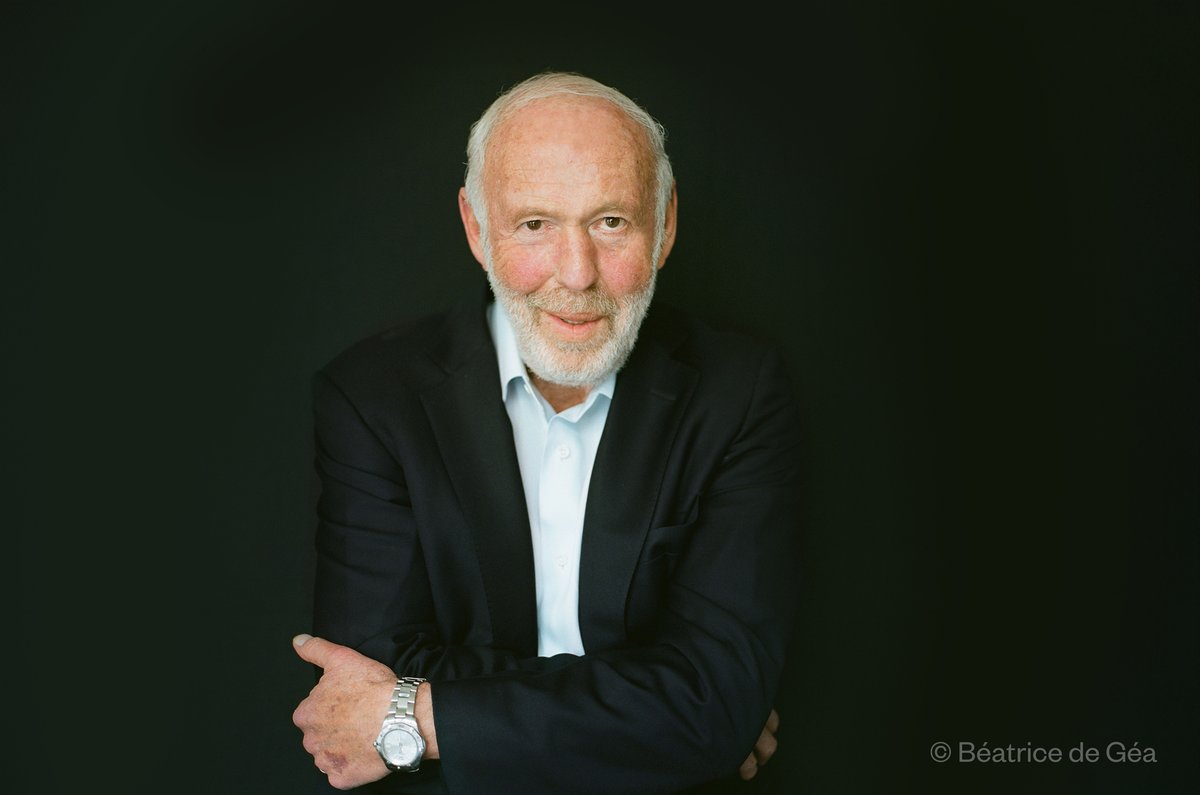
It is with great sadness that the Simons Foundation announces the death of its co-founder and chair emeritus, James Harris Simons. Jim was an award-winning mathematician, a legendary investor and a generous philanthropist. https://t.co/w48DhauUVj
I am extremely proud to see this LANL Quantum Computing Summer School work published in npj Quantum Information
Find the published version
👉https://t.co/cLh7aXyaLz
Huge props to my collaborators @louis_schatzki , @nguyenquantum, @fredericsauv, and @MartinLaroo
In a new paper @AnuragAnshu4, @nguyenquantum (mvp) and I combine ideas ranging from MBQC, quantum complexity, tensor networks and quantum fault tolerance. Our construction hints towards a surprising(?) role that fault tolerance could play in resolving the quantum PCP conjecture.