"They made record profits, but the people they made profits from were left out of the equation."
WATCH Gary resident Aja Bridges dissect NIPSCO's criminal neglect following record storms that caused mass blackouts: https://t.co/EQkfV4r1bO
Lumumba fought for liberation, but the West wanted to conquer Africa at all costs. They murdered him and dissolved his body in acid.
In 2025, a Congolese activist shed light on the country's history of exploitation and ongoing struggles which continue to this day…
🇵🇸👉Si este video hubiera salido de Irán, Venezuela, Cuba o Nicaragua con una joven arrastrada, con los ojos vendados y estrangulada ante una multitud, tapándole la nariz para que no respire.
Occidente ya estaría movilizándose. Los titulares gritarían barbarie.
Pero es Berlín
The West was incensed when the Taliban blew up the Buddhist Bamiyan statues in Afghanistan.
Crickets as Israel blows up a UNESCO heritage site in Lebanon.
The summer issue of Tribune is now online! Featuring:
Lea Ypi on literature and politics
Gabriel Winant on the new working class
Alyssa Battistoni on eco-populism
Matt Kennard on the Israel lobby
Barnaby Raine on the Greens and Reform
Read here: https://t.co/6QXUBZktmu
For more than two decades, the Congo Free State was not a Belgian colony. It was the personal possession of King Leopold II of Belgium. From 1885 to 1908, he controlled an enormous region in Central Africa as his own private enterprise, using its people and natural resources to generate immense wealth through the extraction of rubber and ivory.
As the global demand for rubber exploded during the late nineteenth century, so did the brutality of Leopold's regime. Congolese communities were forced to meet impossible rubber quotas under the threat of violence. Those who failed to produce enough rubber often faced severe punishment. Soldiers working for the colonial force, known as the Force Publique, burned villages, took women and children hostage, carried out executions, and mutilated victims by cutting off hands or other limbs as a form of terror and punishment. These acts were documented by missionaries, journalists, and international investigators, helping expose one of the greatest humanitarian disasters of the colonial era.
The true number of people who died during Leopold's rule remains debated by historians because reliable census records did not exist. However, scholars widely agree that millions of Congolese died from a combination of killings, forced labor, starvation, disease, and the collapse of local communities. Estimates often range from several million to around ten million, while some accounts have suggested even higher figures. Regardless of the exact number, the scale of suffering was catastrophic and permanently changed the demographic and social fabric of the Congo.
International outrage eventually forced Belgium to remove the territory from Leopold's personal control in 1908, transforming it into the Belgian Congo. Although some of the worst abuses were reduced, colonial rule continued for decades, and the economic system remained largely focused on extracting African resources for European benefit.
The atrocities committed in the Congo deserve to be remembered alongside other crimes against humanity. Learning about the Holocaust is essential, and so is understanding the history of colonial violence in Africa. History is not a competition of tragedies. Expanding our knowledge allows us to recognize the experiences of people whose stories have too often been overlooked.
If you love our content and would like to support the page, you can buy us a coffee here: https://t.co/K1AhtZuOFs or tap Link in Bio
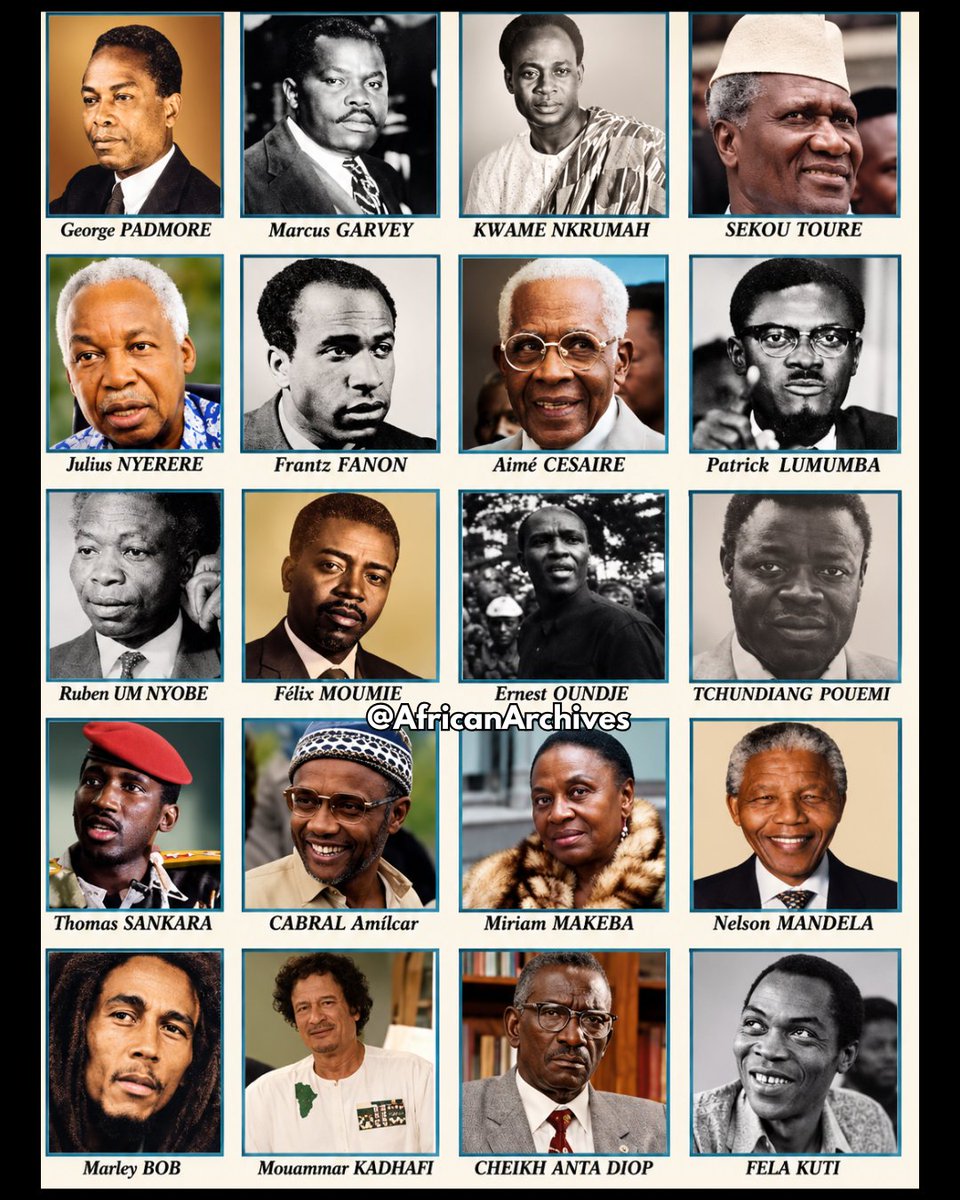
Some of the most influential voices in the struggle for African liberation, Pan Africanism, cultural identity, and Black self determination. Although they came from different countries, backgrounds, and generations, many shared a common belief that Africa should shape its own future free from colonial rule, exploitation, and foreign domination.
George Padmore helped lay the intellectual foundation of modern Pan Africanism and worked alongside many future African leaders. Marcus Garvey inspired millions across the African diaspora with his message of Black pride, economic independence, and global unity. Kwame Nkrumah led Ghana to become the first sub Saharan African nation to gain independence from colonial rule in 1957, inspiring liberation movements across the continent.
Sékou Touré rejected continued French control over Guinea, choosing complete independence despite enormous political and economic pressure. Julius Nyerere promoted African socialism through his vision of Ujamaa while emphasizing education and national unity. Frantz Fanon challenged colonialism not only through political activism but also through powerful writings that continue to shape discussions on race, identity, and liberation around the world.
Aimé Césaire gave the world the concept of Negritude, celebrating Black identity and culture at a time when colonial systems tried to erase both. Patrice Lumumba became a symbol of African independence and paid the ultimate price for refusing outside interference in the Congo's future.
Figures such as Ruben Um Nyobè, Félix Moumié, Ernest Ouandié, and Tchundjang Pouemi fought for Cameroon's freedom and challenged systems that continued to limit Africa's economic independence after colonialism.
Thomas Sankara transformed Burkina Faso with policies focused on self reliance, women's rights, environmental protection, and anti corruption. Amílcar Cabral demonstrated that liberation required both military resistance and education. Miriam Makeba used her music to tell the world about apartheid and injustice, while Nelson Mandela became a global symbol of resilience, reconciliation, and democratic leadership.
Bob Marley carried messages of African unity, justice, and freedom through music that reached every corner of the world. Cheikh Anta Diop reshaped the study of African history by challenging long held misconceptions and restoring Africa's place in world civilization. Fela Kuti used music as fearless political resistance, exposing corruption and demanding accountability from those in power.
If you love our content and would like to support the page, you can buy us a coffee here: https://t.co/K1AhtZuOFs
“Nobody with any sanity, including myself, would have anything but sympathy for the Palestinian plight. There’s not a sane person on earth who in any way sanctions what the fuck the Israeli authorities are doing.”
- Sinéad O’Connor
Thomas Sankara’s Famous Speech On Empowering Burkinabè Women
"There is no true social revolution without the liberation of women."
This was the core challenge issued by Thomas Sankara, the revolutionary leader of Burkina Faso, during his 1987 address on the emancipation of women. Sankara made it clear that women's equality is a fundamental, non-negotiable necessity for the success of any genuine social revolution.
Sankara pushed beyond the status quo, arguing that society could not achieve true progress while half of its population remained relegated to silence and anonymity. By demanding the dismantling of the patriarchal structures that institutionalized exploitation, he insisted that the measure of a society's advancement lies in its commitment to equal rights for all.
His words remain a powerful, enduring call to action, reminding us that any revolution that leaves equality behind is fundamentally incomplete.
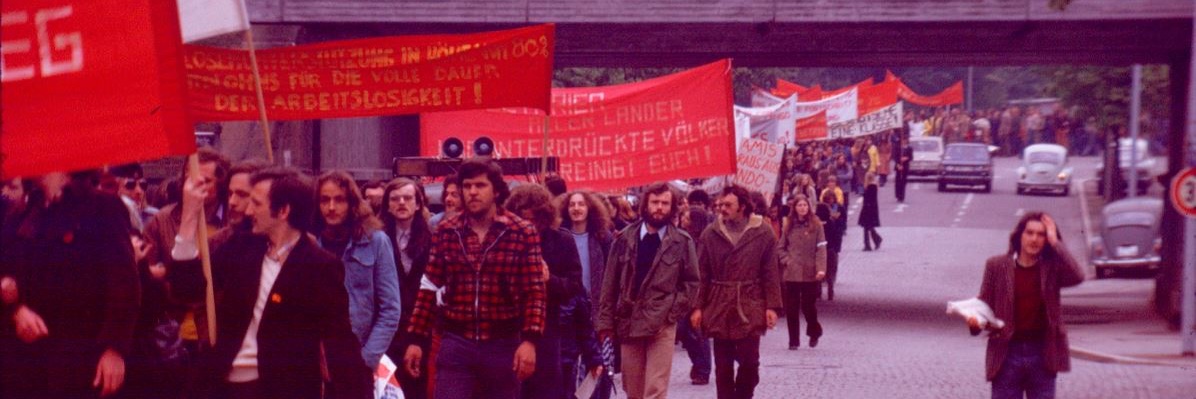
Heute vor 81 Jahren wurde Europa vom Hitlerfaschismus befreit. Wir sagen Danke an die Rote Armee, Danke an die Anti-Hitler-Koalition!
Die Lehre aus der Geschichte lautet: Nie wieder Faschismus! Nie wieder Krieg!
"Kenya is the gateway of recolonizing East Africa through French imperialism. The France-Africa summit in Nairobi is the diplomatic mask for this military consolidation." — Ajiambo Ashlyn, Communist Party Marxist Kenya
watch the full webinar: https://t.co/hSZgkUGyXi