15 DAYS IN A FOXHOLE WITH A RUSSIAN SOLDIER: AN EXTRAORDINARY STORY OF SURVIVAL 🇺🇦
“You're not one of us, are you?”
For 15 days, a Ukrainian soldier was trapped in an underground shelter with a Russian soldier who initially held him at gunpoint. They shared water, played chess with handmade clay pieces, and eventually escaped together. When the Russian finally agreed to surrender, he had just one request: “Order some food.”
This is the remarkable story of 34-year-old Vadym Letunov, callsign “Cartman,” an infantryman from Odesa serving with Ukraine's 118th Separate Mechanized Brigade. His ordeal began during a devastating Russian bombardment. Vadym and a young fellow soldier, who was on his first combat mission, came under relentless mortar and drone attacks. An explosion buried Vadym beneath earth and fallen trees. When he regained consciousness, his comrade was calling for help, saying he could no longer feel his legs. The young soldier died before Vadym's eyes. With no radio and no way to contact his unit, Vadym managed to free himself and stumbled toward what he believed was Ukrainian territory.
He discovered a dugout, entered to rest, and suddenly heard movement. When he pulled back a curtain, he found himself staring down the barrel of a Russian soldier's rifle. “You're not one of us, are you?” Vadym asked. The Russian ordered him inside, searched him for weapons, drugs, and GPS devices, and interrogated him about Ukrainian drone operators. He threatened to shoot him but then said something bizarre: “Calm down. I'm not going to kill you. See? I have a cross.” The Russian had fashioned a wooden cross bearing the words “Save and Protect.” He dug a small pit for Vadym to sleep in. The first night, the Ukrainian soldier didn't sleep at all.
Over the following days, their relationship became an extraordinary mixture of captivity, fear, suspicion, and reluctant cooperation. The Russian occasionally gave Vadym water, socks, and scraps of fabric to wrap around his injured feet. They talked about food, their lives, and the war. “When I'm full, I'm kind,” the Russian told him. Desperate for supplies, the Russian even made a sign displaying Vadym's callsign and military unit, hoping Ukrainian drones would recognize it and deliver food. To pass the time, they played chess using handmade clay pieces. Vadym shaped his pieces from wet clay, while the Russian mixed earth with urine to make his pieces hold together.
Meanwhile, Vadym's physical condition deteriorated. His feet were badly injured, and one toe had turned black. “Once, I asked him to kill me. I saw my black toe and realized I had no strength left.” Then, after 15 days, everything changed. Heavy fog covered the battlefield. While searching for water, the two men heard a drone overhead and rushed into their shelter. But Vadym recognized it as Ukrainian. He ran outside holding his improvised identification sign, fell to his knees, and shouted toward the sky: “Cartman! It's me!” The Ukrainian drone dropped a radio, allowing him to contact his comrades. “I told them, ‘There's a Russian here with me. He wants to surrender.’ And the Russian added, ‘Order some food.’ So we actually ordered food.”
Later, Ukrainian forces arranged their evacuation. Vadym feared until the very last moment that the Russian might change his mind, but both men eventually climbed into a Ukrainian evacuation vehicle. “I never believed you'd actually come with me,” Vadym told him. The Russian replied: “You promised me they'd feed me and wouldn't beat me.” Vadym emerged barefoot, barely able to walk because of his injuries. His first request to his fellow Ukrainians was that they not harm the prisoner.
But his thoughts remained with the young comrade who had died beside him. “I lost my fellow soldier, and I was the senior man.That's very painful for me.But I'm glad I brought the Russian back — not even as a person, but as an opportunity for a prisoner exchange. Essentially, it's one person for another.
A historic video – November 22, 1994:
The U.S. President thanks Ukraine for giving up its nuclear weapons. In return, the U.S. promises to stand by Ukraine’s side to safeguard its independence, sovereignty, and territorial integrity well into the future.
That future has arrived—yet today, Trump and his circle act as if none of this ever happened.
https://t.co/T7kFSRKgsJ
1/3
The text below is not mine. It was written by Vitalie Cojocari, a Moldavian journalist who understands the Russian world—as well as the worlds of Putin and Zelensky—far better than I do.
I am sharing it with you because we often ask ourselves: who is Zelensky, really? A comedian who became president by chance? A puppet of the West, as Russian propaganda claims?
To understand who he is today in Brussels—shouldering the burden of a nation under bombardment, caught between the pressures of two superpowers—we must understand who he was in the past.
Vitalie takes us back to a Russia that few remember: the year 2002.
A time when, during prime time on Russian state television, one could still laugh at Putin to his very face—
and Putin, sitting in the front row, was forced to applaud. A time when the sharpest jokes targeted rigged censuses, crumbling roads, and an army in disarray.
And in that Russia, there was a 24-year-old Ukrainian—the captain of a comedy troupe called "Quarter 95"—who was the quickest, the most resourceful, and the one most feared by his fellow comedians.
That young man was Volodymyr Zelenskyy.
Read this story, and you will grasp a simple truth: the man who today responds to a Sky News journalist with a smile—setting the entire Brussels press room into laughter—is the very same young man who, 24 years ago, did the exact same thing with Putin sitting in the front row.
He hasn’t changed. Only the stage has. Back then, his goal was to lead a team of comedians to victory. Today, his goal is the survival of an entire nation.
I leave you with Vitalie’s account. "The year is 2002.
Putin has been the full-fledged president of Russia for two years, having previously served as acting president following Yeltsin’s resignation.
Across the ocean, George W. Bush is president. That very year, he and Putin signed the 'Strategic Offensive Reductions Treaty.'
On Russian television, one of the best-known, most highly regarded, and most-watched programs draws millions of viewers to their screens. It’s called KVN—a bit like a variety show, but structured as a competition.
The name stands for *Klub Vesyolykh i Nakhodchivykh*—the 'Club of the Cheerful and Resourceful.' The show airs on Russian state television.
The premise of this comedy show is simple: various teams present their jokes, and a jury awards points. It typically airs during prime time on the weekend.
It was so popular—incredibly popular—even more popular than Putin himself. To appear in prime time before the Russian public, Putin would often attend KVN. He’d sit in the front row, with the cameras—and the jokes—directed right at him.
Goodness, the way they used to joke back then—they really went for it! It’s nothing like today, where KVN has become a mere shadow of its former self.
On stage, during prime time, there was always sharp, caustic criticism of everything that was going wrong in Russia.
Let me give you an example.
You’re surely familiar with the Queen song 'I Want to Break Free.' You know how it begins:
'I want to break free
I want to break free
I want to break free from your lies
You're so self-satisfied
I don't need you
I've got to break free'
And then comes the famous 'God knows!'
One well-known KVN bit was inspired by this song.
A team takes the stage..." ...dressed like Queen, and begins to sing. She does so in Russian, not in English.
The lyrics go like this:
"The country's roads,
And the country's cars too,
As well as the wages, the football, the administration, the cinema..."
Then come the words, in English: "God knows."
The audience is in stitches; the Russians are laughing uncontrollably, some wiping away tears. Those who know Russian understand why.
Can you imagine if Eastern Europeans talked about the rest of the world using the same clichés, tropes, stereotypes, & propaganda commonly used about them?
🧵…
The proposed social media ban for under-16s is exactly the sort of state overreach that should concern anyone who values liberty.
We do not need an authoritarian state. That is not British.
I may not be entirely neutral on this, having grown up under a communist dictatorship myself. Parents should raise their children, and children should be free to make their own choices wherever reasonably possible. Any involvement by the state should be questioned and limited to where it is genuinely necessary.
What is not necessary is the state prescribing values, telling parents what their children may read, watch or write, or attempting to shield teenagers from technologies that are already shaping the modern world.
I do not know what kind of children the supporters of these bans have in mind, but my nieces and nephews use these tools thoughtfully and skilfully. They are learning how to navigate a digital future that will define their working lives.
If British children are held back until the age of 16 while their peers around the world gain experience and confidence with these technologies, they will start that future at a disadvantage. This is not how we prepare young people for the future. It is how we leave them behind.
Let me get this straight:
You are locked in a war on the other side of the globe, completely dependent on European infrastructure literaly begging for us to join and you feel like flexing against a continent of several former empires with unmatched history of warfare is good, because former commie empire is digged in 2nd world country for 4 years unable to even stop the destruction of its own oil infrastructure.
Buddy, you are not gonna believe that, but Germany stopping being gay, green and woke is not bad for us, but for you.
Your entire world dominance stands on a deal that Europe will not militarise and will follow your lead.
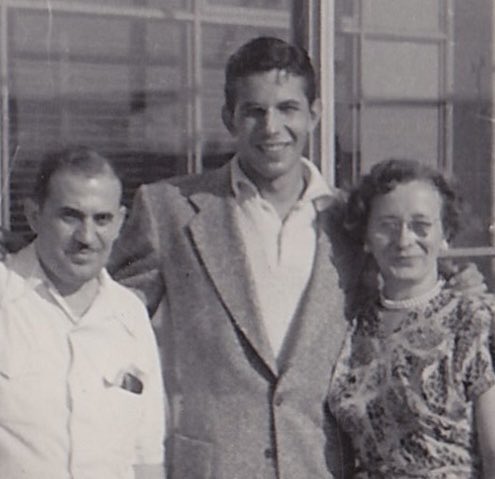
To commemorate my father’s 95th birthday, I want to remind Spock fans that dad’s parents were Ukrainian immigrants which shaped my father in many ways. Four years of Putin’s war has brought death and destruction to our people, our homeland. LLAP. #standwithukraine#ukraine
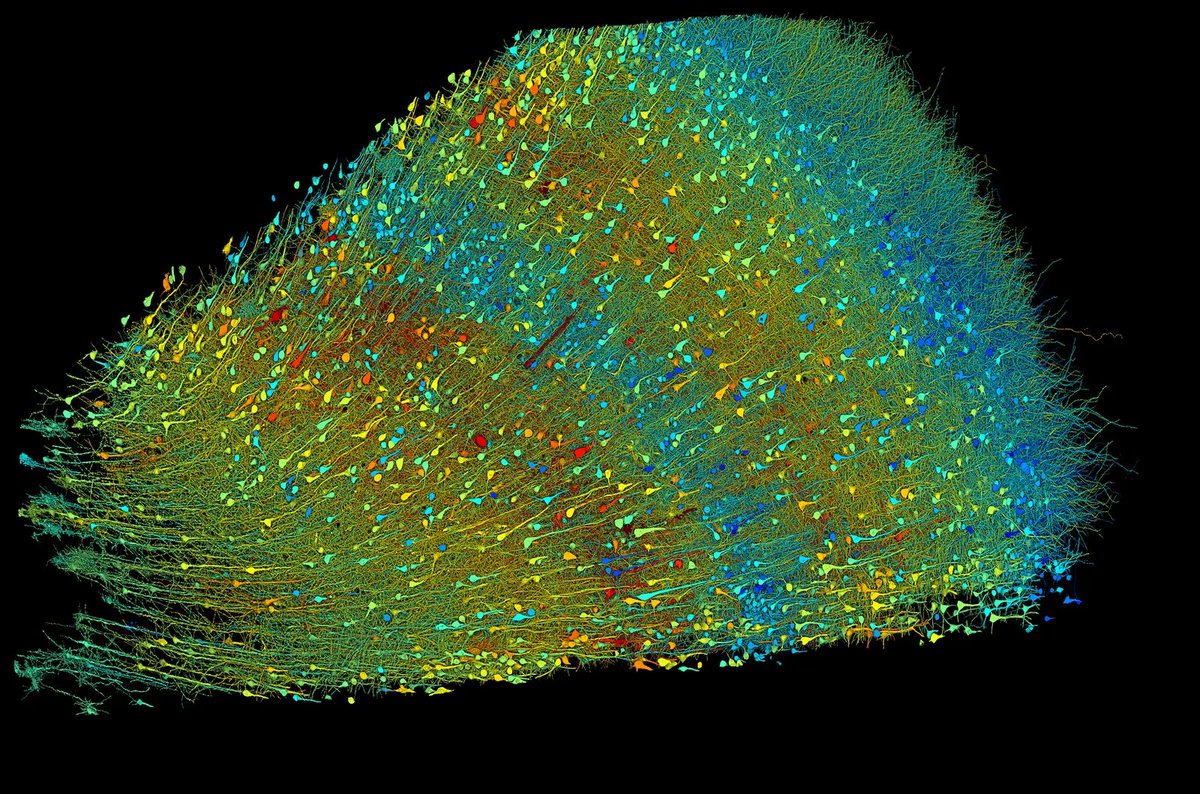
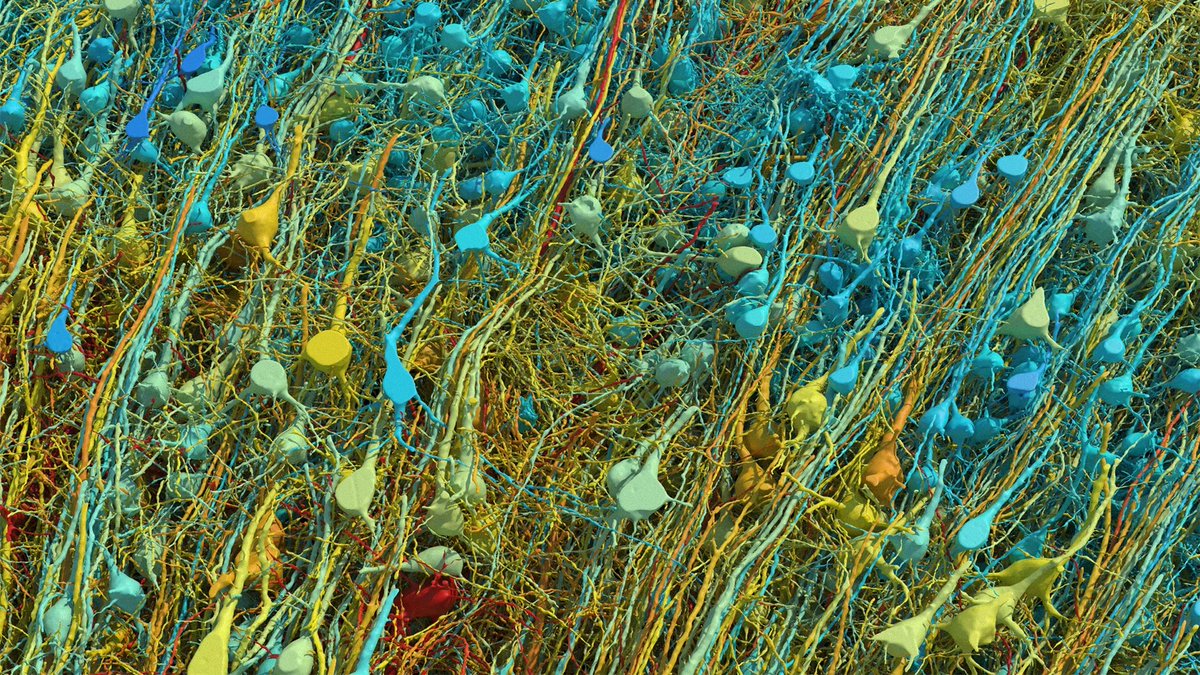
This tiny speck about half the size of a grain of rice contained a staggering 57,000 cells, 230 mm of blood vessels, and 150 million synapses. The project required a decade of work and generated 1.4 petabytes of data (equivalent to 14,000 4K movies) just to capture this single cubic millimeter at nanoscale resolution
One of the most powerful Reddit accounts ever, /u/maxwellhill, a longtime curator and moderator of r/worldnews, stopped posting the day Ghislaine Maxwell was arrested.
The account had posted almost daily for 14 years.
https://t.co/Uep4skj5Fk