I want to change your mind about what is possible for your health future. Longevity is a mindset, not a destination. 👇🏻 join my weekly mindset newsletter
Your beliefs about aging are killing you faster than any disease.
Most of us have been conditioned since childhood to accept that getting old means getting sick.
We've watched our parents decline, heard doctors dismiss symptoms as "just getting older," and absorbed countless messages that disease is unavoidable.
This mindset has inertia like a heavy rock—and it's shortening your life.
Here's how:
Self-Fulfilling Prophecy: When you believe decline is inevitable, you stop taking actions that prevent it. Why exercise if you're "going to fall apart anyway"?
Ignoring Early Warnings: You dismiss important health signals as "just getting older"—missing critical windows for intervention.
Learned Helplessness: You develop powerlessness about your health future, giving up entirely on preventative measures that could add decades of healthy living.
The shift that changes everything:
- Disease is NOT your destiny.
- The longer you live, the more tools we'll have to help you live even longer. Every day, scientists create new ways to help us stay healthy.
Your job isn't to find one perfect solution today—it's to stay healthy enough to benefit from tomorrow's breakthroughs.
The 4-Step Framework (that most people do backwards):
Change Your Mindset
Create Your Strategy (family history + genes)
Change Your Lifestyle
Use Helpful Tools
Most people jump straight to step 4 without steps 1-3. Then wonder why nothing works.
@anatelorenzen@femalelongevity oddly enough Nate, I think coming back to Jesus and getting into a church community was the biggest driving force behind my recent 8.5 yr improvement in my epigenetic bio age - so, yeah, you may be onto something
BREAKING: More than 105,000 people have signed an online petition demanding Australian Prime Minister Anthony Albanese’s immediate resignation.
It only took 125,000 for them to introduce social media bans.
Sign & share https://t.co/YWkE65QpTT
Making the terror attack in Bondi about “the need for gun reform” is the single biggest deflection by Aussies leadership I have seen in the 15 years I have lived here - the govt should own up to the real issues!
I ran a 90-day experiment tracking every variable that might impact deep sleep.
What I tested:
Exercise timing
Meal timing and composition
Supplement protocols
Temperature variations
Pre-bed routines
Various devices and interventions
What actually moved the needle:
Biggest impact (20+ minute increase):
- Room temperature below 65°F
- Vagus nerve stimulation before bed
- Sauna 1-2 hours before bed
Moderate impact (10-15 minute increase):
- Magnesium glycinate supplementation
- Carb-heavy dinner
- Consistent sleep schedule
- Minimal impact (<5 minute change):
White noise vs. silence
Specific breathing protocols
Most sleep supplements
What surprised me:
Exercise timing mattered less than I expected.
Morning, afternoon, or early evening exercise all produced similar deep sleep duration.
The only rule: not within 3 hours of bedtime.
What disappointed me:
Most sleep supplements did nothing measurable.
I tested 7 different formulations.
Only magnesium glycinate showed consistent improvement.
Everything else was placebo or minimal change within noise.
The winner:
Vagus nerve stimulation before bed added 20 minutes to my deep sleep.
Most consistent intervention I tested.
Worked regardless of other variables.
The lesson:
Most sleep optimization advice is noise.
A few interventions matter significantly.
Everything else is rounding errors.
Test systematically.
Measure objectively.
Keep what works.
Why Exercise Timing Doesn't Matter (For Deep Sleep)
Common advice: "Don't exercise within 3 hours of bed or you'll ruin your sleep."
I tested this for 90 days.
The result: Exercise timing had minimal impact on deep sleep duration.
Morning workout (6am): Average 108 minutes deep sleep
Afternoon workout (2pm): Average 110 minutes deep sleep
Early evening (6pm): Average 107 minutes deep sleep
Late evening (8pm): Average 98 minutes deep sleep
The pattern:
As long as I finished exercise 3+ hours before bed, deep sleep remained consistent.
The only significant drop: exercising within 2 hours of bedtime.
What mattered more than timing:
Intensity and volume.
Low intensity (easy run, light weights): 95 minutes deep sleep
Moderate intensity (tempo run, standard lifting): 110 minutes deep sleep High intensity (HIIT, heavy lifting): 105 minutes deep sleep
The sweet spot for me: moderate intensity.
Enough stress to trigger adaptation.
Not so much that recovery demands cut into deep sleep.
What this means practically:
Stop stressing about perfect exercise timing.
The "no exercise after 6pm" rule is unnecessarily restrictive.
Just finish 3+ hours before bed and you're fine.
What actually matters more:
Exercise consistency (4-5x per week beats sporadic intense sessions) Adequate intensity (moderate beats light for deep sleep) Total volume (2-4 hours per week minimum)
I wasted months trying to force morning workouts because I thought evening exercise would destroy my sleep.
The data showed that was nonsense.
As long as I wasn't exercising at 9pm right before bed, timing was irrelevant.
Test it yourself.
Track deep sleep across different exercise times.
I bet you'll find the same pattern.
Consistency matters.
Timing is mostly noise.
Thanks Chris, agree. Also happening with social media ban in Australia - my son will soon no longer be able to access the learning repository of YouTube where he learns skills like 3D printing design and software coding. He is an American citizen, I believe his rights are being violated.
Alzheimer's doesn't start when you get diagnosed.
It starts 20-30 years earlier.
Here's the timeline:
Age 40-50: Amyloid beta begins accumulating
Age 50-60: Tau tangles start forming
Age 60-70: Measurable cognitive decline begins
Age 70-80: Clinical diagnosis
By the time you notice symptoms, the damage has been accumulating for decades.
This is why I'm obsessed with deep sleep at age 36.
Not because I'm noticing cognitive problems.
Because the proteins that could cause problems in 2055 are accumulating right now.
The glymphatic system clears these proteins during deep sleep.
Every night with inadequate deep sleep = another night of incomplete waste removal.
Those proteins don't disappear.
They accumulate.
Over decades, they form plaques.
Those plaques drive neurodegeneration.
The intervention window is NOW.
Not when you start forgetting names. Not when you notice cognitive slowing. Now, while your brain is still efficiently clearing waste.
My strategy:
Optimize for 90+ minutes of deep sleep per night.
That's 547 hours per year of glymphatic clearance.
Over 20 years: 10,950 hours of brain waste removal.
Compare that to someone averaging 60 minutes of deep sleep:
365 hours per year. 7,300 hours over 20 years.
That's a 3,650-hour difference in brain maintenance.
The equivalent of 152 full days of additional waste clearance.
This isn't speculation.
It's basic math on a well-established biological process.
Start now.
Not when symptoms appear.
By then, you're managing decline instead of preventing it.
SUNDAY (GENERAL CONTENT #4)
Post 7: What Actually Increases Deep Sleep
Everyone has sleep advice.
Most of it doesn't move the needle on deep sleep specifically.
What the research actually supports:
✓ Moderate to intense exercise during the day (not within 3 hours of bed) ✓ Consistent sleep schedule within ±30 minutes ✓ Room temperature: 60-67°F (15.5-19.5°C) ✓ Carbohydrate-rich meal 2-3 hours before bed
These are non-negotiables.
Proven additions that increase deep sleep:
✓ Magnesium glycinate supplementation (400mg before bed) ✓ Sauna exposure 1-2 hours before bed ✓ White or pink noise during sleep ✓ Vagus nerve stimulation before bed
Notice what's NOT on this list:
❌ Sleep supplements with 15 random ingredients
❌ Complicated breathing protocols requiring 30 minutes
❌ Expensive sleep trackers that just measure what you're already measuring
❌ Sleep gurus selling courses on "sleep optimization secrets"
My current protocol:
12:00pm: Last caffeine
5:30pm: Dinner with adequate carbs
7:15pm: Blue light blocking glasses on
7:45pm: Magnesium glycinate (800mg)
8:15pm: Soundbed (20 minutes)
9:00pm: Pulsetto sleep program (12 minutes)
9:30pm: Lights out, white noise on
Room temperature: 64°F
The result:
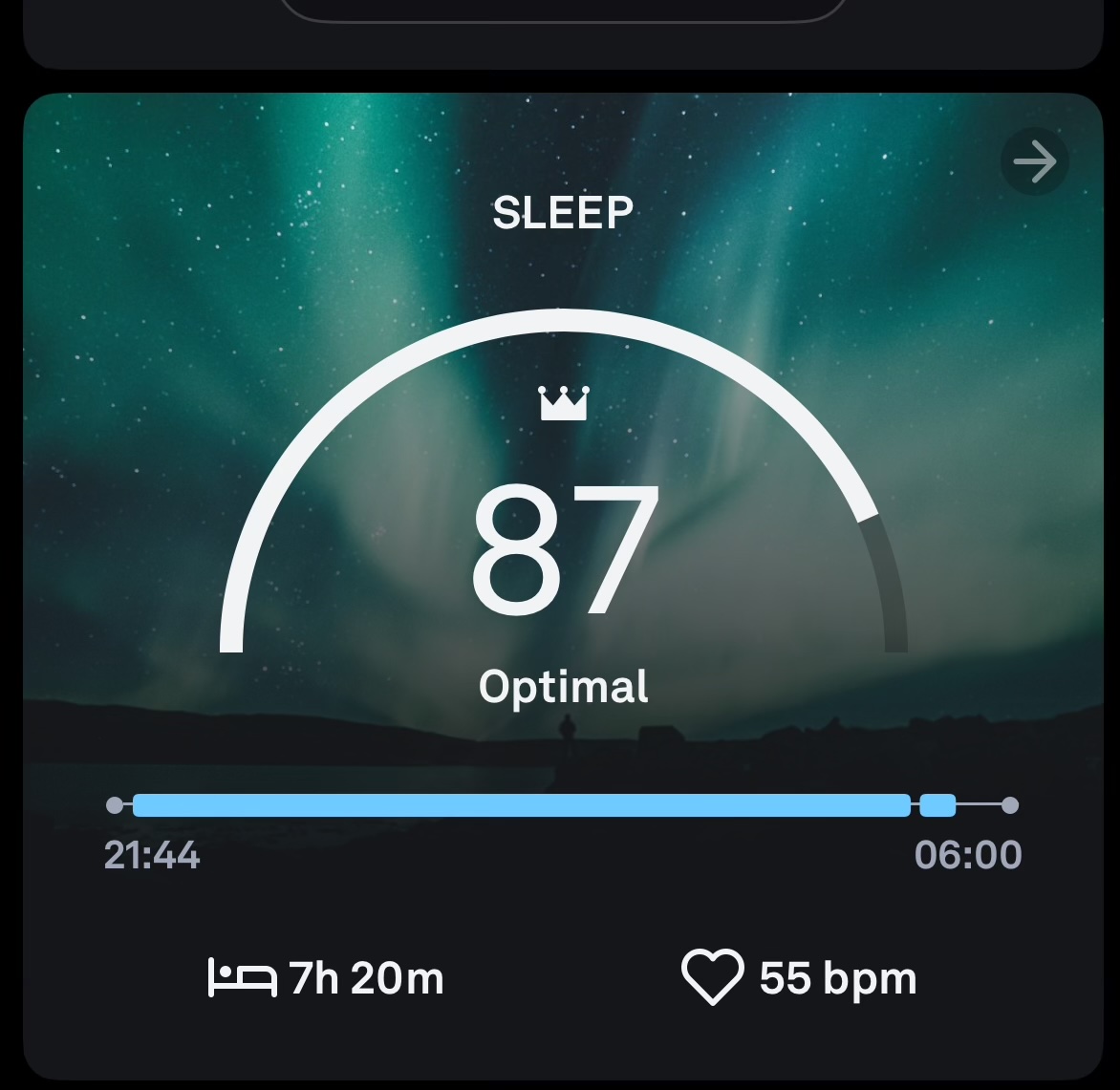
Average deep sleep: 110 minutes
Average sleep latency: 12 minutes
Average wake-ups: 0-1 per night
What I don't do:
Melatonin (makes me groggy)
Complex breathing protocols (too much mental effort)
Sleep restriction (counterproductive for total sleep)
Alcohol (destroys sleep architecture)
The foundation:
Get the basics right first.
Then add targeted interventions based on your data.
Most people do this backwards.
They buy supplements before fixing their sleep schedule.
They try complex protocols before making their room cool enough.
Build the foundation first.
Then optimize.
I just sent my subscribers the complete UV damage reversal breakdown—the most dramatic skincare results I've documented in years.
Here's what they're reading right now:
✅ Why photolyase enzymes can repair DNA damage that other interventions can't touch
✅ The complete 8-week protocol combining LADR serum with red light therapy
✅ Before/after Visia scan data showing 20% UV damage improvement during spring
✅ The dramatic inflammation reduction visible in the scans (most striking visual change in years)
✅ 21% forehead wrinkle improvement—the second horizontal line nearly disappeared
✅ What didn't change (brown spots, pores, texture) and why that validates the results. Most skincare products stabilize damage or slow progression.
This protocol actually reversed accumulated UV damage. Measured with professional equipment. Documented over 8 weeks.
**If you want the deep dives on longevity interventions tested with professional measurement—join here:**
Link below👇
Amyloid beta and tau proteins.
If those sound familiar, it's because they're the hallmark proteins found in Alzheimer's disease.
Here's what most people don't know:
These proteins accumulate in everyone's brain throughout the day.
They're normal metabolic waste products.
The difference between healthy aging and neurodegeneration?
How efficiently your brain clears them out at night.
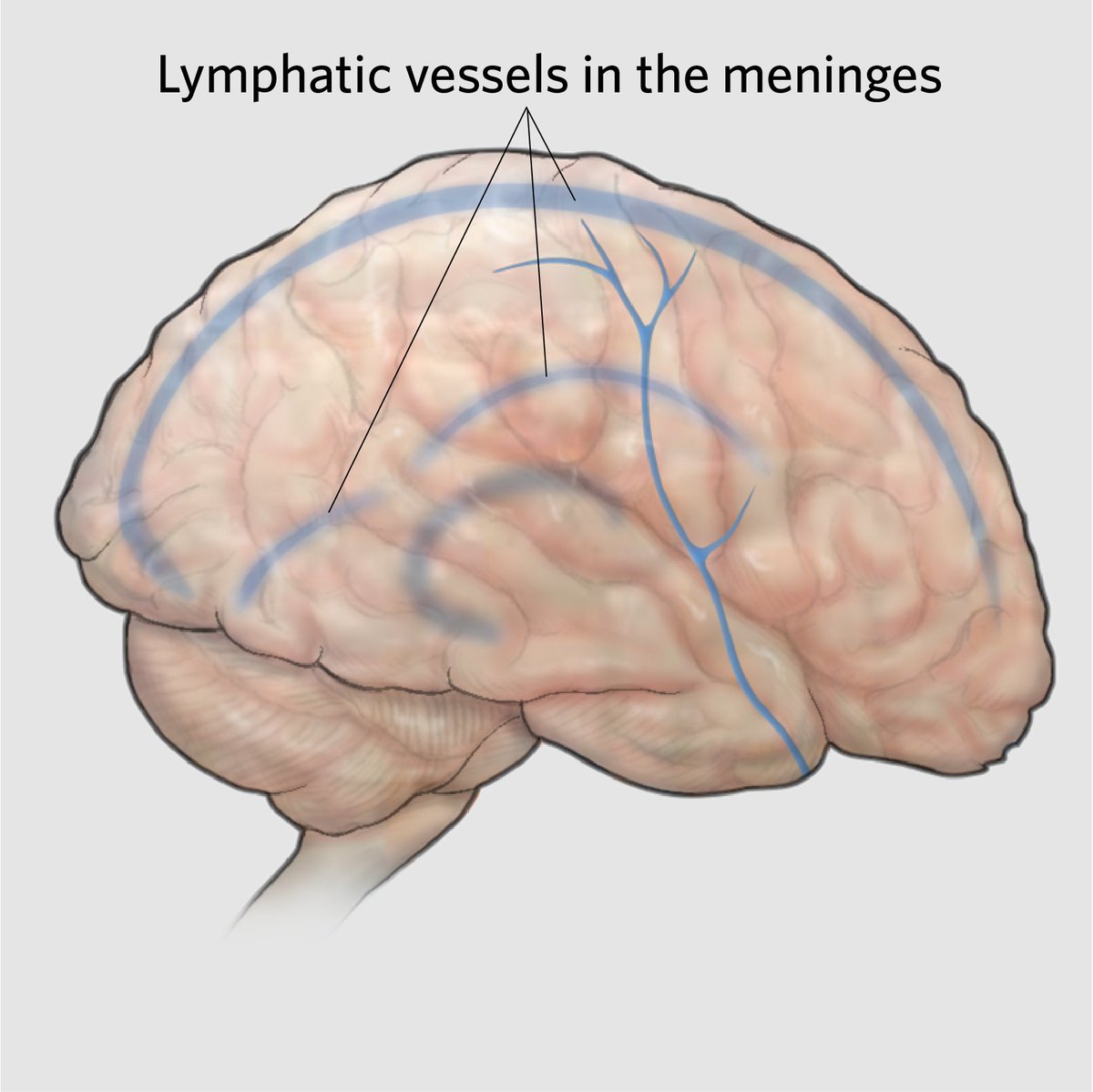
Your brain's glymphatic system handles this clearance.
But it primarily operates during deep sleep.
Not light sleep. Not REM sleep. Deep sleep specifically.
This is why sleep duration alone doesn't tell the whole story:
8 hours of fragmented, light sleep with minimal deep sleep = poor waste clearance
6.5 hours with adequate deep sleep cycles = better waste clearance
My current focus:
I'm less concerned about total sleep time than I am about deep sleep duration.
Target: 90+ minutes of deep sleep per night
Current average: 110 minutes
That's 140 extra minutes per week of glymphatic clearance compared to my baseline.
This compounds.
Not tomorrow. Not next month.
In 2045 when I'm comparing cognitive function to peers who spent decades with inadequate deep sleep.
Track your deep sleep.
Not just your sleep score.
@mjfrcp Agree Mark. I’ve also seen the opportunity for a cross device comparison and have at least one additional company willing to cooperate with my review process 👍🏻
Someone always asks:
"But where are the clinical trials?" "Show me the peer-reviewed research!" "I need randomized controlled studies!"
I get it. I used to think the same way.
Then I noticed something:
Clinical trials tell you what works for average populations.
They don't tell you what works for YOUR biology.
Example: NMN supplementation
Published studies show NAD+ increases. Podcasts rave about the benefits. Longevity experts recommend it.
I took 2g daily for 90 days.
Tested my NAD+ levels before and after.
Result: No change.
Zero. Nothing.
The study results were accurate.
For the average participant in that study.
Not for my specific metabolism.
This is why I run personal experiments:
Your genetics affect supplement absorption. Your gut microbiome changes bioavailability. Your existing nutrient status alters response. Your stress levels modify effectiveness.
A clinical trial can't account for YOUR variables.
My framework:
Research suggests mechanism is plausible
Safety profile is acceptable
I can measure the relevant biomarker
Test for 8-12 weeks with before/after data
Remove and verify benefits disappear
Decide based on MY results, not study results
This doesn't mean clinical research is useless.
It means clinical research tells you where to START testing.
Not where to STOP thinking.
The Pulsetto doesn't have published RCTs.
But I have:
Baseline sleep data without it
Intervention data with it
Removal data without it again
Restoration data with it again
That's more useful than knowing it worked for 50 people in a study I wasn't part of.
Test on yourself.
Measure objectively.
Decide based on your data.
Not on population averages.