@JulieChangRE Mission Beach has been home to vacation rentals for over 💯 years.
The highest and best use for that area has always been, and will always be, vacation rentals.
This may be the strangest location to point at and to complain about STRs.
This is a real California ballot.
Dozens of candidates. No clarity. No accountability. 🤷🏼♂️
This is what a “jungle primary” looks like.
Everyone runs at once → votes get split → fringe candidates sneak through → most voters end up choosing between two people they never wanted. Whoever spends the most on name recognition can win.
It’s not more democratic.
It’s noise masquerading as choice.
We don’t need 40 names on a ballot.
We need a system that actually reflects voters.
A jungle isn’t where you go to make decisions. 🦁
@Jason@ShuttersCA JCal if you come down south to North County San Diego we have oceanfront & luxury homes for you to stay in.
Check them out at https://t.co/6fGS2NaZxr
The San Diego Padres crowd chanting “Holy Sheets” moments before Gavin Sheets connects for a majestic walk off 3-run home run.
How can you not be romantic about baseball ❤️
Solvang is a pretty cool unique town and close to wineries. Definitely worth checking out, especially with the family.
Del Mar is nice and the close proximity to the race track likely leads to the high location rating. As an investor though, the City is closed for biz. No new permits.
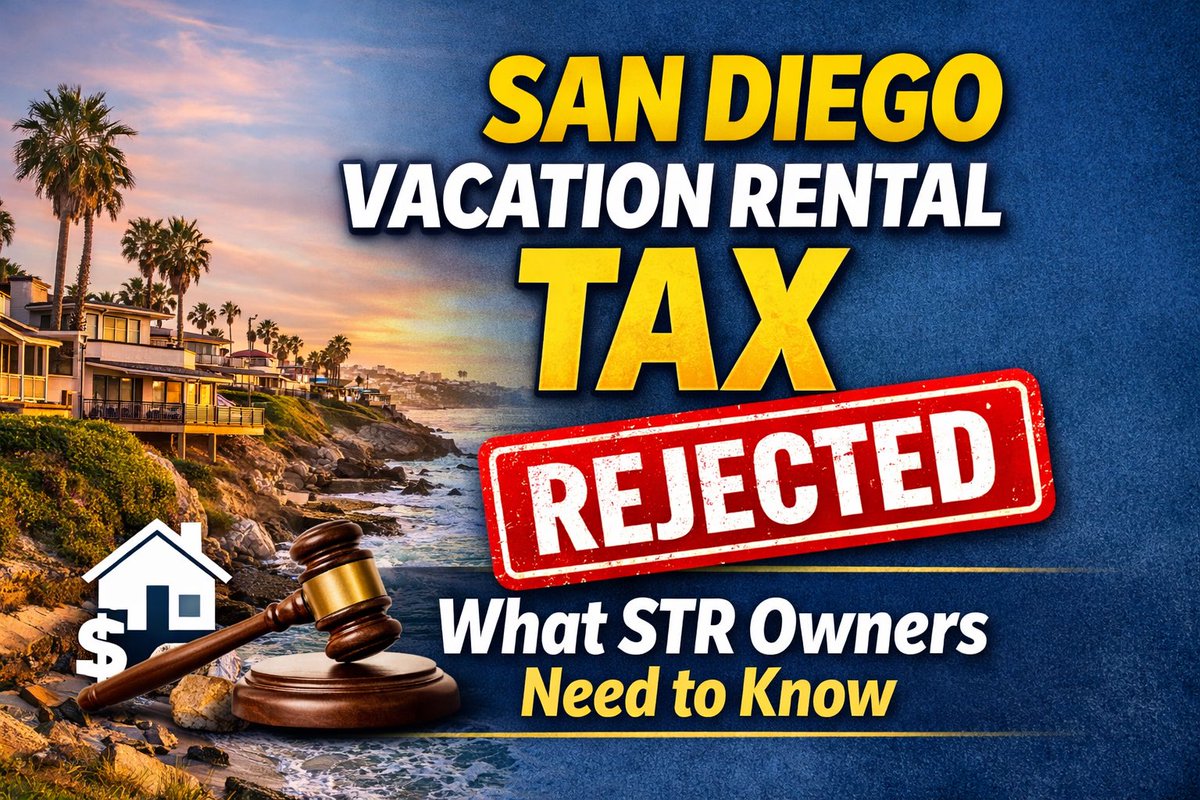
San Diego’s proposed “Empty Second Home & Vacation Rental Tax” was rejected in committee (3–2) on Jan 28, 2026. Big reminder for STR owners: the debate isn’t over—compliance + resilient underwriting matter.
Our breakdown: https://t.co/hRtjfXQJU1
#SanDiego #STR #VacationRentals
California started with the Gold Rush and might end with the Golden Exit.
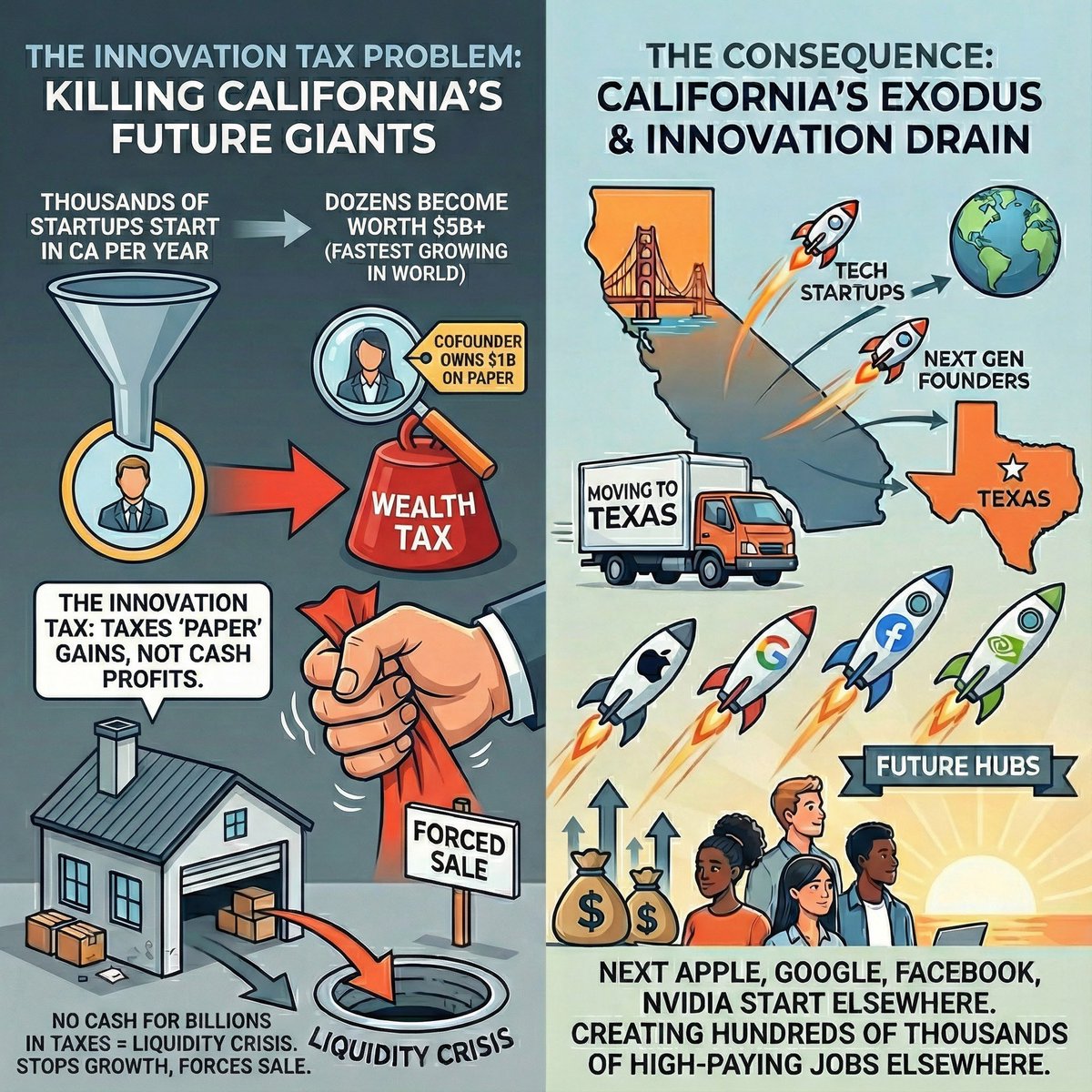
it has been underreported how much wealth has left CA because of the asset seizure tax being proposed.
a private poll was conducted amongst affected individuals a few days ago and 80-90% surveyed said they have already left CA in 2025 or will leave in 2026 if the ballot measure looks likely to pass.
$2-2.5T of assets gone, representing about $20B of annual revenue for the state government. and likely hundreds of thousands of jobs now at risk.
less reported is the bigger exodus underway from folks who are NOT directly affected but worry (as they should) that this law will quickly transition from billionaires to everyone else...
the initiative actually gives CA legislators the right to take anyone's post-tax assets anytime in the future based on a majority vote. this isn't about billionaires. it's a new "tax system" that simply destroys private property rights in America.
all private property is now public property.
even after paying your taxes, it's not legally your property anymore. it's the government's, you're just borrowing it.
legislators will decide what you get to keep and temporarily use each year.
countless founders, CEOs, and other business leaders are actively looking to move their companies out of state. not just tech, not just AI, not just billionaires, but the core engine of California's prosperity since 1847 is unraveling.
and here is how this initiative risks unraveling America:
- ~10 states have explicit or implicit prohibitions against an asset seizure tax...
- individuals affected in CA (and other states trying to do the same) will move to these states that endow private property rights.
- CA already has a $20-30B annual budget deficit, an unfunded ~$1T pension liability for public employees/unions, and $500B of debt outstanding. the state can not afford to borrow much more and will launch more asset seizures to meet its obligations.
- asset seizures will first transition to "millionaires" and eventually to the entire middle class as more asset seizures drive more people to leave the state.
- the deficit, debt, and job loss will spiral. the Golden Exit.
- no US state has ever declared bankruptcy. in addition to CA, dozens of other states face similar fiscal crises - legislators promised future benefits that can't be paid or theft and waste have been allowed to run rampant and unabated for years.
- struggling states will eventually request federal government assistance, as they always have in times of fiscal crisis, effectively "federalizing state debt".
- states not in crisis will declare "enough is enough", individuals in those states will refuse to pay their federal taxes (why pay for other people's mistakes?), some states may try to secede from the Union, and a constitutional and civil crisis will erupt.
this may seem far-fetched but it is the obvious domino effect of selectively deleting private property rights for some people in some states.
i am not a billionaire and this CA bill does not affect me, but i care about the country and the state of CA. i want both to thrive. it's obvious that there are people in CA in desperate need of support and assistance, and inequities may exist that need to be rectified, but eliminating private property rights is the wrong path for everyone.
a few alternatives to consider first:
1) with a $350B annual budget, CA can cut programs that result in theft and little-to-no benefit for citizens. $50B per year is likely recoverable.
2) if more taxes are needed, tax loans against unrealized capital gains (very few objections will arise), eliminate tax-free rollover of certain appreciated assets (real estate industry will fight), create a step up in basis on inheritance (some will fight but most will support). likely $10Bs of incremental revenue can be realized.
3) restructure all public retirement programs from Defined Benefit to Defined Contribution. eliminating the unfunded retirement liabilities ($1T+) will be the release valve on the future the state so desperately needs.
we must address what ails us without dividing and destroying our state, our nation, our home.
ignore the rhetoric, these are the facts.
Larry and Sergey can’t stay in California since the wealth tax as written would confiscate 50% of their Alphabet shares.
Each own ~3% of Alphabet's stock, worth about $120 billion each at today's ~$4 trillion market cap.
But because their shares have 10x voting power, the SEIU-UHW California billionaire tax would treat them as owning 30% of Alphabet (3% × 10 = 30%). That means each founder's taxable wealth would be $1.2 trillion.
A 5% wealth tax on $1.2 trillion = $60 billion tax bill, each.
That's 50% of their actual Alphabet holdings—wiped out by a "5%" tax.
Section 50303(c)(3)(C) of the 2026 Billionaire Tax Act states: "For any interests that confer voting or other direct control rights, the percentage of the business entity owned by the taxpayer shall be presumed to be not less than the taxpayer's percentage of the overall voting or other direct control rights."
This means if a founder holds shares representing only 3% of economic interest but 30% of voting control (through Class B supervoting shares), the tax would presume their ownership stake is at least 30% for valuation purposes, not 3%.
The wealth tax is poorly defined and designed to drive tech innovation out of California.
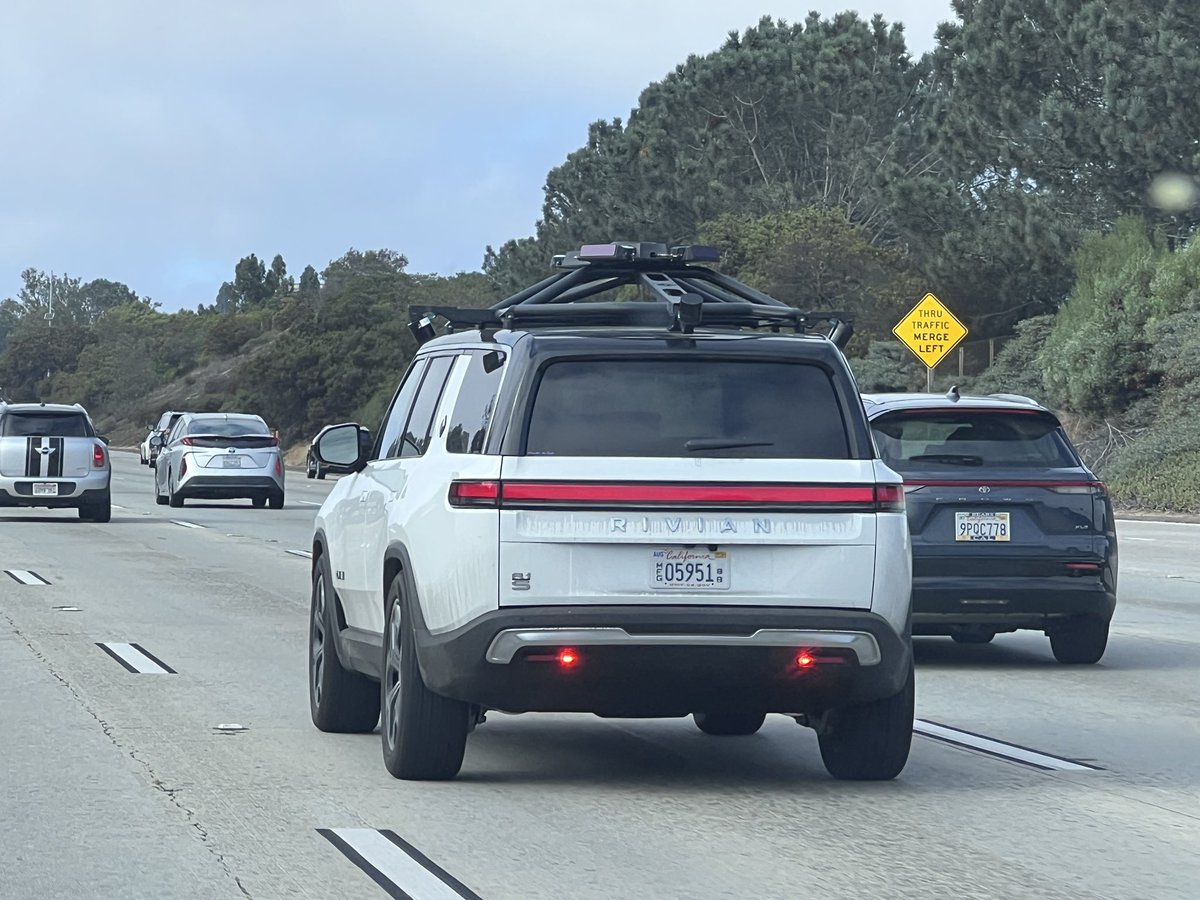
🚙💡 Just spotted this Rivian R1S on the highway rocking manufacturer plates and what looks like some serious roof-mounted sensors. 👀
Is Rivian quietly testing an autonomous rig in the wild?
Or maybe prepping for some new adventure tech package?
Either way — feels like the future is cruising right past us on the 5. ⚡️
Would you trust a fully autonomous Rivian for your next road trip?
#Rivian #EV #AutonomousDriving #FutureOfMobility
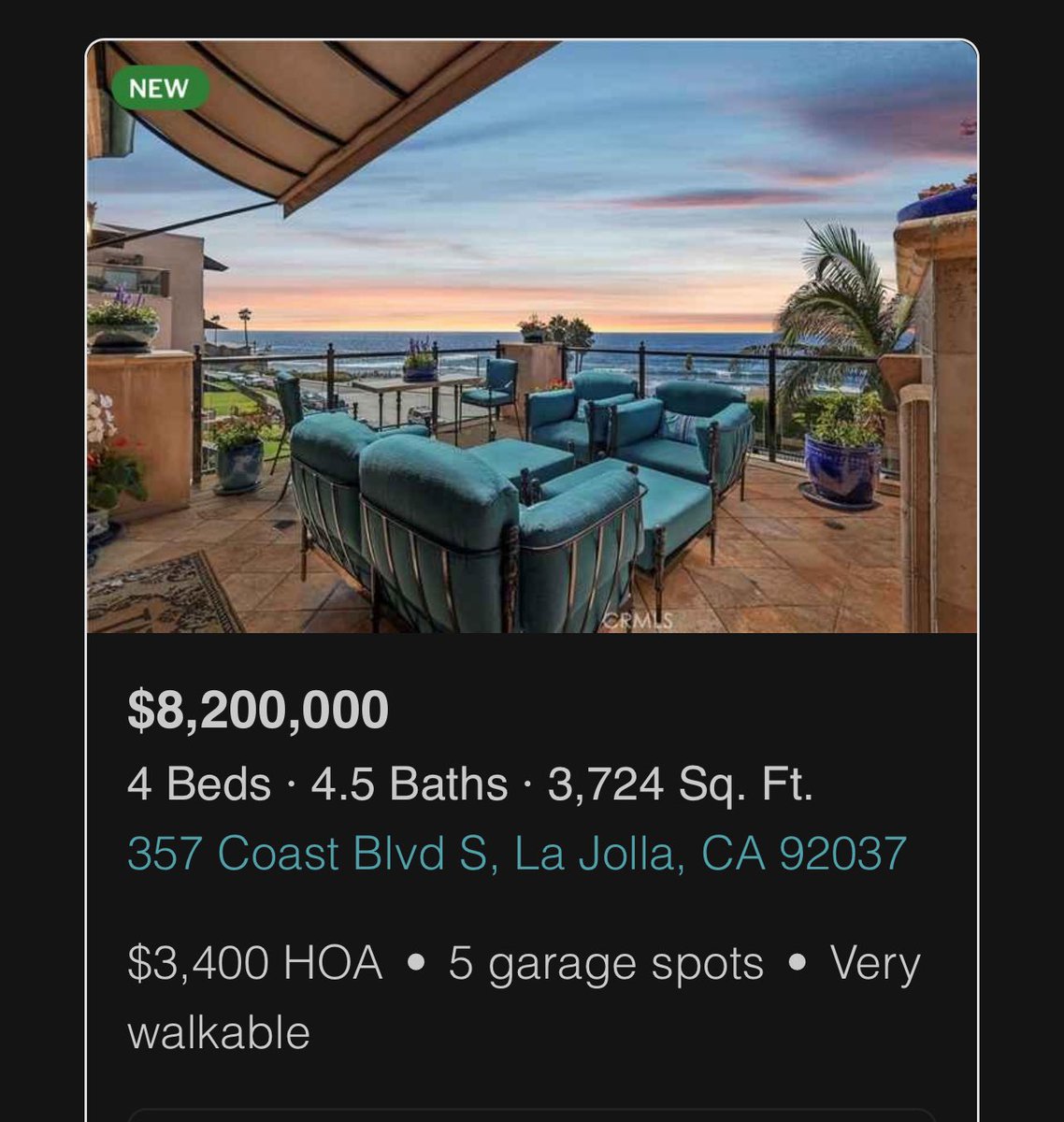
@jonfitzsimon@housleyd All I could find for amenities is access to a five car gated garage (and the cameras).
I can’t imagine it costing $120K annually to maintain the structure. Strange.
💸 HOA fees just hit $3,400/month at this community.
That’s $40,800 a year… just to exist in your own home.
Most expensive HOA of all time? Or are we just getting started… 👀