🎯now let’s do BELOW THE LINE workers.
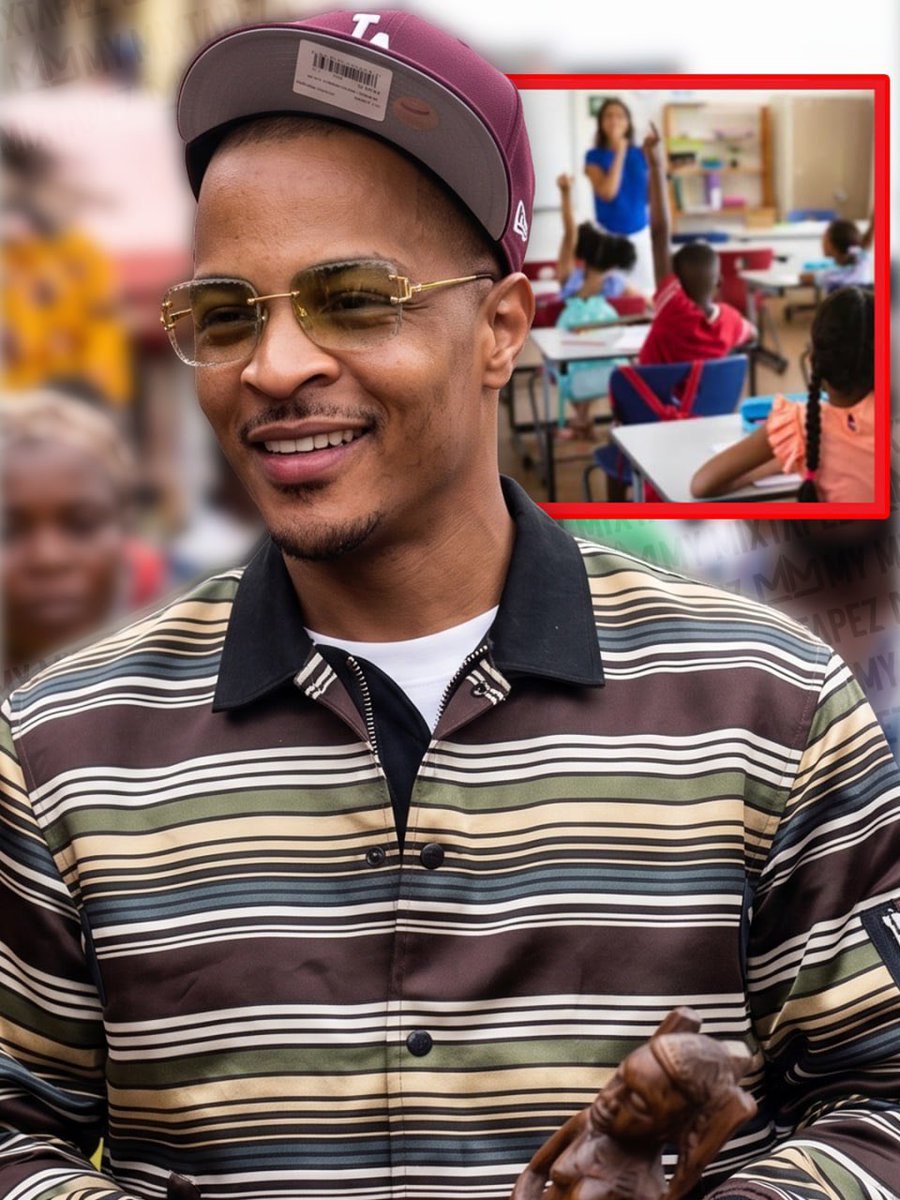
I sold my Astoria, Queens Penthouse to survive, and now I drive Lyft in the early am!
And to think I had an award winning career for 25 years before the strikes!
I was thinking about RETIRING, now I am hustling like a 20 year old and that’s TOO REAL.
✌️💯🇺🇸
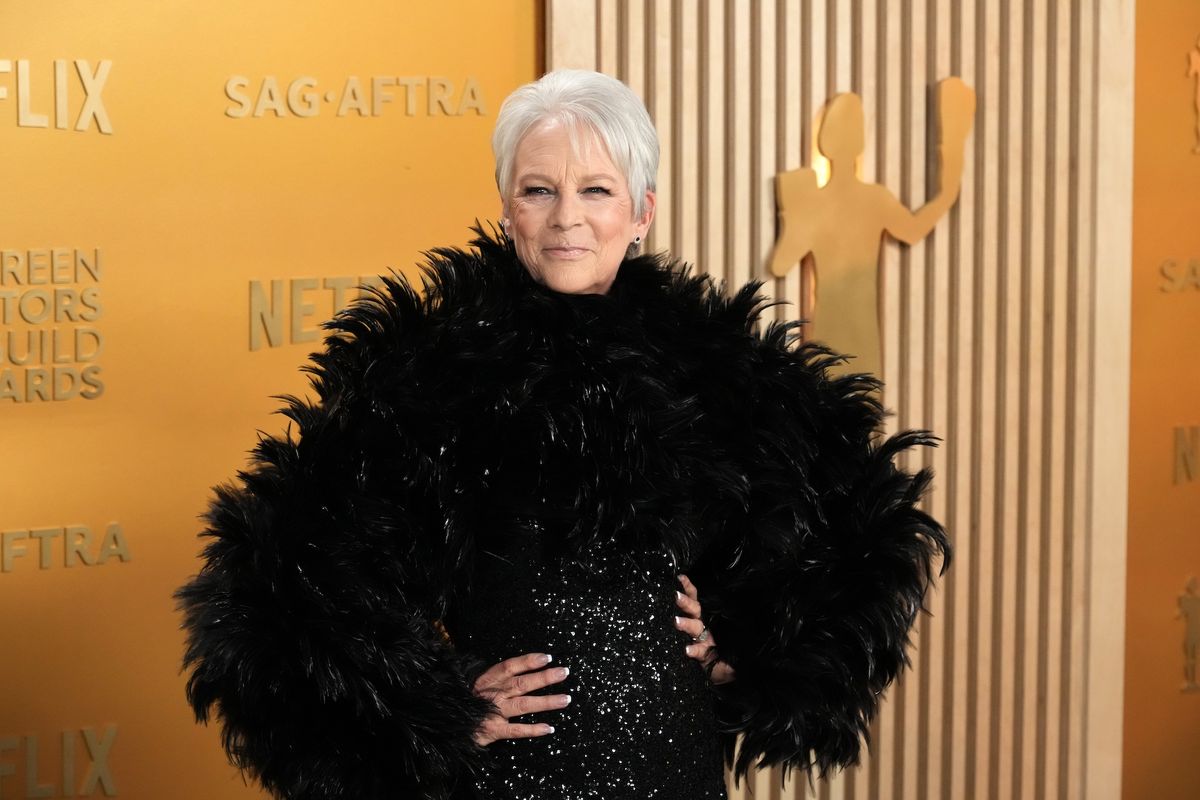
Jamie Lee Curtis has seen Hollywood’s crisis up close in her shift to producing.
“I see the lists of actors who are available for work, and when you start going down these lists, these are people who have starred in movies, had their own TV series — and they’re willing to go on tape for a small part in either your movie or your TV show. It is a desperate time. There is very little work available.” https://t.co/j64E4CcDn6
The doors had no bass! The gypsies had no homes! Don’t let that SCARE you, let that FREE you, because when you’re free-flying with the doors man, you don’t need no safety net! - ♥️kids in the hall
@Cbluepacific Agree 💯. These are the places where life happens and people are made (and fed!) My bapou owned a diner in queens many ages ago… sold it to his dishwashers after 30 years!
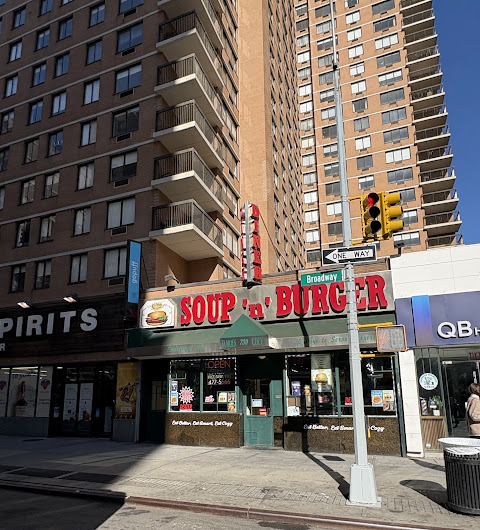
Say goodbye to another old-school NYC diner. Ownership of the Cozy Soup 'n' Burger on Broadway at Astor Place announced that the 54-year-old diner is closing on June 21. The reasons: Rising costs and declining business.
Just one day after ending "The Late Show" on CBS, Stephen Colbert returned to TV — to host a public access show with rocker Jack White in Monroe, Michigan.
Appearances by Jeff Daniels, Eminem and Steve Buscemi.
Say goodbye to another old-school NYC diner. Ownership of the Cozy Soup 'n' Burger on Broadway at Astor Place announced that the 54-year-old diner is closing on June 21. The reasons: Rising costs and declining business.
Christopher Nolan interviewing Michael Mann, Al Pacino and Robert De Niro on the iconic coffee shop meeting in Heat...
Nolan: So for all three of you, I mean, one of the great and memorable scenes in the film - there are many - but the iconic coffee shop meeting that people were so struck by when the film came out, seeing two such great actors who had not acted in the same scene together before, together. There was such mythology around it at the time. I remember several friends of mine being convinced that you'd shot it on different days because there was no two-shot…
(Michael Mann laughs)
Nolan: Was it single camera? Was it two cameras? Did you have two cameras so you could shoot both close-ups at the same time? How did you approach that momentous event?
Mann: It started with this consummate respect for the great artists that these two guys are. We talked about the scene and we analysed the scene… We didn't want to do the scene until we were at Cape Mandelini's. And then it was so ingrained that I knew that in all the little tiny organic details it would be different from take to take. So what I wanted to do was shoot with two cameras, two over the shoulders – I knew that there would be an organic unity to one take, and it would be a slightly different organic unity to another; because if you look at it very carefully, if Bob shifts his hand like this a little bit, right in the middle of dialogue, Al is doing something to counter it - because maybe he's shifting his positions so he can get closer to a weapon…
Nolan: What do you remember about that shoot?
Pacino: I do remember that Bob said – at first I wondered about it and then I thought how right he is – he said, “let’s not rehearse it.”
Nolan: Because you love to rehearse.
Pacino: Oh yeah. And Bob does too.
De Niro: No, I do too at times, but this kind of scene we didn't have to.
Pacino: But the thing is, what Bob said is so true about rehearsal – and that is that there is no sense in rehearsing if the people around you don't know how to rehearse. That is an important factor. Might as well not rehearse or rehearse very little. But it's true because it's a certain kind of thing and people either respond to it or they don't. And so, they could be great actors, of course, but they don't want to rehearse. I've had experiences like that…
De Niro: Well, it was also that we were stationary. So, it wasn't we had to sort of rehearse blocking or anything and discover how our physical moves would be. We were kind of, there, though there were subtle moves in the scene itself, obviously. But anyway, and we started late and.... we didn't start till after lunch or dinner, which was really like one o'clock in the morning...I loved the scene and I wanted, you know, really wanted it to be as best as it could be. So I was a little unhappy that we started so late in the middle of the night...
Mann: It was actually intentional...
De Niro: I know, he wanted to tire us out.
Nolan: But getting into a scene like that, that you know is going to be such a significant part of the film, huge expectation from both of you as you sit down to perform it. At the end of that night, did you know you had it? Did you feel it?
Pacino: I never knew that.
De Niro: You never know that.
Mann: I knew we had it.
Nolan: You knew. That's your job.
Pacino: I'd like to do it again actually.
Mann: (laughs) We’ll re-shoot it… We normally would rehearse scenes. That scene we talked about, we all as a group decided, you know, we wanted to just talk it through and save it for the event of shooting it, which was the only scene we probably did that with. But I tend to not want to rehearse things to the point where I feel like I wish I'd shot it. That's a disaster – I think things will be perfect once, and they'll never be perfect. They'll never be 100% twice. They'll only be 100% once. You want that happening in front of the camera.
From a panel discussion following a special screening of Heat at the Samuel Goldwyn Theater on September 7, 2016.
Michael Mann couldn't shoot Collateral on film. The cameras couldn't see Los Angeles at night the way he wanted. So he picked a digital camera no other major Hollywood movie had used. The crew was still building parts for it during the shoot.
Mann was chasing a specific look. Around 10 or 11pm in LA winters, a low cloud bank drifts in off the ocean and settles about 1,200 feet up. The orange sodium streetlamps below light up the bottom of those clouds and turn the whole sky into a soft, hazy glow. Mann said it looked like winter in England.
Movie film couldn't see that. To shoot a single downtown block clearly, the crew would have had to bring in massive lights and brighten up entire streets just to make the buildings visible. Even with the lens open as wide as it goes to pull in any available light, almost nothing outside the foreground would stay in focus.
The camera Mann picked was the Thomson Viper, brand new and not really ready for production. There was no memory card or storage inside the body. It had to be plugged into a separate hard drive with a cable.
About 80% of Collateral was shot digital. The other 20% on regular film was mostly the Korean nightclub shootout, where the bright club lighting gave the crew plenty to work with.
The coyote scene only exists because of the digital camera. Mann didn't plan it. A small pack of coyotes wandered across an empty street between takes, and because the camera could see in near-darkness, the crew just rolled. On film, that shot would have required lighting up the whole intersection first.
The helicopter shots over the city work the same way. Palm trees against the night sky, the downtown skyline lit only by the city's own light. On 35mm film, none of that would have shown up.
The movie cost $65 million to make and earned $220 million worldwide. It won Best Cinematography at the BAFTAs, the British version of the Oscars, and helped push Hollywood toward digital cameras for night shoots.
One catch. That orange light Mann chased is mostly gone now. Starting in 2009, LA began replacing its sodium vapor streetlamps with white LEDs. By 2013 the city had swapped out 141,000 of them. Today the lighting system is 98% LED. The Los Angeles you see in Collateral doesn't exist anymore.
Michael Mann couldn't shoot Collateral on film. The cameras couldn't see Los Angeles at night the way he wanted. So he picked a digital camera no other major Hollywood movie had used. The crew was still building parts for it during the shoot.
Mann was chasing a specific look. Around 10 or 11pm in LA winters, a low cloud bank drifts in off the ocean and settles about 1,200 feet up. The orange sodium streetlamps below light up the bottom of those clouds and turn the whole sky into a soft, hazy glow. Mann said it looked like winter in England.
Movie film couldn't see that. To shoot a single downtown block clearly, the crew would have had to bring in massive lights and brighten up entire streets just to make the buildings visible. Even with the lens open as wide as it goes to pull in any available light, almost nothing outside the foreground would stay in focus.
The camera Mann picked was the Thomson Viper, brand new and not really ready for production. There was no memory card or storage inside the body. It had to be plugged into a separate hard drive with a cable.
About 80% of Collateral was shot digital. The other 20% on regular film was mostly the Korean nightclub shootout, where the bright club lighting gave the crew plenty to work with.
The coyote scene only exists because of the digital camera. Mann didn't plan it. A small pack of coyotes wandered across an empty street between takes, and because the camera could see in near-darkness, the crew just rolled. On film, that shot would have required lighting up the whole intersection first.
The helicopter shots over the city work the same way. Palm trees against the night sky, the downtown skyline lit only by the city's own light. On 35mm film, none of that would have shown up.
The movie cost $65 million to make and earned $220 million worldwide. It won Best Cinematography at the BAFTAs, the British version of the Oscars, and helped push Hollywood toward digital cameras for night shoots.
One catch. That orange light Mann chased is mostly gone now. Starting in 2009, LA began replacing its sodium vapor streetlamps with white LEDs. By 2013 the city had swapped out 141,000 of them. Today the lighting system is 98% LED. The Los Angeles you see in Collateral doesn't exist anymore.