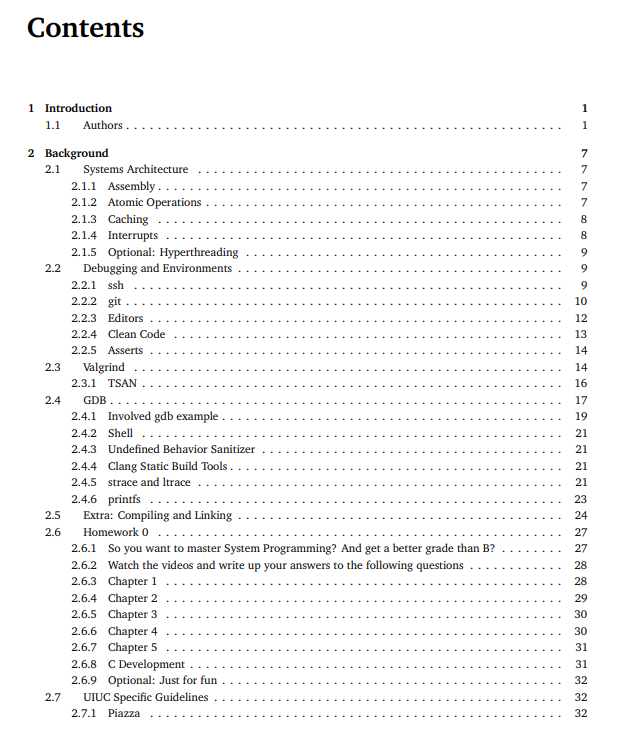
a professor at Illinois got frustrated with existing systems programming textbooks
so he started a Wikibook with students helping write it
it covers C, processes, threads, memory, networking, filesystems, scheduling, and security
all in one free book
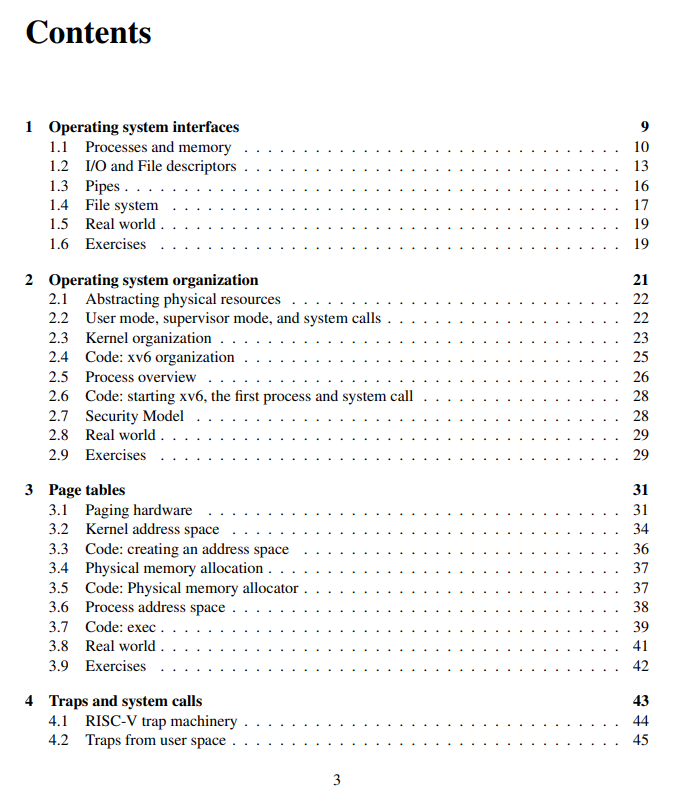
MIT teaches operating systems by giving students a complete Unix-like kernel and asking them to modify it.
it's called xv6, a ~6,000-line reimplementation inspired by Unix V6.
processes, system calls, virtual memory, and filesystems are all there
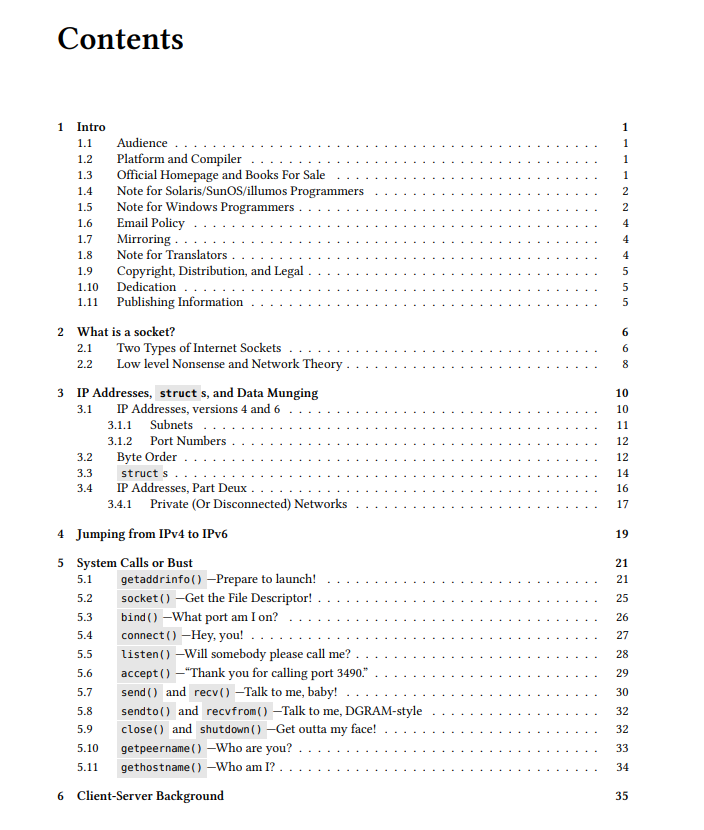
someone asked Beej how sockets work in C. he got tired of explaining it. so in 1995 he put it all online.
it's been the definitive socket programming guide for 30 years.
it covers everything: TCP, UDP, IPv4, IPv6, non-blocking I/O, select(), poll().
graduate OS courses worldwide assign it. it's funnier than any technical book has a right to be.
it's free and always will be.
JUST IN: How the Rust Standard Library Verification Contest Scaled Past Manual Proof Engineering
> Rust stdlib verification contest scaled via Autoharness: 12k+ functions checked for UB, no new safety bugs found, gaps remain.
Pnpm 12 written in Rust is now stable!
> pnpm’s Rust roadmap (pacquet) outlines staged parity: headless frozen-lockfile installer first, then full resolution, then remaining commands; issue now closed.
https://t.co/15JDHjkPs3
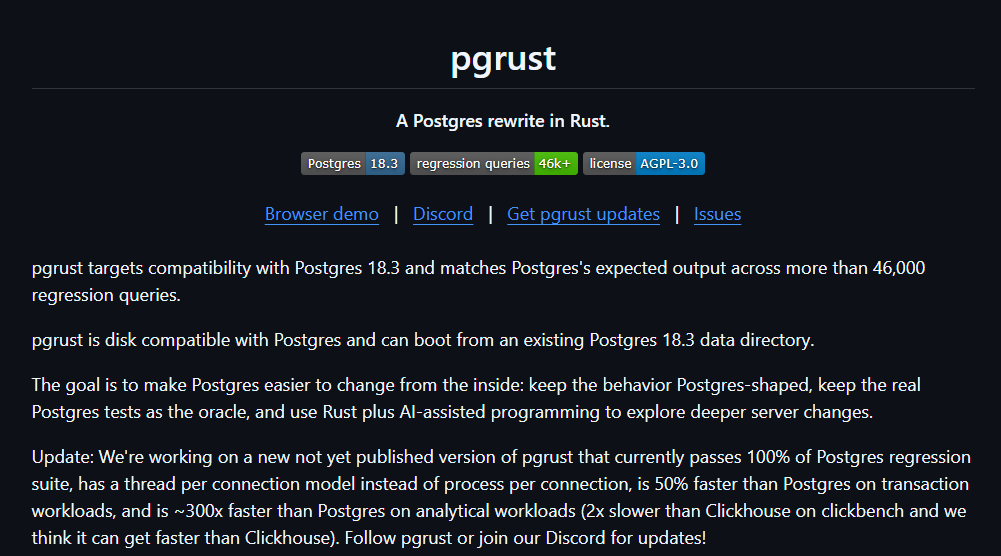
Reescribieron PostgreSQL completo en Rust... y ya pasa el 100% de los tests oficiales de Postgres!
Ojo, no es un fork, es una reimplementación desde cero en Rust que actualmente:
• Pasa las 46.066 queries del regression suite de PostgreSQL 18.3
• Es disk-compatible (puedes bootearlo directamente con tu data directory actual)
• Tiene demo funcional en el browser
El objetivo Es hacer que una de las bases de datos más complejas del mundo sea mucho más fácil de modificar, extender y optimizar desde dentro usando Rust + programación asistida por IA.
Y lo más loco: ya existe una versión WIP (aún no publicada) que promete ser 50% más rápida en workloads transaccionales y ~300x más rápida en workloads analíticos.
REPOOO👇
Features landing in the next few weeks:
- Bookmarks
- Helix Jump
- Code lens
- Markdown Renderer - Gif support, GFM callouts ([!IMPORTANT], [!WARNING], etc)
- `git: view commit` action to look up commits via ref
Perry is a TypeScript compiler written in Rust that targets nine platforms.
One of them is the Apple Watch. Nobody asked for TypeScript on watchOS.
The maintainers shipped it anyway. Native binaries. No Node, no Electron.
The best software is always written by people who never asked permission.
"Programming was never about the code" means that it was never about typing the code. In this sense, AI is replacing neovim and typists, not programmers.
Programmers will always have a lot of work to do.
Linux kernel 7.1 introduces a new in-kernel NTFS driver, a complete ground-up rewrite that delivers native read and write access to Windows NTFS volumes directly within the kernel without any userspace tools.
It replaces the slower FUSE-based NTFS-3G and the previous NTFS3 driver. Performance gains include 3-5 percent faster single-threaded writes, 35-110 percent faster multi-threaded writes, and mounting times for large drives up to four times quicker. The driver also features lower CPU overhead, better integration with modern kernel infrastructure, and improved reliability.
This update marks a major step forward for Linux-Windows storage interoperability.
Via:tomshardware
remember when 512MB RAM was considered massive?
programmers wrote code like every byte mattered. optimized everything. squeezed performance from nothing.
suddenly nobody cared about efficiency anymore. just throw more RAM at it, problem solved.
now we have 32GB RAM and Slack uses 2GB just to show text messages. Electron apps eat memory like it's free candy.
we got better hardware and built worse software. abundance made us lazy.
slow internet is so much worse than no internet
without internet you go for a walk, read a book or something
with slow internet you become capable of things you cant explain to a jury