Revolut has spent ten years telling you you'd never need to walk into a bank again.
Now it's building airport lounges.
If you're one of 75 million customers. Odds are you're on the free plan. And that's the problem Revolut is quietly trying to solve.
Free customers don't make it money. The money is in the paid plans. Plus, Premium, Metal, Ultra. A monthly fee for better perks, and the higher you go the more you pay.
That subscription is the best kind of money there is. It lands every month whether you touch the app or not.
There's just one problem with it. You can cancel in one tap.
So how do you stop someone leaving when leaving is that easy?
You give them something they'd feel losing.
Amex has run this play for years. Nobody really pays $895 a year for a metal card. They pay for the lounge. The quiet room, the free drink, the feeling of having made it. That feeling is what stops them cancelling, long after the maths stops making sense.
Revolut is copying it, with one difference. It isn't buying you a pass to someone else's lounge. It's building its own, with the biggest lounge operator in the world. The first opens in Copenhagen in 2027.
Here's the part worth understanding if you work in marketing:
The lounge isn't a gift. It's a hook. Built to reach you at the exact moment you feel richest and most relaxed, and quietly make the paid plan feel impossible to walk away from.
That's not a criticism. It's just worth seeing clearly.
The best perks are never really about the perk. They're about making leaving that perk behind feel like a loss.
Friends, this is where I am learning Sanskrit from. This is for those who want to learn Sanskrit from first principles - from Ashtadhyayi. And if that sounds intimidating, don’t worry, there are people to hand-hold you all the way. The support is just amazing. Dr Sridhar of Vidyasvam has developed a unique course to make sure you learn the most important grammar principles and don’t wade in oversimplified spoken Sanskrit thinking you’ve got it. He makes you dive in deep waters but has a team of people helping you to navigate.
Ever wondered if you’re overpaying for your stocks? Let's understand the two key metrics to help you assess whether a stock is over or undervalued.
#Investing#StockMarket#FinanceTips
One good thing about all the post-pandemic excess in the stock market is that the Indian stock market has become a lot younger.
Of course, many of these young investors are doing a lot of things they shouldn't be doing. But they are better off making all the mistakes when they are young and have very little to lose, than later in life when they have more money and responsibilities.
Reading and learning are important, but money mistakes are the best form of financial literacy. 1/2
A new era in capital markets - Mark the date - Monday 14th October 2024
SEBI has over last 3-4 years taken numerous steps to ensure safety of client assets from any misuse by brokers.
Currently when any client buys any stock, the same is first transferred by exchange to the brokers pool account and thereafter the broker transfers the same to the clients demat account.
In another giant leap, exchanges will wef. 14th October 2024 transfer stocks bought by an investor directly to his demat account. This in a way will eliminate the role of a broker in payout process to a significant extent.
As a risk mitigation process, in case the stocks being transferred to the client accounts are not fully paid for by the client or have been bought under Margin Funding(Pay Later), the same will be marked as pledged in favour of the broker as and when they are transferred by the exchange to clients demat. The pledge will be released once the client pays in full.
This in my view is another big step by the regulator to ring-fence client assets from misuse. In recent times regulators have made many other changes like Segregation of client funds, Block Mechanism, Pledge Mechanism, Leverage restrictions in F&O, Upstreaming of client funds etc which have made capital markets a lot secure.
As I said in the start, a new era begins.
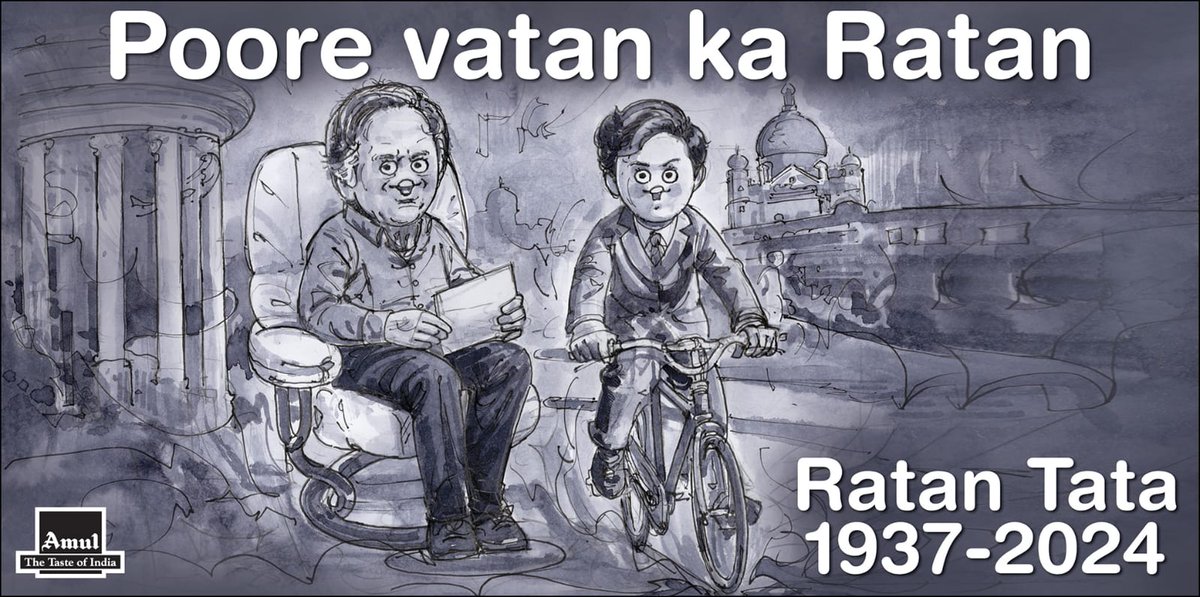
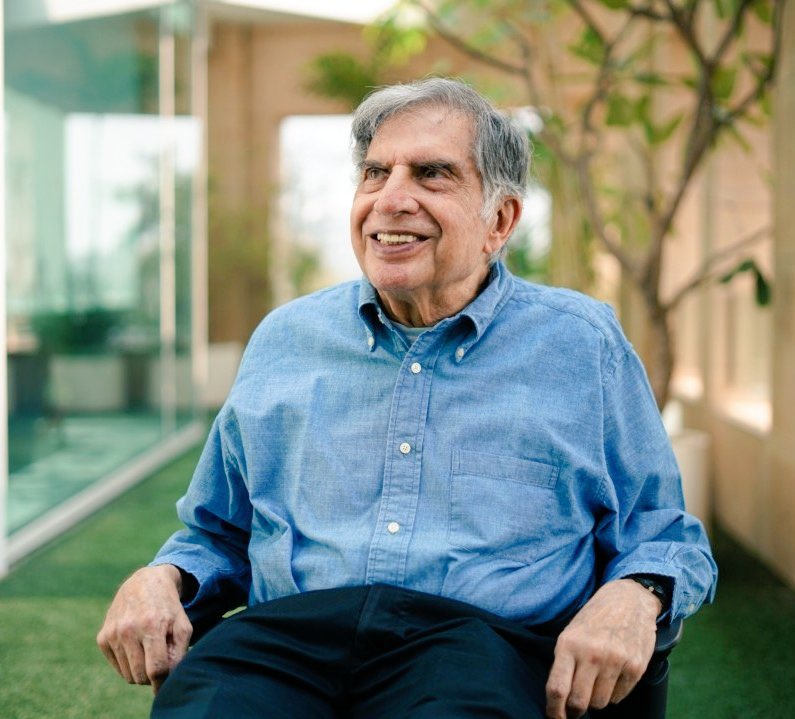
The clock has stopped ticking. The Titan passes away. #RatanTata was a beacon of integrity, ethical leadership and philanthropy, who has imprinted an indelible mark on the world of business and beyond. He will forever soar high in our memories. R.I.P
The new updated technicals widget on Kite web now gives you all the key market information in one place.
Powered by @StreakTech, along with a quick technical summary of stocks and F&O contracts, you can now check the market heatmap, top gainers & losers, scanners, strategies, and more.
@zerodha@StreakTech Thank you so much for all the new features. Please consider adding two more - additional warchlists and dividend received tracking for portfolios holding. Thank you.
While SEBI is tightening rules to make the markets safer on the one hand, it is also making things simple on the other.
Starting from October 14th, shares bought will be directly credited to the customer's Demat account through net settlement. This significantly simplifies our DP process, which today involves receiving shares for the entire group of clients and then allocating them based on purchases made, i.e., gross settlement.
And this is much safer, too. A broker from now on will never be able to touch client securities ever, which is possible today when you buy stocks and are not yet credited to your Demat.
By the way, another change that started yesterday is that you can use 100% of funds from sale proceeds for further purchases. Until now, you could only use 80% of the funds if you bought on the same day. 1/2
Adidas vs Abibas is old, check this 🚨
Scammers are now targeting @zerodha with #FakeTradingApps on the App Store, exploiting trusted brokers brands to run sophisticated scams.
Stay vigilant, folks! Apple Intelligence is here to make dollars for Apple, not to protect you.
Equity delivery will continue to be free at @zerodha. As of now, we are not making any changes to our brokerage.
From today, Oct 1, 2024,
For options: STT increases to 0.1% from 0.0625%, and transaction charge decreases to 0.035% from 0.0495%.
This results in the cost of trades seeing a net increase of 0.02303% or Rs 2303 per crore of premium on the selling side on NSE and of 0.0205% or Rs 2050 per crore on BSE.
For futures: STT increases to 0.02% from 0.0125%, and transaction charge decreases to 0.00173% from 0.00183%.
This results in a net increase of 0.00735% or Rs 735 per crore of futures turnover on the selling side.
You can check out our brokerage calculator to see the new charges.
Since STT is charged on the entire contract value for futures, whereas in options, it is charged only on the premium, the impact will be much larger for futures traders. 1/2
Attrition rate in IT companies reflects employee turnover which impacts project continuity, and overall business efficiency.
LTIMindtree tops the list while Tech Mahindra has the lowest attrition rate!
Share your thoughts below 👇
#hcl#infosys#wipro#tcs
10 important charts every investor must know: 👇
(1) Consumption story in India is still in its early stages, and since it's far behind China and the USA, there are great opportunities for growth.