What we call radio, visible light, X-rays and gamma rays are all part of the same electromagnetic phenomenon.
The visible range is just a tiny window our eyes happen to detect.
"Adoro te devote, latens Deitas,
quae sub his figuris vere latitas…"
"I devoutly adore You, hidden Deity,
truly hidden beneath these appearances"
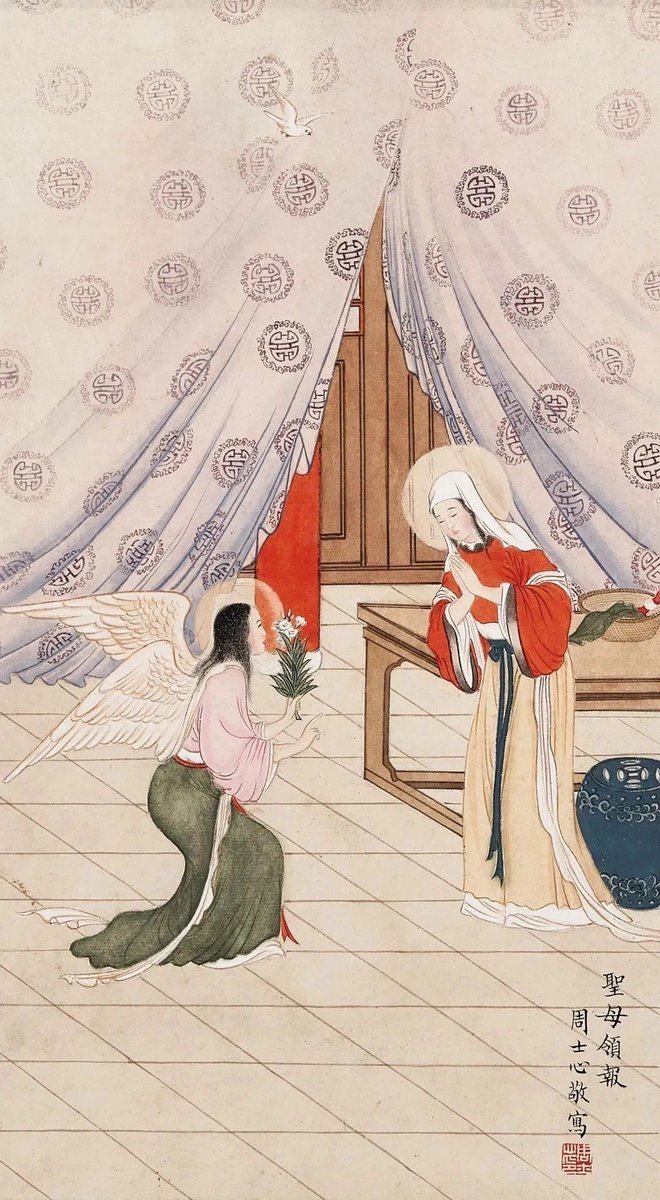
today is st. thomas aquinas day, priest and philosopher that worked with aristotelian philosophy trying to reconcile reason and faith. for humans, God is hidden. we cannot see or fully comprehend God, but our understanding is not null, it's only limited cause his presence is beyond the material world or direct perception
“As a man who has devoted his whole life to the most clearheaded science, to the study of matter, I can tell you as a result of my research about the atoms this much: There is no matter as such! All matter originates and exists only by virtue of a force which brings the particles of an atom to vibration and holds this most minute solar system of the atom together. . . . We must assume behind this force the existence of a conscious and intelligent Mind. This Mind is the matrix of all matter.”
― Max Planck, The New Science
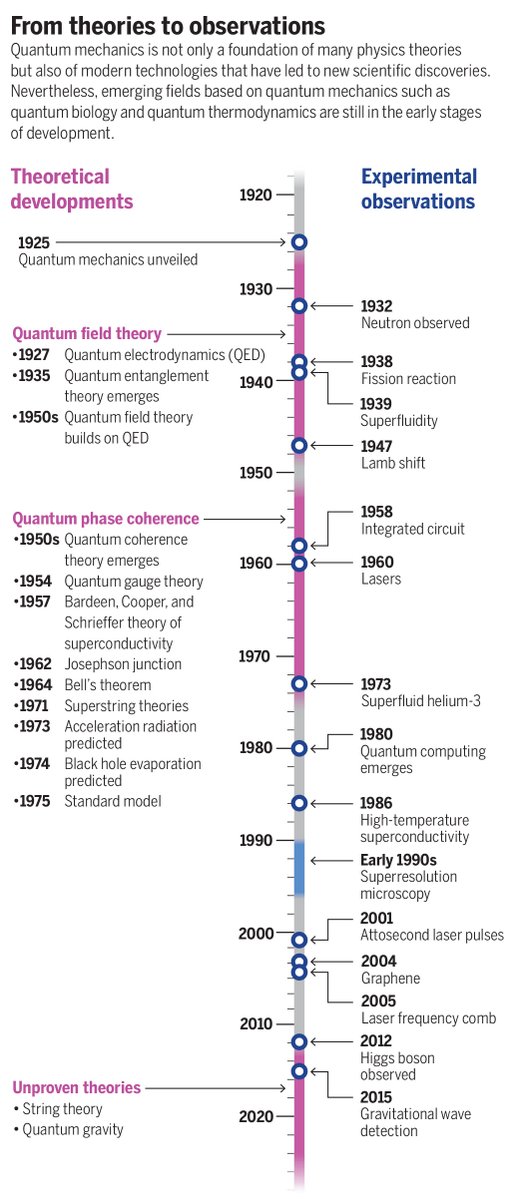
Quantum mechanics has gone from a theory in test to becoming the foundation of new technologies.
Learn more in a new #SciencePerspective that looks at the last 100 years of #QuantumMechanics: https://t.co/dJVd43rqZm
🧠 Déjà vu might not be a brain glitch — it could be your mind remembering the future, scientists say.
That eerie sensation of déjà vu—the feeling you’ve lived a moment before—may not be a brain glitch after all.
Some scientists believe it could be the mind briefly tapping into future experiences. This theory draws from the concept of precognition, the idea that the brain can form memories of events before they occur.
Building on research dating back to the 1990s, scientists are revisiting whether human consciousness moves strictly forward through time—or if it can occasionally loop backward, entangling with moments that haven’t yet happened.
The theory suggests the brain might function like a two-way radio, transmitting and receiving signals between past and future versions of ourselves. In this view, déjà vu and gut feelings may be subtle hints from the brain’s nonlinear processing of time. Researchers also point to quantum models of consciousness and even historical CIA studies into precognition as evidence that human perception may stretch beyond conventional timelines.
While the idea remains speculative, it challenges our understanding of memory, free will, and reality itself—inviting a mind-bending question: what if déjà vu is your future self calling to say hello?
Source: “Déjà Vu Isn’t a Glitch, Scientists Say—It’s Possibly Your Brain Slipping Back From the Future,” Popular Mechanics, 3 October 2025.
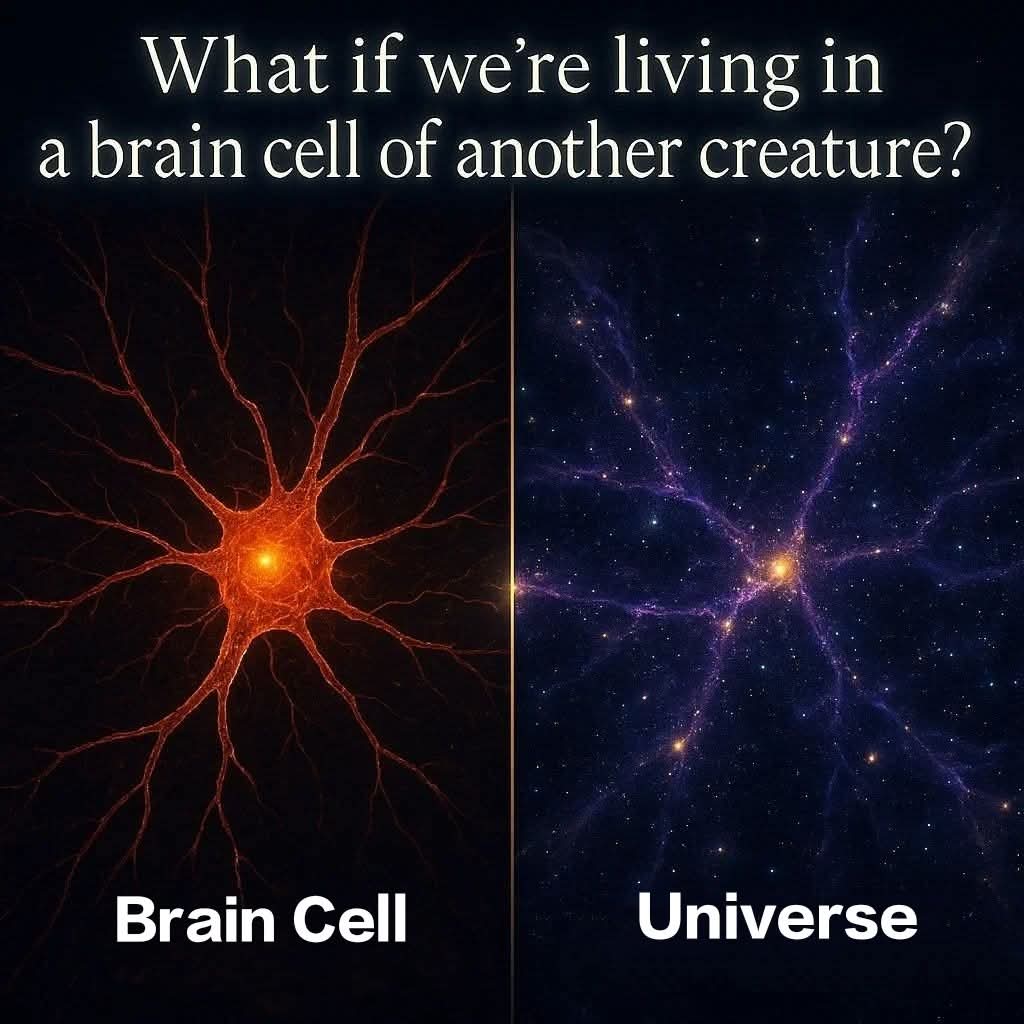
🌌🧠 It’s mind-blowing to realize that brain cells and the universe share a striking similarity in their network structure. Both are made up of countless nodes — neurons in the brain and galaxies in the universe — connected by delicate filaments. The brain contains around 86 billion neurons, while the universe holds at least 100 billion galaxies, woven together in a vast cosmic web. Yet, despite this visual and structural resemblance, they’re worlds apart in composition and purpose. The universe is dominated by dark energy and dark matter, while the human brain is mostly water. The brain processes information and thought, while the universe’s filaments transfer energy and matter across unimaginable distances. It’s a beautiful reminder that patterns repeat themselves — from the smallest neuron to the grandest galaxy.
#Universe #SpaceExploration
Fascinating visualization of a black hole surrounded by an accretion disk, illustrating how light is warped by its intense gravitational fields.
📽: NASA/JPL-Caltech/R. Hurt (IPAC)
*Then, my noble friend, geometry will draw the soul towards truth, and create the spirit of philosophy, and raise up that which is unhappily been allowed to fall down."
- Plato, Republic
El carácter chino más difícil del mundo significa 'biáng', un plato de fideos.
Se compone de 58 trazos en su forma tradicional y se codificó en Unicode solo en 2020.
https://t.co/6PC7MWvDHj