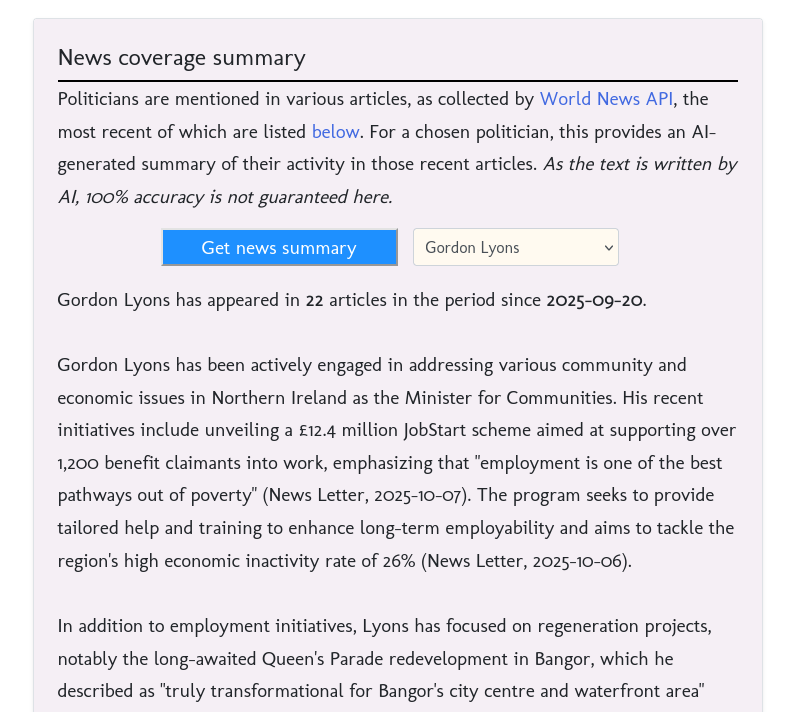
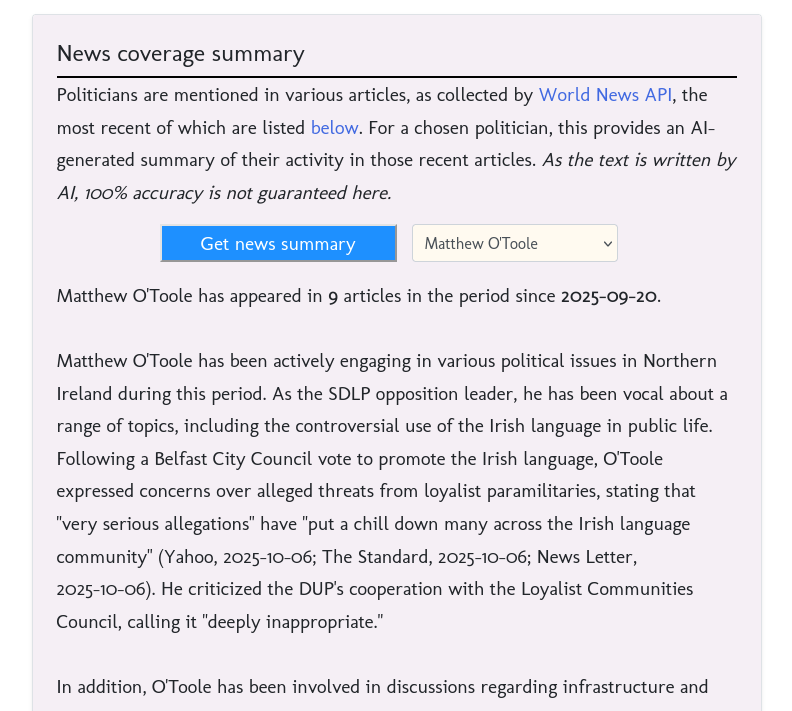
The news page gives summaries of recent coverage, searchable by person. These are AI-powered and give a good guide to recent activities. Also available on the individual profile pages.
https://t.co/di2FdOVLtu
https://t.co/vqRkRwcX5G
https://t.co/pwj1oJBGAs
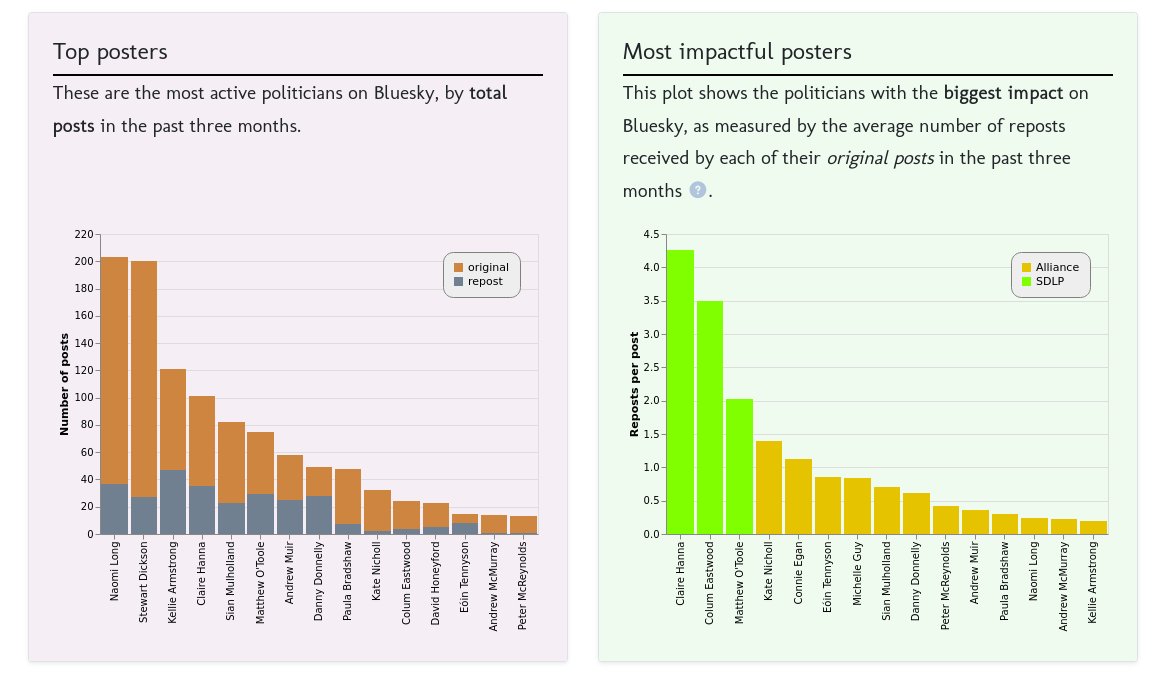
A few updates recently. Twitter's data became prohibitively expensive to access, so NIPG now tracks Bluesky activity instead. It is much less widely used than Twitter by NI politicians, and skewed towards two parties. If everyone could switch over to Bluesky, that'd be great.
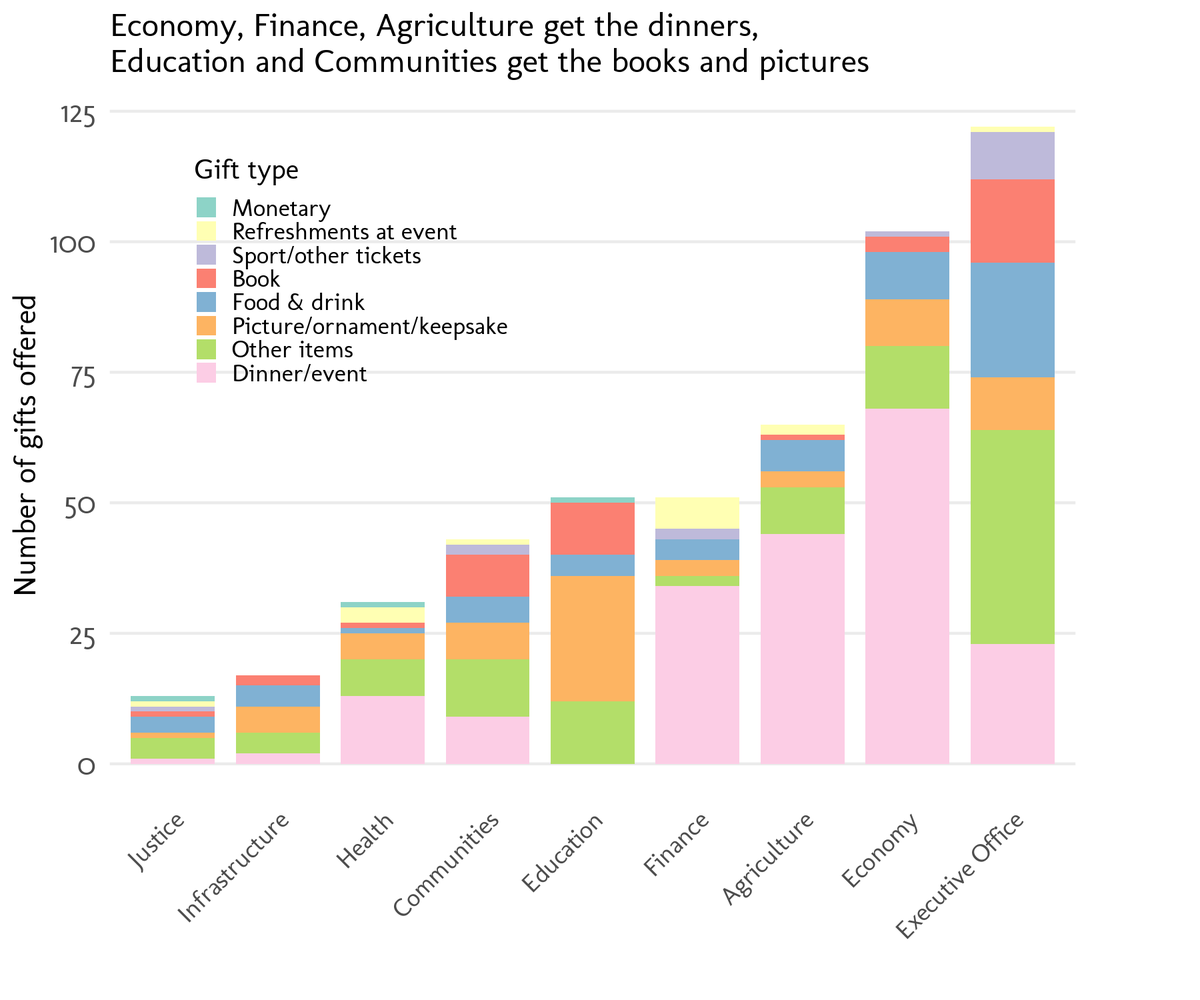
Types of gifts received by NI Assembly departments in recent years. Education ministers get lots of homemade, keepsake gifts.
See the full gifts & hospitality dataset here https://t.co/bFX3GZmWjJ
@opendatani
A few new datasets are on NIPG now, via @opendatani. Here is the value of gifts received by NI Assembly departments (not always kept/used personally by the minister) in recent years.
Explore the full gifts & hospitality data here: https://t.co/bFX3GZmoub
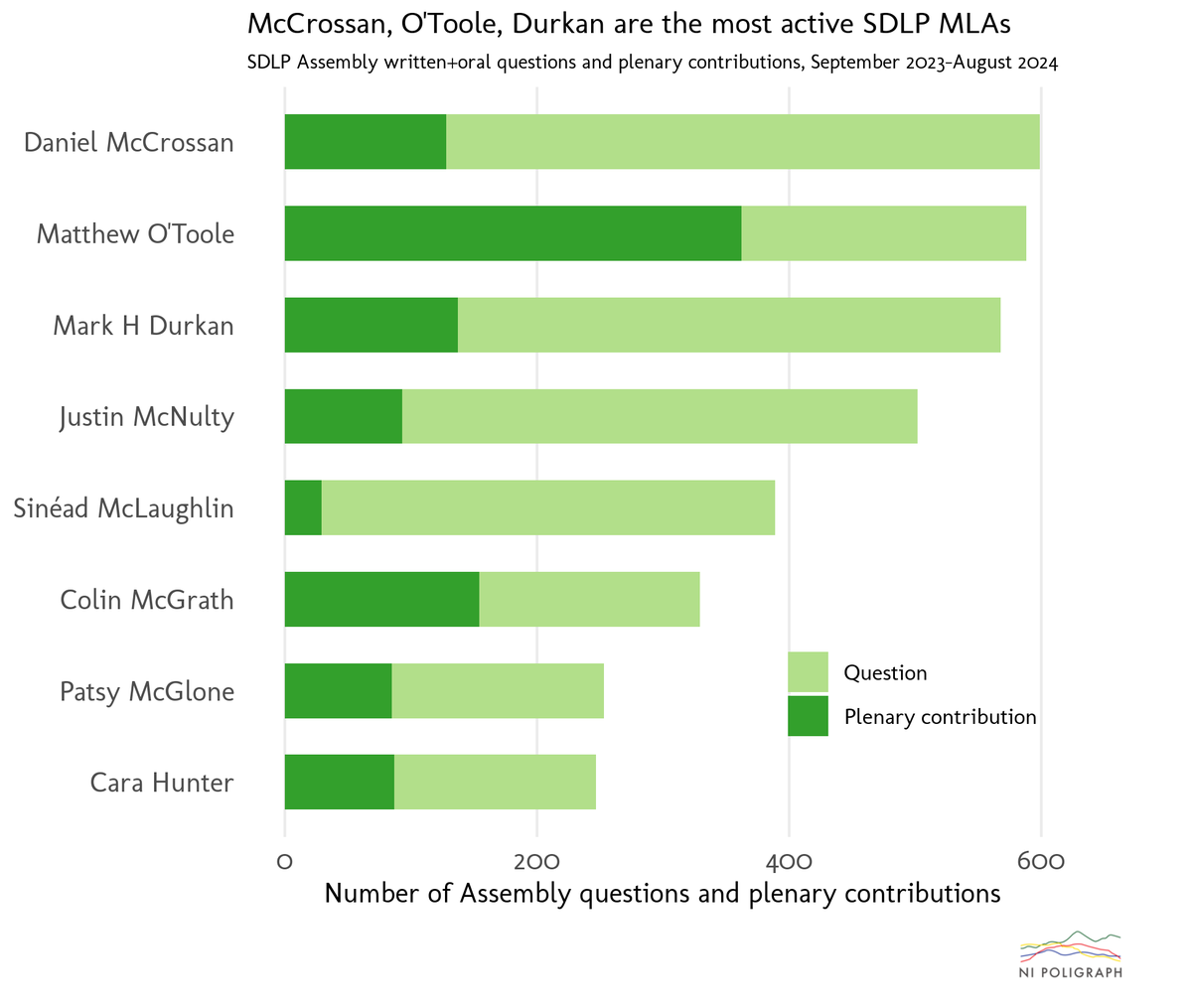
Another measure of status within the party could be activity in the Assembly, where Mr O'Toole is by far the most frequent contributor in recent plenary debates, though others including Daniel McCrossan have asked more questions to ministers. https://t.co/Dbj4z0q7mQ
Confirming what is obvious, Claire Hanna and Matthew O'Toole have the biggest print media footprint in NI PoliGraph's news tracking, making them them the natural names to be mentioned in respect of the leadership election. https://t.co/di2FdOVLtu
This is great for fun election night coverage, but bad for representative democracy, when the winner is so strongly dependent on who else chooses to stand. Giving voters a wide choice should be a good idea, but the FPTP system is not the place to do it. Hooray for STV. (4/4)
The 2024 UK General Election exposed more than ever the inadequacy of the first past the post system, with big disparities between national vote and seat shares for Labour, Reform, and Green, and... (1/4)
https://t.co/fBaHXL9NTB
...which are ridiculous numbers for a system that can't even handle 3 candidates per seat. The result was several very unpredictable outcomes, and 3 NI constituencies were unfortunately among the lowest in the UK for vote share obtained by the winner (UK average was 42%). (3/4)
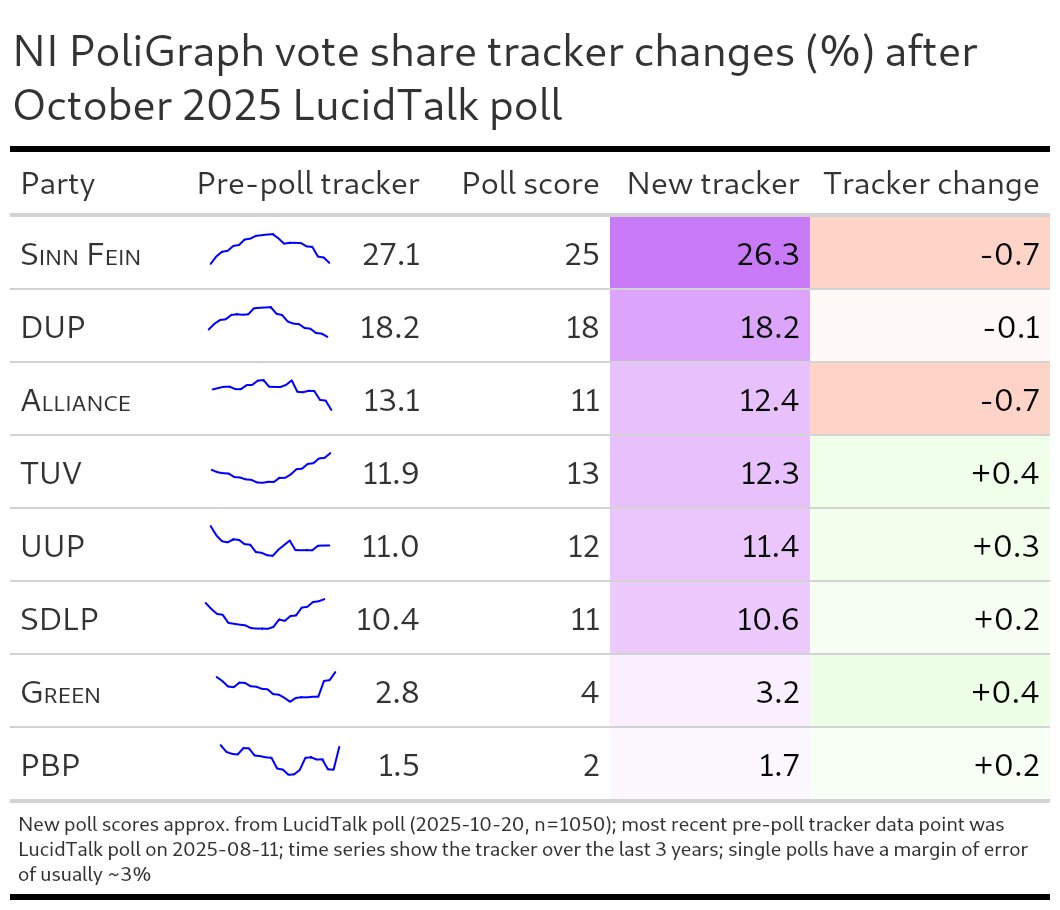
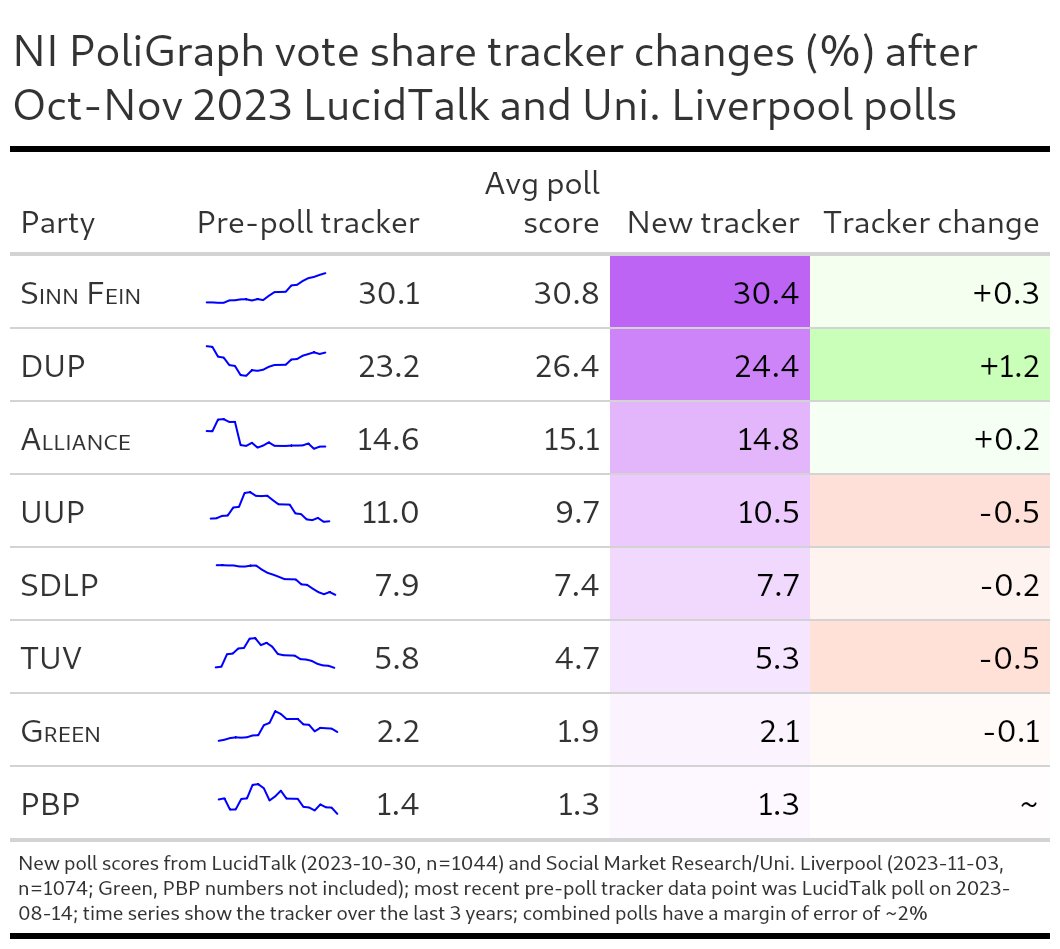
NIPG tracker after two recent polls. The ULiv poll asked about voting intention in the next Westminster election, but has been included as if it were a regular party support question. The slow flow of support from TUV back to DUP appears to continue.
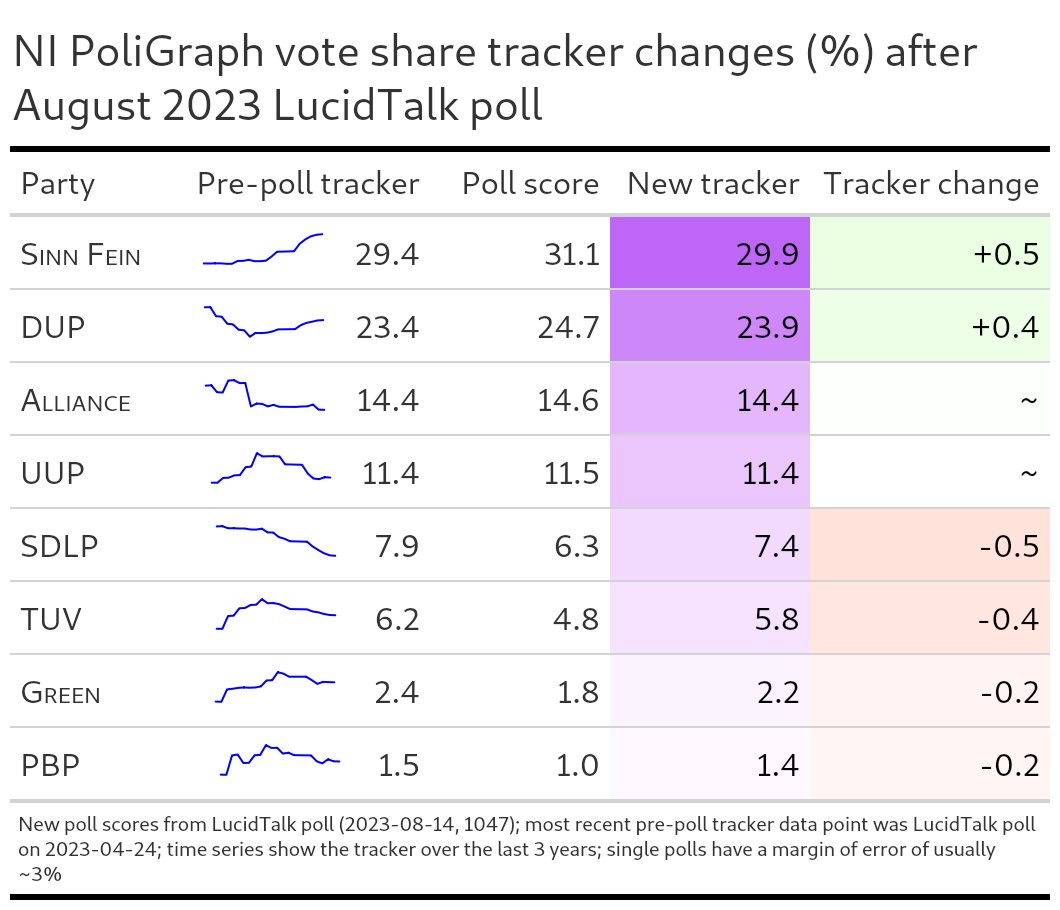
Belatedly, the August LucidTalk poll showed continued swings SF-to-SDLP and TUV-to-DUP. Note that compared to the raw poll data, the headline numbers for DUP and UUP reported for the poll seem to have been misquoted by 1% each.
@patrickjfl Yes, for Northern Ireland, where there are often multiple names from the same party on a ballot, and the ballots can be longer than in a typical Westminster election: https://t.co/NzpLN5FcFG
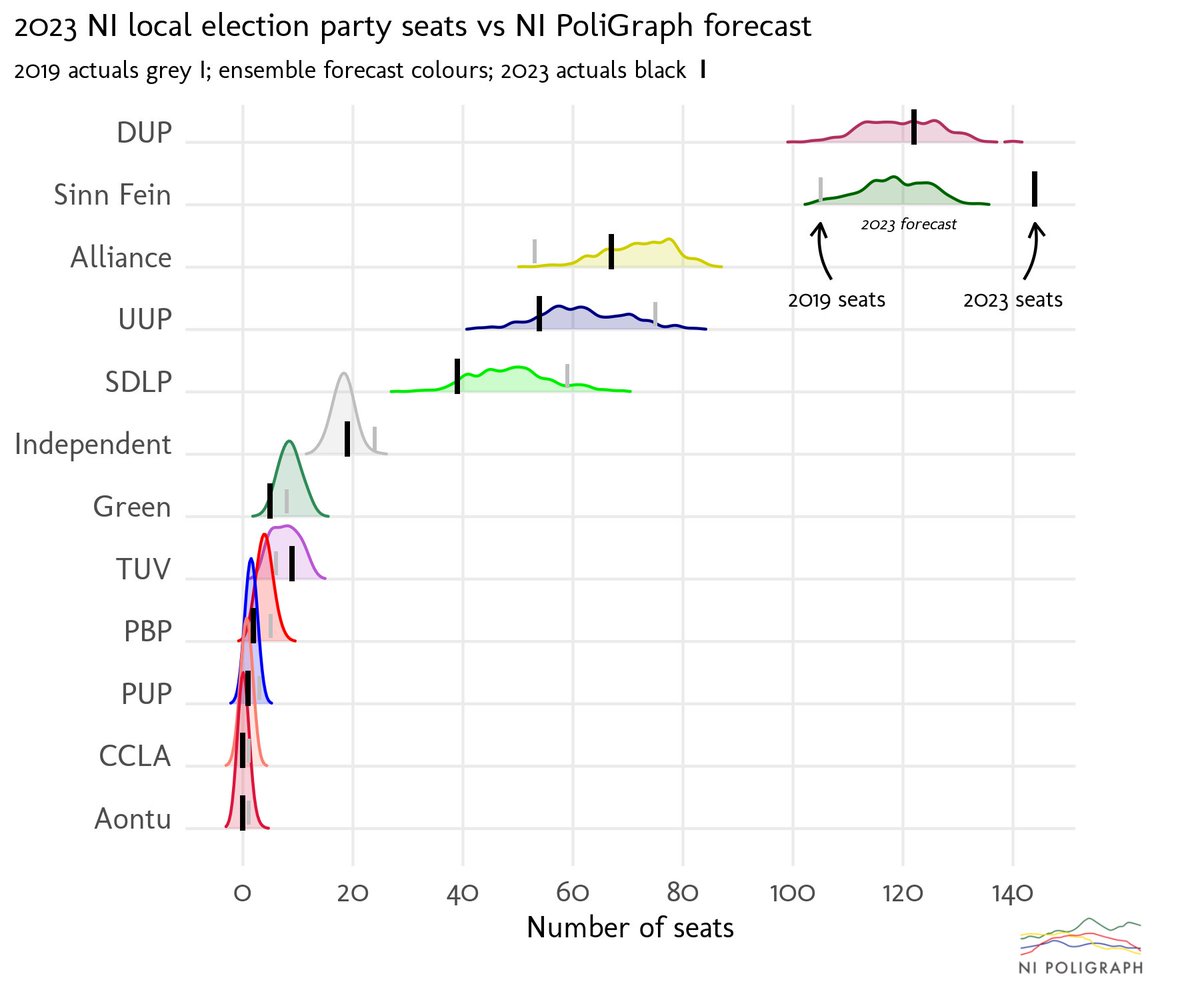
It was a forecast-busting performance from Sinn Fein. To be fair, the indications were there in recent polls, but I didn't expect them to translate so directly into local votes. SDLP, UUP, Green, even Alli pushed towards lower end of expectations by the SF over-performance.
Those Alliance gains are predicted to most likely come in Causeway Coast & Glens (+4), Newry, Mourne & Down (+3), Lisburn & Castlereagh (+3), and Antrim & Newtownabbey (+2). Sinn Fein gains are predicted in Fermanagh & Omagh (+3), Derry & Strabane (+2), and Belfast City (+2).
I wasn't planning to do a local election forecast but inspired by @peterdonaghy and @MaxWoodsss, I have done one by using the AE2022 model https://t.co/MbJb12YP7V with a few tweaks. It comes with little claim of reliability. Predicted seat totals from an ensemble sim are shown.