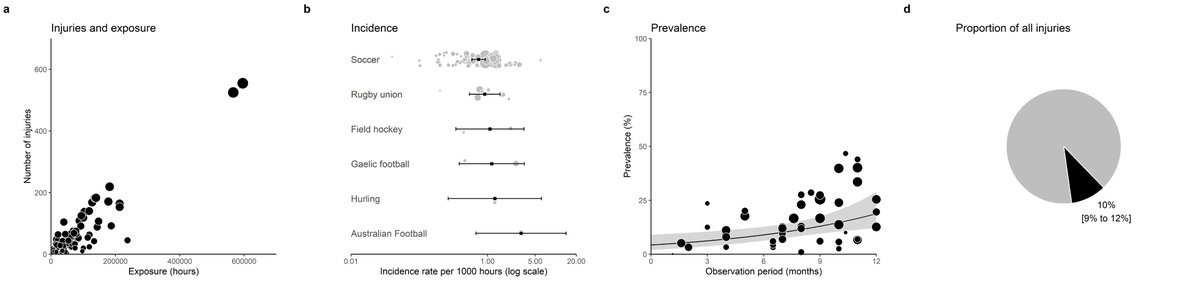
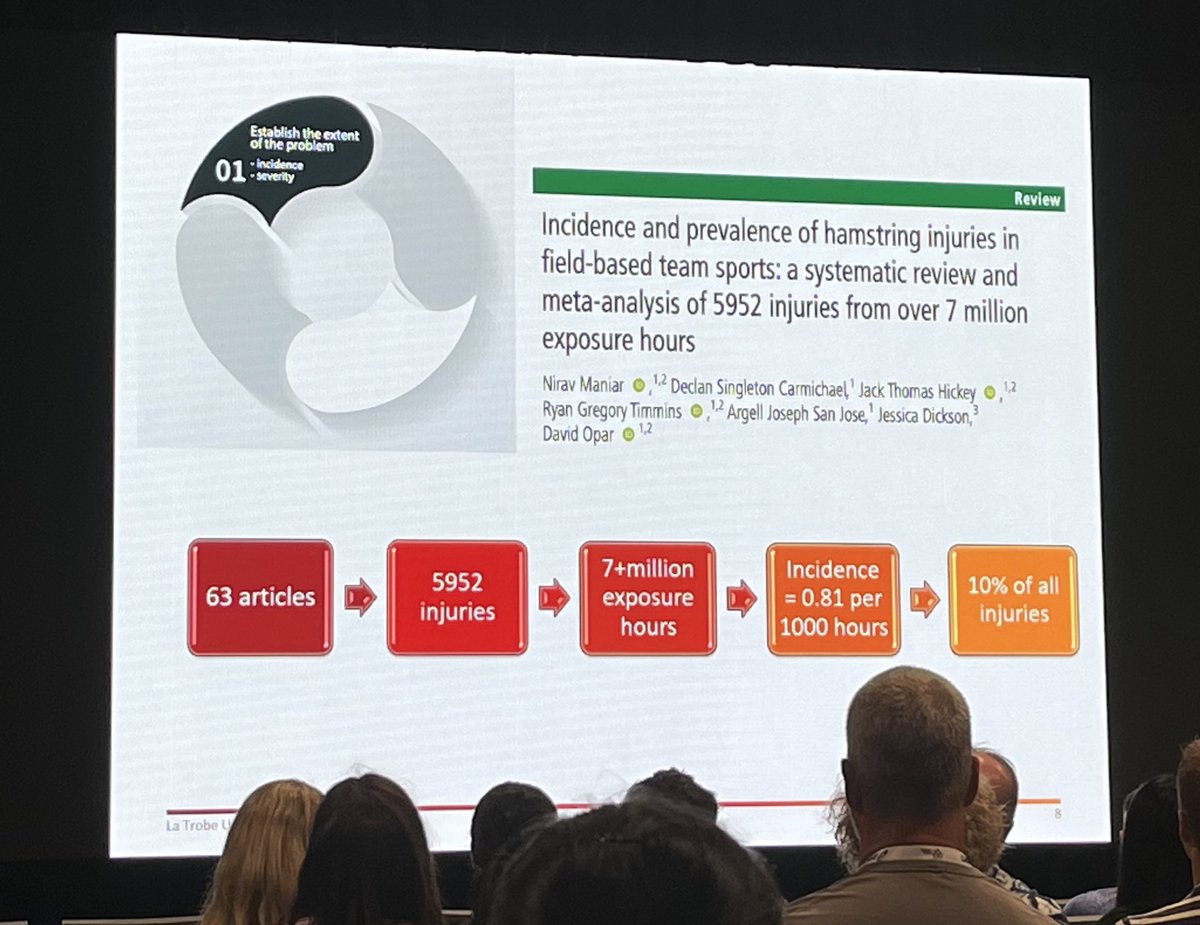
New meta-analysis on the incidence/prevalence of hamstring injuries in field based team sports in @BJSM_BMJ
https://t.co/IJ65havbDP
✅5952 injuries
✅Over 7 million exposure hours
✅Cool findings (see thread ⬇️)
Team: All-star @ACUmedia team from @SPRINT_ACU and @LibraryACU
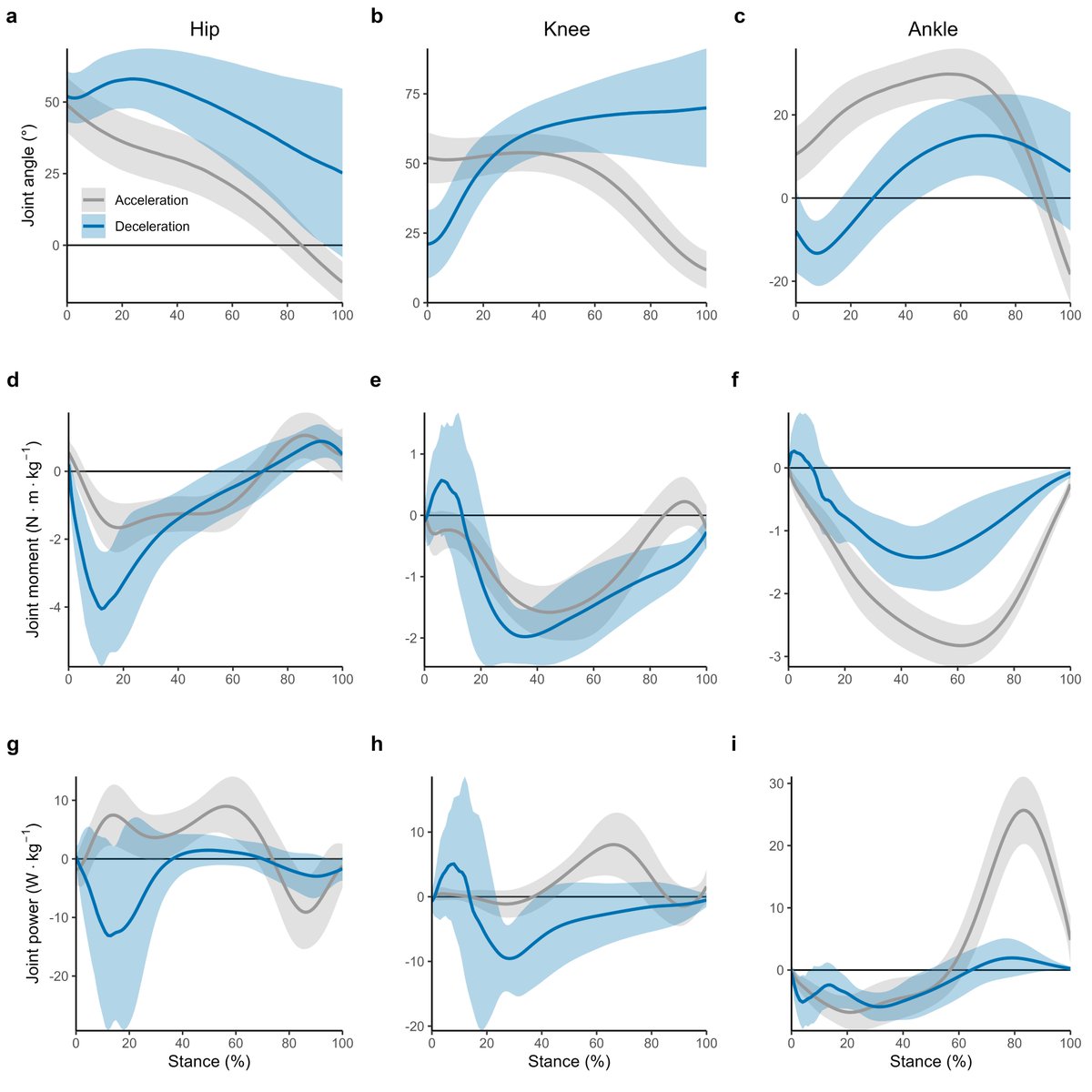
🔝"This article investigated joint mechanics during maximal effort ACC & DEC running"
➡️Peak joint moments were usually ⬆️ during DEC compared to ACC, except for the ankle plantar flexion & hip flexion moments
👉E. Fitzwilliam @davidopar et al, 2024 🇦🇺
📂 https://t.co/253UOCmzfM
#RTS earlier than 9 months after #ACLR does not increase the risk of a new injury.
"How" an athlete returns is more important than "when."
https://t.co/NNLyh34FFU
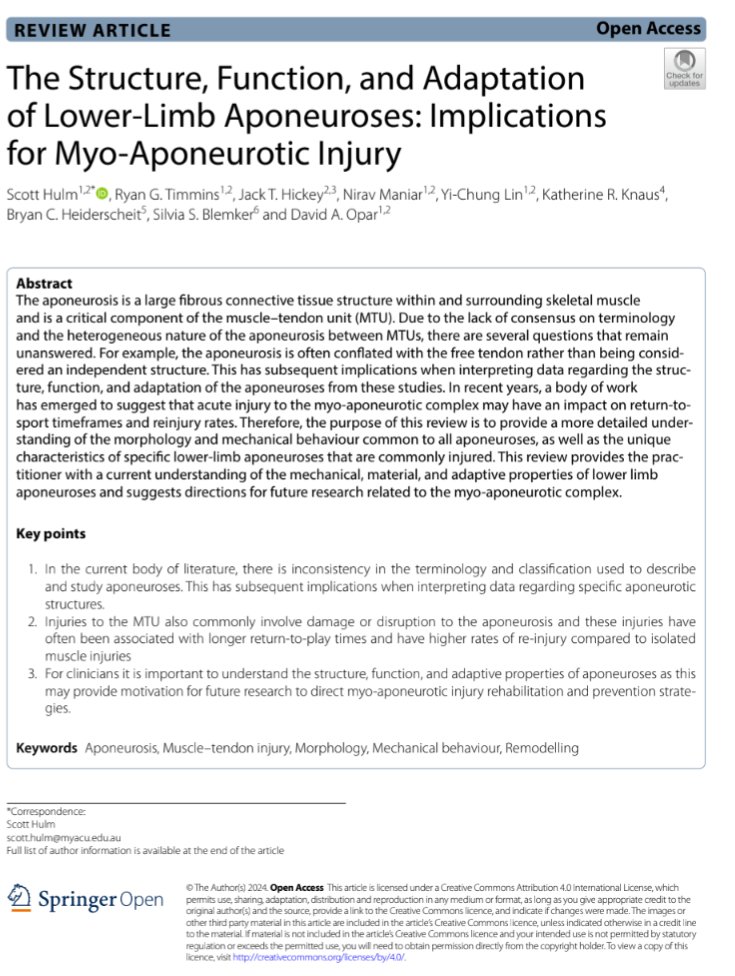
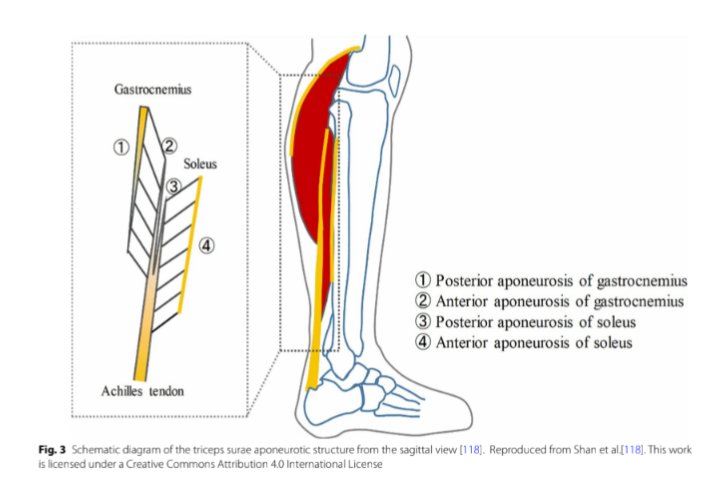
Delighted to share my first PhD publication, where we review lower limb aponeurosis structure, function, adaptation and injury. We identify the calf and hamstrings as useful case examples and provide directions for future work in this space
(Open Access) https://t.co/jMBmV1ghvG
Peak joint moments were usually larger during deceleration compared to acceleration, except the ankle plantar flexion and hip flexion moments (where the opposite was true).
@lahti_johan@SPRINT_ACU@ACUmedia@BrakingPerform Thanks Johan, we do indeed have more coming! Some more modelling work on muscle contributions, hamstring mechanics, and potentially some groin/calf mechanics during accel, decel and sidestep cutting. Also have some running drills with this data set.
Our work found that acceleration was largely driven by positive work from the ankle, followed by the hip then the knee. Deceleration was associated with negative joint work, largely driven by relatively similar contributions for the hip and knee, followed by the ankle.
Nice new study from @davidopar@niravmaniar91 et al.
Lower limb joint mechanics during maximal accelerative and decelerative running
https://t.co/xMBS7ZjwDj
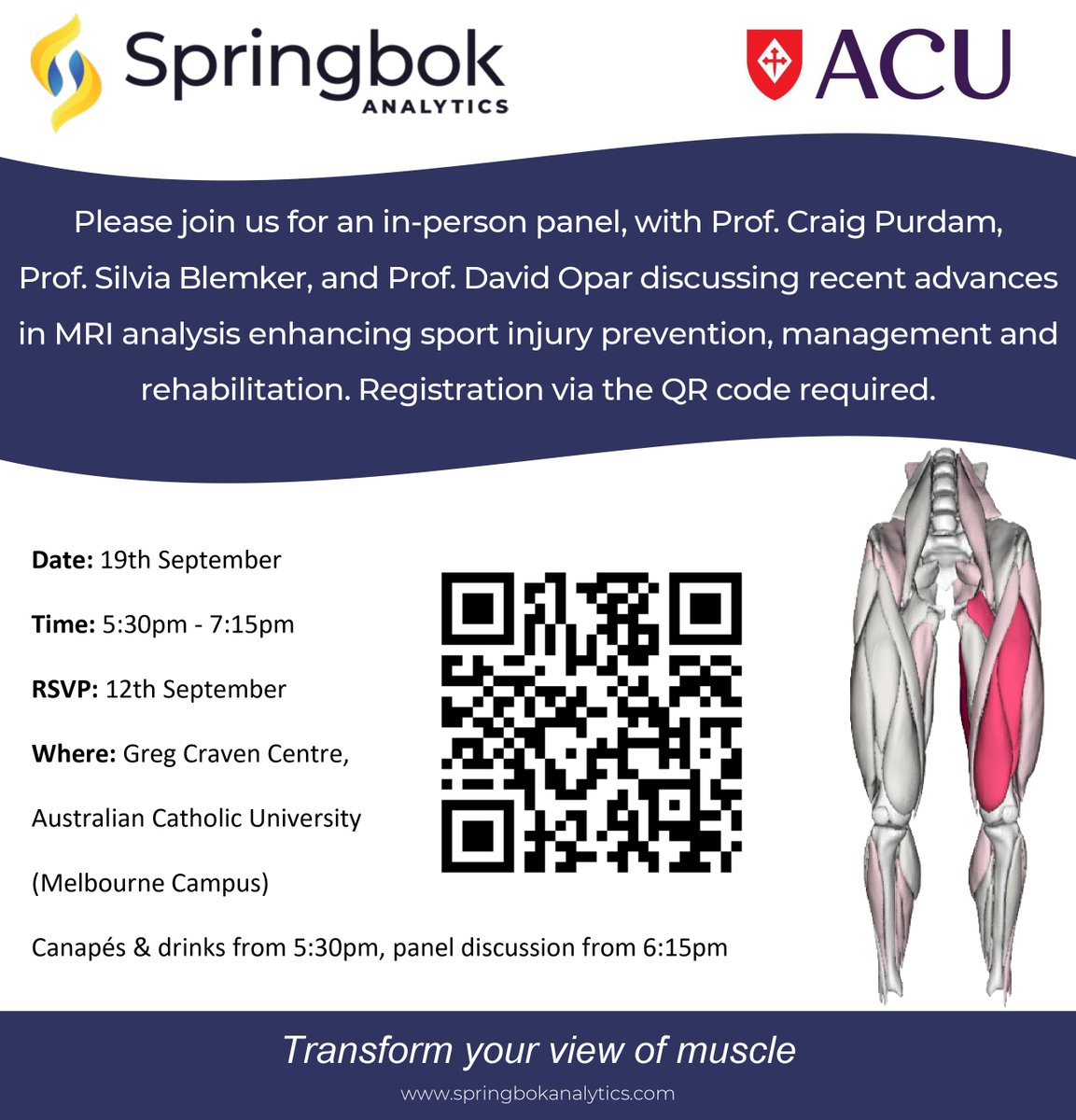
Come along to an evening of networking with @SpringbokTech, hosted at ACU Melb Campus. Please register using the QR below by Thurs 12th Sept. We look forward to seeing you there!
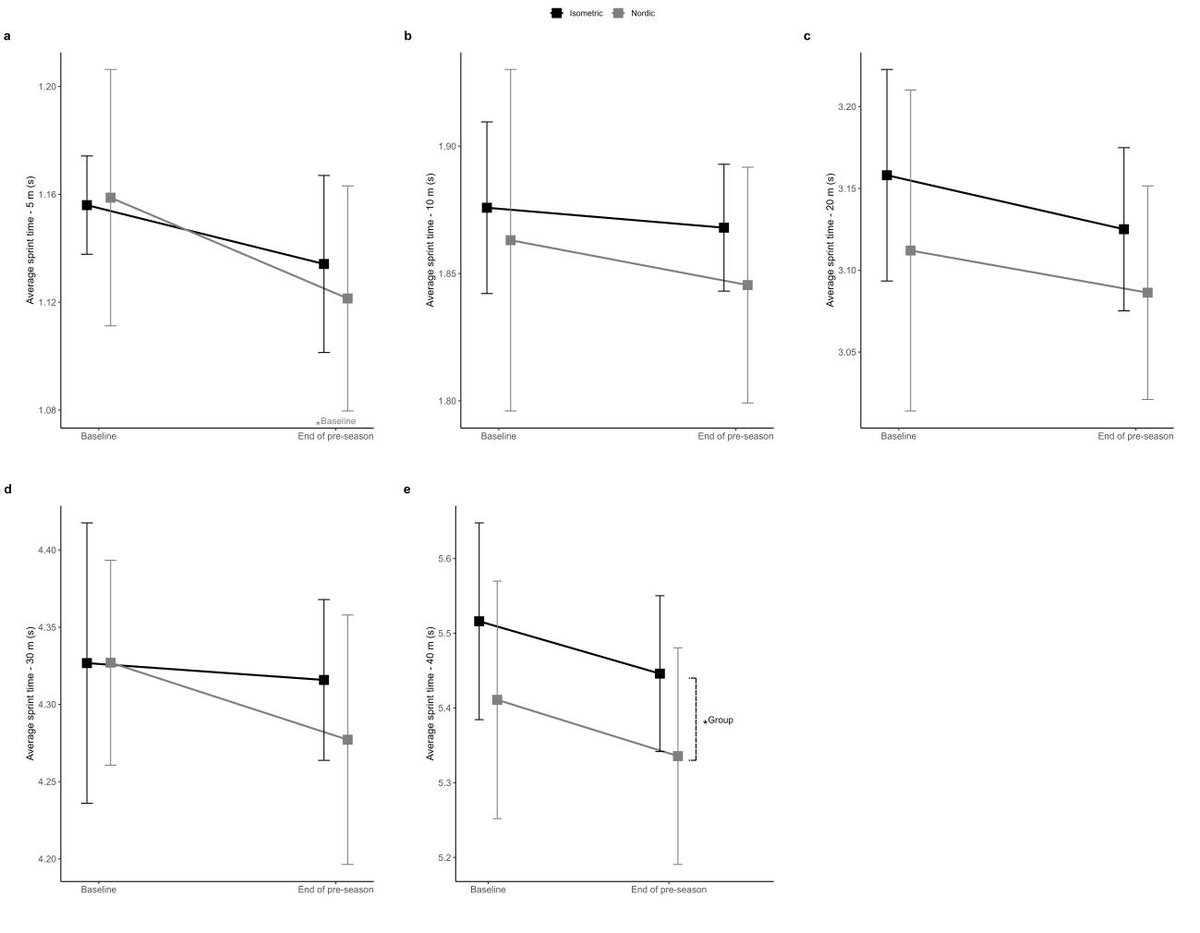
"The Impact of Eccentric or Isometric Training on Strength, Architecture, and Sprinting across an Australian Football Season"
NHE or ISO training over 38-weeks + a periodised sprint program.⬆️fascicle length, thickness, 5m sprint (NHE) + NHE strength
https://t.co/g5FdGdxNBq
@TylerCollings3@DavidJohnSaxby1@benji_dutaillis@MBourne5 We can consider which muscles we want to target to unload the ACL. Prior work which shows both knee spanning and non-spanning muscles are important.
While considering local muscles is great, we should expand our thinking.
https://t.co/ZM6LTjVJ1e