Bored of using #qubits for #quantum#MachineLearning? Just use #qudits instead! In our latest (and my first) work we use the advantages of qudits to build a quantum machine learning model.
https://t.co/sdRo3v1Sfy
https://t.co/F3rIjSqyWW
1/5🧵
Ever wonder how #electrons move in an #atom? What we see is a #probability cloud showing where the electron is likely found. Here it starts in a ground state that is spherical. When excited it takes a dumbbell shape, and when it falls back the atom emits a #photon.
Happy to report on a new work that is (finally) out:
We demonstrate that area laws are not restricted to quantum entropies but can also be observed in differential entropies of phase-space distributions!
We showcase this exemplarily for a spin-1 BEC: https://t.co/4uvMRFvLoq
First try at making #sciart with #blender#b3d
Monte Carlo samples from hydrogen like atomic orbitals.
A photon driving a transition from a 2S state to a 2P state and after some time another photon is emitted to bring the state back to 2S.
Some more is hopefully coming soon…
My quick tutorial on making optical setups using my components pack is now up! 🔬
https://t.co/BCutGVNkla
The audio quality is terrible, so many apologies in advance... 😭 Hope people still find it useful though!
#b3d#scientificillustration#science
🎄 VERLOSUNG 🎄
Weihnachtszeit ist Lesezeit. Für ausreichend Lesestoff über die freien Tage verlose ich dieses Buchpaket.
Teilnahme: 1. Like, 2. Retweet 🤞
Super happy that our paper is now published in the Quantum Machine Intelligence Journal @MachineQuantum
Have a look here:
https://t.co/Z7QPIz0uV8
Many thanks to @QuantumManuel, @fretchen86 and Sebastian!
Bored of using #qubits for #quantum#MachineLearning? Just use #qudits instead! In our latest (and my first) work we use the advantages of qudits to build a quantum machine learning model.
https://t.co/sdRo3v1Sfy
https://t.co/F3rIjSqyWW
1/5🧵
A new classical simulation kid is on the block 👲And we are benchmarking it against everyone's favorite example. Via classical surrogate simulation of 127-qubit systems, we can evaluate new circuit angles in fractions of a second on a laptop.
https://t.co/GKghcO8nMU
🧵1/7
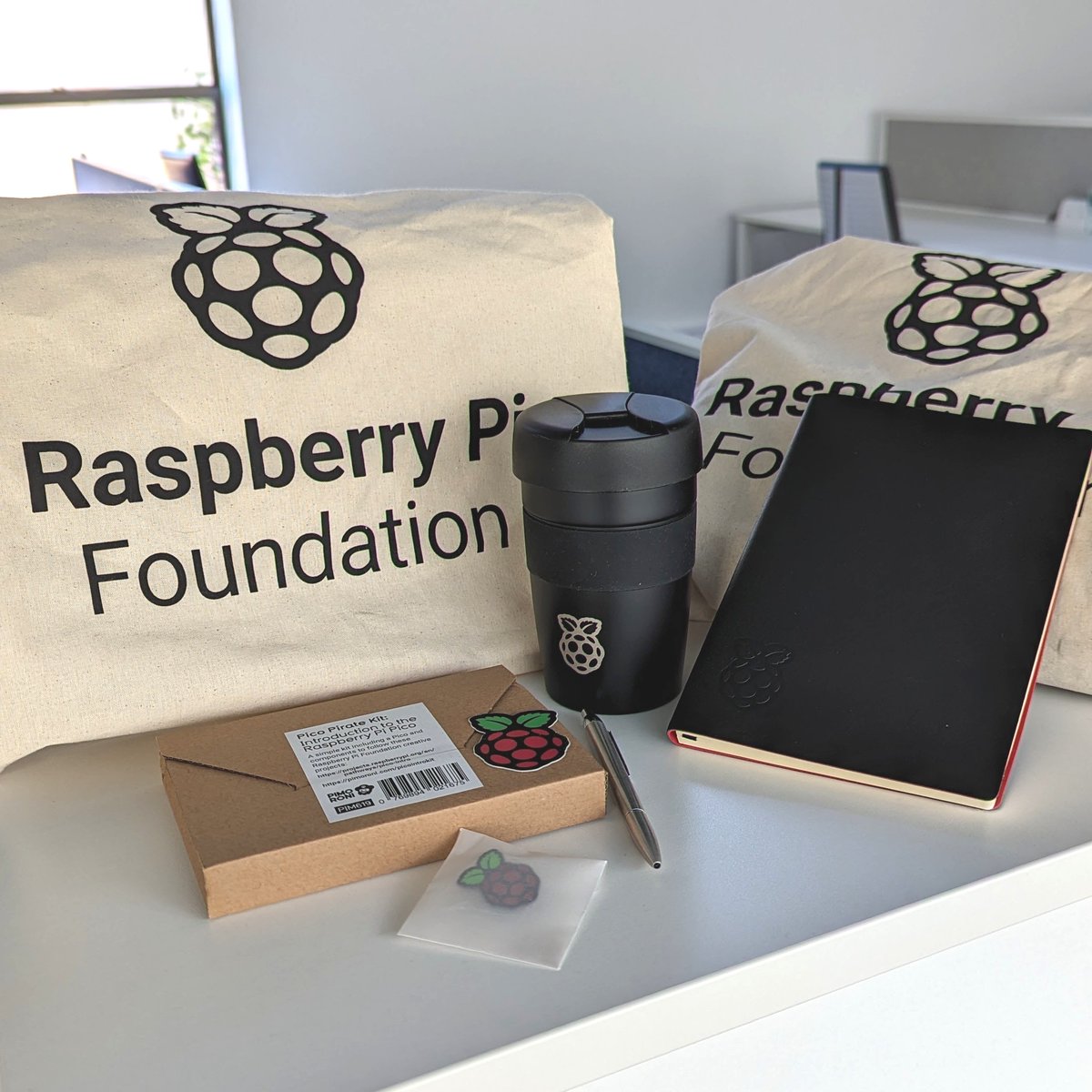
10K FOLLOWER GIVEAWAY 🎉🎈🎁
To celebrate 10K followers on Twitter, we're giving away 3x Raspberry Pi Foundation tote bags containing Raspberry Pi branded goodies 😍 Winners will be randomly selected on Friday, 19 May 2023.
To enter: Follow us, like & RT this tweet.
Good luck!
Come by at 5:30 CEST to listen to my talk about #qudits and #quantum#MachineLearning organized by Quantum Research Seminars Toronto @QRSToronto!
You can get the zoom link by signing up using the link below:
https://t.co/gSoectTIdb
It was an great first day at #samop#dpg ⚛️ If you’re interested in optical lattices, ultracold molecules or high-resolution imaging you can come by on Wednesday to our poster. (You can also come by if you’re interested in #qudits and #quantum#machinelearning :D)
There’s also a bit more on the theory side and an outlook (confinement induced resonances) to the next steps for the #RbSr machine on the poster by Digvijay.
Qudits are high-dimensional generalizations of qubits and exhibit a really interesting inductive bias for certain multi-class classification problems.
Check out our work that came out today:
https://t.co/Mu8BORNfeX
Congrats to @noah_leonardo_w for his first paper!
Check out the paper on the #arXiv!
A huge thank you to @QuantumManuel, Sebastian and @fretchen86 without whom this would have never seen the light of day.
5/5
Bored of using #qubits for #quantum#MachineLearning? Just use #qudits instead! In our latest (and my first) work we use the advantages of qudits to build a quantum machine learning model.
https://t.co/sdRo3v1Sfy
https://t.co/F3rIjSqyWW
1/5🧵
3. The model is able to learn highly non-linear decision boundaries such as the reduced MNIST handwritten digits data set. It achieves comparable accuracies as classical approaches💻
And we can even learn on real quantum hardware like the #IBMQ machines.⚛️
4/5