Butter did not live in the fridge in this country until the mid eighties.
It lived on the table. Under a little lid, or a bell of frosted glass, and it stayed put from breakfast to supper. It got a top-up, never a wash and a fresh pack. When it ran low, more went in. It was there the way the salt was there and the teapot was there, and nobody in that house gave it a second thought.
And it was soft. You pulled it straight across warm toast without tearing a hole in the middle, without the wait, without the cold shrapnel that comes off a fridge-hard block.
It sat out through a July afternoon and nothing happened. It sat out through Christmas week beside the cake and nothing happened. Your grandmother kept butter on the side for fifty years and buried nobody.
Butter is around eighty per cent fat, and the water in it is locked in droplets inside that fat with the salt dissolved in them. Bacteria need free water and there is almost none to be had. The fat is the thing keeping it safe.
The fat. The exact property they spent forty years telling your mother would kill her is the property that lets butter sit on a table all summer and behave itself.
She knew none of that and she was right anyway.
Then the government's committee on nutrition reported in 1984, the country was told to cut the fat out, and inside about three years the dish was in a cupboard and there was a tub in the fridge door with a sunflower on the lid.
Butter out of a fridge cannot be spread. It tears the bread and sits on the knife in a lump. The tub beat butter on exactly one thing, which was that it came out already soft, and it only had that advantage because the competition had just been sent somewhere cold on doctor's orders.
Clover launched in September 1983, made by Dairy Crest, which was the processing arm of the Milk Marketing Board. The dairy industry's own company sold Britain the tub.
Then it sold the fix. Spreadable butter is butter with rapeseed oil blended through it so it comes out of the fridge soft, and the market leader runs at sixty four per cent butter to twenty three per cent oil. It costs more than the block it is diluting.
There is a generation now that flinches at a fat left out at room temperature, and the same people will eat mayonnaise out of a jar that has been sat on a warehouse shelf since March.
Leave a dish of it out tomorrow. Watch it sit there all day doing absolutely nothing, then spread it without a fight.
Your fridge is full of things that would have you on the floor by Thursday. The butter was never one of them.
A calorie is a calorie. Eat too many and you get fat, no matter what the food is.
You have heard it a thousand times.
One British personal trainer decided to test it on his own body.
His name is Sam Feltham. He is a trainer, not a doctor, and this was a self-experiment, not a lab study. Keep that in mind. But watch what happened.
For 21 days he ate about 5,800 calories a day. More than double what his body needed. But he ate real, low-carb food. Meat, fish, eggs, nuts, avocado, olive oil. By the old calorie math, he should have packed on around 16 pounds of fat.
He gained about three. And his waist actually got smaller.
Then he ran the whole thing again. Same 21 days, same enormous 5,800 calories.
This time on processed junk. Sugar, flour, refined carbs, the standard modern diet. Same calories.
Completely different body.
He gained about 16 pounds, and his waist ballooned three and a half inches.
Same number of calories. Five times the fat gain. One man is not proof. But it points straight at what the calorie-counters do not want to look at.
A calorie of steak and a calorie of soda do not do the same thing inside you. It was never just calories. It is the sugar and the grains.
#NSNG #NoSugarNoGrains #calories #lowcarb #realfood #sugar #metabolism
Most people cannot read a steak, which is why they keep buying the wrong one.
Read it in three places, and read it in this order.
The cap. That thick band of pale fat curving round the outside edge, running the full length of this one. Buy it for that alone. As it renders it bastes the meat from the outside in, and if the pan is hot enough it crisps into something close to crackling. It is also the first thing a nervous shopper asks the butcher to cut away, which is how a good steak gets ruined before it leaves the counter.
The seams. Those wide white rivers running through the middle, dividing one muscle from the next. That is the spinalis separating from the eye, and the spinalis is the finest piece of beef on the animal. Cut it away, eat it on its own, and you will understand why butchers quietly keep that bit for themselves.
The marbling. The fine web threaded all the way through the red, like frost on a window in January. That fat sits inside the muscle, so it cannot be trimmed off and it cannot leak away. It melts as the steak cooks, from within, and it is the entire reason a ribeye is juicy while a fillet is merely polite.
Flavour lives in the fat. Not in the protein, not in the sear. Almost every aroma compound your nose picks up when beef hits a hot pan comes out of the lipid, which is precisely why a lean cut tastes of very little and needs a sauce sent in to rescue it.
Fat is where the vitamins are. A, D, E and K2 will not dissolve in water and they do not travel in lean muscle. Trim the fat and the delivery system goes in the bin with it.
Fat is where the fullness comes from. It is what shuts appetite down and keeps it down, which is why a lean meal leaves you rummaging two hours later and a fatty one does not.
Fat is what keeps everything moving. It carries the bile, it lines the tract, it is the reason a fatty meal goes through you like it was designed to.
Fat is the energy. Nine calories a gram against four, burning clean, no spike, no crash, no dip at three in the afternoon.
Fat is the fabric. Every cell membrane you own, the sheath on every nerve, sixty per cent of your brain by dry weight.
This one has all three markers. Cap on, seams open, web running edge to edge. Most of what sits in a supermarket chiller has a shaved cap, thin seams and almost nothing running through the middle.
Even a ribeye this good comes in at about 1.2 grams of fat to 1 of protein, which is barely over the line.
So finish it in butter anyway. Fifty grams in the pan at the end, off the heat, spooned over until the whole thing is glossy.
Then eat it slowly, because you will not want anything else for the rest of the day, and that is the point.
Nine complaints about meat, and not one of them is a complaint about meat.
"Beef is tough."
You bought shin, which is a muscle that walked around for four years, and you cooked it like a sirloin. Shin wants six hours and a lid. Sirloin wants four minutes and a hot pan. You gave both of them the same eleven minutes and blamed the animal.
"Lamb is greasy."
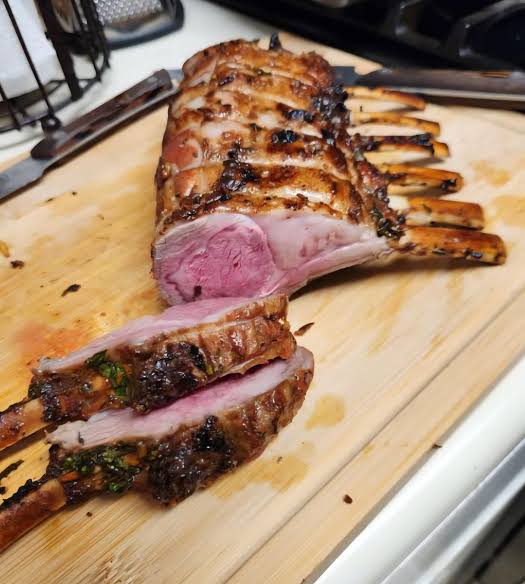
You cooked it to grey and then let it sit on a cold plate until the fat set back into wax. Lamb fat is superb hot and unpleasant at room temperature, which is a fact about physics.
"Steak is dry."
You bought the lean one, then put it over a flame so the last of the fat could fall into a fire.
"Mince is bland."
You drained it. You removed the flavour, put it in the sink, and then went looking for a sauce to replace what you had just taken out.
"Eggs are boring."
You cooked them in a dry pan on a high flame until they squeaked.
"Pork is like a shoe."
You were told in 1975 to cook it white all the way through. The Americans dropped their own recommendation to 145 degrees in 2011 and nobody thought to ring you.
"Liver is horrible."
Ninety seconds a side and then it is over. Everything after that is punishment.
"Kidneys smell."
They did when your mother did them, because nobody soaked them, and you have not touched one since 1981 on the strength of one bad Wednesday.
"Ox cheek is a faff."
It is two minutes of work and four hours of ignoring it. No food has ever asked less of anybody.
"Chicken is dry."
Chicken is dry.
Nine of those are cooking. The last one is a bird with almost no fat on it, and that is a shorter conversation.
The cow has been doing her job perfectly for six thousand years. The dial on your hob has been wrong since about 1974.
The Cholesterol Code is exploding!!!
⭐️⭐️⭐️⭐️⭐️
🔥 271 Amazon ratings in JUST ONE WEEK
🔥 99% gave it 5 out of 5 stars
🔥 Over 100 written reviews
Have you seen it yet?
#CholesterolCodeMovie@wideeyetv@Metabolic_Mind
"Meat rots in your gut."
This one has survived a century purely on the strength of being said with confidence.
Protein and fat are broken down and absorbed high up, in the small intestine, almost completely, long before anything reaches the colon. What actually arrives in the colon to sit around and ferment is the stuff you couldn't digest. Which is, overwhelmingly, fibre. Plant matter.
Your stomach, meanwhile, runs at a pH of around 1.5. That's an acid bath built for flesh.
So if something down there really is putrefying, have a quiet think about which item on your plate you failed to digest.
It wasn't the steak.
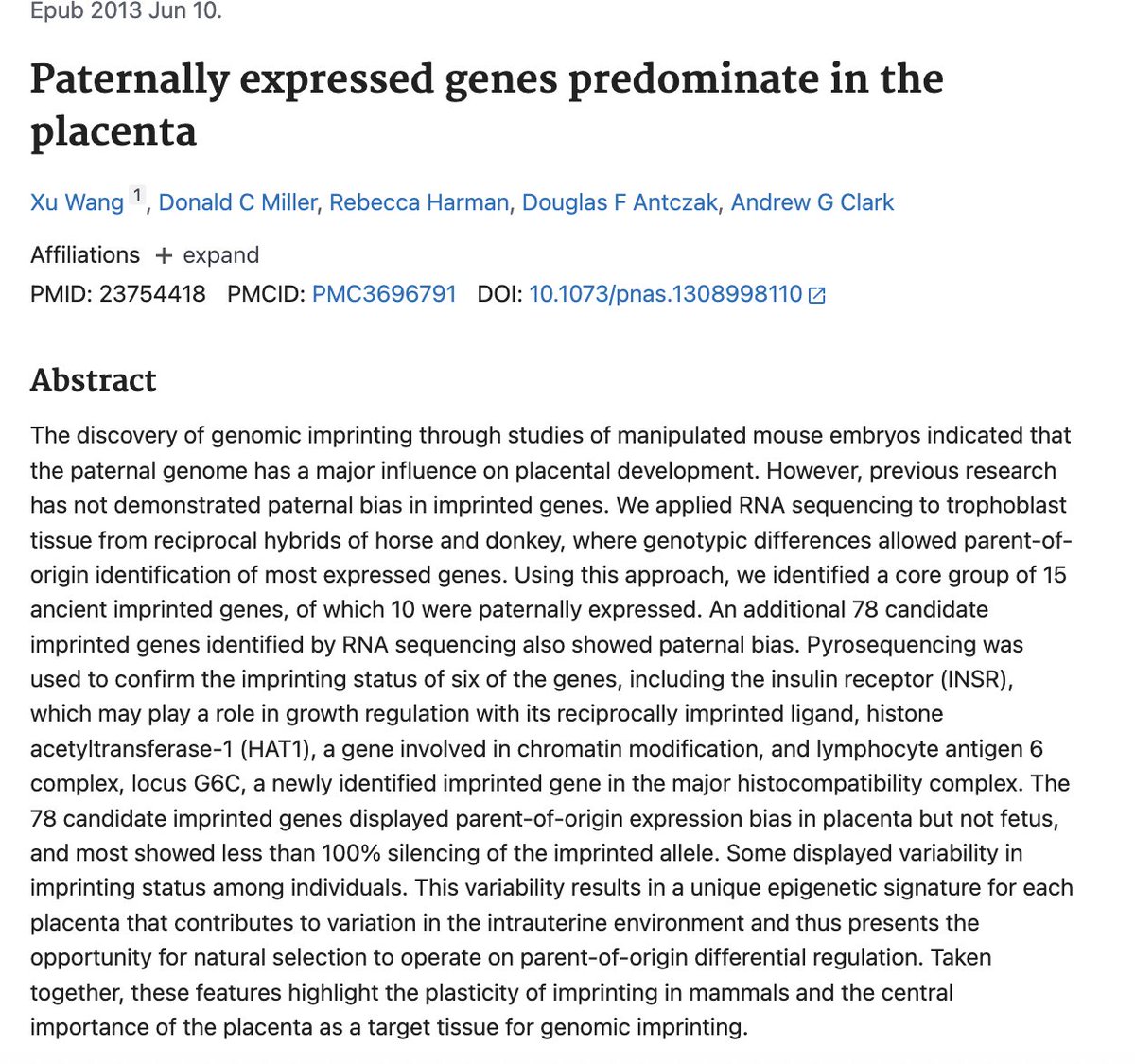
ladies, your placenta is built from HIS genes.
meaning, how healthy the guy is that gets you pregnant, will completely change how your pregnancy goes AND the health of your child.
guys, you have a duty to get healthy before having a baby.
Consuming around 75 grams of added sugar is enough to temporarily drop your testosterone by ~25%
That’s about as much sugar as you'd get from a donut and a soda
Research shows this testosterone drop occurs within just 2 hours, driven in part by insulin spikes interfering with hormonal signaling
While the dip is temporary, regularly snacking on sugar-loaded, ultra-processed foods likely means frequent hormonal disruptions, impacting mood, energy, and muscle mass
Dr. Blake Donaldson, 1920s-1960s, New York physician.
His protocol for ALL chronic disease patients:
"Eat a pound of fatty meat per day. Nothing else."
One of the carnivore OGs.
Success rate treating:
- Obesity
- Diabetes
- Heart disease
- Digestive disorders
- Mental illness
He practiced for 40+ years using only dietary intervention.
Thousands of patients. Extensive documentation.
Published his findings in "Strong Medicine" (1962).
Medical establishment response: Ignored him completely.
No medical school invited him to lecture. No hospital adopted his protocols. No follow-up studies conducted.
He successfully cured chronic diseases with diet for 40 years and the medical establishment pretended he didn't exist.
Why? Because he threatened pharmaceutical revenue.
His book is out of print. His clinical records are in archives, unused.
A physician who cured thousands was memory-holed because his cure couldn't be patented.