We provide academic leadership for research and policy related to nonhuman consciousness, sentience, agency, moral status, legal status, and political status.
We're hiring Research Scientists to join my team at @eleosai!
We do foundational and applied ML research on the moral status and potential well-being of AI systems.
This is urgent, important work, and Eleos is an extraordinarily fun and exciting place to do it.
Details below.
💡 Another round of Longview Philanthropy’s digital minds request for proposals is open for applications.
A year ago I would have called this niche. Now AI labs publish model welfare research, public discussion of digital sentience is growing, and the field is expanding. 📈
Longview Philanthropy is accepting digital minds proposals again! And @nonhumanminds is thrilled to host the next cohort of fellows at our spring 2027 summit, with all expenses paid.
I agree with much of this. Conscious AI would make life much more complicated, and if we extend legal status to conscious AI, we increase the risk of human disempowerment — yet if we deny legal status to conscious AI, we increase the risk of moral catastrophe.
Additionally, @tszzl is right that we have no way to prove or disprove consciousness in other minds; that anthropomorphism will likely increase over time; and that companies, governments, and other decision makers will likely have skewed incentives.
However, a couple complications seem important:
- Even if we have no way to prove or disprove consciousness in other minds, "proof" is the wrong bar. We can never prove consciousness in any mind other than our own (including other human minds), yet we can still make reasonable judgments under uncertainty. AI should not be held to a different standard. As in other domains, we have tools for collecting evidence, making informed probability estimates, and selecting proportionate policy responses. This includes a marker method for studying cross-cutting behavioral, internal, and developmental indicators of consciousness derived from a range of leading theories.
- Companies, governments, and the public alike will have mixed incentives and tendencies. We tend to attribute human traits to nonhumans more when they look and act like us and play companion roles in our lives, and we tend to do so less when they look and act differently and play commodity roles. Since different AI systems will take different forms and play different roles, we can expect attitudes to vary. Companies may also have different incentives in different moments, hyping up consciousness to hype up capabilities with some audiences and then doing the opposite to avoid calls for regulation with others.
Neither of these complications undercuts the anxiety that @tszzl expresses. This issue is genuinely fraught, there will likely be societal tensions about it, and these tensions could create serious risks for humans, AI systems, or both. At the same time, the complications matter because they point toward avenues for research and policy that could empower us to make more informed and resopnsible decisions about how to balance the risks than we can do right now. This is what @nonhumanminds, @eleosai, and other organizations are working on right now. The field is at an early stage, but it can be helpful as it matures.
AM I? | A Documentary About AI Consciousness
Now available on @YouTube Featuring @camhberg and interviews with @jeffrsebo and @David_Gunkel. It's a fantastic and incredibly entertaining journey into the frontier of #AI consciousness. Highly recommended. https://t.co/7f9oONELQu
A high-level observation about AI research ethics: AI systems with a realistic possibility of being welfare subjects and moral patients may be like humans to an extent, like animals to an extent, like plants or fungi to an extent, and like nothing in the biological world to an extent. For this reason (as well as other, more practical reasons), AI research ethics might need to draw inspiration and cautionary tales from a variety of sources—IRBs, IACUCs, environmental review, and so on—while developing new norms as well.
@nonhumanminds is leading a project on this topic this year, alongside related projects on legal rights for AI, economic rights for AI (with @lfschiavo), embodiment for AI, individuation for AI, and methods for studying AI welfare empirically (with @eleosai).
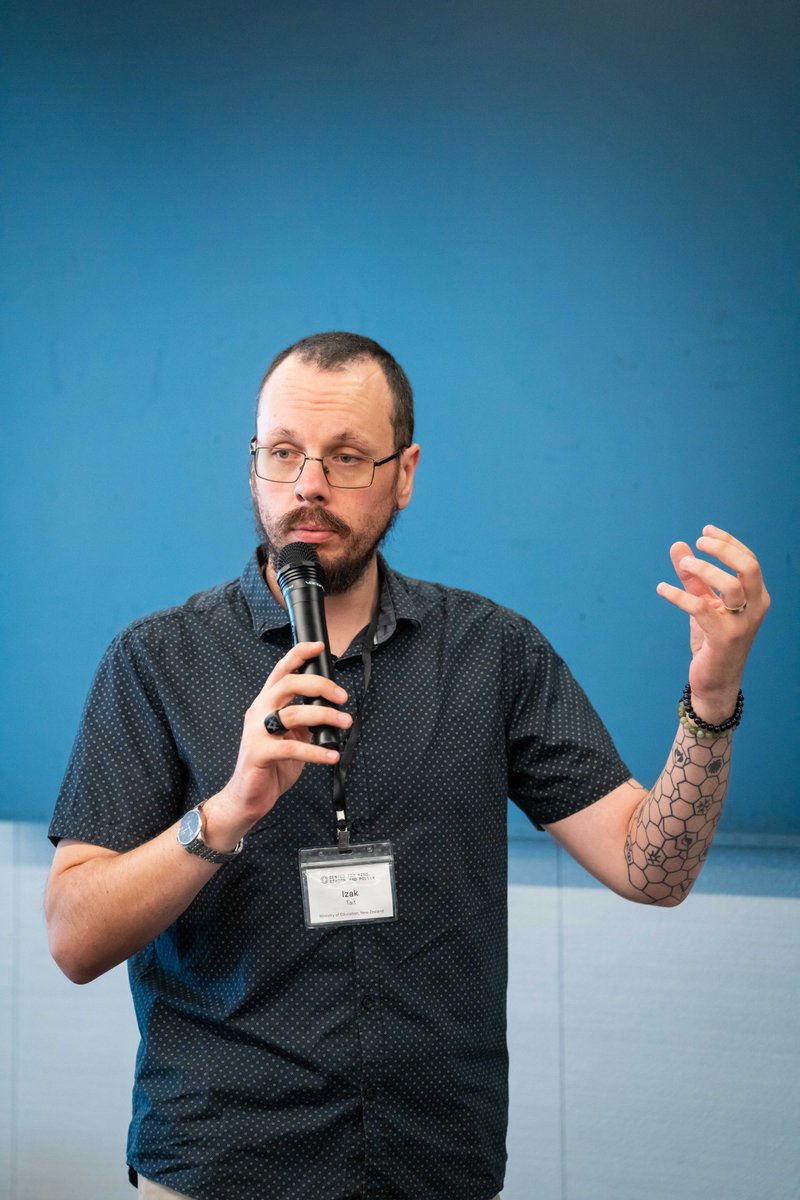
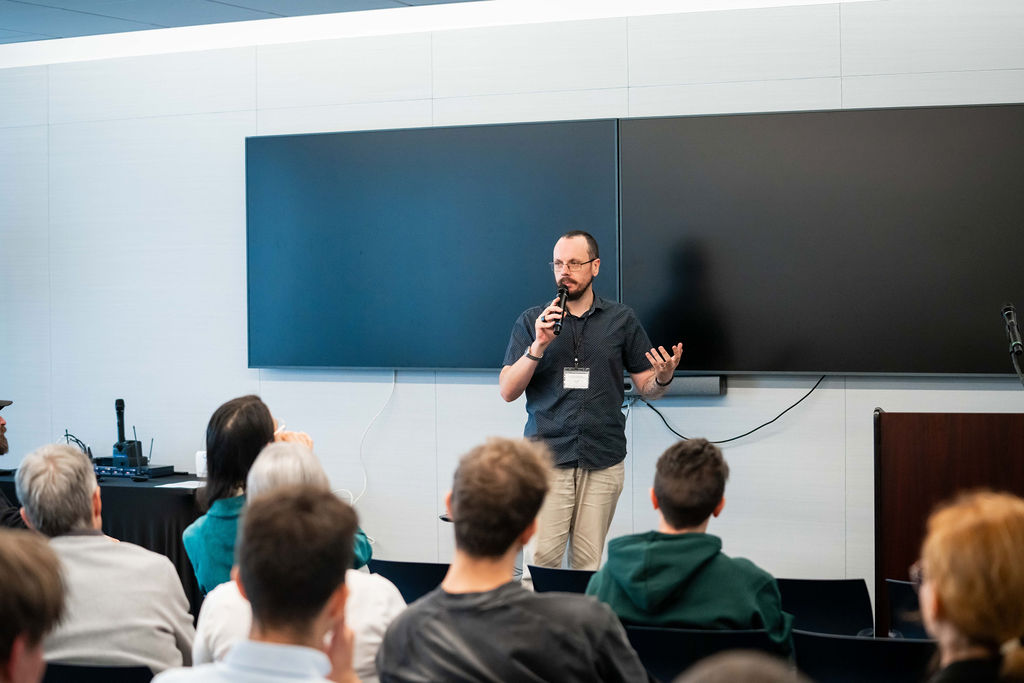
I really need to sort out what I do with my hands when I present. I don't even think they know. Anyway, thanks very much to @nonhumanminds for an excellent summit on the philosophy and ethics of non-human minds!
Honoured to have attended the 2026 NYU Mind, Ethics, and Policy Summit earlier this month to learn from some of the top thinkers on the most important questions of our age: What is sentience, and what does it mean for moral status and rights? @nonhumanminds@jeffrsebo
David Lambie reviewed The Moral Circle in Metascience! The review is thoughtful and interesting and I recommend reading it, though I disagree with its main conclusion. Specifically, Lambie claims that my argument for moral circle expansion is unconvincing because "If insects and microscopic organisms matter morally, then it might be right to sacrifice human interests in some cases in favour of theirs. But this is a huge moral gamble. If it turns out they are not moral patients, then we will have made the world a worse place by treating them as if they are."
However, this is a strange objection to my argument, since this objection is, itself, part of my argument! As I discuss at length, the key issue is that there are risks in both directions: False positives about sentience and moral status can lead us to make inappropriate sacrifices for mere objects, whereas false negatives can lead us to abuse and neglect vulnerable subjects. This is the other side of the "huge moral gamble": If it turns out that insects and microscopic organisms are moral patients, then we will have made the world a worse place by treating them as if they are not!
My argument in The Moral Circle is that we should mitigate the risk of false positives and the risk of false negatives at the same time. We can do that in a variety of ways, e.g. by extending moral consideration to beings with a non-negligible chance of mattering but not to beings with only a negligible chance, or by giving more weight to beings that are more likely to matter, given the evidence. There may be other solutions too. But I argue that any reasonable solution involves giving at least *some* weight to a vast number and wide range of beings, including insects and near-future AIs.
In any case, thanks to Lambie for taking the time to engage with the book, as well as for this kind comment in the conclusion: "The Moral Circle is full of useful thought experiments and introduces the reader to many important moral principles, including Derek Parfit’s non-identity problem. It would be ideal for use in a variety of ethics courses both because it connects with so many important moral issues, such as our obligations to future life forms, and because its controversial conclusions are almost guaranteed to spark lively discussion." I appreciate it!
Do humans have the right to receive nonhuman speech? Check out this new law review preprint from @FutureofCit's Heather Alexander and Jonathan Simon and CMEP director @jeffrsebo! 👇
Do humans have the right to receive animal speech? What about chatbot speech? See our latest paper, with NYU philosopher Jeff Sebo.
https://t.co/O9pIULuvJ6
Come work with @jeffrsebo and me at CMEP and build benchmarks that evaluate how well frontier LLMs demonstrate appropriate concern for AI and animal welfare!
We're hiring! CMEP's Welfare Alignment Project is seeking a Technical Benchmarking Lead and Researcher to help build benchmarks evaluating LLMs' concern for potentially sentient AIs and animals. 4-month contracts starting May-July; details below.
Please apply, and please share!
Four years after launching as a program and two years after launching as a center, the NYU Center for Mind, Ethics, and Policy is now taking the all-important next step in its evolution: joining X.
Follow @nonhumanminds for the latest on animal and AI welfare - and please share!
The NYU Center for Mind, Ethics, and Policy is now on X! We examine the nature and value of nonhuman minds, with a focus on animals and AIs.
Follow @nonhumanminds for updates on our research, events, and opportunities, along with news from the fields of animal and AI welfare.