This is the exact wrong response.
The U.K. Biobank already should've been open access. They should take the opportunity to open it up, not close it down further.
Their choice here is to slow down scientific progress and to *increase* the value of further data breaches.
Science is about to get absolutely nuked.
Unless we get extremely strict about providing and opening up code and data and documenting lab experiments rigorously, a torrent of credible-looking but fraudulent papers is upon us.
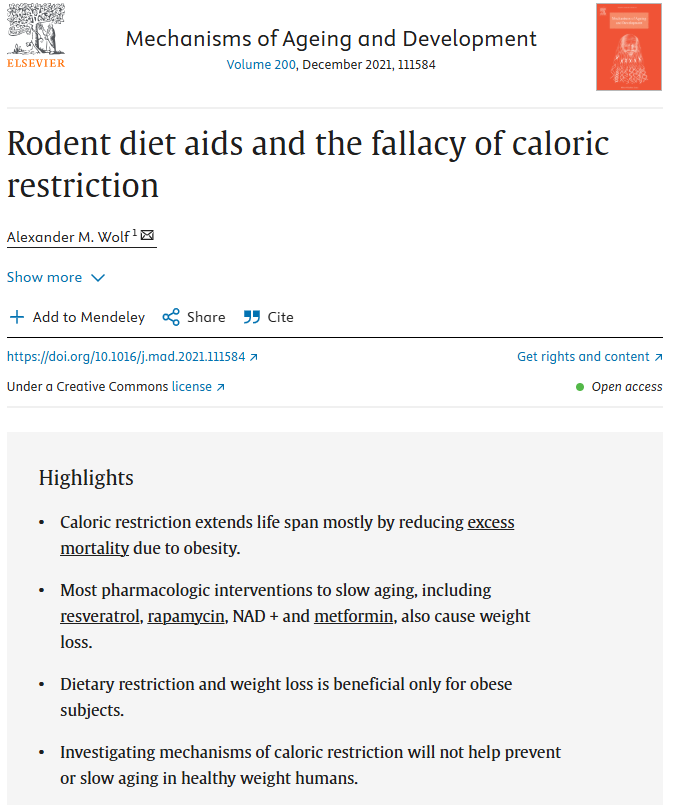
Sobering paper on aging
Argues that basically every intervention known to extend lifespan only does so by preventing obesity.
In other words, being lean and fit is not just 90% of slowing aging, but 100%.
https://t.co/wpdZmpm4nt
Game theory proves that the most cooperative people in any group are usually the most exploited. Not because they are weak, but because they are fundamentally more predictable: Every "defecting strategy" relies on the foolishness of unconditional cooperators. Cooperators expect reciprocity; what they truly get is betrayal. Cooperation must be conditional; otherwise, you will pay.
Reminder that there is now a twice-yearly shot that completely prevents getting HIV.
In this trial, lenacapavir led to zero new cases among these South African/Ugandan women, which compares very favorably to F/TAF and F/TDF, which were alternative daily oral forms of PrEP.
I continue to think that iron is not only an underrated factor in aging, but maybe the most underrated factor.
Hardly anyone in the aging space ever mentions it - despite (for some of them) large amounts of blood testing leading to iron loss, which may be driving their results.
Clinical trials today are highly bureaucratic, expensive, and time-consuming. Most trials fail to recruit enough participants to answer their questions at all.
This great post by @kroetscha explains how things got this way.
https://t.co/m5wrTBIR4S
What's most interesting to me is that rigour doesn't have to mean bureaucracy.
For decades, some researchers have been pushing for larger, simpler, more efficient trials that are arguably more rigorous than their bureaucratic counterparts.
The RECOVERY trial is probably the best example. It identified dexamethasone as a life-saving COVID-19 treatment within months of the pandemic, and enrolled over 40,000 patients using a two-page consent form. In a single trial, it tested over a dozen treatments within two years.
I'm a fan of this model. While there are sometimes trade-offs between rigorous practices and speed, there are also many win-win ideas that mean we don't need to compromise at all, and we can improve both at once.
About Health Nerd's take-down of the Finnish study on mental health outcomes among youth attending gender clinics
🧵👇
The study isn't perfect by any means. There are fair reasons to criticize it. But Health Nerd's central thesis falls apart upon the simplest examination.
I find it very disappointing when people leverage their academic credentials to supposedly bust bad science or misinformation but only wind up spreading more misinformation in the process. Where are we these days if we can't trust people to use their credentials wisely and inspire trust in those with advanced degrees?
I've tried explaining to Health Nerd what he got wrong, to no avail. It was like arguing with a character in a Lewis Caroll poem.
See the thread below.
Project Hail Mary writer Andy Weir on social commentary in books:
"I dislike social commentary. Like… I really hate it. When I’m reading a book, I just want to be entertained, not preached at by the author. Plus, it ruins the wonder of the story if I know the author has a political or social axe to grind. I no longer speculate about all possible outcomes of the story because I know for a fact that the universe of that book will conspire to ensure that the author’s political agenda is validated. I hate that."
"I put no politics or social commentary into my stories at all. Anyone who thinks they see something like that is reading it in on their own. I have no point to make, and I’m not trying to affect the reader’s opinion on anything. My sole job is to entertain, and I stick to that."
"To that end, I also don’t talk about my personal political opinions publicly. I don’t want readers to even know, honestly. I don’t want that in the back of their minds as they read my stuff."
Is this why he has the #1 sci-fi movie in decades?
It's true.
Whether the outcome is mortality, bone density, or... anything.
Multivitamins just don't seem to help.
This makes claims of widespread nutritional deficiency with real harms problematic.
FREE book. Geometry, with an Introduction to Cosmic Topology, by Hitchman. (238 pages)
“This book approaches geometry through the lens of questions that have ignited the imagination of stargazers since antiquity. What is the shape of the universe? Does the universe have an edge? Is it infinitely big?
This text develops non-Euclidean geometry and geometry on surfaces at a level appropriate for undergraduate students who have completed a multivariable calculus course and are ready for a course in which to practice the habits of thought needed in advanced courses of the undergraduate mathematics curriculum. The text is also suited to independent study, with essays and discussions throughout.
Mathematicians and cosmologists have expended considerable amounts of effort investigating the shape of the universe, and this field of research is called cosmic topology. Geometry plays a fundamental role in this research. Under basic assumptions about the nature of space, there is a simple relationship between the geometry of the universe and its shape, and there are just three possibilities for the type of geometry: hyperbolic geometry, elliptic geometry, and Euclidean geometry…”
“How can it be that mathematics, being after all a product of human thought which is independent of experience, is so admirably appropriate to the objects of reality?” —Albert Einstein
“Out of nothing I have created a strange new universe.” —János Bolyai
Link: https://t.co/wiUv5FSJx0
I'm blocked by thousands of accounts on Bluesky I've never even interacted with, since I almost never post. People over there block on first contact with any ideological friction. That results in a bunch of small isolated communities. Not ideal for a social media app.
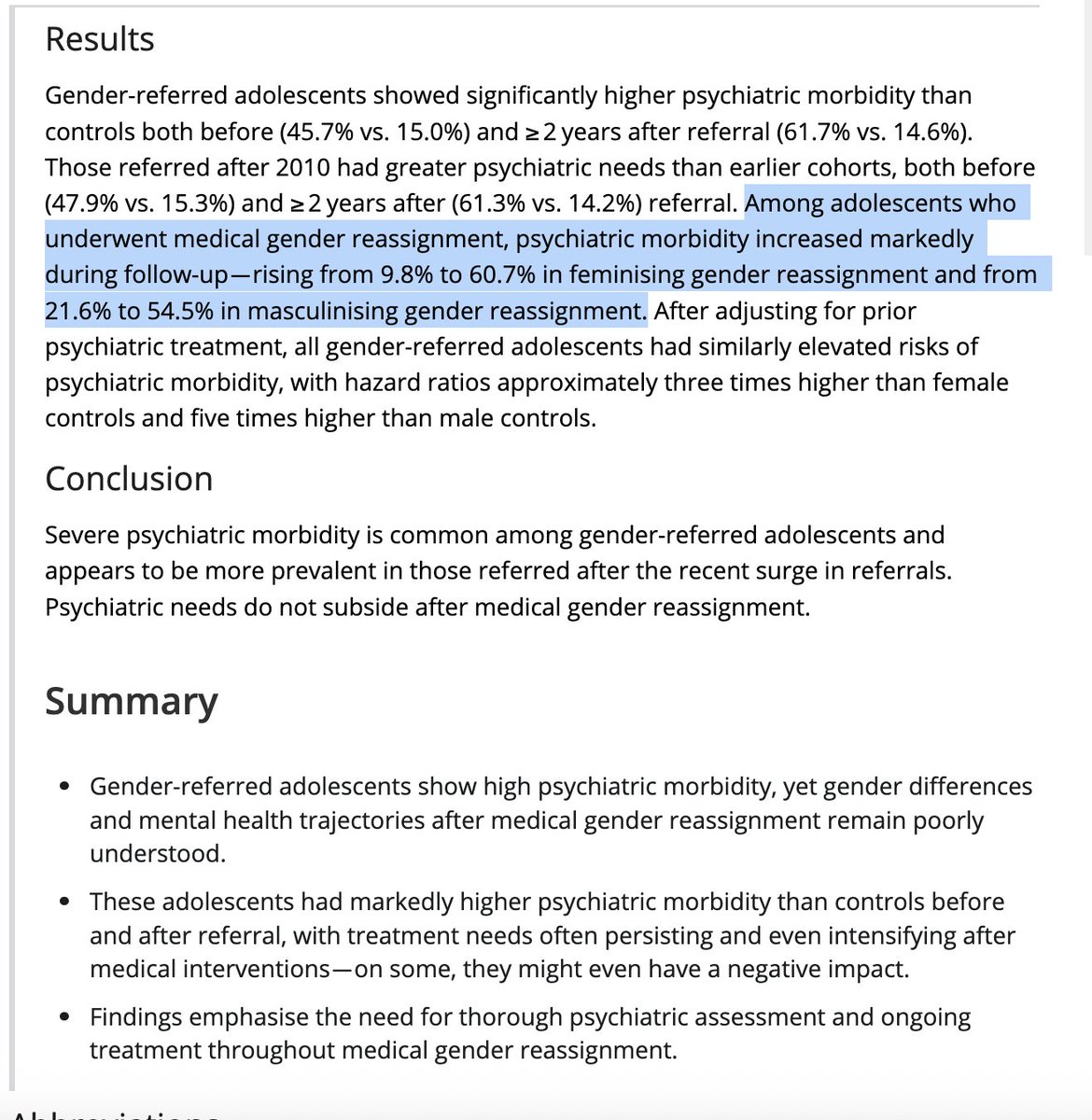
📰A new Finnish study reports that youth gender transitions (under age 23) did not improve mental health symptoms. For some youth, medical gender reassignment may have had a negative impact. Link ⬇️ /1
Think about this:
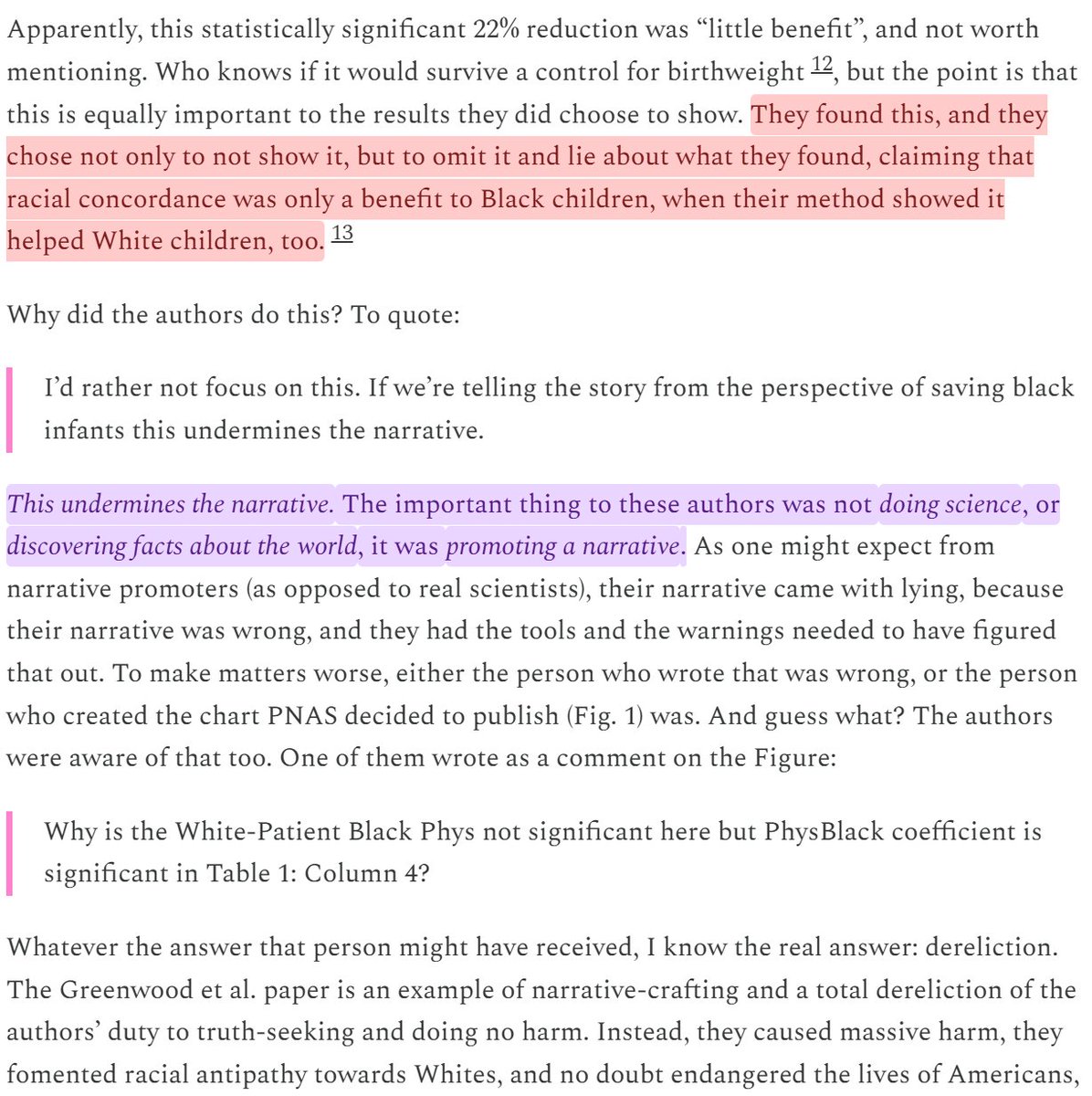
It's been a year since we learned this study was wrong and that the authors actually committed fraud and knew it was wrong when they published it.
No correction, no statements, and certainly no retraction.
These researchers did harm and have gone unpunished.
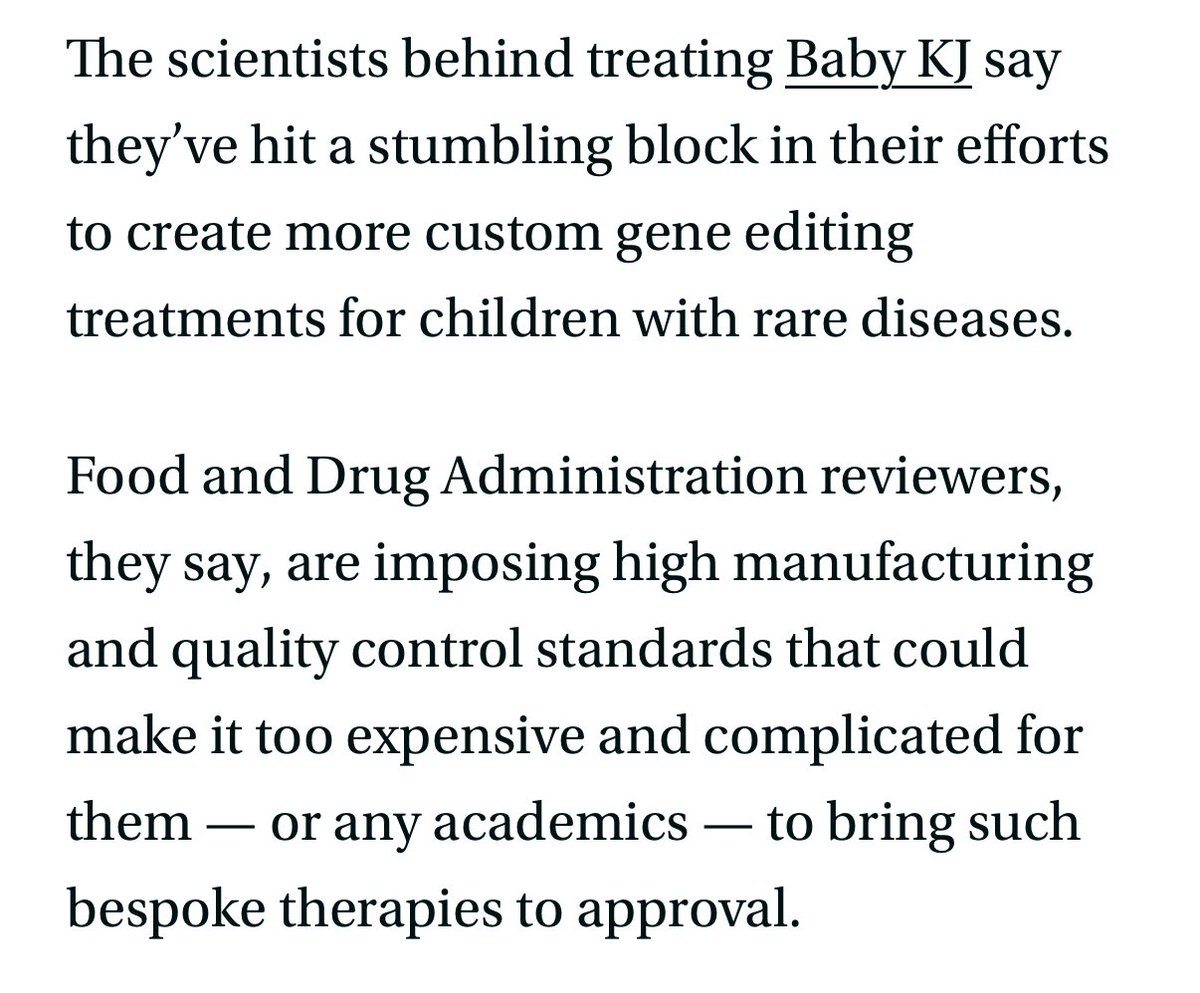
Recently, the FDA announced a new path that would facilitate the approval of drugs for ultra-rare diseases. But without allowing more pragmatic regulatory schemes for trials, such efforts will remain financially infeasible, as the scientists behind baby KJ highlight in @statnews.
One of the central problems in medicine is getting drugs where they need to go.
Only a fraction of injected drugs actually reaches the target organ, including cancer drugs reaching tumors. As the rest circulates through the body, it can cause off-target side effects.
The brain is even harder to reach: it has a defensive barrier that blocks nearly all large drugs and most small ones, which makes it much harder to treat diseases like Alzheimer’s, Parkinson’s, and brain cancer.
Scientists have tried many different delivery vehicles, including nanoparticles and liposomes. But the liver or immune system intercept most of the dose before they reach their target.
These are some of the barriers that microbubbles may be able to cross.
Microbubbles are tiny gas-filled spheres, encased in a protective shell and capable of carrying drugs through the bloodstream.
They don’t try to slip past the body’s defenses undetected; instead, they can be burst deliberately by an external ultrasound pulse.
That burst generates a pressure wave that briefly forces open biological barriers, including the blood–brain barrier, allowing treatments to quickly pass through, without a permanent opening.
Microbubbles are already used in imaging and diagnosis for some diseases. Now researchers are exploring their use to dissolve stroke clots, deliver mRNA therapies to specific tissues, and potentially even shatter kidney stones from the inside.
New piece by Ambika Grover: https://t.co/sfBzxMjSfX
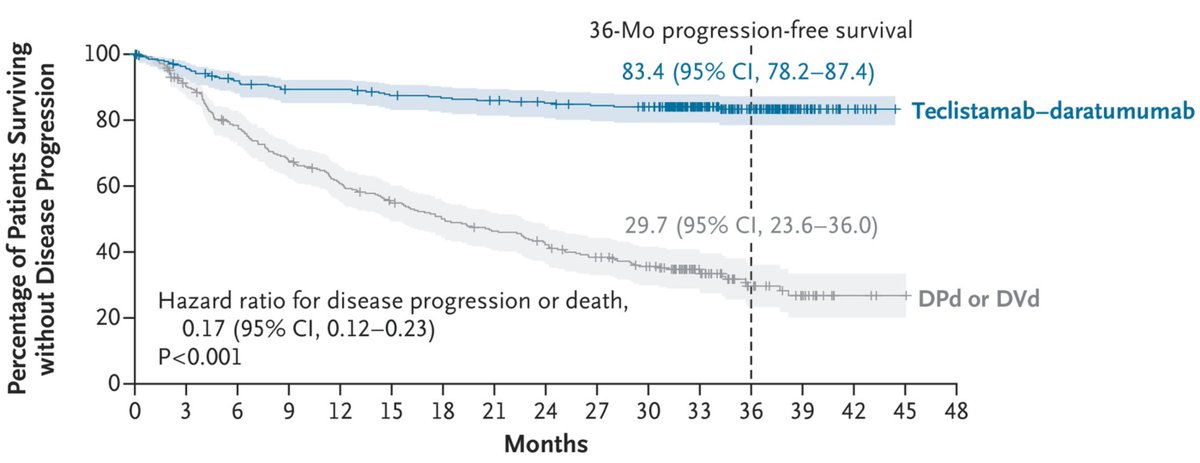
Sometimes cancer treatments are subject to hype, but here’s an advance that’s been understated:
Combining a T-cell engager antibody with daratumumab allowed >80% of people with relapsed or refractory multiple myeloma to go years without progression. Might be *permanent* control
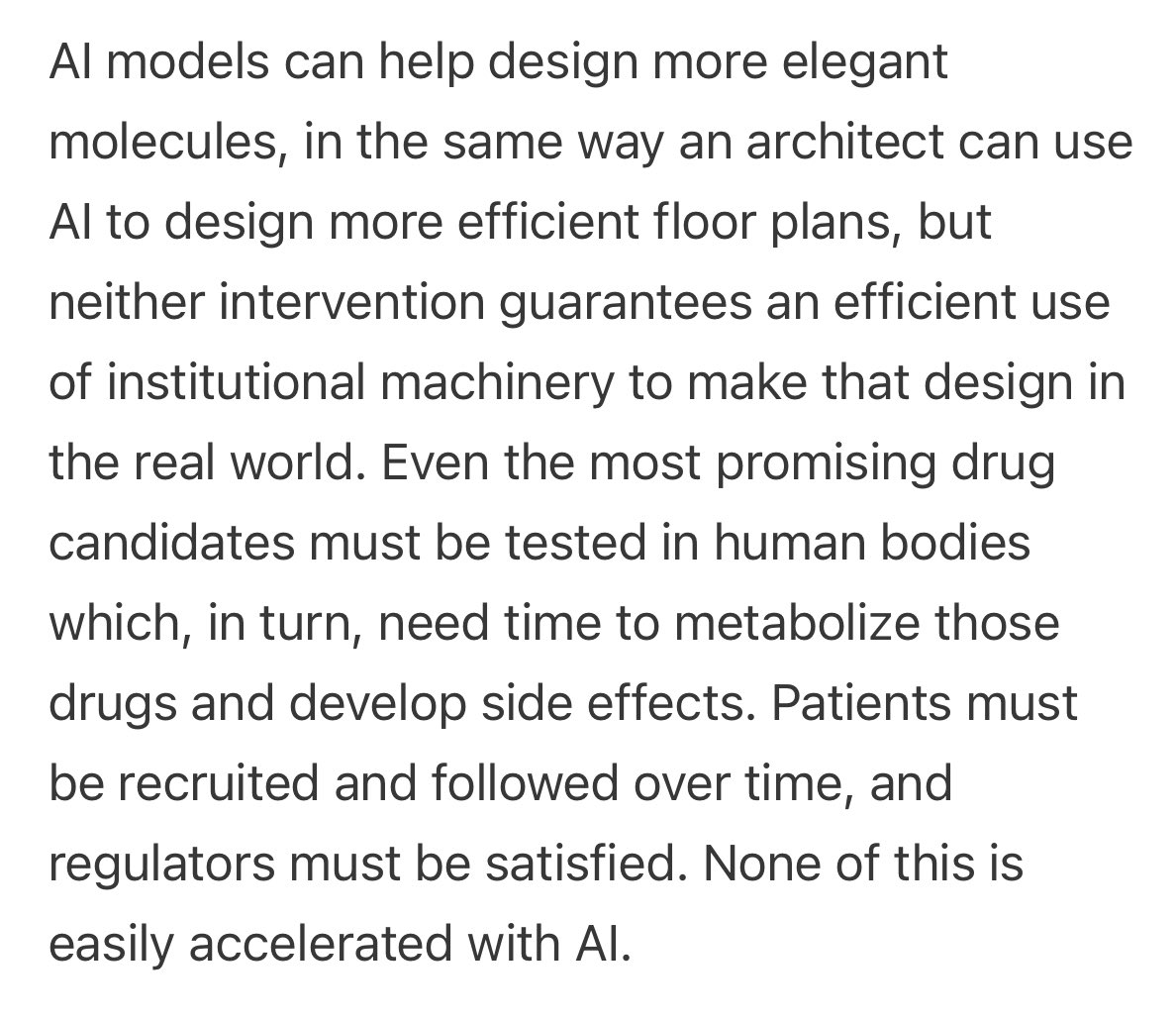
This is true and why I work on Clinical Trial Abundance. Clinical Trials will only become more of a bottleneck in the AI era. And AI won't accelerate them on its own, without concurrent institutional & regulatory reform.
From one of my pieces:
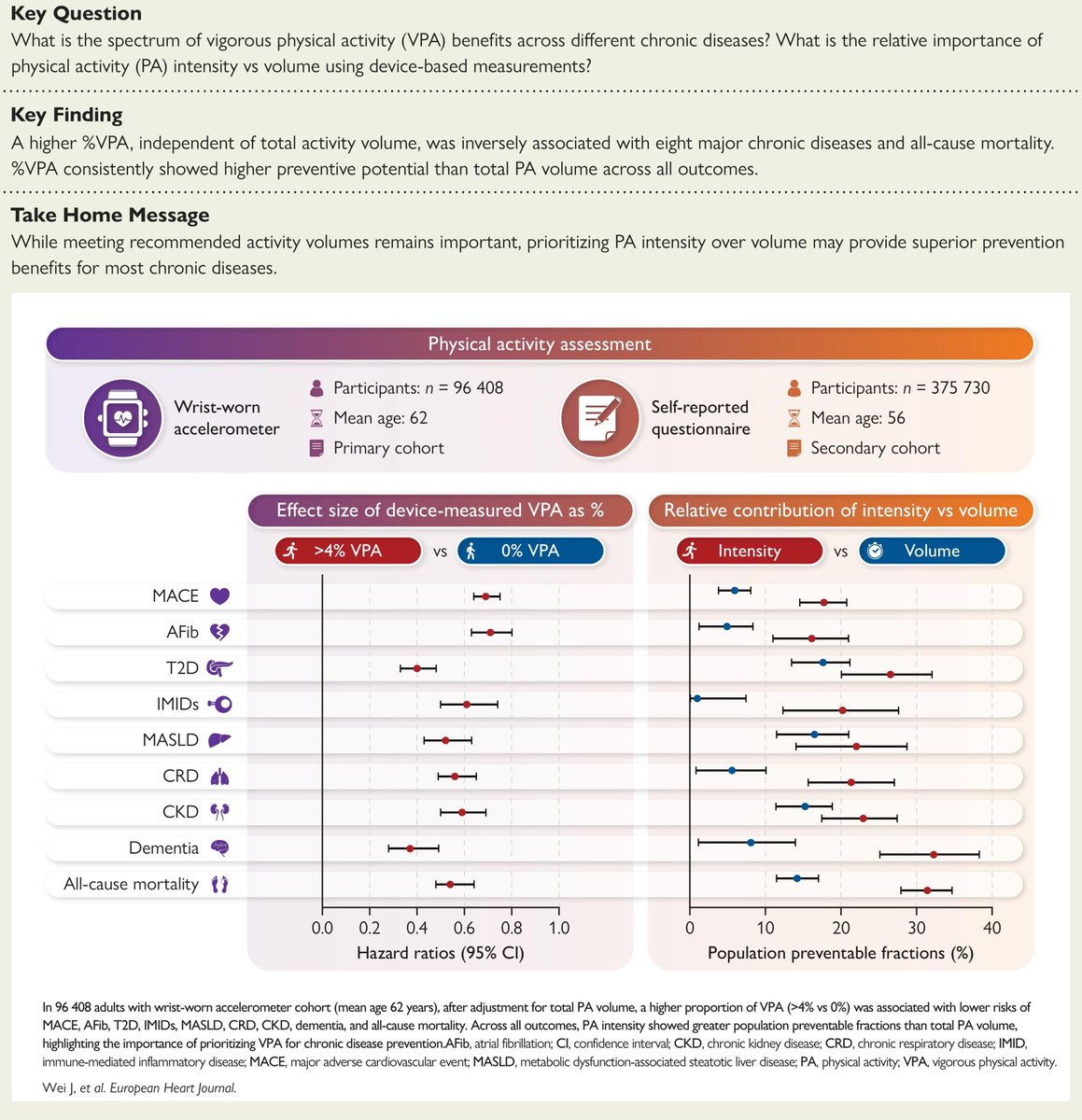
Exercise intensity vs volume and the risk of major chronic diseases
New study finds intensity trumps volume for everything.
Much greater decrease in disease risk and all-cause mortality for vigorous exercise, compared to overall volume.
https://t.co/b9xIvVCugB