Tomato, my Material 3 Expressive, data-oriented Pomodoro timer app, is now available on the Google Play Store for everyone to download. Get it at: https://t.co/vWuuKLfuR4
It is open source, with the source code at https://t.co/qBO1C2FjKZ
#JetpackCompose#AndroidDev#Compose
@_shub39 Use shared bounds instead of shared element for Text composables with different font styles. Also, the order of modifiers and where you place the shared element/bounds modifier can make a huge difference in the appearance of the transition. These improved the UX of Tomato a LOT
@dilangilluly@Shra_va_ni Kotlin code is still compiled to JVM bytecode and then DEX as part of the build process, so Java is still part of the build process and Kotlin does not do its own thing with a different compilation process
@dilangilluly@Shra_va_ni This is not true. Android does not execute JVM bytecode, Android apps are compiled into Dalvik Executable Bytecode (dex) which the Android Runtime (ART) compiles into machine code at runtime on first start but then precompiles most of the app while your phone is charging and idle
@nsg650 Desmos is probably the best you can get, you can do calculations AND plot graphs. It has a dedicated scientific non-graphing calculator too if you need that
@mahersafadii No problem 😁, I do agree that this was only introduced a few days ago, I'm sorry if my comment sounded harsh or rude 😅
The thing you pointed out is true though, the current state of the API is very convoluted and this change needs to be applied to all composables
@Devoid_5@evowizz M3E's Jetpack Compose components library becomes stable soon, we should see adoption by larger production apps like WhatsApp and Slack in a few months hopefully
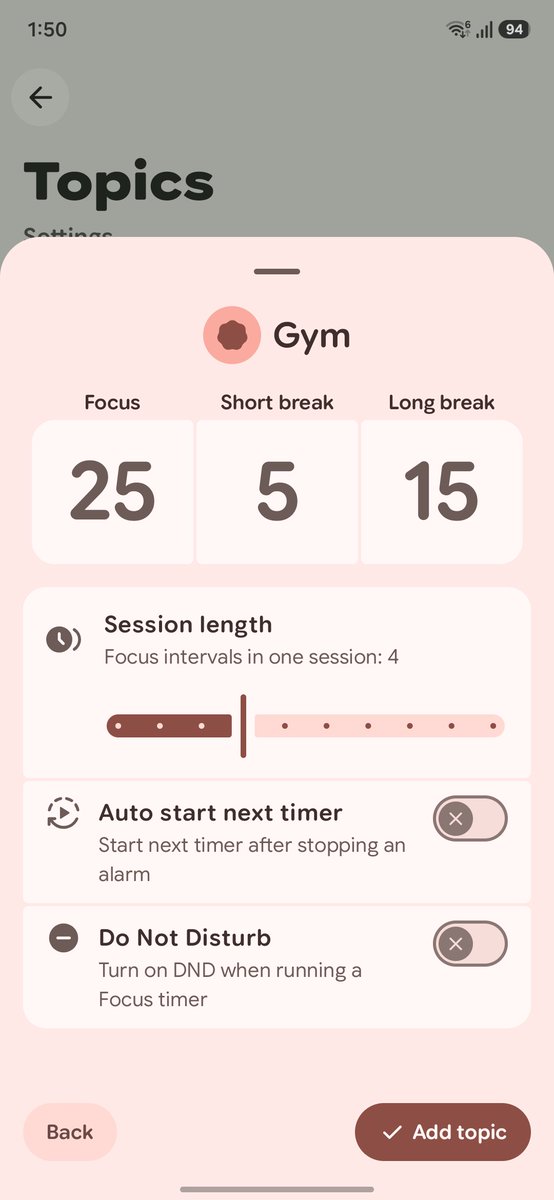
Tomato v2.0.1 is now available on the Play Store and GitHub. This update contains a highly requested feature: Topics!
Add topics to quickly switch between different pomodoro intervals for different tasks.
Special thanks to @the_only_dimu for designing most of the topics UI