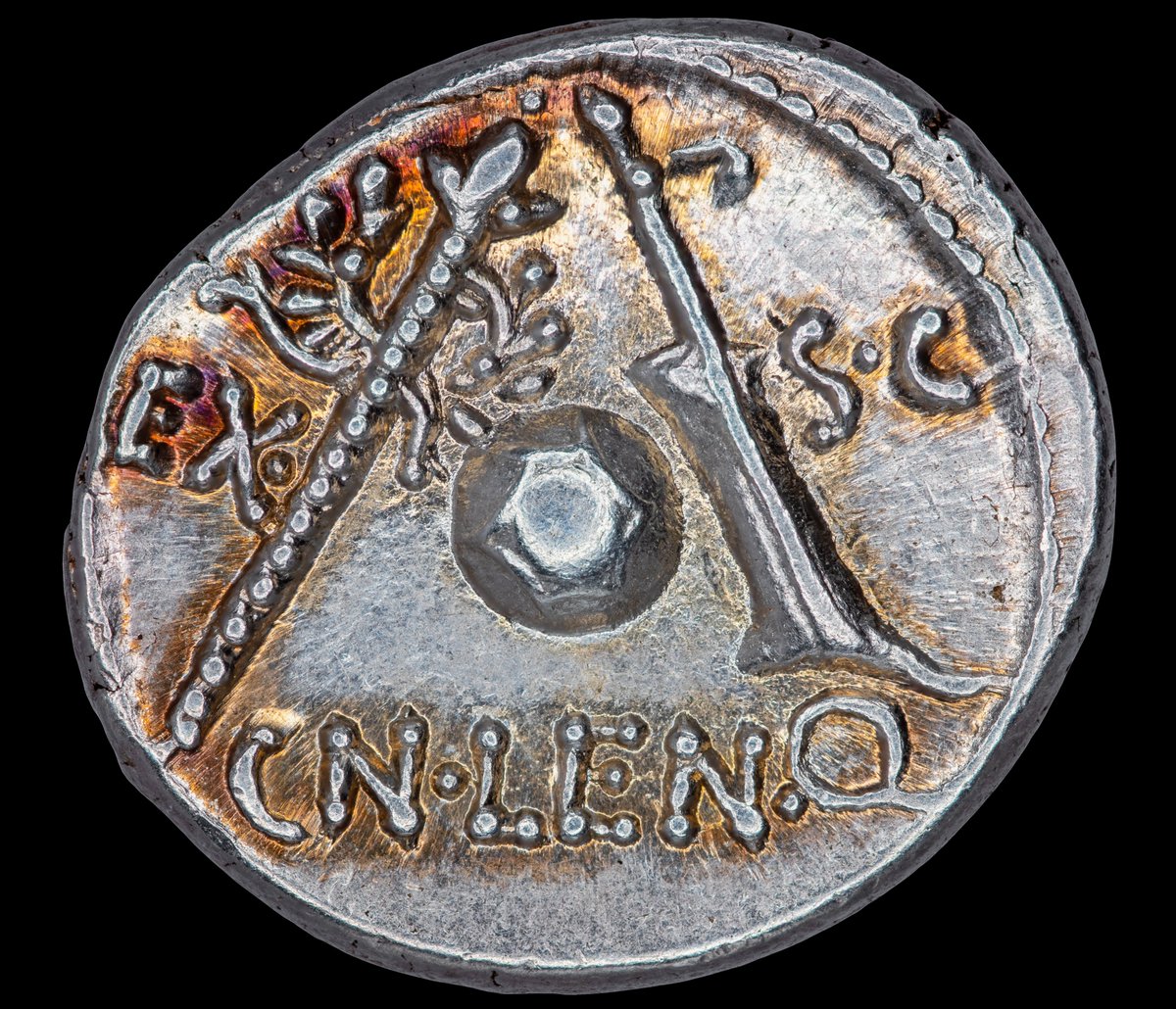
Struck in Rome under P. Clodius – appointed by the Third Triumvirate of Antony, Octavian and Lepidus in 42 BC.
Diana and Apollo were two of the most popular deities depicted on ancient Roman coins. Diana was often shown with a bow and arrow, or with a crescent moon on her forehead, while Apollo was depicted with a lyre or a bow.
Coins featuring these deities were often issued as a way of emphasizing the ruler's connection to the gods and to show that they had their favor.
#tezos #numismatics
Today's coin is the famous Robert Lovett, Jr. 1861 Confederate States of America copper cent. He only struck around 15 coins as he tought this could constitute a treasonous activity against the Federal government.
This is a restrike by coin dealer John W. Haseltine who bought the dies from Lovett.
#tezos #numismatics
When the vast empire of Alexander the Great broke up, the Macedonian general Seleucus secured the lion's share for himself and went on to become the longest-lived of Alexander's successors.
His tactical skills and his military innovations, including his use of war elephants on a scale never seen before in the West, earned him the epithet Nicator (Victorious).
#tezos #numismatics
Today's coin is the famous Robert Lovett, Jr. 1861 Confederate States of America copper cent. He only struck around 15 coins as he tought this could constitute a treasonous activity against the Federal government.
This is a restrike by coin dealer John W. Haseltine who bought the dies from Lovett.
#tezos #numismatics
Today's coin of the day is this beautiful 69 AD Roman Empire bronze sestertius of the first ruler in The Year of The Four Emperors, Servius Sulpicius Galba, who assumed the throne after Emperor Nero's suicide.
#tezos#numismatics
In Ancient Greece, the Gorgoneion (Greek: Γοργόνειον) was a special apotropaic amulet showing the Gorgon head, used by the Olympian deities Athena and Zeus: both are said to have worn the gorgoneion as a protective pendant, and often are depicted wearing it.
You can now add one to your #tezos wallet.
The Romans were fanatical about cricket, as well as gladiator shows and chariot races. The moneyer of this coin, Gnaeus Lentulus, was so obsessed with the game he decided to place a wicket stump, cricket ball, and cricket bat on this denarius minted in 74 BC! 🏏