@mr_wormhole@valyala@_rsc But if it does not that could confuse all the people who expect it to, since it always did so, and having reproducible output can be very useful. Also the comment in the code says it should always give the same result and that was written by Russ, so yeah.
@valyala@_rsc I know but the playground is supposed to be completely deterministic so that output does not change and can be cached. At least that's how it was in the past and the playground even faked time and sleeps in order to enable this.
Reminds me of the time I found and optimized a query that took took 2 hours to generate some kind of product export (and which had to run twice)
Got it down to <1 second with 0 changes to tables/indexes
Still not sure whether to love or hate SQL
Sometimes I'm not sure whether I love #sql or hate it
Just optimized a SELECT that took ~2 hours by moving some JOINs and subselects into CTEs
Same data returned, but optimized query takes < 1 sec
#mysql#performance
There goes my Saturday, but I finally finished the initial rewrite of my Go resp package for RESP3. Still needs more integration tests. Next step: Trying to integrate it into an existing Redis client package. https://t.co/d4UfLJY1C7 #golang#redis
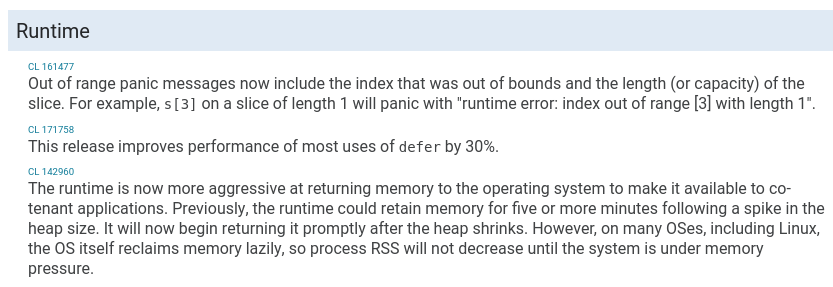
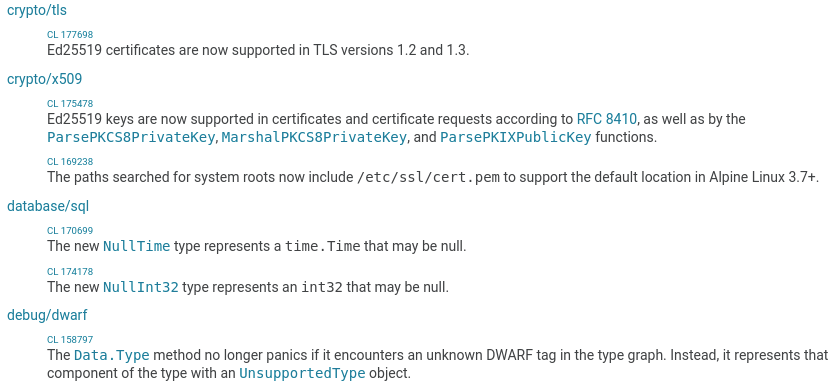
Wrote myself a userscript (Tampermonkey) that shows links to the relevant CLs on the #golang release notes. Makes finding the relevant CLs much less annoying (no more dev tools or source viewing) https://t.co/Nk0gu2krdg
Reminder: Just because SSDs are fast doesn't mean you shouldn't optimize your application's I/O.
Just went from reading ~800MiB/sec to ~2200MiB/sec by switching to direct I/O, using larger buffers, and doing concurrent reads.
@psjarlo@pmjordan@kellabyte@janl Cloudflare has a blog post on this (in their case it was impacting ChaCha20-Poly1305 performance): https://t.co/Khk0czDP9s