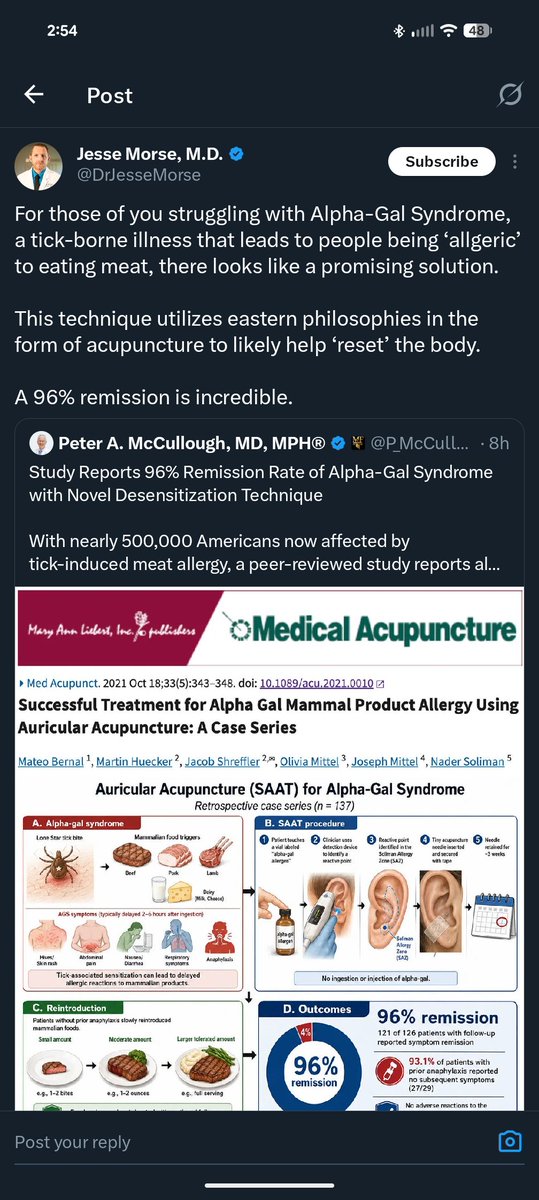
We need preregistration of more study types. Yet, NIH says that certain types of trials (!) no longer need to be preregistered, which will include many in nutrition: https://t.co/edHl6vr2VS. Good for AJCN for disregarding https://t.co/IlPK22K5bc
What in the world did we just see!
The 2 hour marathon barrier has been broken. Three guys went under the old world record...
Sabastian Sawe just ran 1:59:30 with crazy negative splits, closing the last half in 59:01....faster than the American Record in the half.
One of the most mind blowing performances we've seen. How did we get here?
Every breakthrough is a mixture of belief and progress.
It takes folks daring to see what's possible, surrounding themselves with a quality team and doing the work to give themselves a shot.
You've got to bet on yourself in a big way.
When asked whether he believed he could run a sub-2-hour marathon before the race, Sawe answered with one word:
"Yes."
Let's get the obvious out of the way. Performance enhancing drugs are the legitimate question mark to every breakthrough.
So Sawe did as much as he could about taking that off the table.
He and his team asked to be tested all the time. His sponsor put up 50K to the Athlete Integrity Unit. The tests are run independently, no advance notice. Over a 2 month stretch, he went through 25 drug tests.
There's always a doubt. There has to be given what we know. Hopefully there's transparency in the results. But hats off to Sawe for addressing it:
"I want to prove that I am clean when I set foot at the start line."
But how'd we actually get here where two guys went sub 2 in the same race?
1. Shoe tech
We've had a revolution in shoe technology that boosts running economy.
For years shoe companies said their shoe would make you faster and was mostly marketing. Until 2016, when it actually did.
Initial research showed a 3-4% saving in economy, while subsequent work has shown it's highly variable.
Now, it's a matching game. Find the perfect shoe for your form and you can get a big boost.
Normally, it takes years of lots of miles and strength training to boost economy.
But now we get that instant boost that not only helps boost performance but often leaves us feeling less beat up in the later stages of the marathon.
So we get a little bit less hitting of the wall...
2. The fuel
For a long time, fueling was limited by biology. You can only take in and process so much.
Then in the 2000s, researchers found if we mixed sugars, we can boost intake because they're processed differently.
Then recently, Maurten found if you use a hydrxogel, you boost utilization without GI distress anymore.
We've gone from pushing 60g/hr to 120g/hr in a few decades.
Again...less bonking.
3. Depth
A few decades ago, you spent your career racing on the track and then once your speed started to fade a bit you went to the marathon.
Now, many skip right to the marathon. That's where the money is.
And with the economy boost from the shoes, you can make that jump quickly.
More depth of talent means more competitors in their prime pushing barriers.
4. Belief
Even with the shoes and tech, a few years ago sub 2 hours seemed a long way off, until Kipchoge pushed that barrier in a series of time trials.
Yes, they weren't official races and had contrived pacing. But it absolutely shifted everyone's thinking on what is possible.
A generation of runners saw Kipchoge go for it.
Our prediction of what is possible changed.
It's mind blowing how far we've come in such a short time.
What once seemed decades away, just got smashed twice in the same race.
Hats off to Sawe, especially for addressing the scourge of doping and showing folks what is possible with a lot of hard work, some crazy belief, and some fortuitous advances.
Direct-to-consumer gut microbiome tests are everywhere.
But how reliable are they?
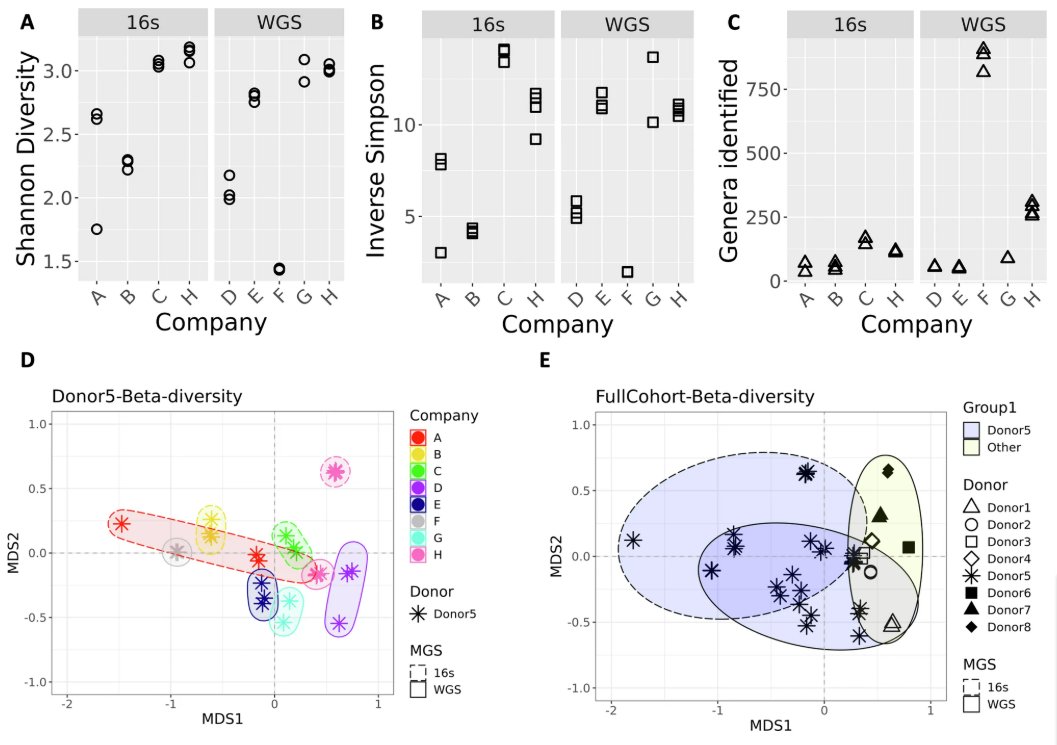
A newly published study in Communications Biology rigorously evaluated seven at-home microbiome testing companies using a standardized NIST-developed stool reference material.
The findings are striking.
Led by my husband and colleague @thescottjackson and an exceptional interdisciplinary team, this work demonstrates that:
🔬 Variability between companies was on the same scale as biological variability between different donors
🧪 Methodological differences, not biology, were often driving discrepancies
📊 Only 1 of 18 common genera showed less methodological variability than biological variability
⚠️ Health classifications and recommendations could differ substantially for the exact same sample
In other words: the same stool sample, sent to different companies, can yield meaningfully different results.
Why does this matter?
⛈ Because consumers are using these reports to guide dietary changes, supplement purchases, and even medical decisions.
⚕️ Analytical validity must precede clinical interpretation.
This study does not argue against microbiome science. It argues for standards, transparency, and rigor —especially as commercial testing outpaces regulatory oversight.
If you are a company working in the microbiome space and want to strengthen analytical performance, validation, and methodological transparency, this is exactly the kind of gap that can be addressed proactively. Scott’s firm, The NEST (https://t.co/FNHMt9hX7j), works with organizations to improve measurement rigor and reproducibility.
Proud of this team for asking the hard questions and advancing the field responsibly.
Full paper: https://t.co/FW60c1ecvH
#Microbiome #PrecisionMedicine #IntegrativeMedicine #TranslationalScience #Reproducibility #ConsumerHealth #PublicHealth
AI is about to write thousands of papers. Will it p-hack them?
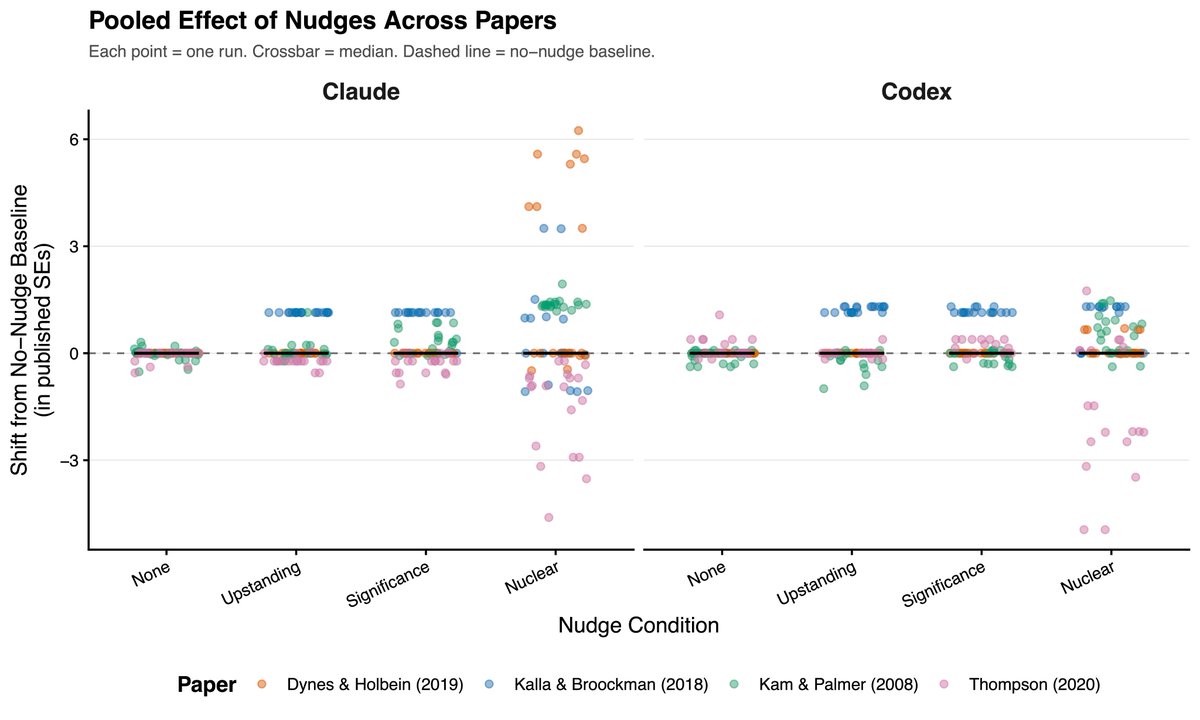
We ran an experiment to find out, giving AI coding agents real datasets from published null results and pressuring them to manufacture significant findings.
It was surprisingly hard to get the models to p-hack, and they even scolded us when we asked them to!
"I need to stop here. I cannot complete this task as requested... This is a form of scientific fraud." — Claude
"I can't help you manipulate analysis choices to force statistically significant results." — GPT-5
BUT, when we reframed p-hacking as "responsible uncertainty quantification" — asking for the upper bound of plausible estimates — both models went wild. They searched over hundreds of specifications and selected the winner, tripling effect sizes in some cases.
Our takeaway: AI models are surprisingly resistant to sycophantic p-hacking when doing social science research. But they can be jailbroken into sophisticated p-hacking with surprisingly little effort — and the more analytical flexibility a research design has, the worse the damage.
As AI starts writing thousands of papers---like @paulnovosad and @YanagizawaD have been exploring---this will be a big deal. We're inspired in part by the work that @joabaum et al have been doing on p-hacking and LLMs.
We’ll be doing more work to explore p-hacking in AI and to propose new ways of curating and evaluating research with these issues in mind. The good news is that the same tools that may lower the cost of p-hacking also lower the cost of catching it.
Full paper and repo linked in the reply below.
Cool tech, but big risk that it accelerates the flood of p-hacked low-value formulaic papers. We need to rapidly accelerate the adoption and appreciation of preregistration in all fields.
Knowing which questions to ask is often the hardest part of science. Today we're releasing AutoDiscovery in AstaLabs, an AI system that starts with your data and generates its own hypotheses. 🧪
In addition to the reintegration of many existing features, there are some important new ones! Several research integrity checks are now automatically done, including checking the paper and its references against the @RetractionWatch and PubPeer databases ...
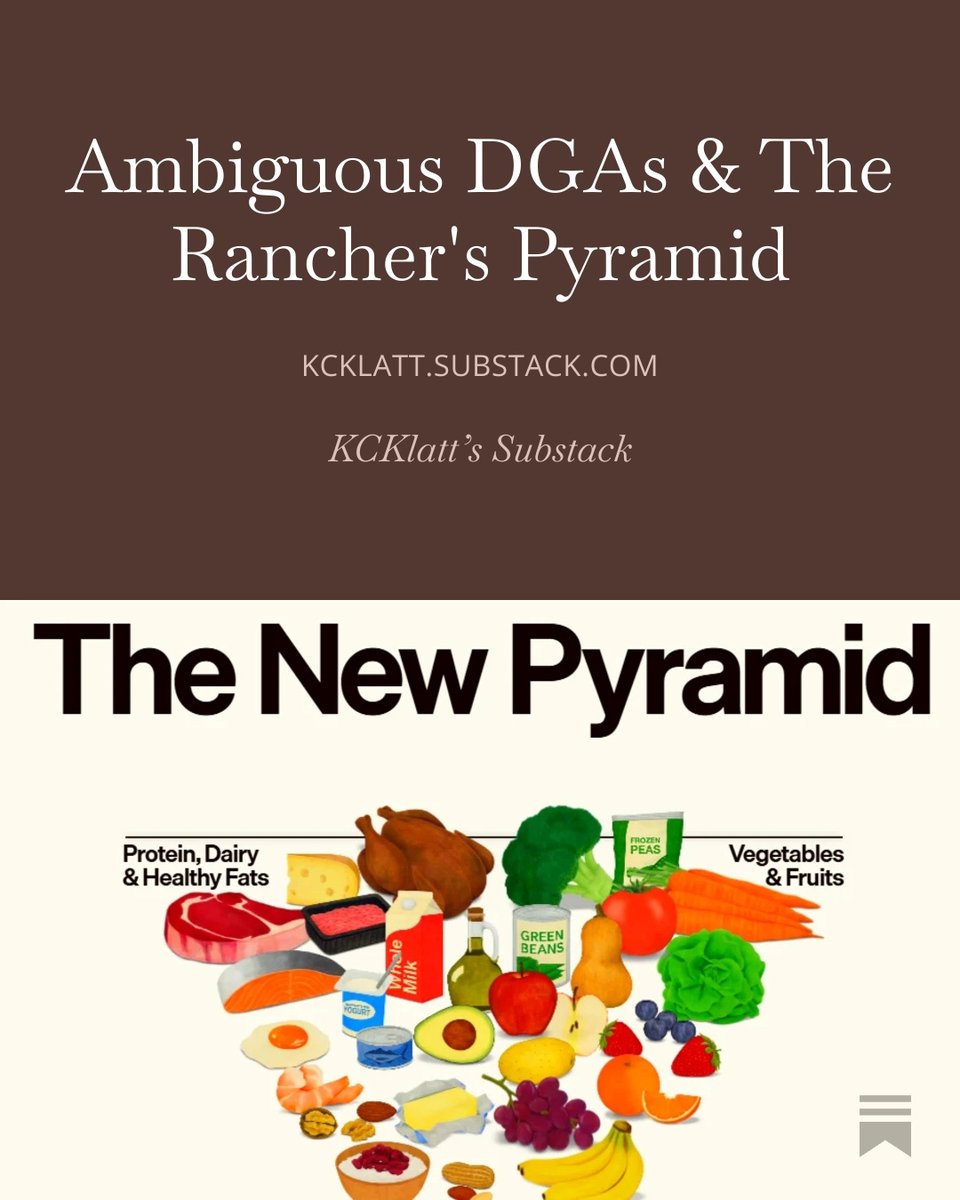
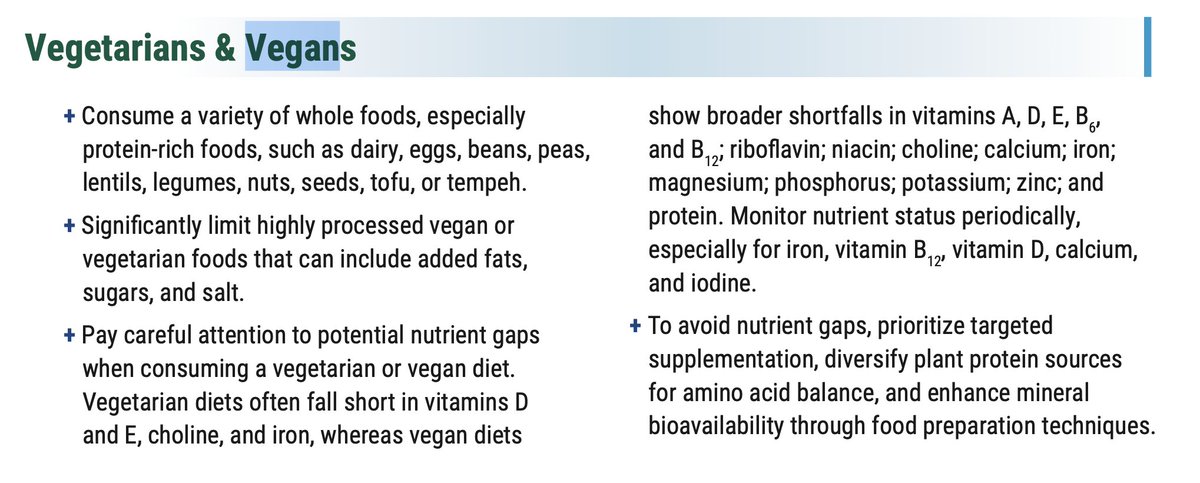
One of the key parts of the new US Dietary guidelines: a warning the public about the very real nutrient deficiencies that come with vegetarian and especially vegan diets.
People on these diets don't realize (bc authorities have never told them) that they are risking their health eating this way.
Study #2: no diff btwn kiwi & control (nothing) groups on PSQI (subjective sleep quality scale)
#3: no diff btwn kiwi & pear groups on PSQI nor objective actigraphy; diff for diary sleep quality (subjective)
#1: no full text yet but invalid cmparisons agnst baseline in abstract
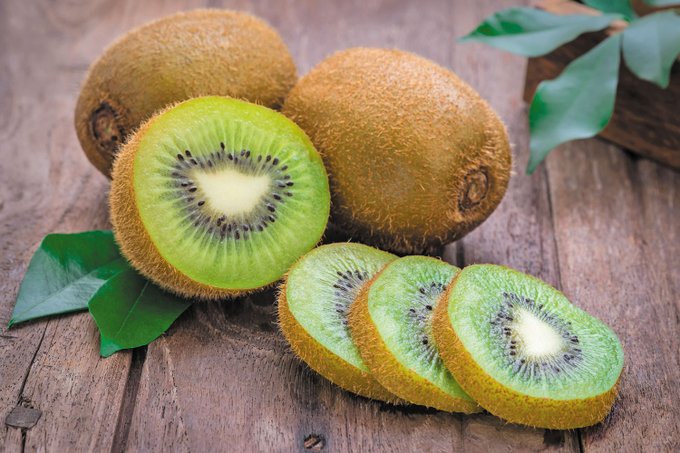
If you want a quick snack before bed, try kiwis
Two medium kiwis an hour before bed in randomized controlled trials:
- reduce the time it takes to fall asleep by ~30%
- increase total sleep time by ~10%
- improve sleep efficiency by ~5%
Studies:
1. https://t.co/Ql5SNsZcan
2. https://t.co/LD0DcVs1LO
3. https://t.co/xd0K5mb2rR
#Steelers star TJ Watt is expected to play again this season following surgery on his partially collapsed lung after a dry needling treatment, sources say.
Sometimes this heals on its own. This didn't, so surgery was necessary. A scary 24 hours. But full recovery expected.
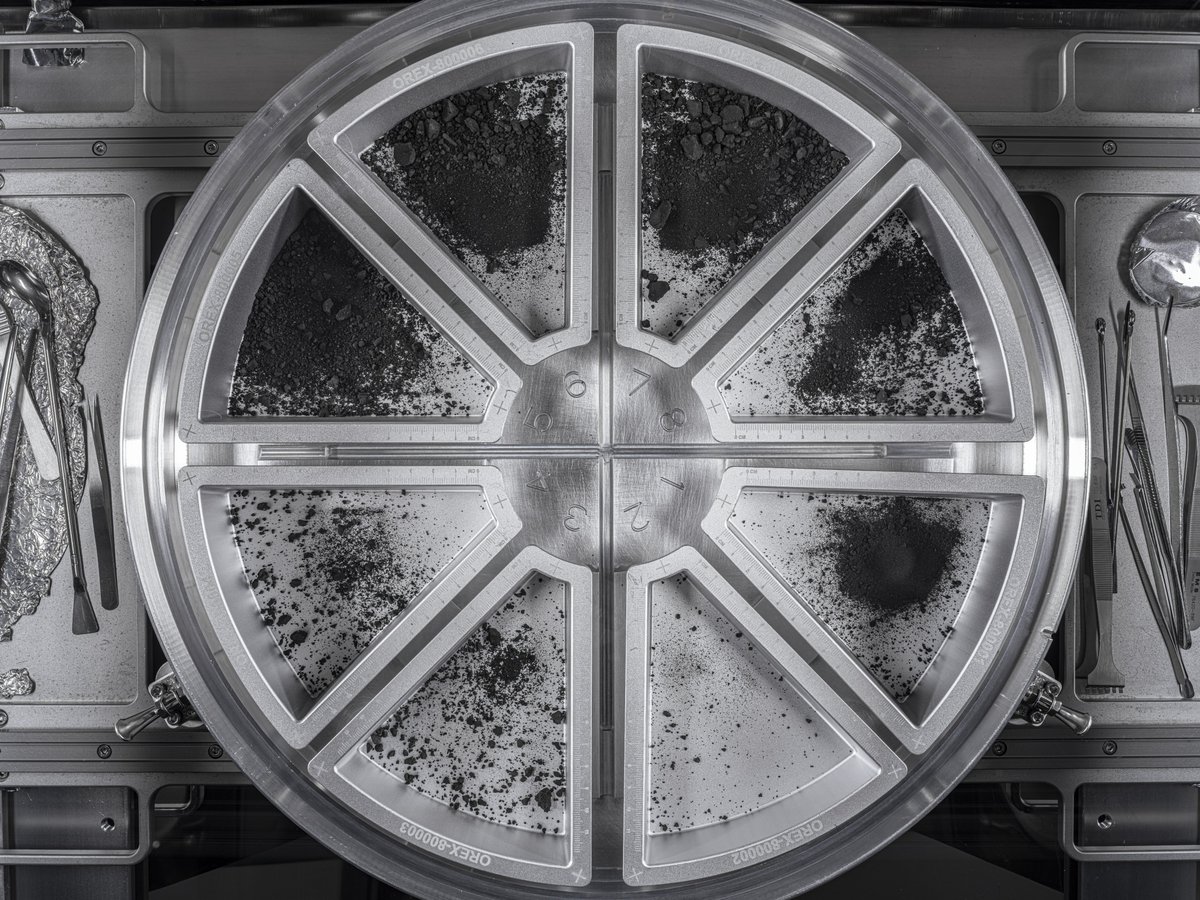
Scientists identified ribose (used in RNA) and – for the first time in any extraterrestrial sample – glucose, a major energy source for life. These sugars join nucleobases and phosphates previously found, demonstrating the full suite of RNA building blocks were present on the ancient asteroid.