🔔After it being a LONG time in the works, today we launch "Applied Nutrition Literacy", a course that Dr. Alan Flanagan and I have developed.
📊The goal: To help you become competent and confident in your critical appraisal of nutrition research.
See: https://t.co/LVf0Qj6mJp
I suspect the reason for going on and on about this case study is to deflect attention away from their preprint. The QAngio results reveal most participants had detectable plaque, median plaque increased, and 21% met a significant progression threshold. Leaving aside severe methodological limitations, those results don't support the documentary's main claims, so all this seems like a desperate attempt at reframing around a single case. And as seems typical of this group, the tables with the clear interpretative results are buried in the supplementary materials.
Statins, GLP-1s, seed oils, Ancel Keys, and the influencers shouting the loudest about all four.
Bariatric surgeon Dr Terry Simpson has familial hypercholesterolemia, lost 50 pounds on tirzepatide, and spends his time pushing back against the loudest voices on social media. We sit down to work through what the data actually says, and how to think about uncertainty in nutrition and medicine.
For the full show notes head to: https://t.co/y7x6C5eDc3
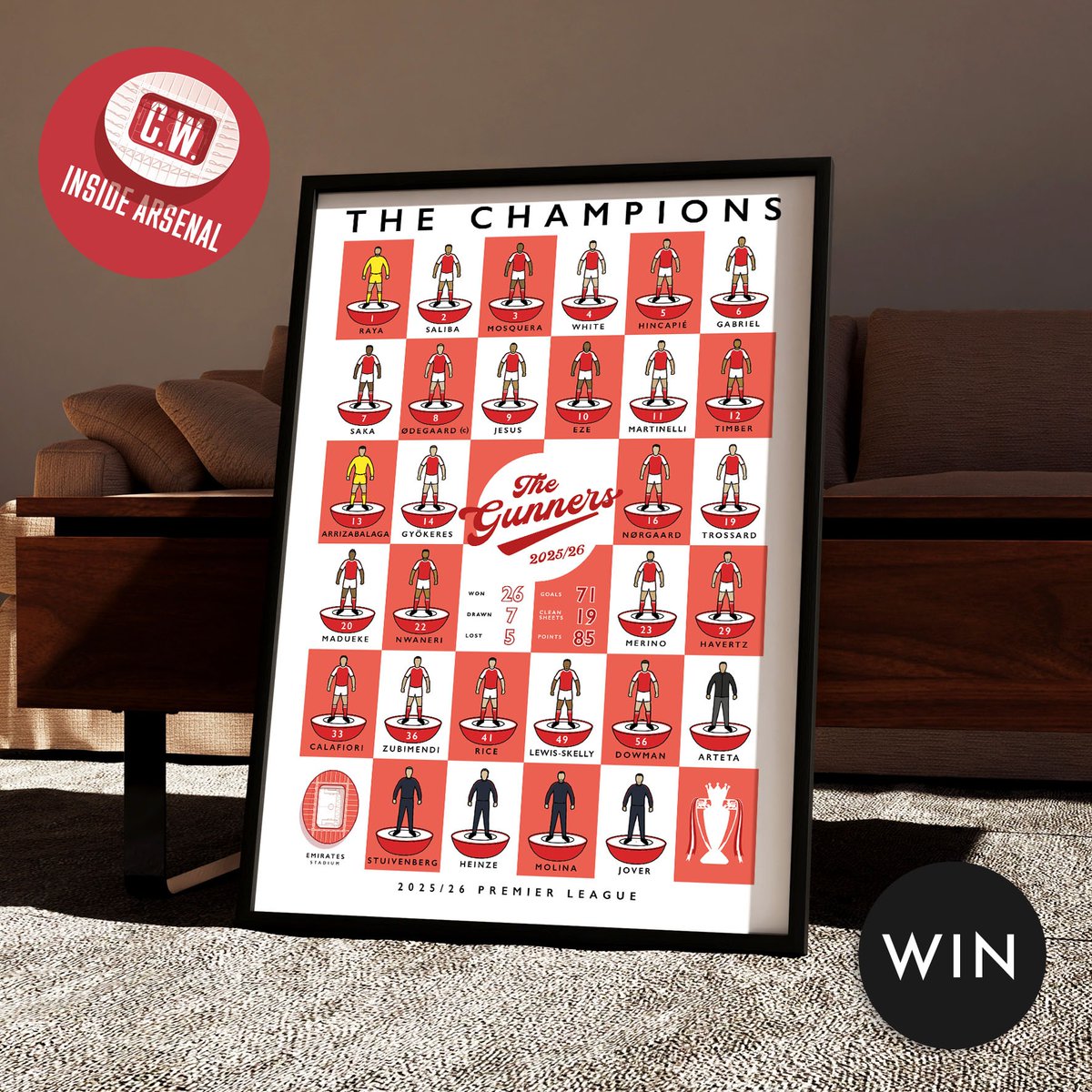
🚨 Hi everyone. To celebrate Arsenal’s title win I'll be giving away THREE 'Champions' prints by the brilliant @matthewjiwood to three random winners
- Simply repost this to enter
Winners picked on Saturday.
(If you're not feeling lucky the prints - and loads of others - can be found here: https://t.co/718xYZwECf)
As bad as some of Nick’s heart disease commentary is, telling your audience you know how to *never* get Alzheimer’s despite risk factors might be the worst.
That MD title comes with responsibility. Maybe avoiding residency to be an influencer isn’t the best idea.
CC: @ZKForTre
Want to see what an actual metabolic health scientist thinks of medfluencer Nick Norwitz? Watch this. In fact, if you’re interested in diabetes and (much more) Nicola Guess’s YouTube is second to none.
https://t.co/qPQkNY8D1U
The saddest part about the spiraling and voluntary delegitimizing of Norwitz is that he had the option to try to be Mark Hyman or Steve Rosenberg/Jennifer Doudna/Stan Prusiner, and he chose to aim lower than Hyman.
As always, Nick deliberately choose hype & clickbait framing for clicks, even in a published paper.
We know he has LOTS of data of total cholesterol < 700 mg/dL, as it’s published. See below from Oreo vs statin where untreated TC was 494 and 539.
https://t.co/bEv17mYnIG
And no, nobody is saying this meaningfully changes the point, but rather that scientific rigor is never the priority here. “Cholesterol of 700 for 7 years” just adds to the hype, which is the game…
New episode with @DrBSteamjets 📢
We discuss why common errors in interpretation can lead to overstated conclusions on a range of nutrition topics.
Lots of excellent details on methods, stats, and critical appraisal in nutrition.
https://t.co/tO9EjwNXOL
Great new podcast @NutritionDanny with David Allison. https://t.co/H6VlR54Ytv
David's key takeaways at the end of the 'cast on nutrition research:
1.) Focus on important AND answerable research questions. No more fluff research that is more helpful for tenure track promotions than science at-large.
2.) 🔥MOVE ON FROM SELF REPORTED FOOD INTAKE🔥
YES PLEASE. I could not have said it better myself:
David- "I think we need to stop spending so much time debating about things like the value of self-report of food intake, and trying to tweak it in tiny ways to make it better, or apologizing for it. We need to say, "That is a terrible method," and really move or shift the investment from using those methods toward coming up with better methods that are based on biochemical tests and have a lot more validity, if we can work on them."
3.) PREREGISTER (would cut down on rampant p hacking by multiple exposure/ analytical investigations). MAKE DATA PUBLICALLY AVAILABLE. PUBLISH ALL TRIALS.
Stunning. Agree with all these. The current realm of nutritional data greatly muddies the water and, again, is best suited for tenure track promotions rather than finding Truth.
Transcript of this part of the podcast below
This interview by @NutritionDanny with David Allison was excellent and reminded me of a couple of concepts I needed to brush up on.
https://t.co/ue12MtxjvF
For those of you new to this discussion, one thing that has always been hard to reconcile is that the criteria Dave mentions here to define "Lean Mass Hyperresponders" describes 3 fasting lipid parameters, and as far as I can tell makes no reference to 1) Leanness (body composition), 2) body mass, or 3) hyperresponse. So I think it is therefore not surprising that people might have trouble following the logic of how it exists. If he wants consensus on whether there are people out there with a collection of fasting lipid values in the ranges he describes, well he will find plenty of it
Why does it feel as if he is on a mission to undermine the proven benefits of statins with loose mechanistic correlative data (he is)? Maybe AI can find a single post Nick has ever made framing statins in a positive light? Never mind. It won't exist... Also wake me when he has written one legal prescription or has made a single clinical decision as a licensed practitioner
This is a headline generated from a cross-sectional study published in a Radiology journal using a shortened Food Frequency Questionnaire and a totally made up metric of UPF intake. Countless issues with zero potential for causal inference. What are we even doing @cnnhealth ?
Academics, plz stop giving quotes to media about your studies that will just be clickbait, and plz restrain your comms offices from running press releases on this stuff.
When legacy media and academia opine that nobody trusts science anymore, they should look in the mirror.
Diet and gallstones:
me talking with @NutritionDanny about the evidence and what more we need to investigate: dietary fat gets a mention but there's much more to it
Thanks Danny for the opportunity!
https://t.co/fuUQ3RmR4f
Dietary guidance around gallstones often focuses on dietary fat restriction.
But there is surprisingly weak evidence for this intervention.
@AngelaMMadden discusses what we actually know about diet in relation to gallstones and gallbladder conditions.
https://t.co/asCtzbWeIz
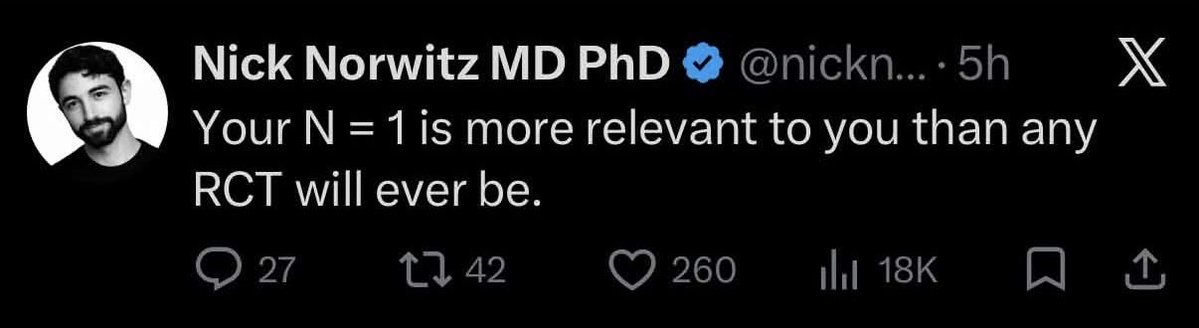
Nah, we have an overwhelming amount of research showing that people generally suck at knowing what they are doing in their life, leading to a ton of confounding, cognitive biases, and other things that cause personal experiences to be unreliable.
Best thing is to evaluate one's personal experience within the context of RCTs and other scientific evidence so that you can better figure out the truth value of your experiences and beliefs.
So, both matter and both are relevant when the goal is truth seeking.
I don’t understand why @nicknorwitz continues to appeal to his apparent “authority” as an MD. 🤔 He quite literally has not prescribed a single medication to a single patient as a qualified medical doctor. He hasn’t worked a single day in hospital so has no real world experience of how medications affect patients at the individual level. This level of delusion is mind-boggling. He claims his MD gives him further insight and expertise into medical interventions, yet the only things he knows about medications are from papers and things he reads online. 🤦🏽♂️
@nicknorwitz still doesn’t understand why we have an issue with referencing N=1 experiments regularly. 🤦🏽♂️ Your N=1 feels convincing because you lived it. But you didn’t control anything, so you can’t isolate the variable or rule out placebo, natural changes, or coincidence. All you know is what happened… You don’t know why it happened. That’s the gap RCTs fill.