sales manager @ecospray. Biorational Nematicide approved for sports turf/potatoes/carrots/parsnips/roses to name a few! Covering EU/Africa/NZ/AUS and elsewhere
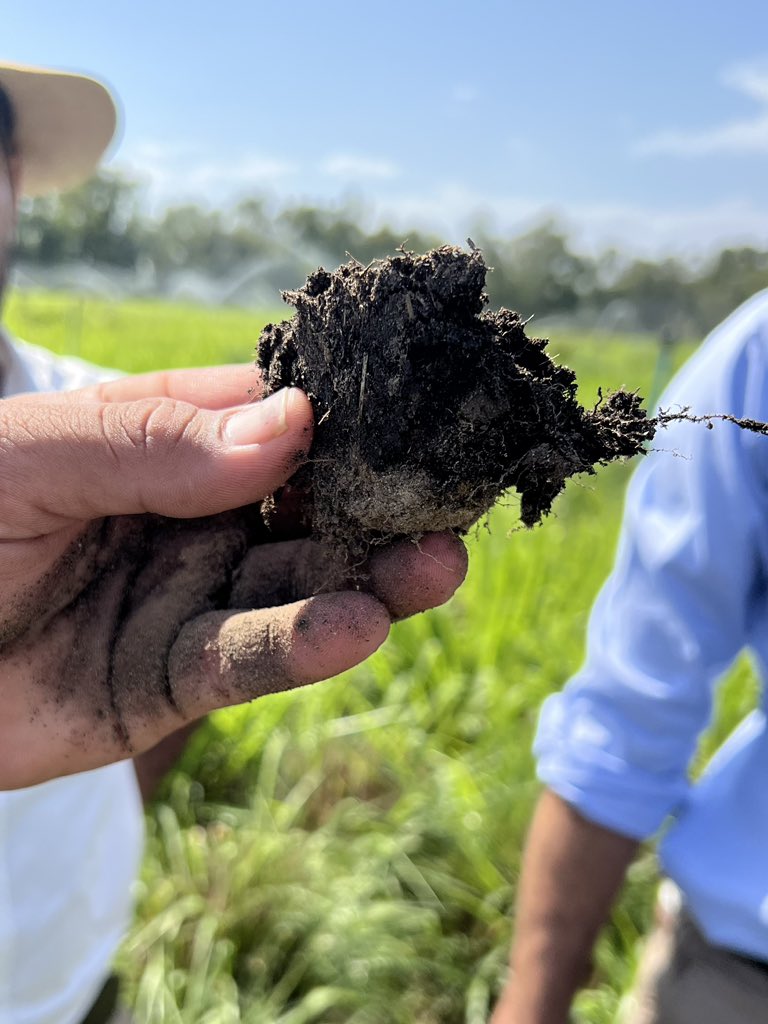
After just two seasons of holistically managed multi-species grazing, this desert soil transformed from lifeless sand into a carbon-rich sponge, supporting an increasingly rich diversity of life both below and above ground.
Drawdown Farm, located in the Thal Desert of Pakistan, is quite literally greening the desert while producing a variety of grains, fruits, specialty crops, livestock, and more.
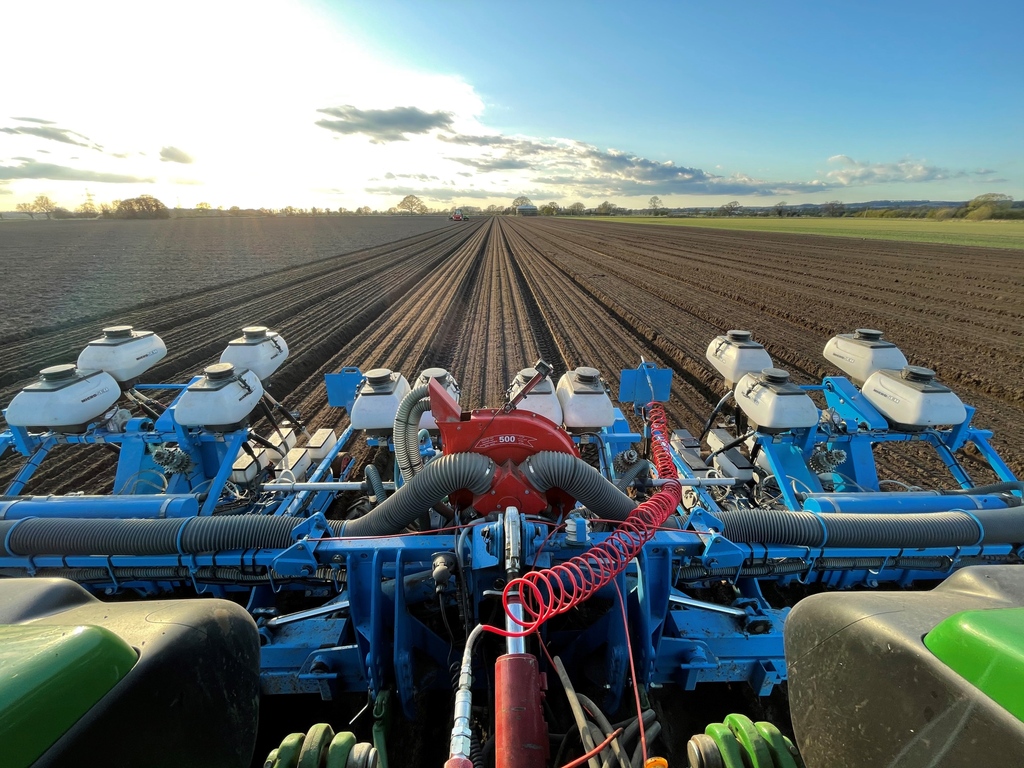
A great photo showing Nemguard DE being placed in the seed furrow. This kind of targeted application delivers protection exactly where it's required!
For more information on Nemguard DE, please visit our website at https://t.co/B0UVmBRCqV
#Carrots#parsnips#farming
In today's #GWCT Morning Newsround:
🌳 England's hedges would go around Earth 10 times
💰 Call for increase in spending on biodiversity
🌊 83% of English rivers have evidence of pollution
Check out these stories and more in the Morning Briefing 👇🏼
https://t.co/Nlz9VOQQcx
In today's #GWCT Morning Newsround:
🌳 England's hedges would go around Earth 10 times
💰 Call for increase in spending on biodiversity
🌊 83% of English rivers have evidence of pollution
Check out these stories and more in the Morning Briefing 👇🏼
https://t.co/Nlz9VOQQcx
Nemguard DE has proven activity on key nematode species. By applying Nemguard DE at drilling of carrots or parsnips, reduce fanging and get an increase in overall marketable yield. 🥕
Visit https://t.co/B0UVmBRCqV for more information.
#farming#carrots
Over the course of 5 years, Fazenda Mata do Lobo in Goiás, Brazil, converted conventional corn and soy fields into a thriving agroforestry system featuring coffee.
No longer mono-cropped, this system yields limes, mango, avocado, banana, several hardwood species, and specialty grade coffee.
Coffee farming can be a catalyst for ecosystem restoration and the diverse and profitable production of several crops within the same system.
With no MRL and no PHI, NEMGuard DE is an ideal fit for your IPM program.
Use NEMGuard DE as soon as you’re aware of a nematode problem in your root crop. You can make one 20 Kg/ha application per crop.
To learn more visit ➡️https://t.co/tpNwKlOj9i #Farming
Disease suppressive soil has a natural ability to suppress or reduce the incidence and severity of plant diseases, even when a pathogen is present.
The problem is, the average farm doesn't manage soil or crops in a way that fosters disease suppression.
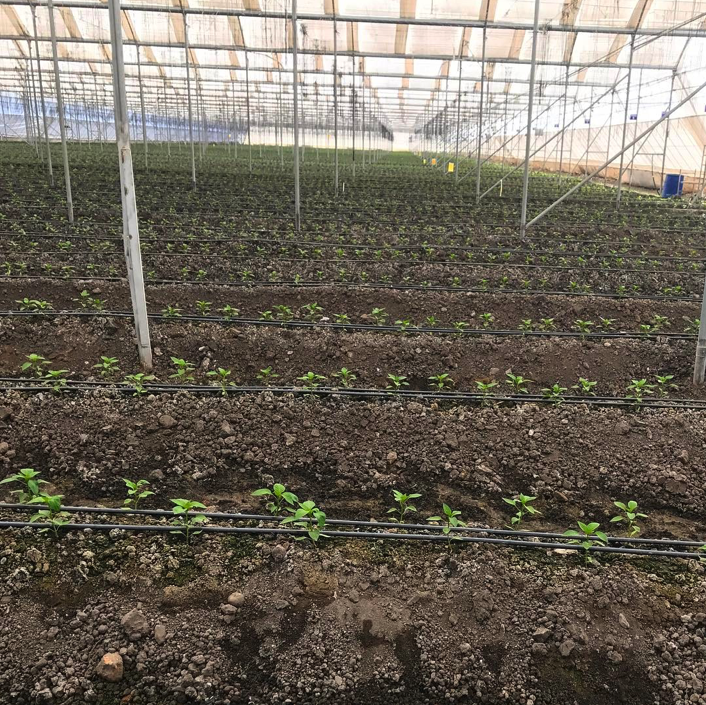
The pictured farm produces organic bell peppers and, for many years, followed the standard practice of essentially sterilizing the soil between each planting cycle. Still, they would lose 10-20% of their plants to damping-off (Pythium, Rhizoctonia, and Fusarium).
Instead of continuing to sterilize the soil, which creates ideal conditions for opportunistic soil-borne pathogens, we aggressively inoculated the soil with beneficial microbes, supplied biostimulants, balanced soil minerals, and fine-tuned plant nutrition.
As a result, this greenhouse of 32,000 bell pepper plants lost approximately 10 plants to disease instead of the customary 3,200 – 6,400.
With an integrated approach that aims to build a robust soil microbial community and optimize plant nutrition, crops can be free of disease, despite the presence of pathogens.
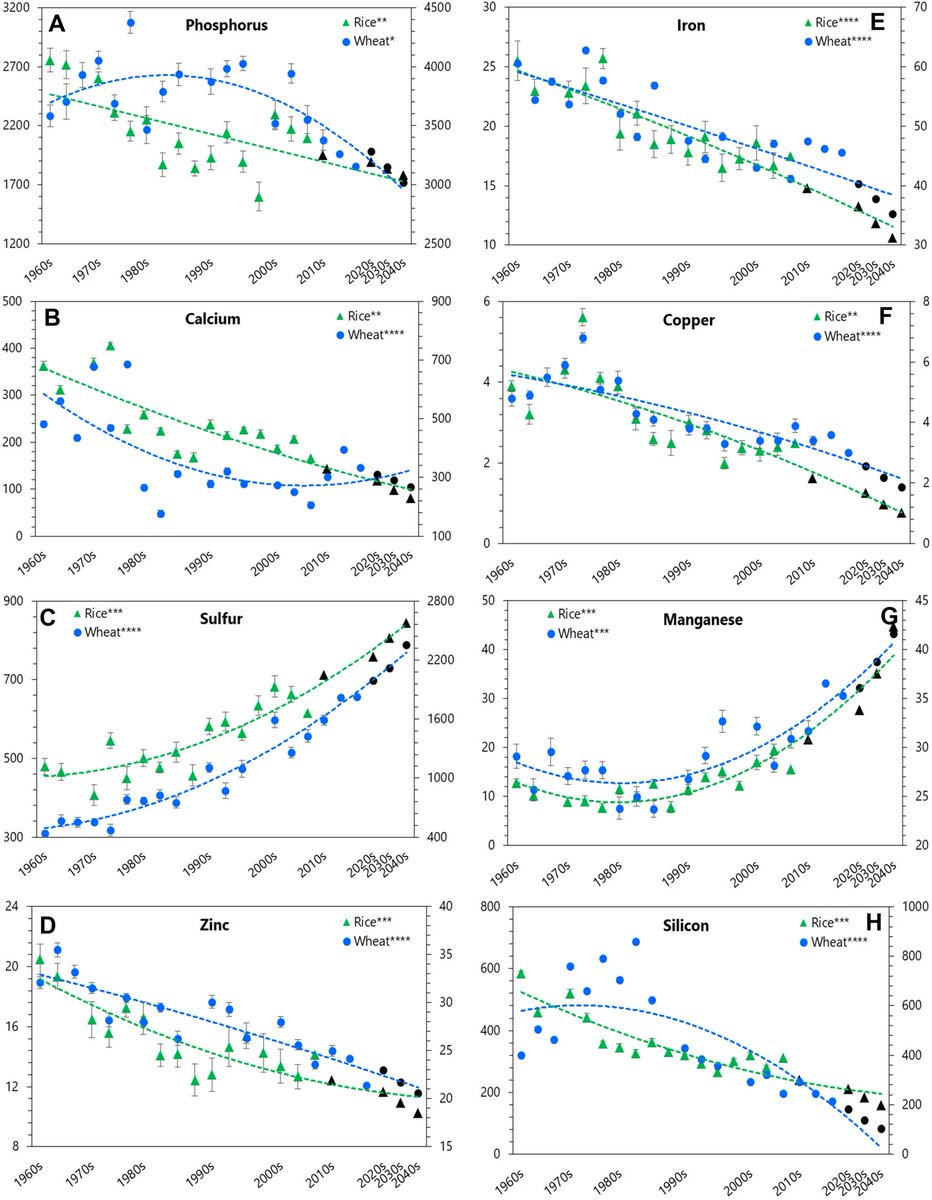
Rice and wheat, two of the most crucial food staples worldwide, have experienced a significant decline in nutritional quality over the past 50 years.
The essential mineral concentration in rice has decreased by 36%, while in wheat, it has dropped by 57%.
At the same time, toxic elements like aluminum have increased by as much as 78%.
This deficiency in nutritional quality, coupled with elevated concentrations of toxic elements, lies at the heart of the overfed yet undernourished paradox.
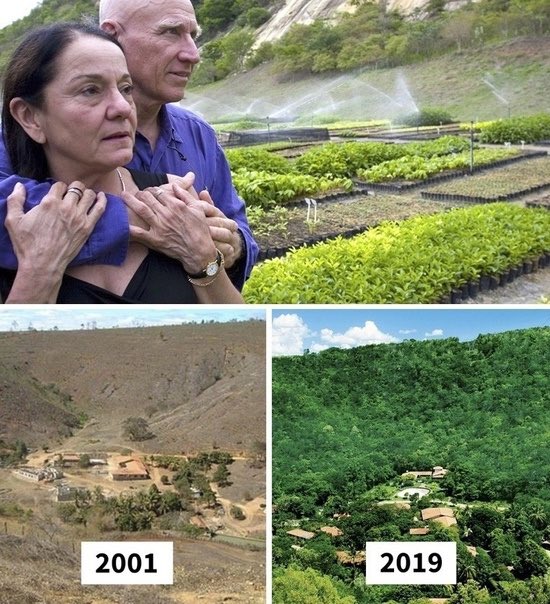
In the early 1990s, Brazilian photojournalist Sebastião Ribeiro Salgado was stationed in Rwanda to cover the genocide, an experience that left him traumatized.
In 1994, upon returning to his home in Minas Gerais, Brazil, Sebastião hoped to find solace in the lush green forest of his childhood. Instead, he discovered that his home had transformed into a dusty, barren land stretching for miles, devoid of any wildlife.
"The land was as sick as I was. Only about 0.5% of the land was covered in trees," he remarked.
At this time, his wife, Lélia Deluiz Wanick Salgado, proposed that they embark on the ambitious journey of replanting the entire forest. Sebastião supported the idea, and together, over the course of the next 20 years, they planted an astonishing 2.7 million trees.
Their efforts resulted in the rejuvenation of 1,500 acres of rainforest, and the site eventually became home to 293 plant species, 172 bird species, and 33 animal species, some of which were on the brink of extinction.
THREAD (of despair) 🧵
We call this field (the one with the pylon in it) ‘Pylon Field’, and the national grid are contracting Morrisons Energy to do some work on the lines. They’ll need to access the towers with heavy machinery… 1/
Right what critics demand - greatly reduced sheep. Left managing holistically using greatly increased sheep numbers to address climate change. Science vs emotional beliefs.
2 fields of winter barley, drilled same day, 25 Oct. The one on the right hasn't had any applied N for 8 years. It has established better and is a darker green.