Before John Glenn trusted a computer with his life, he trusted Katherine Johnson.
In 1962, as NASA prepared to send Glenn into orbit, he specifically requested that Johnson independently verify the electronic computer’s trajectory calculations by hand.
Her mathematical brilliance helped guide America's earliest crewed spaceflights and later contributed to the Apollo missions that carried humanity to the Moon.
Working in an era of racial segregation and gender discrimination, Johnson earned her place in history through extraordinary talent and determination.
She passed away on February 24, 2020, at the age of 101.
Astronauts left their footprints on the Moon, but the mathematics that helped them get there began with people like Katherine Johnson.
In the early 1990s, Graham Greene walked into an American casting session—already a respected actor, already proven.
Then a director said something that revealed everything:
“Can you sound more Native?”
Greene didn’t argue.
He didn’t raise his voice.
He simply looked at him and replied:
“Which tribe?”
The room went silent.
And just like that…
The role disappeared.
That one moment explains his whole career better than any award ever could.
In 1991, Graham Greene had just earned an Academy Award nomination for Dances with Wolves.
Hollywood acted like it was progress.
A “breakthrough.”
A new era.
But Greene knew what it really was.
A cage with nicer lighting.
At that time, Native characters in U.S. film usually existed for only two reasons:
To die violently…
Or to spiritually educate a white protagonist.
Dances with Wolves was praised as progressive, but the structure stayed the same.
Kevin Costner’s character changed.
The Lakota didn’t control the story.
Greene’s character, Kicking Bird, was intelligent, calm, admired…
And narratively subordinate.
Wise.
But never decisive.
Hollywood loved that version of him.
And wanted it forever.
After the Oscar nomination, offers poured in—but they were all the same role in different clothes:
The forgiving elder.
The chief who explains history in perfect English.
The Native character who exists so America can feel evolved.
When Greene challenged dialogue, accents, or endings, executives labeled him “uncooperative.”
When he refused roles that ended in ritualized Native death, calls slowed.
So he changed the game.
Instead of chasing prestige…
He chased friction.
In Clearcut (1991), he played a Native character who survives, refuses reconciliation, and terrifies white audiences by refusing to be “redeemable.”
In Thunderheart (1992), he helped anchor a story modeled on real FBI abuses at Pine Ridge—forcing viewers to confront contemporary Native resistance instead of comforting nostalgia.
These films weren’t built to soothe anyone.
They were built to unsettle.
And Greene paid a price.
He never became a franchise lead.
He never got the protection Hollywood gives “compliant” figures.
But he gained something bigger:
Autonomy.
Over 100 roles across four decades, moving between U.S. studios, Canadian cinema, and independent projects…
Without surrendering ownership of his dignity.
He once said Hollywood loves Native people…
“As long as we don’t want anything.”
Land.
Power.
Narrative control.
Graham Greene was never misunderstood.
Hollywood understood him perfectly.
And he made that understanding expensive.
Asimov got a handwritten letter from a reader who said he was majoring in English Literature and felt he needed to teach Asimov some science.
The reader quoted Socrates, "it is because I alone know that I know nothing," as if Asimov were foolish for knowing a great deal.
Asimov had heard the argument before. John Campbell had put it to him a quarter of a century earlier, telling him all theories are proven wrong in time. This line was his answer to Campbell:
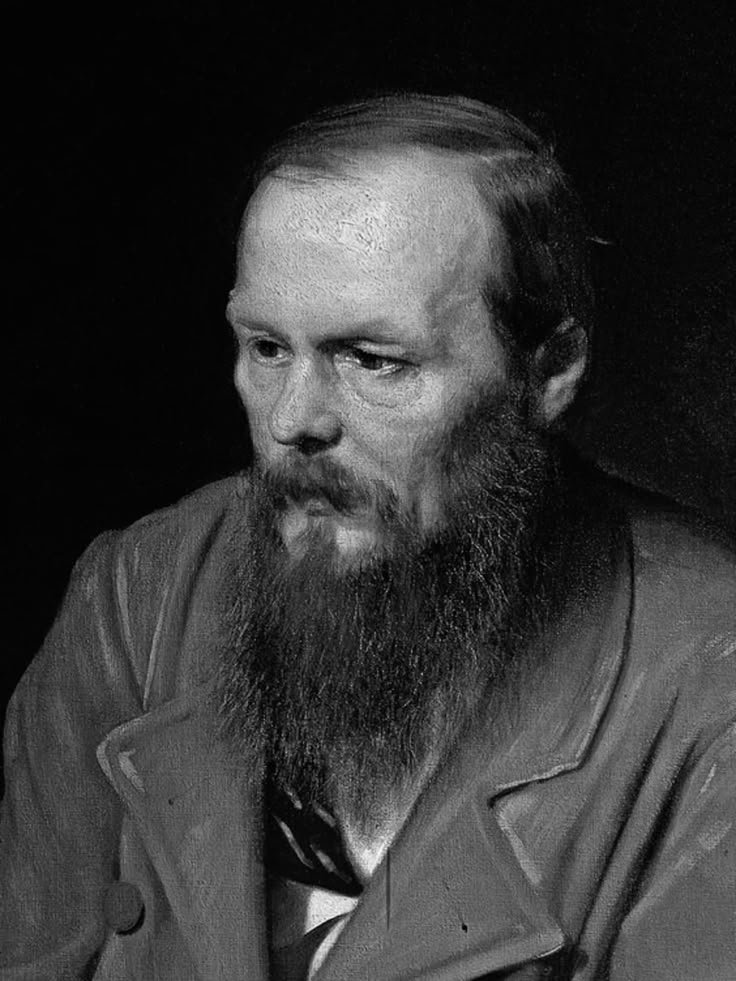
Dostoevsky was 28 when they stood him in front of a firing squad. Blindfolded. Hands tied. He could hear the rifles being loaded.
At the last second, a messenger on horseback arrived. The Tsar had commuted the sentence. The entire execution was staged. Psychological torture designed to break him.
It worked. He had a seizure on the spot.
They sent him to a labor camp in Siberia for four years. Freezing. Starving. Sleeping on wooden planks next to murderers. His epilepsy got worse. He had no paper. No pen. Nothing.
When he got out, he was broke. His first wife died. His brother died. He inherited his brother’s debts. He was so desperate for money that he signed a contract with a publisher that would have given away the rights to everything he’d ever write if he missed the deadline.
He wrote The Gambler in 26 days to make it. Dictated it to a 20-year-old stenographer named Anna. Married her three months later.
Then the real work started. Crime and Punishment. The Idiot. Demons. The Brothers Karamazov. The greatest novels in the history of the Russian language. Maybe any language.
The man who stood blindfolded before the firing squad, who convulsed on the ground while soldiers watched, who slept next to killers in Siberia for four years, who was buried in debt and grief.
That man wrote: "Every minute can be an eternity of happiness."
He earned the right to say it.
It's never over. Never give up, friend.
Receiving a Lifetime Achievement Award for GANGLAND reminds me how it all started.
I would not have the career I have if not for Luis Valdez, writer/director of La Bamba.
This amazing documentary finally gives him some of the credit he deserves.
Check it out. Still streaming.
In honor of my photo of the first Starship V3 launch being featured in @TIME top 100 photos of the year, I decided to reopen the vault where I keep the unsold prints. If you want a limited edition print of the photo, I’ll have them for 3 days here: https://t.co/YAty9p6Nid
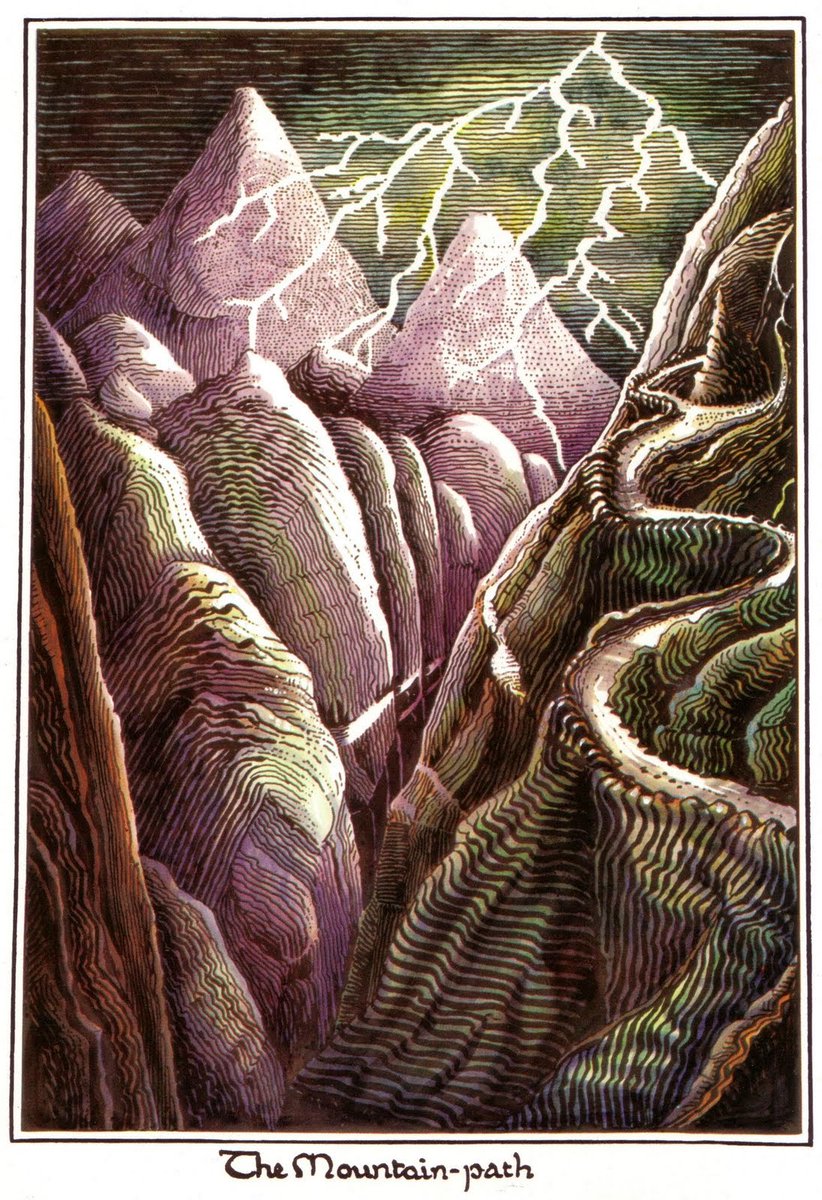
Did you know Tolkien's trip to Switzerland inspired Rivendell?
In 1911, a 19-year-old #Tolkien walked through the Lauterbrunnen valley with a party of twelve. Those memories became the basis for Rivendell and the Misty Mountains.
Artwork: 'Rivendell' by J.R.R Tolkien
The power of precise optics and a stable atmosphere...
This almost looks like it was taken from lunar orbit, but it was captured from my backyard observatory in Arizona, during a brief moment of calm skies.
@Mythos_Man@JeremyTate41 You are not alone.
Nobody in this entire thread posted him prior to myself.
These are from his 1975 calendar. There were 5 more illustrations, of course
The one of Bilbo & Gandalf serves as the 11''x17'' centerfold piece. (NO T&A! 😂🤣😂)
I paid $125 for my copy from EBay.
An electric chair runs on about 2,000 volts. The metal ball at a science museum runs at around 100 times that, and they let kids line up to put their hands on it.
The only thing it ever hurts is your hairstyle.
What kills you is current, meaning how much electricity actually flows through your body. Think of voltage as water pressure and current as how much water comes out of the hose. The chair has decent pressure with a firehose behind it, pushing several amps through a person. The museum ball has insane pressure coming out of a garden hose with about a cup of water in it. All it can push is a few millionths of an amp.
Honestly, the outlet behind your toaster is more dangerous than that ball.
So here's what's going on with her hair. When she puts her hand on the ball, charge floods onto her body. All of it is the same kind of charge, and same-type charges push each other away, so it spreads out as far as it can get. The farthest spots it can reach are the tips of her hair.
Now every single strand on her head carries the same charge, and they're all shoving each other away. A hair weighs almost nothing, so that little shove is enough to beat gravity. The whole head of hair lifts and spreads out like it's trying to leave.
Watch her curls, though. They go up, and they stay curly. The electric push can lift a strand off her head, but it isn't anywhere close to strong enough to straighten one, because chemical bonds inside the hair hold the curl in place. So she ends up with coiled springs sticking out in every direction.
Physics teachers actually pick volunteers with fine, light, straight hair for this demo, because thicker hair has a hard time getting off the ground. If the room is humid, moisture in the air drains the charge and the whole thing can flop. Curls like hers are about the toughest test you can give it, and they still went up.
The machine has a crazier backstory than the hair. A physicist named Robert Van de Graaff built the first one at Princeton in 1929 out of a tin can, a silk ribbon and a little motor, and it hit 80,000 volts. By 1933 his MIT team had a 40-foot version running in a Massachusetts hangar, because they were racing to be the first people to split the atom. Machines like his ran nuclear physics labs all the way through the 1970s.
That 40-foot one still works. It moved to Boston's Museum of Science in 1955, and it's still the biggest air-insulated Van de Graaff in the world. These days its job is shooting fake lightning for school field trips.
Van de Graaff spent his career chasing the atom, and now his invention is best known for giving a girl in a museum the wildest hair day of her life.