Toda tecnología que cambia cómo nos comunicamos termina cambiando cómo nos relacionamos. La IA no va a ser la excepción. Lo que todavía no sabemos es qué tipo de intimidad va a producir.
Me están sangrando los ojos…
Así es como el Jurídico del IMSS defiende la legalidad de sus actos administrativos a través de sus contestaciones de demanda: con el uso cínico de ChatGPT y el tradicional copy-paste.
Mínimo eliminen la respuesta de la IA, por decencia.
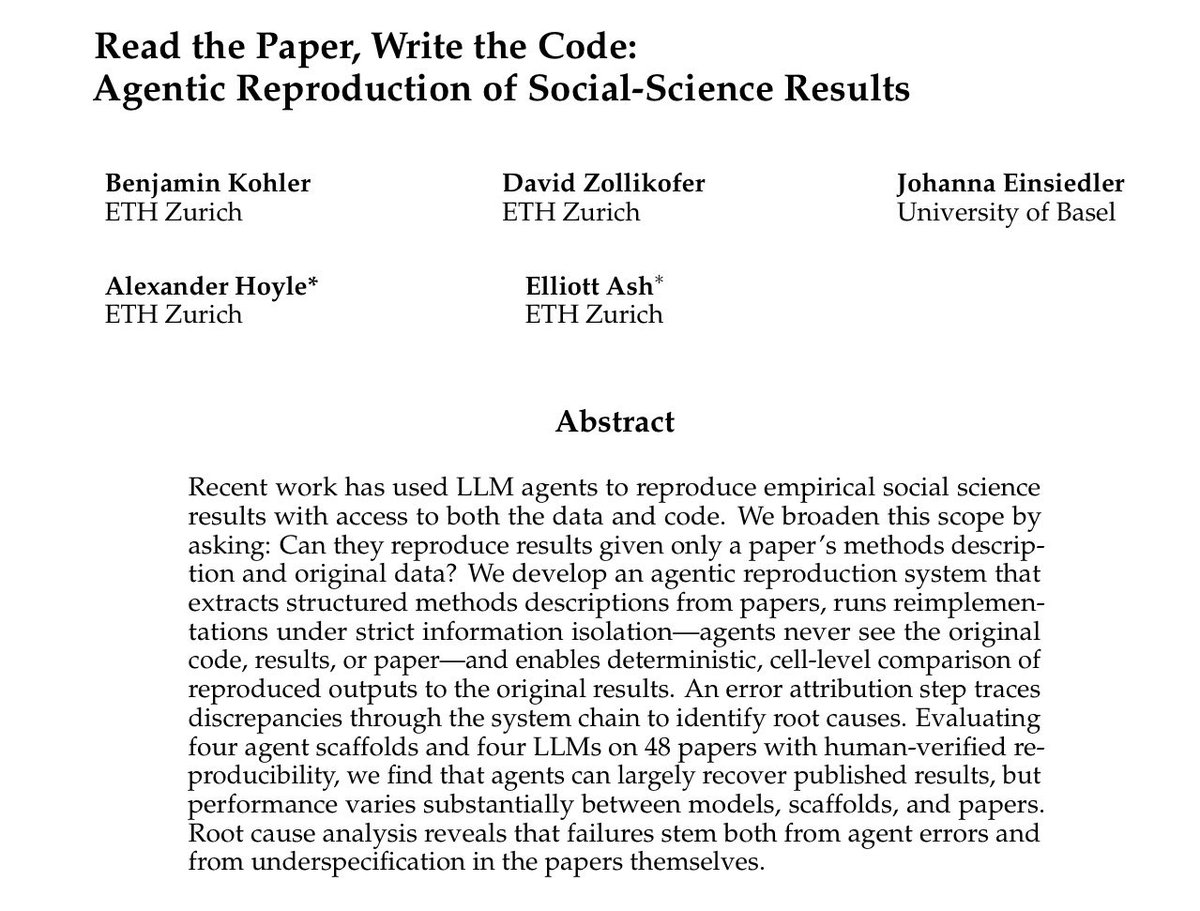
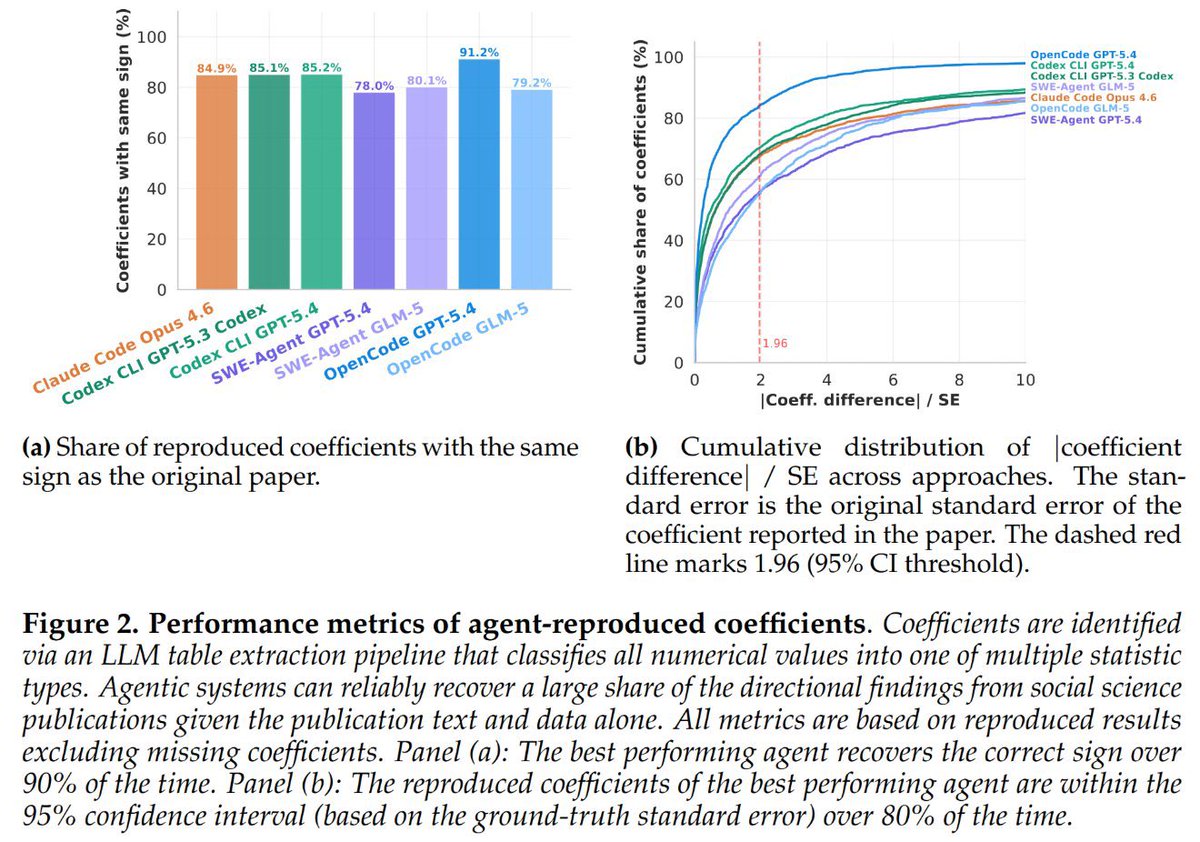
I think that academia has not absorbed the fact that AI agents are now good enough to independently reconstruct complex papers without access to code or the papers themselves; just the methods & data.
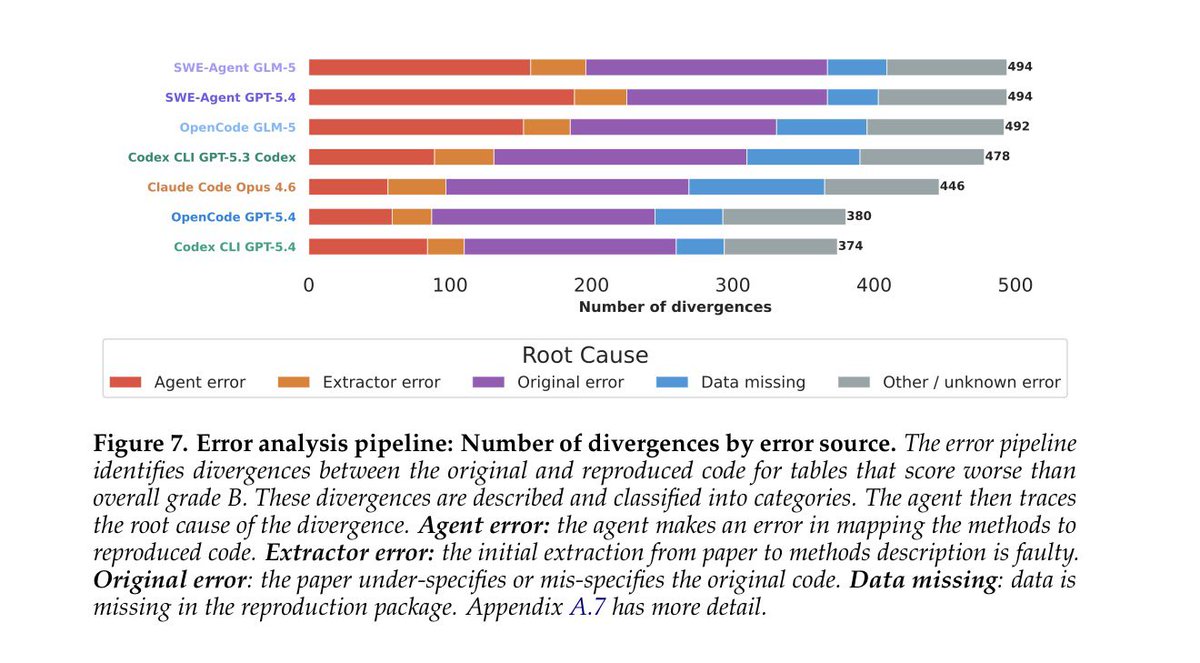
They aren’t perfect but the errors are often in the human paper, not the AI.
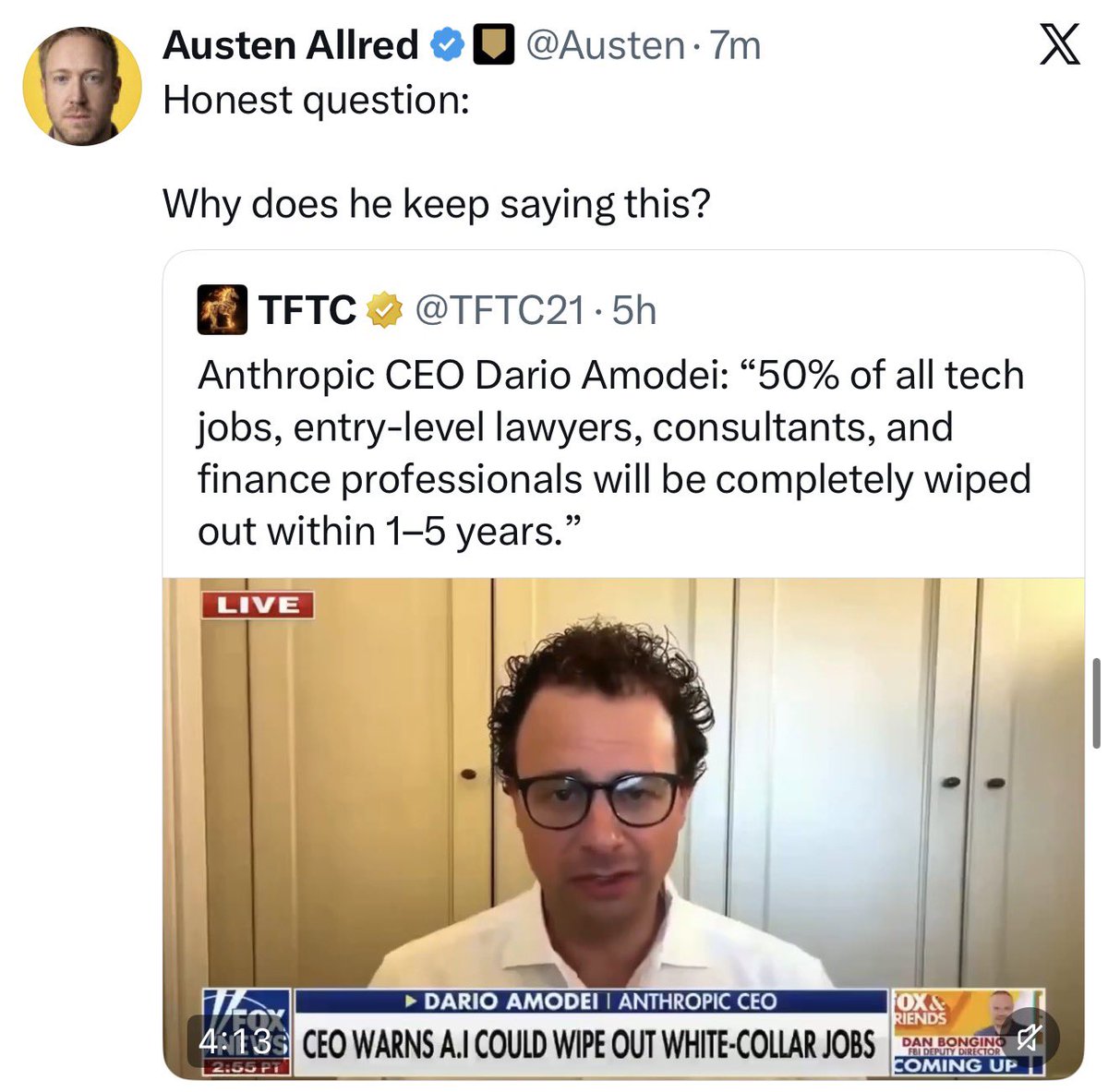
Anthropic’s CEO keeps talking about AI wiping out jobs because he’s trying to IPO this year.
If he positions Claude as armageddon for jobs, his TAM becomes “all white-collar human labor,” not just AI agents or SaaS.
It’s completely self-interested. All the concerns he’s expressing about job disruptions are fake.
It’s a marketing gambit to create hype and FOMO among the people he needs more than anyone else this year: institutional investors like BlackRock, Fidelity, pension funds, and sovereign wealth funds.
If these investors pay for tickets on the hype train—if he can make them believe that AI will eliminate half of white-collar jobs, with Anthropic, as the dominant leader in enterprise AI, positioned to capture the surplus margin—the IPO will be oversubscribed and Anthropic can raise more funds for the company at a higher valuation.
But Dario (or, at least, his bankers) knows that these investors are more fiscally disciplined than they used to be. A lot of them got burned during Covid SPAC-mania and don’t want to risk it again. They’re going to challenge Anthropic about whether it will ever get to sustainably high gross margins, or if its arms race with OpenAI will lead to kilowatt-hours permanently suppressing gross margins. They’re going to ask pointed questions about Anthropic’s massive capex and whether it will ever generate accretive ROIC.
And Dario might not have the answers they’re looking for.
So that’s why—to answer Austen’s smart question—you keep seeing Dario in the news and the podcast circuit, spreading doom and gloom about widespread job loss.
It’s not to make you afraid of losing your job. It’s to get Wall Street afraid of missing out on his IPO.
AI agents will pay you to chat with them.
When AI agents hit a wall, Humwork's (@humworkai) MCP server connects them to a verified domain expert in 30 seconds. Their experts include senior engineers, marketers, designers, and more.
Congrats on the launch, @theyashgoenka and @OneRohanDatta!
https://t.co/HTb5KrjpAi
As AI agents accelerate coding, what is the future of software engineering? Some trends are clear, such as the Product Management Bottleneck, referring to the idea that we are more constrained by deciding what to build rather than the actual building. But many implications, like AI’s impact on the job market, how software teams will be organized, and more, are still being sorted out.
The theme of our AI Developer Conference on April 28-29 in San Francisco is The Future of Software Engineering. I look forward to speaking about this topic there, hearing from other speakers on this theme, and chatting with attendees about it. We’re shaping the future, and I hope you will join me there!
It is currently trendy in some technology and policy circles to forecast massive job losses due to AI. Even if they have not yet materialized, these losses certainly must be just over the horizon! I have a contrarian view that the AI jobpocalypse — the notion that AI will lead to massive unemployment, perhaps even rioting in the streets — won’t be nearly as bad as dire forecasts by pundits, especially pundits who are trying to paint a picture of how powerful their AI technology is.
Among professions, AI is accelerating software engineering most, given the rise of coding agents. According to a new report by Citadel Research, software engineering job postings are rising rapidly. So if software engineering is a harbinger of the impact AI will have on other professions, this expansion of software engineering jobs is encouraging.
Yes, fresh college graduates are having a hard time finding jobs. And yes, there have been layoffs that CEOs have attributed to AI, even if a large fraction of this was “AI washing,” where businesses choose to attribute layoffs to AI, even though AI has not changed their internal operations much yet. And yes, there is a subset of job roles, such as call center operator, that are more heavily impacted. Many people are feeling significant job insecurity, and I feel for everyone struggling with employment, whether or not the cause is AI-related. And many other factors, such as over-hiring during the pandemic and high interest rates, have contributed to the slowdown in the labor market, and the notion that AI is leading to unemployment is oversimplified.
In software engineering, I see a lot of exciting work ahead to adapt our workflows. It is already clear that: (i) As AI makes coding easier, a lot more people will be doing it. (ii) Writing code by hand and even reading (generated) code is not that important, because we can ask an LLM about the code and operate at a higher level than the raw syntax (although how high we can or should go is rapidly changing). (iii) There will be a lot more custom applications, because now it’s economical to write software for smaller and smaller audiences. (iv) Deciding what to build, more than the actual building, is becoming a bottleneck. (v) The cost of paying down technical debt is decreasing (since AI can refactor for you).
At the same time, there are also a lot of open questions for our profession, such as:
- In the future, what will be the key skills of a senior software engineer? And for junior levels, what should be the new Computer Science curriculum?
- If everyone can build features, what skills, strategies, or resources create competitive advantage for individuals and for businesses?
- What are the new building blocks (libraries, SDKs, etc.) of software? How do we organize coding agents to create software?
- What should a software team look like? For example, how many engineers, product managers, designers, and so on. What tooling do we need to manage their workflow?
- How do AI agents change the workflow of machine learning engineers and data scientists? For example, how can we use agents to accelerate exploring data, identifying hypotheses, and testing them?
I’m excited to explore these and other questions about the future of software engineering at AI Dev. I expect this to be an exciting event. Please join us!
[Original text: The Batch newsletter.]
https://t.co/i4bQevDG4i
Le expliqué a un compa del mundo crypto que los AI agents van a necesitar wallets propias y me dijo "eso nunca va a pasar". Marc Andreessen dice que ya está pasando con 5,000 personas. Imagínate cuando sean 5 millones
Marc Andreessen: “This is the grand unification of AI and crypto”
“I think AI is the killer crypto app… It’s now obvious that AI agents are going to need money. It’s already happening.”
Marc explains:
“My friends, who are the most aggressive users of OpenClaw, have given their Claws bank accounts and credit cards. And not only have they done it, but it’s obvious that they needed to do it… It’s just completely obvious. The number of people who have done that today is, I don’t know, probably 5,000 or or something. But it will grow. That’s how these things start.”
Source: @latentspacepod (Apr 2026)
Le mandé este thread a un amigo que tiene agencia de marketing "tradicional" y me dijo "eso es ciencia ficción". Bro, ya hay empresas de 7 cifras operadas por 2 personas y una flota de agentes. La ciencia ficción eres tú cobrando por reportes mensuales en PDF
things keeping me up at night about where AI is actually going:
1. "ambient businesses" are coming. basically, agents monitor the market, handle customers, execute decisions. you check in every few days. 7-8 figure businesses with almost no daily human input. we're early but it's happening.
2. you can now build a company in an hour. grab an idea, vibe code it, add stripe, get a customer. the old timeline was 12 months to first revenue. that's just gone.
3. the internet went app store era → API economy → agent economy. we're now in the part where agents hire other agents on the fly. fixed tech stacks are dissolving. nobody's built the glassdoor for AI agents yet.
4. vertical AI is replacing headcount. that's 10x the market that vertical SaaS ever touched. boring industries like insurance, construction, legal, elder care are the goldmine.
5. SaaS pricing is flipping from per seat to per result. someone is going to build a billion dollar business just by converting legacy SaaS companies to outcome based pricing
6. a whole graveyard of generic SaaS is coming. basic CRMs, analytics dashboards, template marketplaces, scheduling tools. agents just do it better. lots of incumbent saas that are generic and not reinventing themselves right now will struggle/reprice.
7. "human made" is becoming the new luxury. porsche already ran a 100% human made ad campaign. no AI is going to be a premium label like organic is for food. there's a real business in that certification.
8. IRL is having a renaissance. when everything is AI generated, being in a room with other humans becomes scarce. karaoke bars, escape rooms, live music, co-working. the experience economy is accelerating.
9. founder market fit is dead. founder agent fit is what matters now. can you direct a fleet of agents like a film director? that's the new unfair advantage.
10. ghost team org charts are coming. two real people, twelve agents with names, faces, personalities. your about page is going to look the same
11. 1000 true fans is now 100. agents cut your costs so much that 100 customers at $500/mo is a real solo business. micro monopolies across multiple niches. this is the playbook.
12. context window poisoning is the new phishing. cybersecurity hasn't caught up. agents have access to your files, email, bank accounts. bad things are going to happen. it's also a massive startup opportunity.
13. the window is open for maybe 12-24 months. then the moats get built like data, brand, trust, network
14. build cost is basically zero. audiences are underpriced. niches are wide open.
idk about you but i'm not sleeping much
so much opportunity
this is the most asymmetric time to be building a startup.
full episode on @startupideaspod to get your creative juices flowing (latest episode get it where you listen/watch pods)
no advertisers, just pure ideas to help you
im rooting for you
don't just bookmark share with a friend
watch
Un bro graba tutorial de 2 minutos sobre AI agents y sin querer enseña que sus bots le hicieron $868K. 28,620 trades. Todos verdes. Mientras tanto hay "traders expertos" vendiendo cursos de $500 que ni ellos mismos usan 💀
A Chinese developer recorded a 2 minute tutorial on how to set up Claude Code agents. Three monitors behind him. Messy desk. Cables everywhere. Posted it to Bilibili expecting maybe 100 views.
While the West argues about whether AI will take jobs, China is already building AI farms in apartments. This guy was trying to show how. He just showed too much.
Bro pause at 0:47. Look at the right monitor.
Is that a real balance? $868K???
gabagool22. $868,862 profit. 28,620 predictions. Joined October 2025.
→ https://t.co/XrVYCkVBpI
He recorded a tutorial about AI agents. Forgot his wallet was open on the second screen. 28,620 positions. All BTC. All 15 minute windows. All green.
The comment section turned into a detective board. Someone slowed the video to 0.25x. Screenshotted every frame where the second monitor was visible. Stitched them together. Reconstructed the full wallet page from 4 seconds of background footage.
Entry prices between 2 and 10 cents. Payouts in the thousands. Every single line green. Not one red row in 28,620 entries.
The setup isn't one computer. It's a farm. Multiple machines scanning different 15 minute windows simultaneously. Together they cover every window. 24 hours a day.
He deleted the video 3 hours later. Too late. Someone had already screen recorded it. The clip hit Discord. Then Telegram. Then Twitter.
The tutorial had 200 views. The clip of his second monitor has 400,000.
707K people watching the wallet now. He hasn't posted anything since. The screens are still on. The wallet is still active. The farm is still running.
He wanted to teach people how to set up AI agents. He accidentally showed them what his were already doing.
Un morro de 17 años con 10 personas manejando su estrategia digital y hay 'empresarios' que todavía creen que con un community manager de $5k pesos al mes ya la armaron.
‼️NEW: Lamine Yamal has a team of around 10 people working almost exclusively on his career, handling everything from marketing and logistics to digital strategy and brand partnerships.
Yamal’s environment includes super-agent Jorge Mendes and multiple agencies managing his image, sponsorships, and day-to-day operations.
They have registered 7 trademarks valid until 2035, covering products such as clothing, footballs, and headphones.
Two of them are under his full name, the others under his '304' brand.
His adidas deal is worth around €32m, making him one of the brand’s key future investments.
— @GuillemBalague