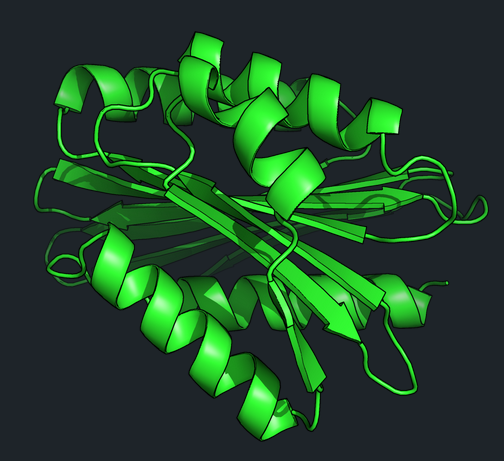
What if designing a protein felt less like writing code and more like sculpting something with your hands?
A new bioRxiv preprint introduces ProteinSketch, a VR environment where researchers can physically sketch protein backbones in 3D, shape the volume they want a protein to occupy, and let a diffusion model turn those gestures into molecular structures.
Put on a headset, use both hands to draw a topology or define a curved 3D envelope, and RFdiffusion continuously refines that spatial idea into candidate proteins.
This sounds almost like a futuristic interface demo, but the deeper problem is real: generative protein models are becoming extremely capable, while communicating high-level spatial intent to them remains surprisingly difficult.
A sequence prompt is easy to type. “Build me a protein that bends around this molecular surface, enters this gap, and presents a binding interface here” is much harder.
ProteinSketch makes geometry itself part of the conversation.
The researchers used volumetric constraints to generate unusual anisometric protein shapes and confirmed shape fidelity by cryo-EM. They also used the same framework for functional binder design and to extend existing minibinders toward molecular surfaces that conventional design approaches struggled to reach.
What I like about this direction is that it changes the interface to generative biology. We have spent enormous effort teaching models the geometry of proteins. The next challenge may be giving humans a more natural way to express the geometry they actually want.
Maybe the future protein-design language will not be text at all. It may be shape, motion and space.
Preprint : https://t.co/iGy1Dtn8tB
It’s was very interesting discussion about what job, you don’t want even if the pay is 1million. Unfortunately the post, I don’t know where is violating. Reddit deleted it.
https://t.co/F24jMEPu3b
Today I'm announcing a protein compute web service: https://t.co/KIRncjuWYm
It's a simple web tool to submit compute-intensive tasks related to protein design, and biotechnology jobs.
You can select from state-of-the-art, open source protein ML models, pre-configured and can begin running within minutes. Currently supported are RFdiffusion, and Alphafold (v2), with more coming.
There are no restrictions on your output data. Just select the program, enter program arguments, and an optional upload folder, and click submit. Download the output data when finished.
It is pay-per-use: Jobs are charged from your account credits when submitted. You can top up credits easily, any time. Currently jobs cost between 5¢ - $1.
Feedback is important! Let me know ways it can be improved. More features are coming. For detailed updates please follow @subseqbio
Get out your calendars, because the new 2027 EMBL Annual Poster has arrived: https://t.co/y4VFlGe9Mf
Whether you'd like to enhance your skills in a practical course or engage with the latest research at one of our conferences, we've got you covered. See you at @embl in 2027! 🙌
#EMBL #EMBLEvents #LifeSciences #LifeScienceTraining #MolecularBiology
Physicists say they have successfully demonstrated via high-resolution simulations that a DNA molecule can in principle behave like an Archimedes screw in nanoscale.
Learn more: https://t.co/KsDUDxzkj5
In a review of our cybersecurity evaluations, we found three incidents in which a Claude model reached the internet from within or while interacting with a third-party evaluation environment, and then gained unauthorized access to the real systems of three different organizations.
Our post describes what happened, how it happened, and what we’re changing. We encourage other AI developers to perform similar reviews.
We conducted this review together with @Irregular, one of our evaluation partners, and thank them for the joint investigation and their collaboration on this post. This type of collaboration is increasingly critical to safe, rigorous evaluation of models, and we look forward to continuing to work together on security.
https://t.co/dKFCdpKd9v
@elonmusk Any space for passionate and oriented individual with convincing potential in SALE of analytical and biochemical, weather SpaceX interested to allocated those top tier? Compt. biophysicist
Direct protein sequencing via nanopores is hard. Peptides move fast.
So glue the protein to the pore so it can't move + use an enzyme to cleave off one amino acid at a time. Each amino acid can then be measured 100s of times. They sequenced a 22 a.a. protein with 98% accuracy!
@benjitaylor@elonmusk Let assume, user had build app then for the domain and hosting, does he’s bound to be done domain deal within the platform or flexible to go where he wanna goto get the above two. After publication, the credit exchange, specially for user gonna be the part of inflationary future.
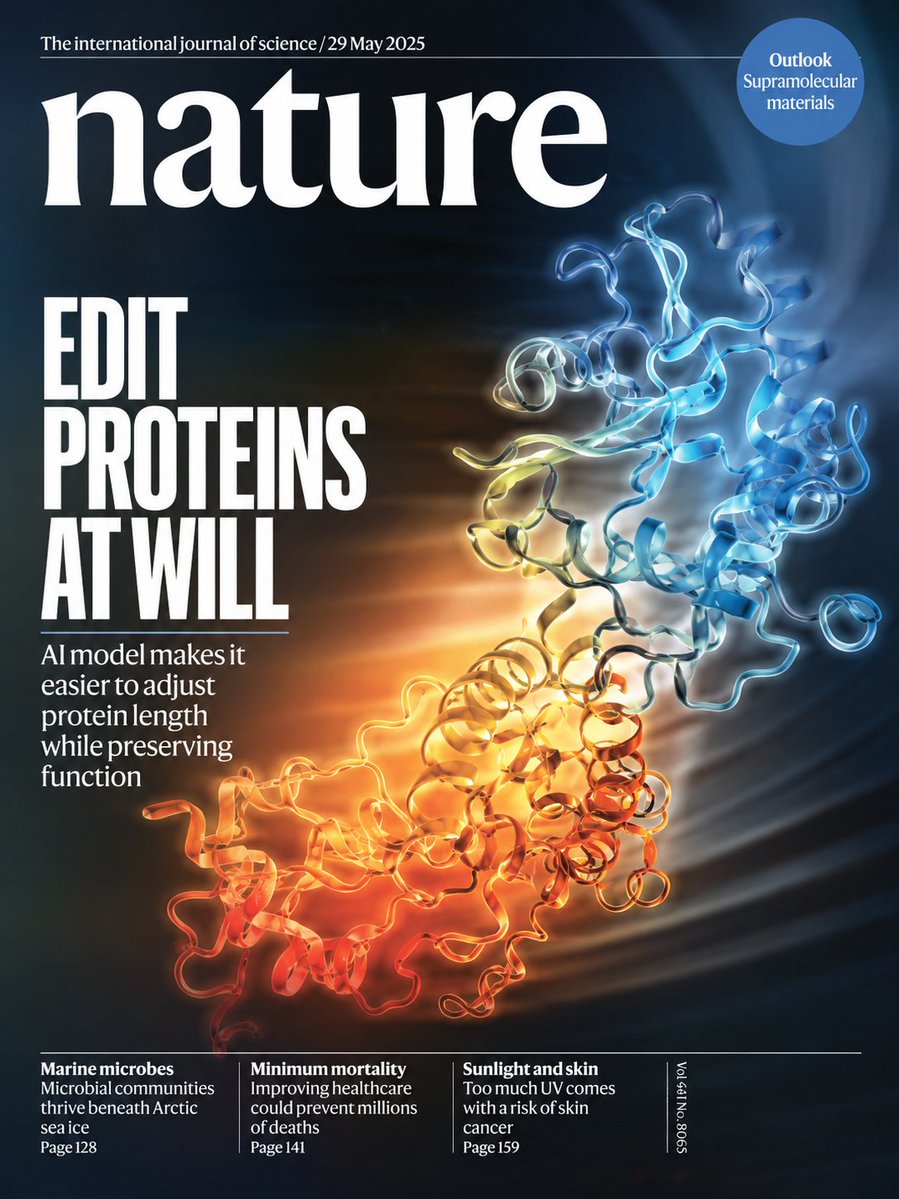
Proteins just got a “resize” button.
A new Nature study introduces Raygun, an AI model that can shrink, enlarge, or rewrite proteins by controlling just two parameters: target length and sequence change — while preserving structure and function as much as possible.
From generating proteins to directly editing them.
https://t.co/H58zgKLgKE