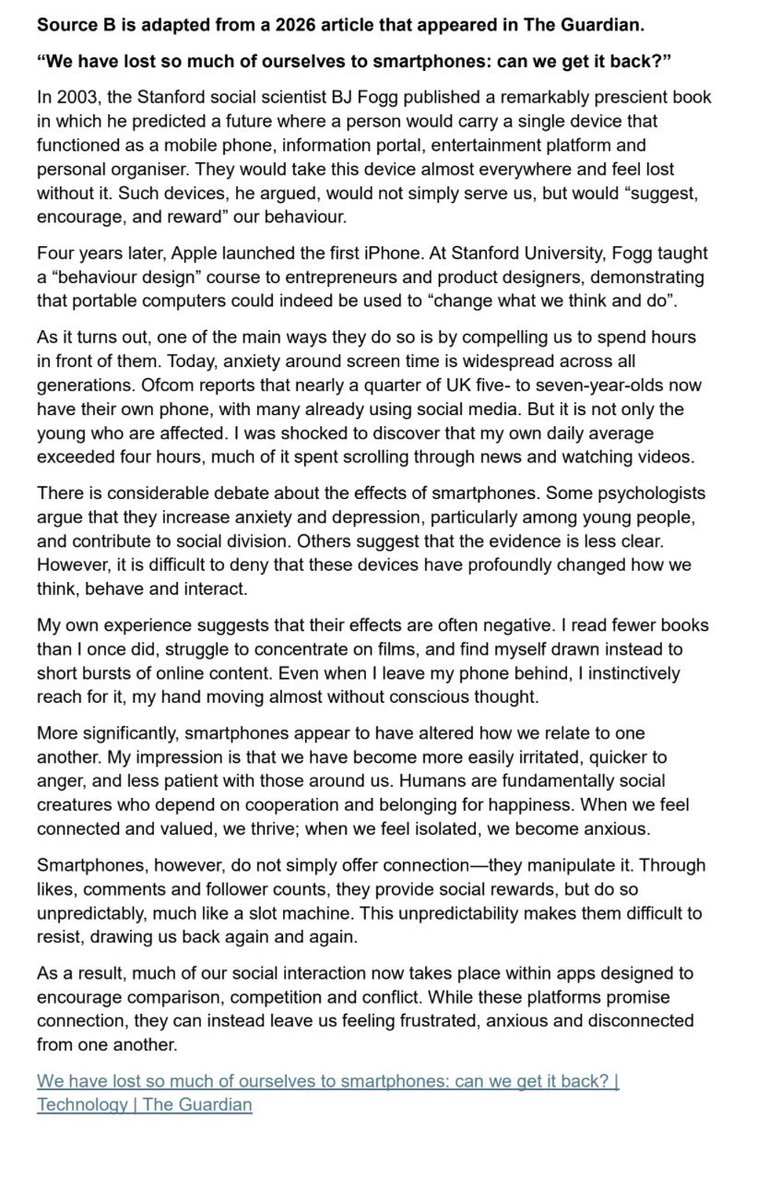
Can’t remember who shared this absolute beauty of a paper on here! I just want to say thank you though, it was a belter of a Paper 2 to go through the day before the exam! 11/3 LOVED it! Another year done 🙌👍
Retrieval practice goes wrong when it becomes a ritual for teachers to perform.
The aim isn’t five questions at the start of every lesson. It’s making knowledge available when it’s needed: recalled successfully, used purposefully, corrected visibly, and strengthened for elsewhere and later.
https://t.co/pR6y7Db170
Fabulous blog by @PieCorbett on @kidspoetsummit website! I LOVED, LOVED, LOVED the writing activities described and the stunning poems that emerged. A must-read for all primary teachers, and teachers of English at KS3! https://t.co/qYlA0A9WSK
Teachers are frequently told to make questioning a priority in their lessons - but are rarely given much guidance on what that questioning should involve.
I take a look at what makes effective questioning in the geography classroom.
https://t.co/nhJA4DeIyv
#GeogChat
This blog shares one teacher's bleak experience of a curriculum imposed from above. Emails from anxious, demoralised teachers come to EMC quite often & suggest that it's a growing problem that needs urgent discussion. If it's an issue for you, let us know. https://t.co/1pWjkdgrK6
*NEW* for AQA: English Lang & Lit mock exam trackers, using June 2025 boundaries and RAG rating for QLA, for each paper like so 👇
Retweet and help yourself 😊 #teamenglish
https://t.co/ODj6wkNCGR
IN MATHS! Please can we stop making sweeping statements without being clear that this study was in ONE SUBJECT. Not all subjects are the same & the conclusions should therefore not be generalised as if they apply across the board.
https://t.co/bB6jXR5Q8A
2 sets of things for collapse : ACC and Macbeth - used as LANG texts for AQA paper1 . Word doc for kids , html for teacher . #TeamEnglish might just turn the html to powerpts at some stage
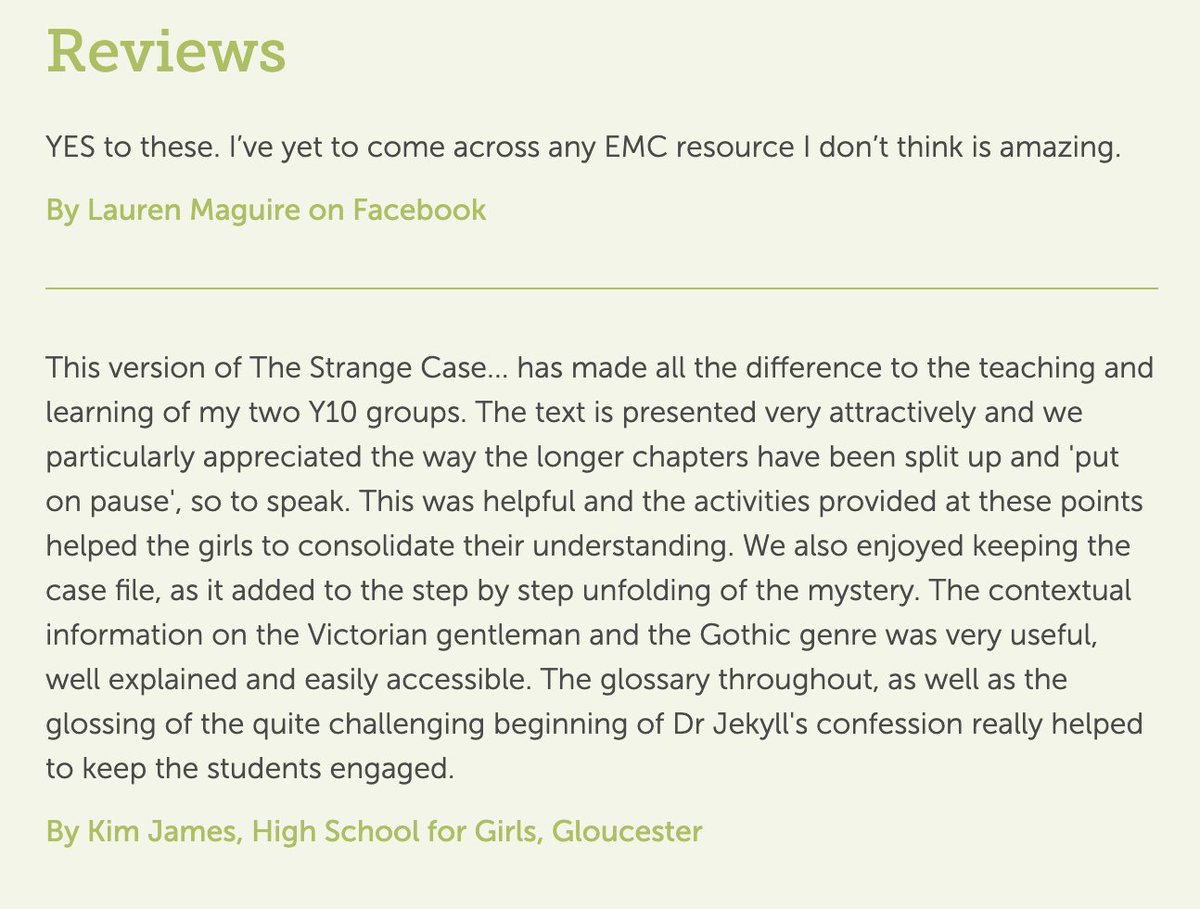
@misstmalcolm@LauraLolder The @EngMediaCentre study edition has lots of relevant contextual information woven into the material. 'Relevant' & 'woven in' are key. Students struggle to make it pay its way in interpreting the text if context comes first & is overdone. https://t.co/c1gzRICUgu
https://t.co/tbRjnrxpQ8.
Easter themed pseudo Paper 2 lang
Can’t recall if posted last year or not - one of several like this in the pinned tweet .
#TeamEnglish
Responsive Revision: an evidence-informed & efficient approach to independent study. It's important we share this to support our students as they head towards exam season.
https://t.co/6Efb5ncPxo
As part of @EngMediaCentre series of curriculum blogs, I've written one on Oracy – what the renewed focus means for English teachers, focusing on 10 key things that seem to me to matter most. Thinking Ahead: Talk in the New National Curriculum
https://t.co/0kbQcfEGhh
Changes to the way we teach language in English are vital if the new National Curriculum is to correct the imbalances & offer important Knowledge About Language once again. Hear what Dan Clayton has to say in one of @EngMediaCentre curriculum blogs.
https://t.co/kfRxue25ge
This blog in the @EngMediaCentre series on curriculum & assessment is vitally important! The relationship between curriculum and assessment is key and if we don't get formative assessment right at KS3, the whole structure is likely to be shaky. https://t.co/XcP7RDFQKo
And this is why education is stuck in such a rut, and constantly regresses back whenever we make an inch of improvement: because the progressive tropes are so intuitively attractive, easy, and simple, and the reality of learning is much more complex and difficult.
You don't learn very well by watching an amusing or entertaining video; you retain the information in it like a river running through you. You're aware of it temporarily until it is replaced by the next packet of facts, but you don't retain it well or in a way you can retrieve easily later. You might remember novel, surprising, amusing, or shocking parts well enough, but miss the details that weren't obvious, or the links between them.
Knowledge and skills are acquired through scaffolded explanations/ demonstrations followed by the student processing it, using it, thinking about it. The teacher then checks their understanding and offers high quality feedback, reinforces, corrects, redirects or reconstructs. Then the next lesson connects meaningfully with the last one in a similar way, infused with retrieval and revision of prior concepts to ensure deep learning.
Videos can be part of that, but they are not that. We actually do know a lot now about how we learn, and how we teach, and collectively they tend to be called the Learning Sciences, or Evidence-Informed Education. It's urgently required across the world as an antidote to both the winner-takes-all grindhouse of poorly led-lecturing, or more commonly, the inane performative pantomime of progressive flim-flam.
Mr B's references here demonstrate the old Keynesian adage of how so-called practical men who believe themselves free from bias, are usually in the grip of some long dead economist or philosopher. He trots out the most pedestrian and reactionary dogma about learning while believing himself to be a common-sense revolutionary. It's not his fault. I don't know anything about being a social media megastar.
But tech, no matter how shiny, cannot replace the architecture of the human brain. There is a 1300g bag of neural porridge inside every one of us that isn't going anywhere fast, so we better get busy using it to understand how to replicate and build on how we already actually learn, rather than what we wish it was like- or what sells content.
Are you a teacher who wants to implement science-informed reading comprehension instruction--and bring joy to your classroom in the process?
Check out the new book by @Doug_Lemov & his team. It will be a godsend.
More in my new post:
https://t.co/3Z4tH8GcPt