From real estate closings to medical breakthroughs, I thrive on making connections that matter. Realtor, MedRep, Solar expert, IT enthusiast & Blogger - join me
Streamline your freelance finances with Cleva - open a free US-based USD account to receive global payments easily and unlock exclusive benefits. Sign up through my referral link (https://t.co/Xqy2sdsAiu) to revolutionize how you get paid as a freelancer.
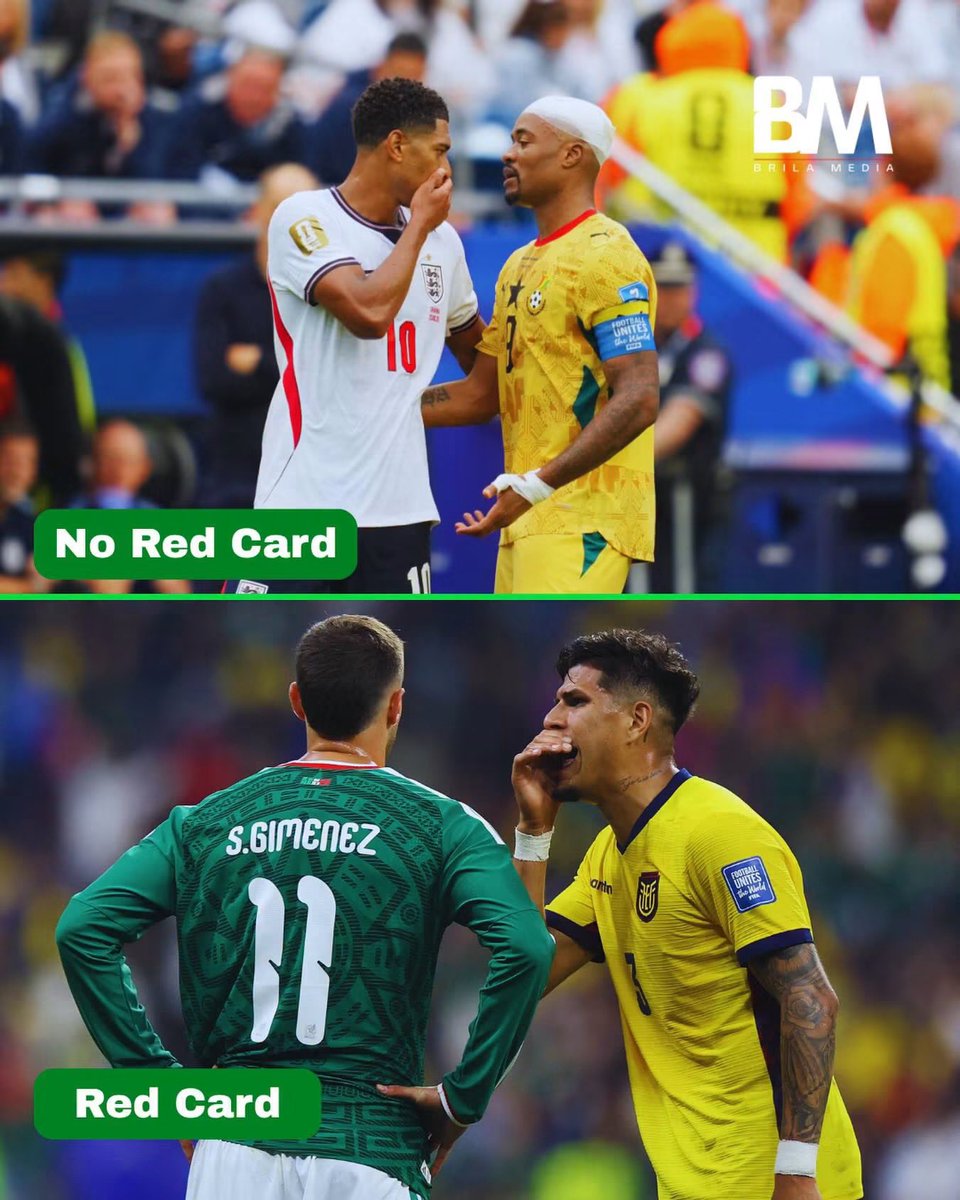
@FIFAcom head of refereeing, @PLGCollina , explained that the new rule is not a blanket ban on covering your mouth. It is intended to punish players who cover their mouths during a heated confrontation to conceal potentially abusive or discriminatory remarks.
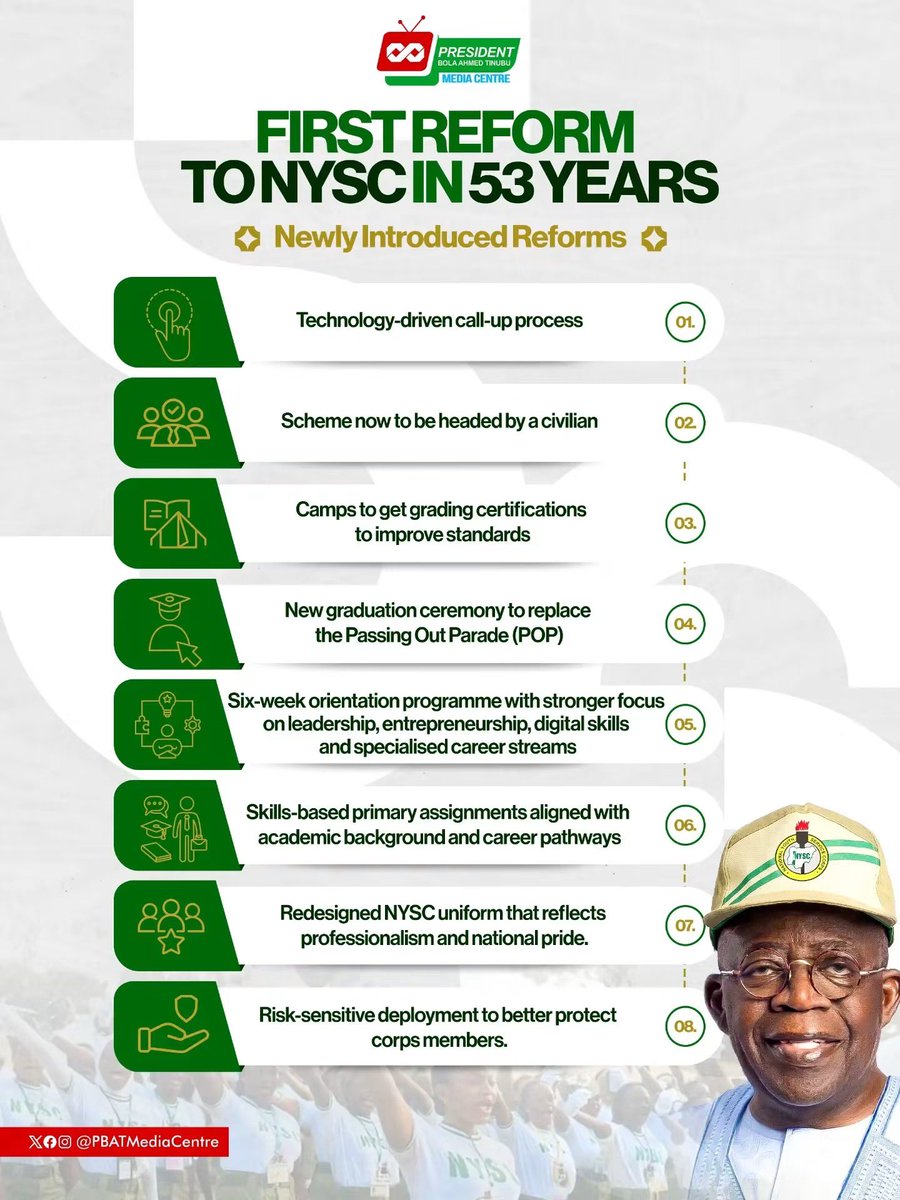
As the National Youth Service Corps gets a first retouch in 53 years under the administration of President Bola Ahmed Tinubu,
Here are some of the newly introduced reforms you should know.
#mundialdefútbol2026#México#akara
RESPONSE TO THE NATIONAL OPPOSITION MOVEMENT (NOM) PRESS CONFERENCE
(With International Authorities and Precedents)
It is time to cut the crap and let Nigeria move forward with long-overdue tax reform.
What the National Opposition Movement has offered Nigerians is not a credible alternative economic vision but a familiar mixture of alarmism, selective outrage, and political nostalgia. Over-recycled, excessively ambitious politicians must snap out of their fearmongering. The alternative exists, and it is responsible governance rooted in reform. We are the national opposition movement because we always offer pragmatic solutions not this set of unimaginative, recycled, past-their-shelf-life gangs of failed politicians who mistake noise for policy and outrage for ideas.
Those who presided over years of fiscal indiscipline, opaque revenue systems, and structural weakness should prepare for elections not attempt, in their imagination, to obstruct a reform process that is essential to restructuring Nigeria’s finances and building a sustainable fiscal framework for the future.
Globally, Nigeria is not acting in isolation, nor is it experimenting recklessly. The reforms underway are consistent with international best practice.
As the International Monetary Fund (IMF) has repeatedly stated:
“A broad tax base with limited exemptions is the most efficient and equitable way to raise revenue and support inclusive growth.”
Similarly, the World Bank has been unequivocal on the relationship between development and tax reform:
“Countries that succeed in reducing poverty and inequality do so by building strong domestic revenue systems that are transparent, predictable, and broadly based.”
Across Africa, countries such as Rwanda, Kenya, Ghana, and South Africa expanded taxpayer registration, introduced compulsory tax identification, digital filing, and stricter compliance regimes often in periods of economic stress. These reforms were resisted politically, branded anti-poor, and accused of bad timing. Yet today, these countries enjoy stronger revenue performance, improved investor confidence, and greater fiscal space for social spending.
The OECD, in its guidance on tax policy for developing economies, is explicit:
“Low tax-to-GDP ratios are not a sign of compassion for the poor; they are a symptom of weak states that cannot deliver essential public goods.”
Even India’s landmark tax reforms universal tax identification and the GST were met with fierce opposition. Responding to critics, India’s former Finance Minister Arun Jaitley stated:
“No reform is painless, but the cost of not reforming is always higher than the cost of reform.”
Nigeria has already walked this road. The same voices condemning tax reform today declared that removing fuel subsidy would collapse the country. Instead, Nigeria dismantled what the IMF described as:
“A regressive, inefficient subsidy system that disproportionately benefits the wealthy while draining public finances.”
They made identical claims about reforms in the foreign exchange regime. Today, international rating agencies and global peer-review institutions acknowledge improved transparency and coherence in Nigeria’s FX framework.
Tax reform is not an assault on Nigerians. Fiscal irresponsibility is. What truly punishes the poor is inflation driven by deficits, currency instability caused by weak revenues, and a government forced into endless borrowing because it cannot collect efficiently. No country none has ever built a resilient economy without a functioning, enforceable tax system.
As former UN Secretary-General Kofi Annan warned:
“Good governance and sustainable development are impossible without adequate domestic resources.”
Opposition is legitimate. Propaganda is not. Nigeria cannot be held hostage by those who offer no credible alternatives beyond suspension, delay, and a return to fiscal chaos. Reform is never painless, but postponing reform only deepens the pain and transfers the