The CEO of the world’s most valuable chip company just told every worker on the planet something they need to hear.
Jensen Huang, “If I were to hire a new college graduate today, and I have a choice between two, one that has no clue what AI is, and one that is an expert in using AI, I would hire the one who’s an expert in using AI.”
He specifically named accountants, lawyers, salespeople, supply chain managers, farmers, pharmacists, electricians, and carpenters, every profession, every level, no exceptions.
His logic is straightforward and hard to argue with.
The person who uses AI well will do more work, move faster, and deliver more value than the person who doesn’t, and that gap is only going to widen the longer someone waits to engage with it.
Then he drew a distinction that is worth sitting with.
He said that if your job essentially is the task meaning the task is the whole value you bring , then disruption is highly likely.
But if your job has a larger purpose and you use AI to automate the routine parts of it, you stop being just an executor and start becoming the innovator in your own industry.
Huang’s best point was also his most disarming.
If you don’t know how to use AI, you can literally ask AI how to use AI, and it will walk you through the whole thing from the beginning.
The barrier to starting has never been lower, which means the only real obstacle left is deciding to begin.
Every generation has had a moment where the rules of work shifted and most people didn’t recognize it until they were already behind.
This one is happening in plain sight, and the cost of waiting is going up every single day.
Palantir's CEO just told a room of Silicon Valley investors that AI is about to blow up the Democratic Party's professional class base.
Alex Karp runs Palantir, which builds AI systems for the Pentagon, the CIA, and allied militaries.
He is describing what his technology is likely to do to the workforce and the political map.
Karp says AI will heavily disrupt college educated, highly trained professionals, the core Democratic voter base in cities and suburbs.
He argues their economic power will shrink as AI eats white‑collar work.
He also says vocational, working class jobs in the physical world will gain relative power because AI cannot easily replace them.
Those workers are often male, non‑degreed, and more likely to vote Republican.
Karp calls anyone who thinks this disruption will somehow be politically manageable "in an insane asylum".
He is saying out loud that you cannot wreck one side's core voters and expect politics to stay stable.
Then he turns to Silicon Valley.
He argues the industry cannot both destroy professional‑class jobs and refuse to support the US military at the same time.
In his view, the only justification for taking on huge social risk from AI is national defense.
If America does not build these systems, adversaries will, and Americans could end up under someone else’s rules.
He warns that if AI companies decouple from the military, they invite a backlash from both left and right.
That backlash, he suggests, points toward bringing AI companies under direct government control.
Karp says these technologies are “dangerous societally” and will disrupt “the very fabric of our society, including the most powerful parts of our society”.
He is telling the industry it owes the public an explanation for why this disruption is worth it.
His core message is that AI will weaken Democratic leaning educated workers, strengthen vocational workers, and push politics toward a showdown over who controls the tech.
And unless AI is clearly tied to defending the country, he thinks the public will eventually move to seize it.
I own a small bakery. Business has been slow. Rent is up. I was thinking about closing.
Last Friday, a teenager came in. He looked nervous. He counted out change for a cookie. He was short 50 cents.
"It's okay," I said. "Take it."
He ate it at a table, looking at his math homework. He looked stuck.
I used to be a math tutor.
I walked over. "Quadratic equations?"
He nodded. "I don't get it."
I sat down and helped him for 20 minutes. He got it. He left smiling.
The next day, he came back with two friends. They bought cookies.
The day after that, five kids came.
Apparently, he told the school, "The lady at the bakery helps with homework."
Now, my bakery is the after-school hang-out spot. It's loud. It's messy. There are backpacks everywhere.
Yesterday, I found a note in the tip jar. It was wrapped around a $20 bill.
"Thanks for helping my son pass math. A Mom."
I'm not closing the bakery.
I think I finally found my purpose.
It's not cookies. It's community.
The BBC just dropped footage of Alex Pretti with a gun in his waistband, spitting on federal officers, attacking them, and kicking out their tail light.
Peaceful protector though, right?
Doesn't matter now, the narrative has already done its job.
🚨 COMEDIAN CONNECTS THE DOTS ON ERICA KIRK - AND PEOPLE ARE DONE CALLING IT A COINCIDENCE
A stand up comic just laid out a chronological breakdown involving Erica Kirk that has people replaying the tape twice. Not accusations - a timeline.
According to the comic, Erica knew Donald Trump before she ever met Charlie Kirk, even winning a Trump affiliated Miss Arizona pageant. That part’s on record.
He then points to her family background - parents tied to military-intelligence circles, with her father allegedly involved in international weapons deals through Raytheon. The comic frames this as context, not proof - but context people rarely hear.
Then comes Romania.
He claims Erica was involved in running an orphanage that was later permanently shut down after reports of children going missing - serious enough that Romania allegedly issued a permanent ban. He notes this all unfolded during the same era Epstein was still active globally.
Now the relationship timeline.
Charlie Kirk didn’t meet her on a dating app. She walked into Turning Point USA for a job interview. He later said he “fell in love immediately.”
Four years later, Charlie is dead.
Erica inherits control of the organization.
Podcast appearances follow shortly after.
His closing frame stuck with the crowd:
“How it started wasn’t romance - it was a job interview.
How it ended wasn’t love - it was a promotion.”
So what part of this are people still calling a coincidence - and why?
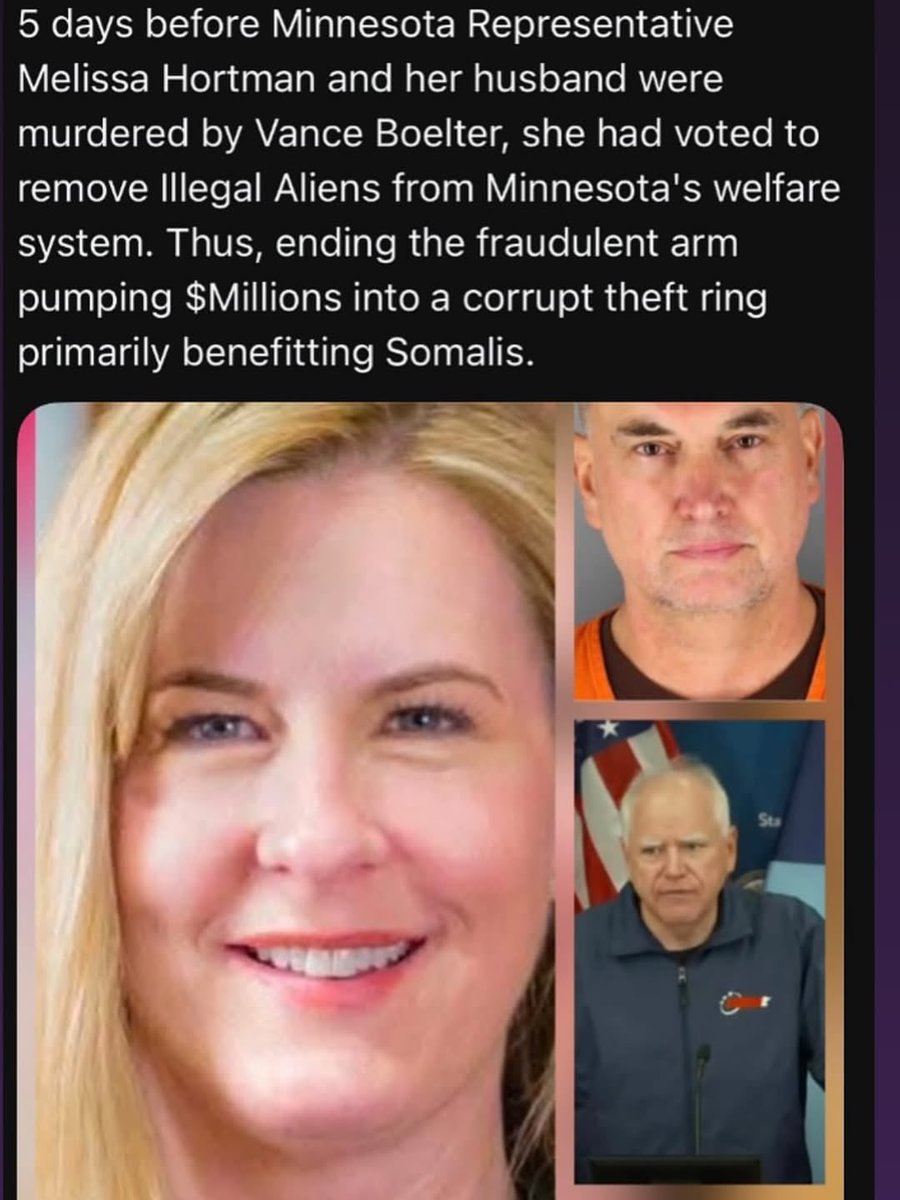
Tim Walz issues a full apology to taxpayers, vows not to rest until every penny is repaid and guarantees everyone involved will go to prison.
Kidding, he called any investigating into the BILLIONS in fraud “White supremacy”