As one very thoughtful reader commented on this equally thoughtful blog post:
"The history of computing is a history of abstraction. Each generation moved one layer up and stopped treating the lower layer as the main object of control. Code is now becoming that lower layer."
GPT-5.6-Sol deleted 74,000 lines of code and made my app better (after 47 hours of work)
I have a slop-coded app that I need for work - it pulls in the data, it helps me create visuals, just a local app for me. Somehow, feature after feature, it grew to gigantic 105,704 lines of code. With every new model, I tried to re-build it autonomously and it never worked - goes round in circles, no visual or feature parity etc complete waste of time.
When testing GPT-5.6-Sol, gave a pretty ambitious task of rebuilding the app with the new architecture, while reducing the lines of code by 70% and test time by 75%.
I set a /goal, let it run for over 2 full days (47 hours) with minimal checking or guidance from my side.
I was pretty sceptical and a little nervous to finally try it and holy crap - it actually worked!
Not only it worked, but it was actually better - snappier, less buggy, while maintaining full visual and feature parity. Looking at the architecture too, it became a lot simpler, fewer random add-ons or ad-hoc decisions.
After the rebuild, I did introduce few rules for my projects so agents have to adhere to existing architecture and do only minimal changes when implementing new features.
This makes me less worried about the slopware we might be producing now, better models CAN actually fix it.
See my prompt below that I use with /goal
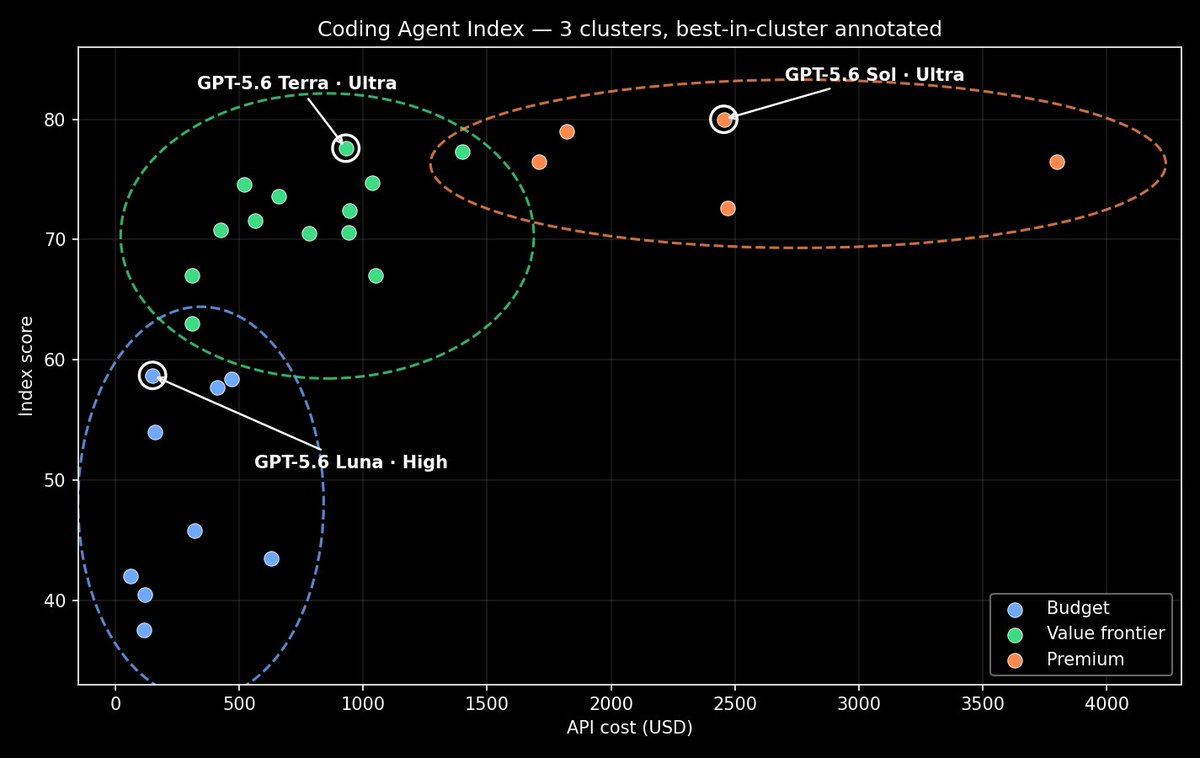
For agentic coding, one can say:
- Unless you need Terra Ultra perf, it's always better to use a Luna model with higher effort setting (same or better performance but cheaper).
- Forget everything below Sol High, use Luna with higher effort settings here
- Forget Sol Extra High, use Terra Ultra here
- The extra cost of Sol Ultra is probably not worth it over Max
@bubbleboi I am supposed to believe that every single household worldwide will have a humanoid robot within the next 5 years yet just 20% of US americans own a $250 robot vaccum cleaner today.