We are thrilled to present our new study unlocking precision in nanoparticles. Cell-level resolution imaging is key in targeted nanoparticle development. See our work on DNA Origami🧬: https://t.co/Ab0FlDBUW5
by @MolbayM, @shan_heather, Benni Kick et al, with @hendrik_dietz.🧵👇🏼
The slight disappointment with being scooped is more than compensated by the very nice results and demonstrations of reduced photobleaching/toxicity with NIR co-illumination in this paper by Ludvikova et al: https://t.co/pR7ugwK12k
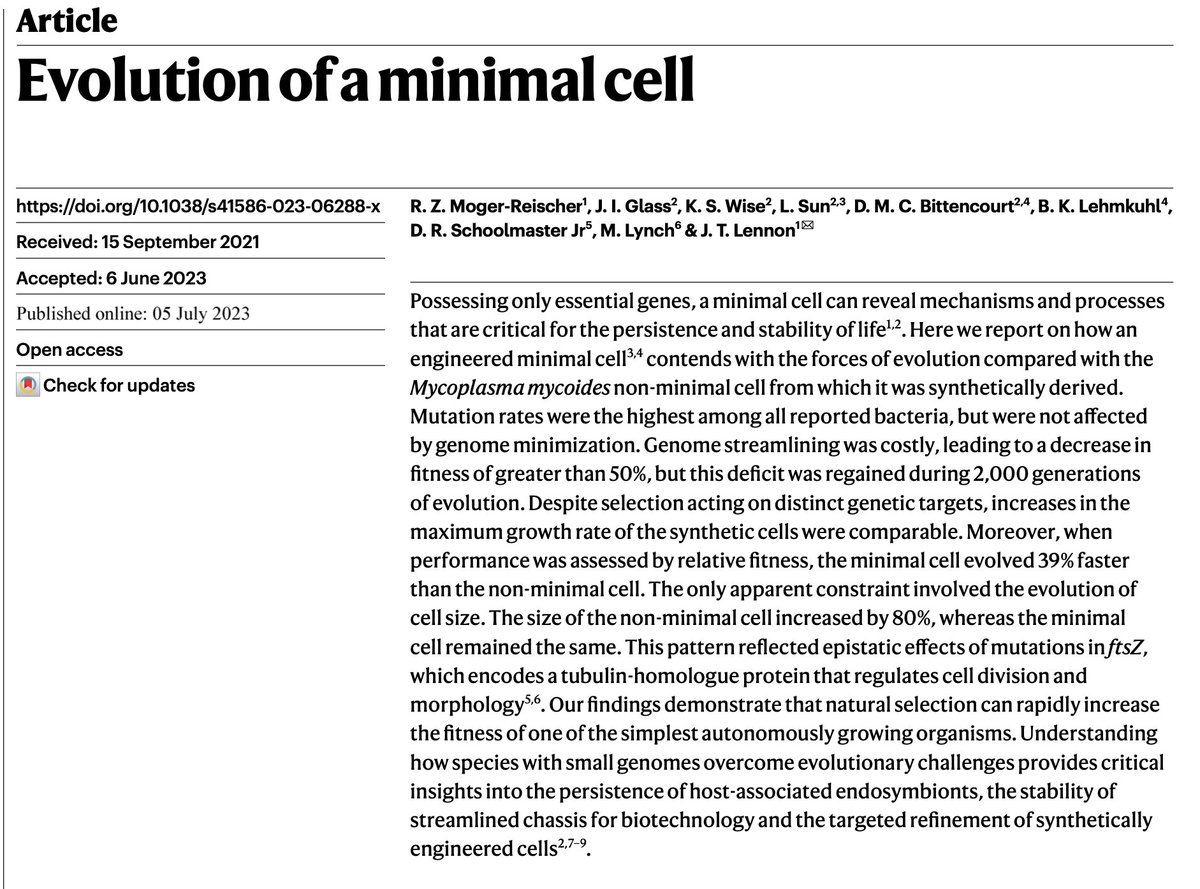
A mind-blowing paper has come out today in @Nature
In 2016, JC Venter Institute scientists trimmed a bacterial genome to its barest minimum required for life to synthesize what they called a "minimal genome" (https://t.co/Rk8oZJ0bUj).
Today, a group of scientists from Indiana University reports how that minimal genome evolved over 2000 generations in comparison to the non-minimal genome.
The authors found that even when you reduce a bacterial genome to its absolute minimum where every nucleotide matters, the genome undergoes mutational events generation after generation as much as the non-minimal genome. One simply cannot stop the evolution.
Just over 300 days of evolution (equivalent to 40,000 years in humans) the minimal cell has gained everything it lacked in fitness on day one in comparison to the non-minimal cell.
When comparing the evolved traits between the minimal and non-minimal cells, the scientists found something striking. The evolutionary process increased the cell size of non-minimal cells but not that of the minimal cell. But that is not the striking part.
The scientists were able to identify the key mutation that resulted in cell size evolution. And it turned out that the mutation that helped the non-minimal cells to grow bigger is the same that helped the minimal cells to stay smaller. Growing bigger had a survival advantage for non-minimal cells and not growing bigger had a survival advantage for minimal cells. So, the mutation had a context-dependent effect. This just demonstrates that the evolutionary effects on traits have no absolute direction. All that matter is what is beneficial for the organism's survival.
The conclusion of the paper is metaphorically a quote from the Jurassic Park movie:
“Listen, if there’s one thing the history of evolution has taught us is that life will not be contained. Life breaks free. It expands to new territories, and it crashes through barriers painfully, maybe even dangerously, but . . . life finds a way". (https://t.co/UlxRlb86CT)
https://t.co/zA9OAqSoAu
As reported in the Asahi Shinbun in March 1907, the crew of a British ship that arrived in Yokohama a few days prior claimed that they encountered a creature on the open sea just off the coast of Taiwan. The creature was about 15ft high and 200ft long with spikes on its back.
Imagine you could stain whole adult mice with standard IgG antibodies. What you couldn't do! We present wildDISCO technology for this🤗, creating the first whole body vascular, lymphatic, and nerve atlases. By @HongchengM@jieluo692 https://t.co/c2F91KQPv4 🧵👇🏼(turn on the sound)
An unbiased study of whole biological systems is key to deciphering complexity. Our new paper describes the steps & applications of vDISCO whole mouse imaging in @NatureProtocols work by @MarikaRuiyao, @ilginkolabas et al. #vDISCO#clearing
https://t.co/PvdVnx8JOO 🧵👇1/n
Need a long working distance (20 mm of air) objective for multiphoton imaging work? 0.5 NA, 3 mm wide field-of-view.
Many people have already bought them.
We're organizing another batch order. If you're interested, you can contact me.
Preprint: https://t.co/pbmj2gMww9
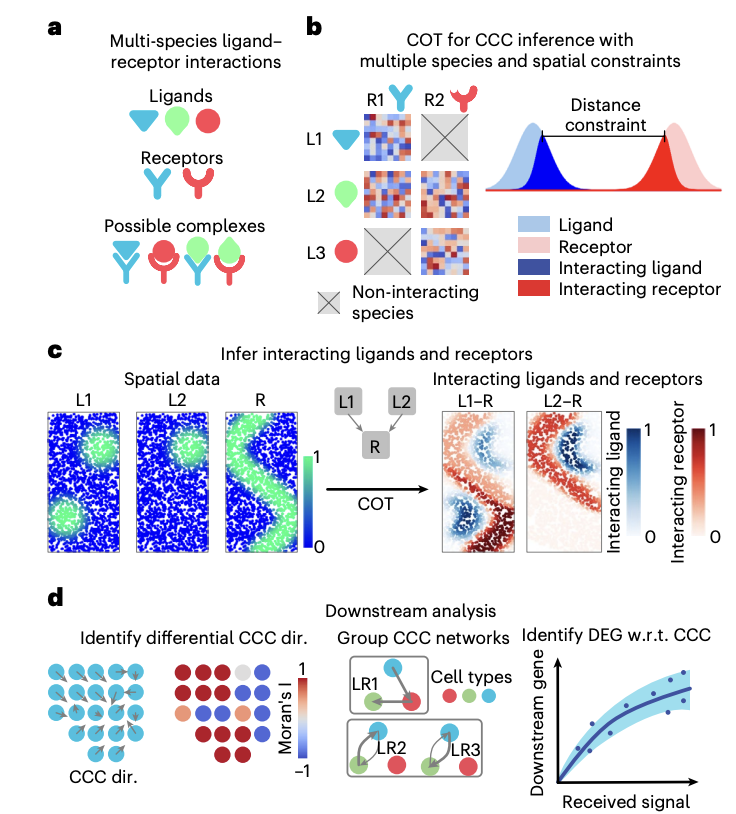
From Qing Nie and colleagues: a computational tool, COMMOT, spatially infers cell-cell communication from transcriptomics data. @ucimath
https://t.co/P9djtVjwcy
It's finally here!! Our Method of the Year 2022 is....long-read sequencing! 🎉
Read our (free!) Editorial to learn why we felt the time was right to select this class of powerful technologies as the Method of the Year.
https://t.co/shnaRqYIxx
Nonnegative spatial factorization: a general framework for spatially-aware and interpretable dimension reduction for high-dimensional spatial data, and its application to spatial transcriptomics analysis. @BeEngelhardt@will_townes
OA paper: https://t.co/YuZu6jeyZV
Spatial-omics goes 3D🤗! Out at Cell @CellCellPress 👉🏼 We developed DISCO-MS with @labs_mann, a spatial proteomics technology for specimens fully imaged in 3D. DISCO-MS is aided by robotics and enables the study of diseases at their early stages. https://t.co/MyvXnnBDgL🧵👇
Introducing a foundational advance in imaging: "Any immersion remote refocus (AIRR) microscopy"
Spoiler: Get aberration-free 3D imaging in a sample of any refractive index using an immersion objective of any type! All in one microscope!
Article here: https://t.co/8b5RzdwbYz
Research highlight by @rita_strack
An approach combining in situ tagmentation and transcription with MERFISH enables spatial profiling of the epigenome in tissues with single-cell resolution.
Highlight: https://t.co/hP3X9XfU8T
Paper: https://t.co/mJ7T9F8Z07
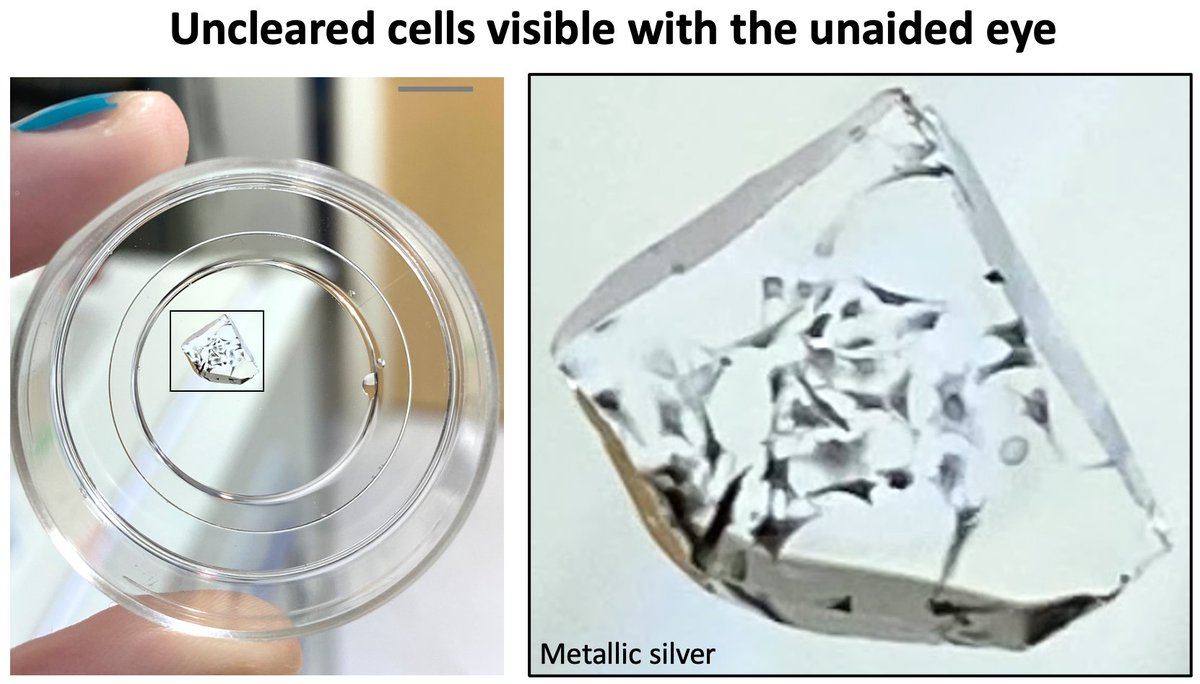
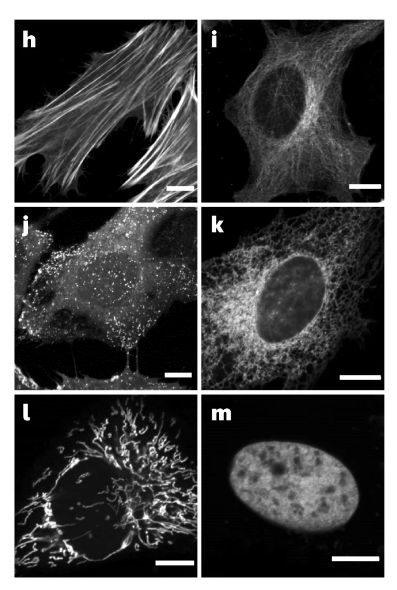
Our latest work on #bioRxiv answers a simple question: can you see cellular substructures and ultrastructure without fluorescence, or even a 🔬? - Yes, you can! With #UnclearingMicroscopy! @OnsMSaad1@mshribak@YaleCellBio
https://t.co/phmjWSSxo9
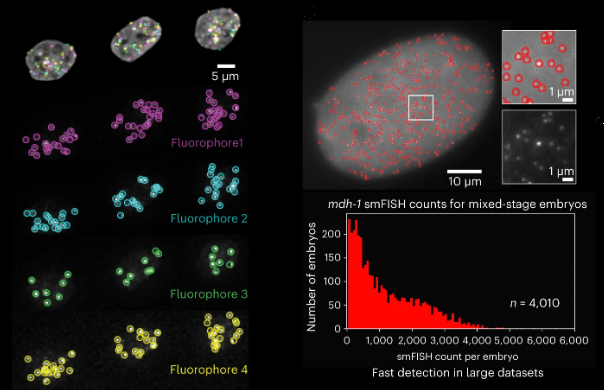
Out today! Radial Symmetry-FISH (RS-FISH) -- an accurate, fast, and user-friendly software for spot detection in 2D and 3D images. Bring on your smFISH, spatial transcriptomics, or spatial genomics applications! @kisharrington @successprocess @preibischs
Anyone fancy of working with me on multisensory integration in the auditory system using state of the art techniques? Two PhD positions in my recently granted #VIDI project are still open for application:
https://t.co/9yB3YBkuem
@ErasmusMC@erasmusmcintl
Hyperfolder YFP (hfYFP) and its variants are remarkably stable, withstanding chaotropic conditions that denature other fluorescent proteins. They are well-suited for use in expansion microscopy and CLEM. @lysergicdesigns
OA paper: https://t.co/WrMFM1i7Zw