Today we share the worldview behind our mission.
Human values don't average out. Local knowledge can't be centralized. The good future has many AIs, raised in different places, shaped by the people they serve, disagreeing with each other the way we do.
https://t.co/A14SurOM2K
We're introducing Elasticsearch Columnar Mode:
A new index mode that stores data once, in columnar form, with no redundant copies and no indexes the workload doesn't need.
Not replacing the document model. Adding a second way to organise data alongside it, for the workloads where columnar is the right shape: logs, telemetry, metrics, security events, AI retrieval.
One platform for search and analytics at the same level, on the same data.
Tech Preview in 9.5, GA in 9.6.
happy, following up on all the work we did for tsdb/metrics in ES, we are formalizing our learnings to a more generic columnar mode in ES, on an index level. Personally, still remember us adding doc values (columnar) to Lucene so many years ago (2012!), and so much since
Introducing EmbeddingGemma, our newest open model that can run completely on-device. It's the top model under 500M parameters on the MTEB benchmark and comparable to models nearly 2x its size – enabling state-of-the-art embeddings for search, retrieval + more.
BigQuery's first-party toolset includes official, Google-maintained tools that provide a secure and reliable bridge to your data, and you can use them in two powerful ways.
Option #1: Use ADK’s built-in toolset for BigQuery → https://t.co/iJPWTp8F9s
I enjoyed reading this LLM-powered data application paper from UCSF: "When the Domain Expert Has No Time and the LLM Developer Has No Clinical Expertise." It gets at the heart of many of my favorite things: accelerating productivity with data analysis, evals in cross-functional teams, pipeline optimization through structured decomposition, improving over long deployments. https://t.co/5N1AVub8cZ
@jxnlco There is a case for knowledge graph representation with a SQL engine execution and many enterprises would prefer this since there are scale and performance limitations with graph dbs. And there is this https://t.co/o0kstMOXYo
The new Gemini 2.5 image model🍌is by far the best out there with a whopping +180 ELO point lead in image editing & it really excels at character consistency.
Available for free in the @GeminiApp right now. Try uploading an image & playing around with it, it's pretty amazing!
Excited to share that I'll be hosting some of the world's best AI researchers and engineers for our @GoogleDeepMind Gemini event next week in Singapore 🇸🇬!
Join @JeffDean, @quocleix, @benoitschilling, @melvinjohnsonp and @denny_zhou for a day of technical conversations, panels and talks about AI, reasoning and our mission to build a world class AI frontier lab in Singapore.
If you're in town and would like to attend, please check the RSVP link below👇. Note, subject to capacity constraints and you'll need to be approved to join.
Tutorial time: Build a Conversational Analytics Agent using BigQuery’s first-party tools!
Here's how the new first-party tools for BigQuery can be used to build a conversational analytics agent in ADK that can answer natural language questions → https://t.co/wDwrEZdmEj
NotebookLM's Video Overviews are now available in 80 languages
We're getting faster at taking these content transformation breakthroughs and making them accessible in lots more languages, huge teamwork to pull this off!
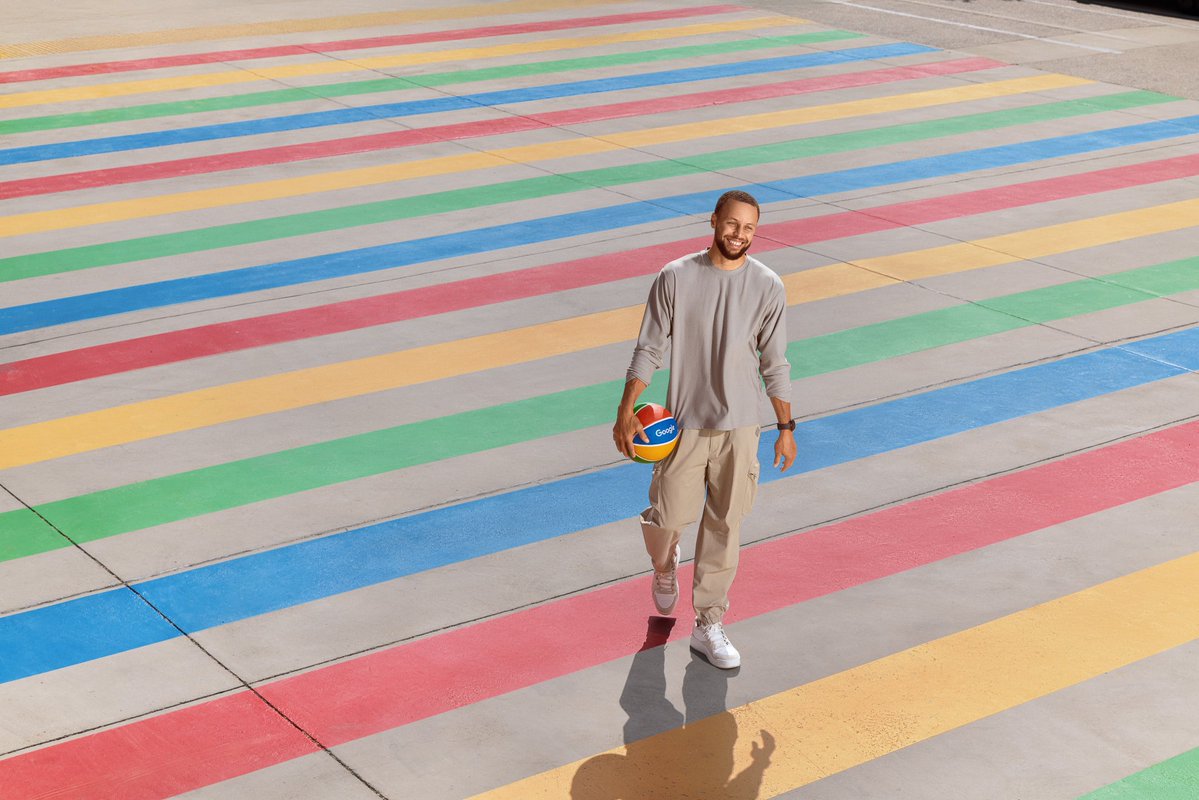
Stephen Curry 🤝 Google.
As an avid Warriors fan, thrilled to welcome @StephenCurry30 as Google’s new Performance Advisor! Stephen is bringing his expertise to help us build products for everyone - and also find unique ways that he can use them to improve his game. 🏀
For example, Stephen is using Pixel to sharpen his workout strategy and continue to develop as an incredible player. He’s also using AI insights from Google Cloud to help analyze his shot quality (not that he needs much help there!). Excited for the future of this partnership!
https://t.co/g36cHnl5cW
📣 Competition Launch Alert! BigQuery AI hosted by @googlecloud
🎯 Solve real-world data problems
💰 $100,000 Prize Pool
⏰ Final Submission: September 22, 2025
https://t.co/obka0tsd1F
🎉 Big news! Google Colab now comes with Gradio pre-installed (v5.38)!
No more pip install gradio needed - just import and start building AI apps instantly.
Thanks to @GoogleColab team and @thechrisperry for making Gradio more accessible to millions of developers worldwide! 🙏
Our open source Gemma models are the most powerful single GPU/TPU models out there! Our latest model Gemma 3n has amazing performance, multimodal understanding, & can run with as little as 2GB of memory - perfect for edge devices - enjoy building at https://t.co/Navvgimwjr !
+1 for "context engineering" over "prompt engineering".
People associate prompts with short task descriptions you'd give an LLM in your day-to-day use. When in every industrial-strength LLM app, context engineering is the delicate art and science of filling the context window with just the right information for the next step. Science because doing this right involves task descriptions and explanations, few shot examples, RAG, related (possibly multimodal) data, tools, state and history, compacting... Too little or of the wrong form and the LLM doesn't have the right context for optimal performance. Too much or too irrelevant and the LLM costs might go up and performance might come down. Doing this well is highly non-trivial. And art because of the guiding intuition around LLM psychology of people spirits.
On top of context engineering itself, an LLM app has to:
- break up problems just right into control flows
- pack the context windows just right
- dispatch calls to LLMs of the right kind and capability
- handle generation-verification UIUX flows
- a lot more - guardrails, security, evals, parallelism, prefetching, ...
So context engineering is just one small piece of an emerging thick layer of non-trivial software that coordinates individual LLM calls (and a lot more) into full LLM apps. The term "ChatGPT wrapper" is tired and really, really wrong.