Director, Research & Development @VHI_ATRC | Product Development Scientist | Project Management Professional | Entomologist | Husband & Father |Views are my own
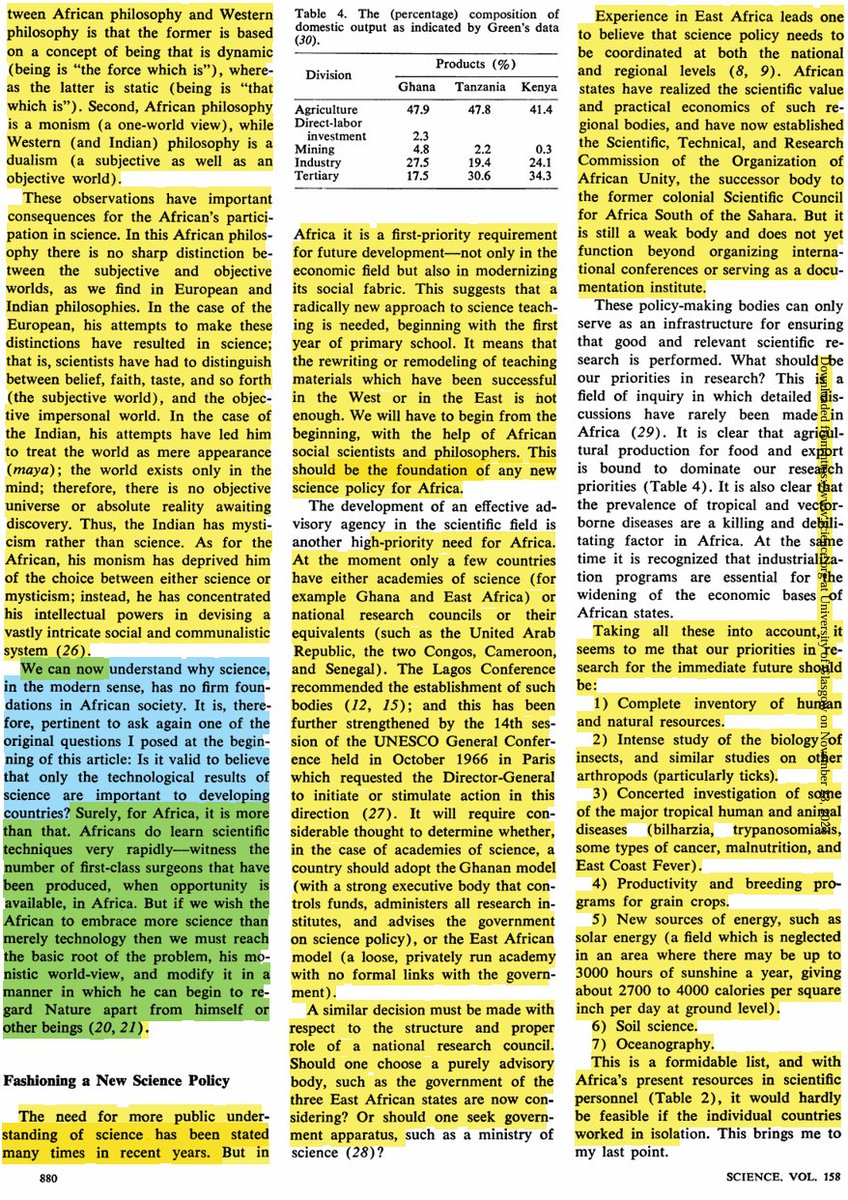
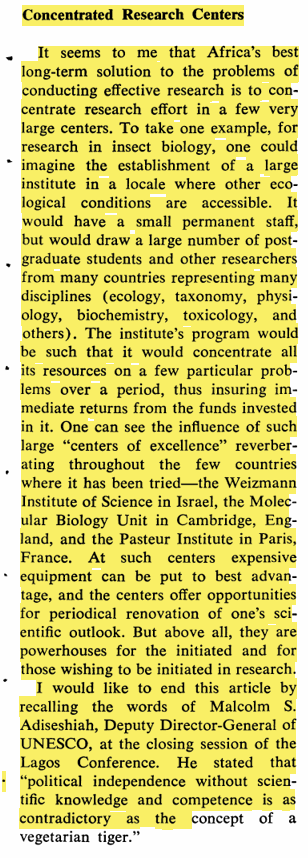
My kinsman, The Late Prof. Thomas Risley Odhiambo (God rest his soul in eternal peace) wrote this nearly 60 years ago in a letter to the Science Journal
~
One might argue that a lot of his views; and recommendations remain most relevant today. Perhaps even more doable and scalable now then back then..
~
Odhiambo 1967: East Africa: Science for Development. "The impact of science in a developing region reveals long-term personnel and research requirements"
~
https://t.co/ih5J5ml2a8
Huge congratulations to #Egypt on being certified #MalariaFree by @WHO!
This milestone is a testament to nearly a century of dedication by the government, health professionals, and communities in eliminating a disease that has impacted the country for thousands of years.
How many female independent researchers have been asked at meetings “who is your PI?” Or “who do you work with?” Is this just me or is this a systemic problem?
I join Mothers of Kenya to remind the Kenya Kwanza Government of their pledge on no more extra judicial killings in Kenya . Why is the Government of Kenya abducting our Sons and daughters? The Masked police are invading homes in the wee hours to kidnap and send fear . Where are these children you kidnapped this morning?
We mothers of Kenya shall not allow you . Release our children.
Don’t kill our children.
Let democracy thrive @ATJLF_@UN@eji_org@UNYouthAffairs @unhabitatyouth @UNHumanRights@IHRF_English@AlJazeeraWorld@cnnbrk@BBCWorld@anticorruption@cbjurists@RESCUEorg
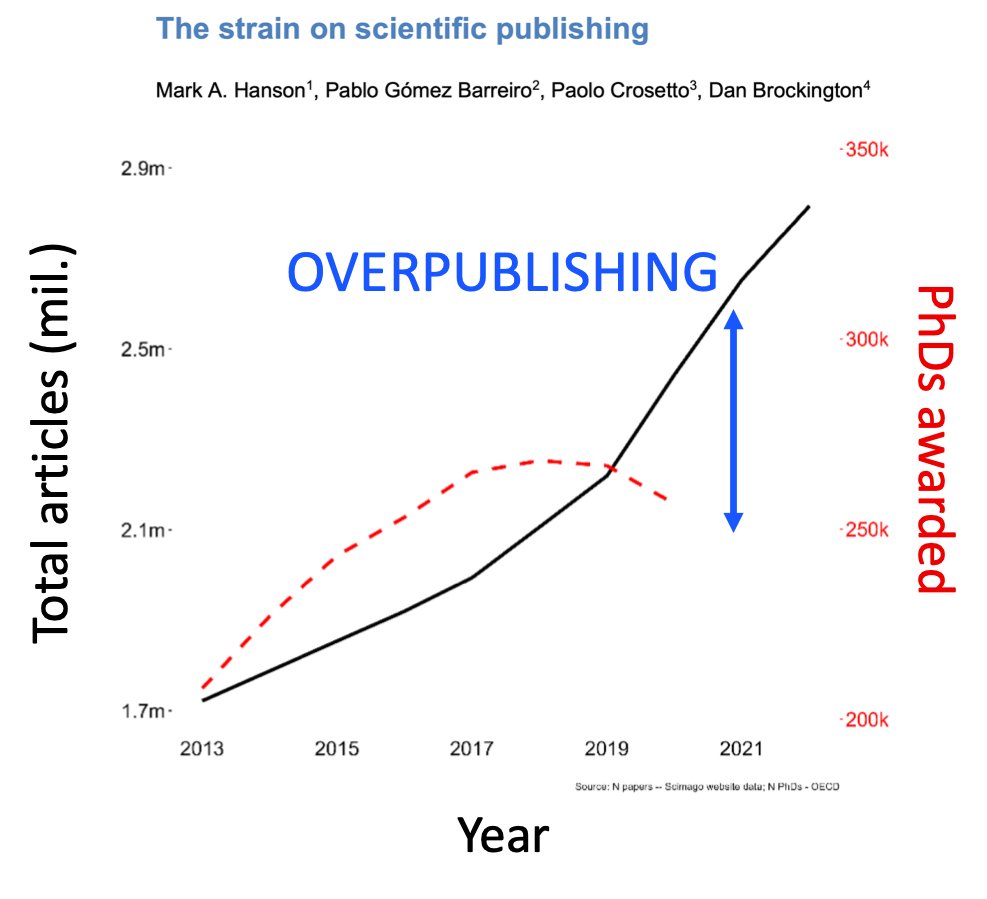
Overpublishing puts enormous stress on students and PIs.
And brings tons of money to publishers in STEM.
A new study shows that the number of papers is increasing FASTER than the number of #PhD graduates.
It’s an amazing work with very useful statistics. Huge kudos to the authors!
▫️
Main outcomes:
1️⃣ In 2022 the number of articles is 47% higher than in 2016. The amount of writing, reviewing and editing workload per scientist is increased enormously.
2️⃣ “Special issues” is a strategy for publishing lots of papers with reduced review time. This is possible due to the “publish or perish” pressure and clearly benefits the publishers.
3️⃣ The publishing time varies widely!
MDPI = 37 days. Frontiers = 72 days. Elsevier = 134 days. Springer = 157 days. Nature = 185 days.
4️⃣ The article rejection rates do not seem to correlate with publisher growth. However, rejection rates decline with increased use of special issue publishing.
5️⃣ Certain for-profit gold-open-access publishers create an increasing number of special issues, with uniquely reduced turnaround times, and in specific cases, high impact inflation and reduced rejection rates.
6️⃣ The authors suggest a new metric - Impact Inflation, which is reflected in self-citation within the same journal. For example, MDPI has a high impact inflation due to excessive self-citation compared to other publishers.
Conclusions and my opinion:
- Scientists have to spend a lot more time on reviewing and writing than before (on average).
- The more papers are published, the more the quality is compromised.
- Scientific progress has become partially bound to the business models of publishers and their revenue (a sad reality today).
- There is a huge lack of transparency. Much of these data had to be ‘web-scraped’ from numerous sources in order to get a full picture. We clearly need regulators to mandate open access to publisher’s statistics.
- Reduce the number of special issues! Those typically have low standards.
▫️
Science, publishing and funding make a trio that is very hard to disentangle.
However, research quality is controlled by the community.
This is why preprint + community review can make a big difference.
#AcademicTwitter #AcademicChatter
Don't miss out as Sumitomo Chemical showcases their technologies for Malaria and mosquito control this morning in a presentation by Barnabas Zogo. @pamcafrica@VHI_ATRC
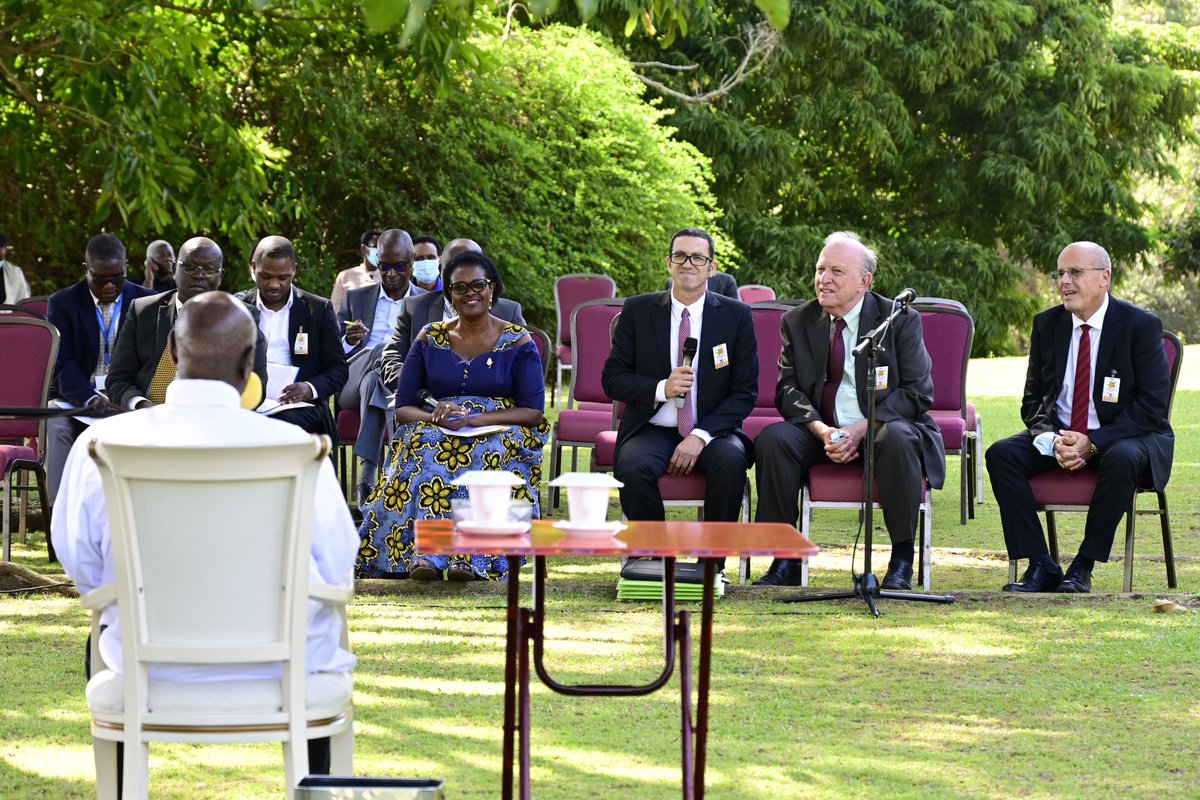
I met a group of scientists led by Mr. Israel Green, the Chief Executive Officer of Malera Technologies Limited. They informed me, that they want to establish high-level artificial intelligence technology known as a radiation sterilization which sterilizes male mosquitoes to lessen the production of any offspring.
Sterilization of the male mosquitoes or tse-tse flies is something we have been talking about for a long time. I told them to start with the Bukedi Sub- region to pilot this method since the area has got a lot of water, flat area, and stagnant water. This will help us solve the problem of mosquitoes and have less patients.
We shall spread it out once the study of this pilot effort works. I wish them good luck.
@EAukot@Safaricom_Care@SafaricomPLC@SafaricomPLC is very good for 99% of us. You should feel free to move to Starlink. We must avoid this culture of exaggerating small challenges when this company has enabled effective connection in homes and businesses and put us above our neighbors.