Strengthening Child Restraint Systems in Uganda
On Monday, April 20, 2026, Makerere University School of Public Health convened an inception meeting following the signing of the GRSP grant agreement to formally initiate implementation of the “Strengthening Child Restraint Systems in Uganda” project.
Sitting in for @RhodaWanyenze, Prof. Frederick Makumbi, the Deputy Dean, led the engagement that brought together the Global Road Safety Partnership (GRSP), @grspartnership, and Global Health Advocacy Incubator (GHAI) teams to align with the School’s project team on priorities and execution.
The meeting brought into focus the project’s technical and advocacy agenda, with participation from Ms. Carmen Koo (GRSP), Ms. Maria Nkalubo (In-Country Coordinator), and Ms. Roxanne Paisible, @rpaisible (@IncubatorGHAI). From the MakSPH side, Dr. Esther Bayiga will lead implementation over the next two years.
📢Coming soon! Co-edited with Dr. Erdal Bayar, this volume explores the roots and evolving dynamics of radicalism in the Global South, linking historical inequalities with contemporary transformations shaped by technology, environmental crises, and global financial networks.
https://t.co/trEOqqHqDB
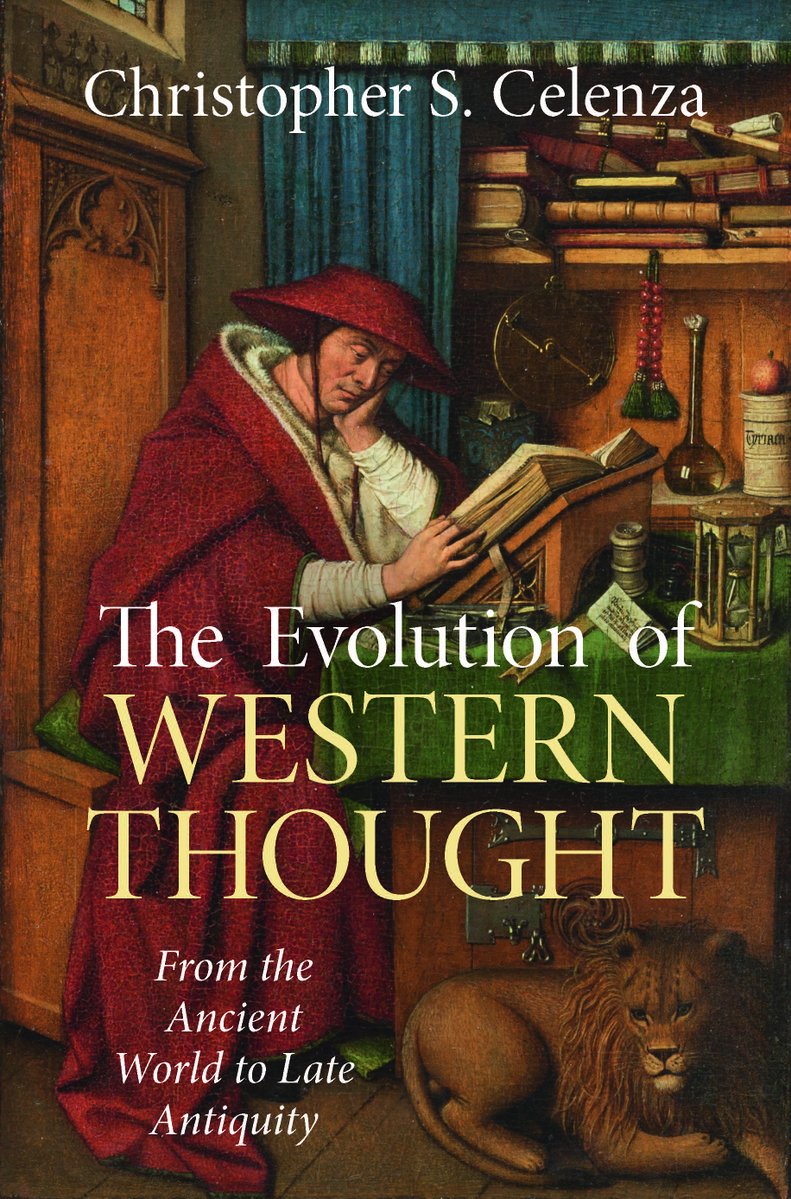
The Evolution of Western Thought by Christopher S. Celenza
A sweeping intellectual history tracing how philosophical, religious and literary traditions evolved from ancient Greece to the Middle Ages.
📘 https://t.co/eOCgL2NXHr
#intellectualhistory#historyofideas
I read a long piece on Africa’s economic future in @TheEconomist of 23 March 2026 titled “Get Paid, Not Aid”, in which the newsmagazine argued that business investment will shape the continent’s future. The long read was quite glowing about Africa’s prospects.
I am skeptical. Why? Because, while it is positive, past experience including the “Africa Rising” wave of the 2000s (started, again, by The Economist, perhaps in atonement for its famous earlier derogatory cover story titled “The Hopeless Continent”), has shown that Africa will not rise simply because western media says it is rising.
These narratives, in the main, are often driven by subtle agendas. In the post-2008 financial crisis, it was driven by Africa being seen as a “last frontier” after the financial crisis destroyed $14 trillion of economic value and Africa, with a low correlation to the global economy at the time, offered a prospect for global investors looking for where in the world to make profit.
To counter this narrative with more nuance, I wrote the book Emerging Africa: How the Global Economy’s ‘Last Frontier’ Can Prosper and Matter, published by @PenguinUKBooks in 2014, in which I argued that although Africa was “emerging”, it had not “risen” and was not rising despite the breathless media narrative driven by western commentators. In that book I provided a guide to how the continent could actually rise, making the point that foundational philosophical worldviews, education and skills, basic good governance anchored on transparency and accountability, and innovation, were far more important than foreign investment or aid for Africa to truly rise. The @FT review of Emerging Africa called it “a welcome last word on the Africa Rising obsession”.
A decade later, my arguments have been borne out. Democracy is in decline, and Africa has not worked out a better alternative (as Winston Churchill famously described it, “democracy is the worst form of government, except for all the rest”). Industrial-based economic transformation has not yet occurred, innovation-driven productivity is absent with perhaps the exception of South Africa. 600 million Africans remain without electricity, and poverty levels remain stubbornly high. Meanwhile, population is rising faster than concrete progress.
The present Economist piece appears heavily driven by a focus by western investors on strategic critical minerals in Africa, even as it lauded the impact of indigenous African entrepreneurs. In this sense, these narratives miss the point: Africa won’t “rise” in a transformational manner, as Rising Asia has, until the continent’s 54 countries are properly governed with the public sector delivering the basics of state capacity. These are: security, effective revenue mobilization from a domestic base as opposed to incessant, unaccountable foreign borrowing, effective provision of social services such as health and education, and enabling business environments (especially electricity).
Private capital isn’t enough.
@okeya_ thank you for this article in today's @DailyMonitor
Surely there are somethings we cannot easily say in the open especially in this current Uganda bse of the obvious repercussions.
May Jurgen HABERMAS rest well 🙏🏿
Alan Tacca: Pentecostals calling themselves Balokole does not stop rogues. Actually, it sometimes attracts rogues, both (exploitative) church leaders and (cover-seeking) members. The result is that you have a huge number of Pentecostals who need to reform, to kulokoka; just like with the Anglicans, Catholics, Muslims, and the godless
https://t.co/aApCIYlDLT
#MonitorUpdates
Uganda’s rolex is much more than a street food – it’s a national treasure
https://t.co/UozqHSNdrp
💻 Ivan Nathanael Lukanda, @Makerere University
#ArtsCultureAndSociety
St. Patrick Children’s Academy, e Nangabo, Wakiso bawandiisa abayizi abaggya ab’omwaka guno 2026.
Balabirira bulungi omwana mu mukwano gw’obuzadde, essomero liri mu kifo ekiwa omwana omwagaanya okusoma nga tataataaganyiziddwa.
Omuyizi waaviirayo nga muntu ajjudde mu by’amagezi n’eobuntubulamu.
Okumanya ebisingawo bakubire ku 0745 066 764 n’okwefunira ekifo ky’omwana wo.
@StPatrickNgb
Kampala at a Crossroads: What New Research Reveals About Mobility, Governance, and the City’s Public Health Risks
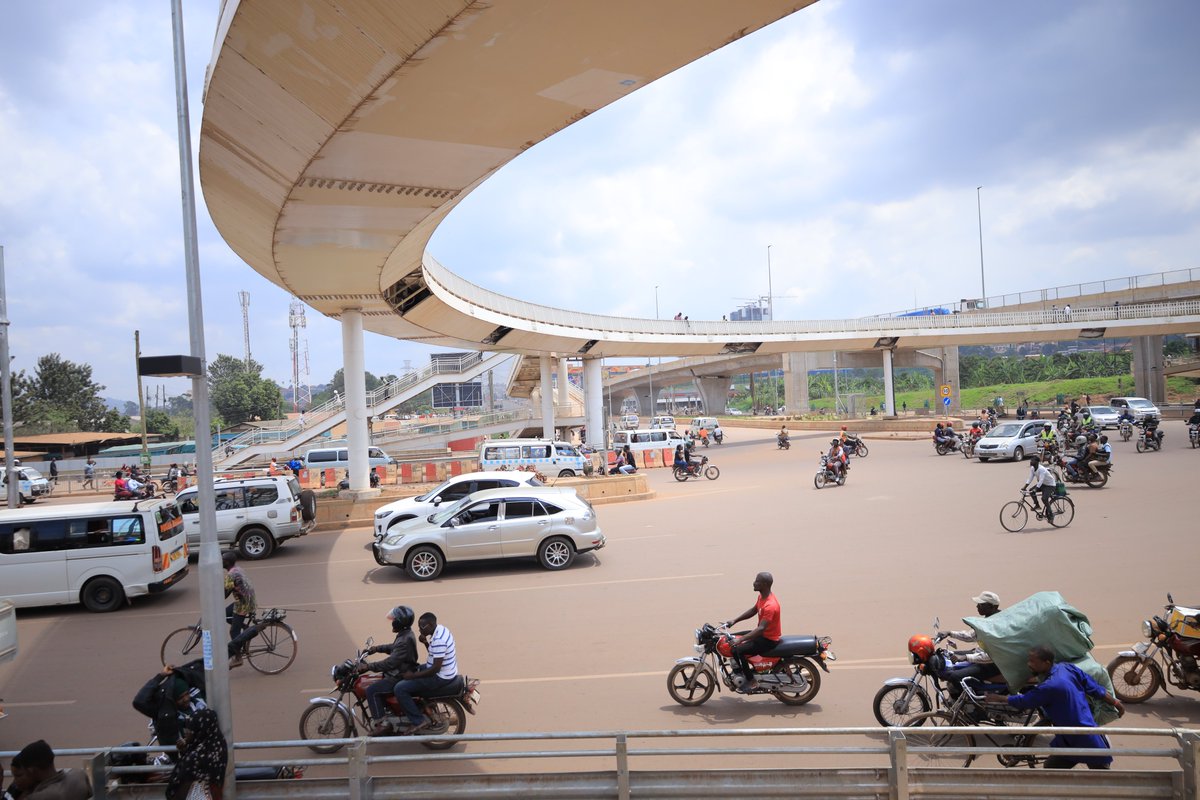
Gridlock, boda-bodas, polluted air, and unsafe streets are part of everyday life in Kampala, but new research suggests these are not just transport problems. Researchers at @Makerere University School of Public Health are examining how governance, policy choices, and power shape urban mobility and, in turn, public health outcomes in the city.
Through a multi-country study spanning Kampala, Kigali, and Lilongwe, the research reveals why some transport options are prioritised while others are neglected, and how these decisions affect safety, equity, and wellbeing. As Kampala grows rapidly, the findings raise urgent questions about whose interests current mobility systems serve, and at what cost.
Read the full article: https://t.co/3EK6Guf9ud
Kabushenga’s Thoughts
Mamdani: An Intellectual Life of Analysis
Prof. Mahmood Mamdani (@mm1124) has written yet another book on the political history of Uganda. It is called SLOW POISON. If his first one called POLITICS & CLASS FORMATION IN UGANDA was his intro, the latest one feels like his parting shot, a fitting farewell to a life of deep reflection, clear thought & powerful contribution. A life well lived, if fulfilled. This book is different though. Very different from the dispassionate almost technically structured & thoroughly academic work he has done before. It is part personal memoir, part historical explanation of the country that should have been his home. He writes of being and yet not quite belonging. He explains, even articulates the leadership challenges of Uganda without necessarily justifying or even defending it.
If you are not given to the tedium of reading, his choice of book title is inviting. If attention is a bit of struggle for you, then simply look for two stories he writes about. One is the tragic loss suffered by a couple during what he calls the fight between two factions of Uganda’s armed groups of the early 80s-Yoweri Museveni’s FRONASA (which became the National Resistance Army)& Milton Obote’s Kikoosi Maalum(which became the Uganda National Liberation Army). Husband and wife returned home to find that their house had been broken into by security forces of the Obote regime & all their children brutally murdered in an orgy of violence. The second one is the sad end to the life of his colleague in political mobilization, a man called Wabwire Kwoba. It speaks to how we can die slowly without knowing and then suddenly.
Mahmood (as we fondly call him) is a Muindi, an East African whose forebears came to the region from the Indian sub-continent. To be distinguished from the more recent (Indian so called investors)arrivals. By any measure, he should be a citizen and yet because of a history he articulates well in the book, you get to understand why for people like him, identity & belonging remains unresolved. For this reason, he anchors his latest book in the seminal event of Asian expulsions from Uganda. It is a long & continuing history of exclusion.
In doing so, Mahmood explodes the myths & carefully constructed narratives about the most consequential presidents of Uganda, Idi Amin & Museveni. A lot of what we have taken for granted is simply a nicely crafted narrative with a purpose. Far from the facts. But we can be forgiven for having swallowed it, hook, line and sinker. Because we didn’t know. And what Mahmood helps to do, is to know. And with that, the book helps us to re-evaluate the two men and their place in our national history. To do so, you have to read the book. You should not rely on third party renditions that tend to be selective & self serving.
Disclaimer: I appear in the book a few times so you can discount my review by that much. But it is simply as a telling of bigger events in the process of building Uganda as a modern state. In the book, you will get to understand Mahmood Mamdani’s journey. You will also appreciate the leadership of Amin & Museveni in ways we would not have without his assistance in his latest book. So if you have the courage, I recommend you drink all of his SLOW POISON. It will, at the very least, kill a lot of misconceptions.
One in seven female sex workers/ sexually exploited children -FSW/SEC tested positive for active syphilis, and more than one in three tested positive for a high-risk Human papillomavirus (HPV) strain (high-risk strain for cervical cancer).