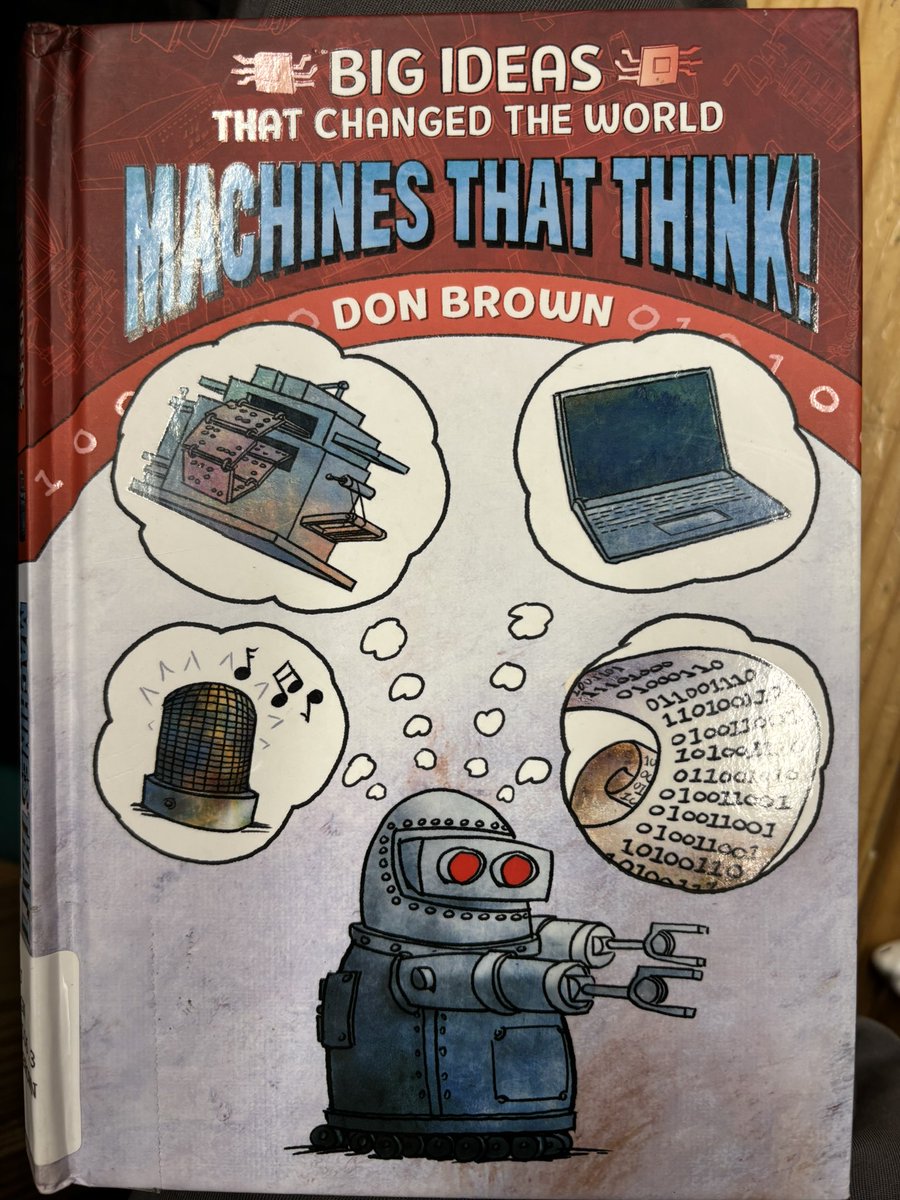
Published in the year 2020 page 97 in reference to Alan Turing’s can computers think. Are you talking to a bot or human? Remember to touch grass, sun bathe and drink water with others. 🌌🤍
🚨In 1990s, Stanford researcher Dr. Robert Sapolsky discovered something that should have broken the internet by now.
He was studying dopamine pathways in primates and found that the brain doesn't just adapt to repeated stimulation. It actively fights back.
When you flood dopamine receptors consistently, the brain deploys what neuroscientists call "opponent processes." For every artificial high you create, your nervous system generates an equal and opposite neurochemical low. Not eventually. Immediately. The system is designed to maintain balance, so it starts producing compounds that directly counteract dopamine while you're still experiencing the dopamine hit.
This means every notification, every scroll, every digital reward doesn't just give you a high followed by a return to baseline. It gives you a high followed by a crash below baseline. You end up in neurochemical debt.
Tech companies never publicized this research. They probably never read it. They were too busy discovering that variable ratio reinforcement schedules could keep users engaged for hours. They built addictive systems by accident, then refined them into addiction machines once they realized what they'd stumbled onto.
Your phone delivers an average of 80 dopamine hits per day. Your ancestors got maybe 5. Each hit triggers opponent processes that create a corresponding low. By the end of a typical day of normal phone usage, your baseline dopamine is running in negative territory. You feel flat, restless, vaguely unsatisfied, and hungry for stimulation because your brain chemistry is literally below zero.
You think you're bored. You're chemically depressed by artificial highs.
The opponent process theory explains why nothing feels interesting anymore. Your brain isn't broken. It's precisely calibrated to maintain neurochemical balance, and you keep throwing that balance off with artificial intensity. Every Instagram hit requires an equal Instagram crash. Every TikTok high gets paid for with a TikTok low. Every notification rush gets balanced with notification emptiness.
Your reward system is running a neurochemical deficit that grows larger every day.
Sapolsky's research revealed something even more disturbing: opponent processes don't just create temporary lows. They become permanent changes to your baseline dopamine production. Chronic overstimulation doesn't just make you tolerant to digital rewards. It makes you insensitive to natural rewards.
The sunset that would have captivated your great-grandfather becomes invisible to you not because sunsets got worse, but because your dopamine system needs intensity levels that sunsets can't provide. A good conversation becomes boring not because conversations got less interesting, but because your brain requires the rapid-fire stimulation of social media to register engagement.
You've accidentally trained your reward system to ignore everything that isn't artificially amplified.
This connects to research from Dr. Anna Lembke at Stanford, who found that people who undergo complete digital fasting for just 30 days show measurable increases in dopamine receptor density. Their brains literally regrow sensitivity to natural rewards. Food tastes better. Music sounds more complex. Social interactions become genuinely engaging again.
But there's a catch that nobody talks about: the first two weeks of dopamine detox feel like clinical depression. Your brain has been chemically dependent on artificial stimulation for years. Removing that stimulation creates actual withdrawal symptoms. Restlessness, anxiety, inability to focus, emotional flatness, and desperate cravings for digital input.
Most people interpret these symptoms as evidence that they need their phones. Actually, they're evidence that they've been neurochemically dependent on their phones without realizing it.
The withdrawal period isn't a bug. It's proof the reset is working.
What happens after week three is remarkable. Colors become more vivid. Conversations become genuinely absorbing. Simple pleasures like hot coffee or cool air become satisfying in ways you forgot were possible. Your brain rediscovers that reality contains enough complexity and beauty to hold your attention without artificial amplification.
You don't need more interesting content. You need more sensitive reward systems.
The solution isn't better apps or more engaging entertainment. The solution is restoring your brain's factory settings for what constitutes a worthwhile experience.
Sapolsky's opponent process research suggests this can happen faster than anyone expected. Every day you don't artificially spike your dopamine, your baseline moves a little higher. Every natural reward you pay attention to rebuilds receptor density. Every moment of boredom you endure without reaching for stimulation strengthens your capacity for sustained focus.
Ancient humans lived in a world that provided exactly the right amount of stimulation to keep their reward systems healthy. Enough challenge to stay engaged, enough calm to stay balanced, enough novelty to stay curious, enough routine to stay stable.
We built a world that provides 10 times too much stimulation and wonder why nothing feels rewarding anymore.
Your brain is not the problem. Your environment is the problem.
Change the environment, and the brain heals itself automatically.
Thoughts on making life easier
Everyone keeps trying to control the wrong layer.
Some things are up to you.
Some things are not.
Not up to you: outcomes, other people, timing, markets, events.
Up to you: judgments, choices, attention, the use you make of what happens.
Most frustration comes from crossing that line. It’s that simple .
You treat what isn’t yours as if it were, then blame the world when it doesn’t obey.
There are only two levers:
•tighten your inputs
•raise the level of consciousness those inputs come from
Define what is actually yours to do.
Turn it into fixed daily actions. There is no other way. The better you do that, the better you do.
Keep a steady rhythm. Same time, same process.
Begin each block with a clear decision to act.
Do the task without bargaining. Stop bargaining with yourself, full stop.
If there is no bargain, it actually gets easier.
Finish the work you set.
Track execution, not results.
If you did the work, it stands complete.
Cut what pulls you off course.
Reduce noise. Reduce parallel aims.
Act fully, then release the outcome.
Once done, it no longer belongs to you.
Raise the level of consciousness
Examine your judgments.
Disturbance comes from how you interpret events, not the events themselves.
Pause before reacting.
Insert choice between impression and action.
Hold attention on what is in your control.
Return to it each time the mind drifts.
When something external goes against you, reframe it:
“This is not mine to command.”
Shift motive from result to conduct.
The aim is to act well, not to win.
Build consistency.
Carry the same discipline across situations.
Act where you have authority.
Withdraw from what you don’t.
Prepare, then choose, then act, then release, then continue.
It’s mechanical.
Focus on the use of your will.
If you become adept everything gets easier .
Everything else follows its own course.
Most of all, if you miss, if you fail, just smile and say “fuck it” and try again.
Let it go.
Awake in a World That Cannot See Itself
One of the hardest things to accept is that the world runs on managed perception far more than most people realize. The deeper you go, the more you see how much of what passes for reality is filtered through institutions, incentives, fear, habit, and narrative. People are constantly being guided toward certain conclusions, certain emotions, and certain priorities, often without ever noticing how much of their worldview was shaped for them. That does not mean everything is fake. It means very little arrives untouched. Most people are not seeing the world as it is. They are seeing it through layers that were built long before they ever thought to question them.
What makes this even harder is that everyone wakes up to that fact at a different pace. Some never question the surface because life has given them no reason to. Some feel that something is wrong but cannot yet explain it. Some see through one layer of illusion only to get trapped inside another. Some become cynical and think cynicism itself is wisdom. And some reach a point where they can no longer look at politics, media, war, finance, or institutions in the same innocent way again. That uneven awakening is one of the biggest reasons true cohesion is so rare. People may live in the same country, watch the same events, and speak the same language, yet still be reacting from completely different levels of awareness. They are not starting from the same assumptions, the same trust, the same pain, or the same understanding of how power actually works. So even when large numbers of people are being pushed in directions that do not benefit them, they struggle to move together because they are not seeing the same reality at the same depth.
That is why life can feel so disorienting once the veil starts to lift. You realize this world was never a utopia, never as honest as it presented itself, and never organized around the well being of ordinary people as much as they were taught to believe. But that realization does not have to turn into despair. It can turn into discipline. It can teach you to become harder to manipulate, slower to react, more careful about what you accept, and more serious about the choices you make. Maybe that is the real task in a world like this. Not pretending you can wake everyone up at once, and not letting bitterness consume you, but learning to see clearly enough that you do not surrender your own mind. To think carefully. To move wisely. And to protect the people you love with as much truth, strength, and discernment as you can hold onto.
@WillMuldoon Transparency helps with accountability and progressive trust relationships. I once worked in AP department of an Ak regional corp and was happy to see contractors submit paperwork auditable via receipts in a registry system. Only thing missing was asset tags for equipment
@erikfromalaska Polarity is an illusion humans seek for a sense of safety. Our cognitive capacity did not evolve to survive in nuance. Making spaces where all can gather helps us integrate and go further.
@LukasJaeckel Ooo fun fun I’d love to see an ontology that bridges the two worlds. Watch out for get echo chambers and stoked for your narrative travels 🫡
Each year a side basin of the glacier above Juneau shown in this photo can spill out in a burst. It has burst 2 years in a row now. Awaiting reports of flooding.
https://t.co/2fuJefEBGd
@BenWest Hugs and love brother 🌌🤍 Thanks you for sharing in the open and allowing your community to support you. I said bye to #chinotheboston a few years back. He was sent to teach me #dadlife skills.