Please mention @olbin or DM to let us know of cool results, interferometry-related twitter threads, or anything else of interest to the OLBIN community!
There is a postdoc opportunity in Nice (France) to develop new technologies for intensity interferometry. More info here: https://t.co/ftKd797MD9
#olbin
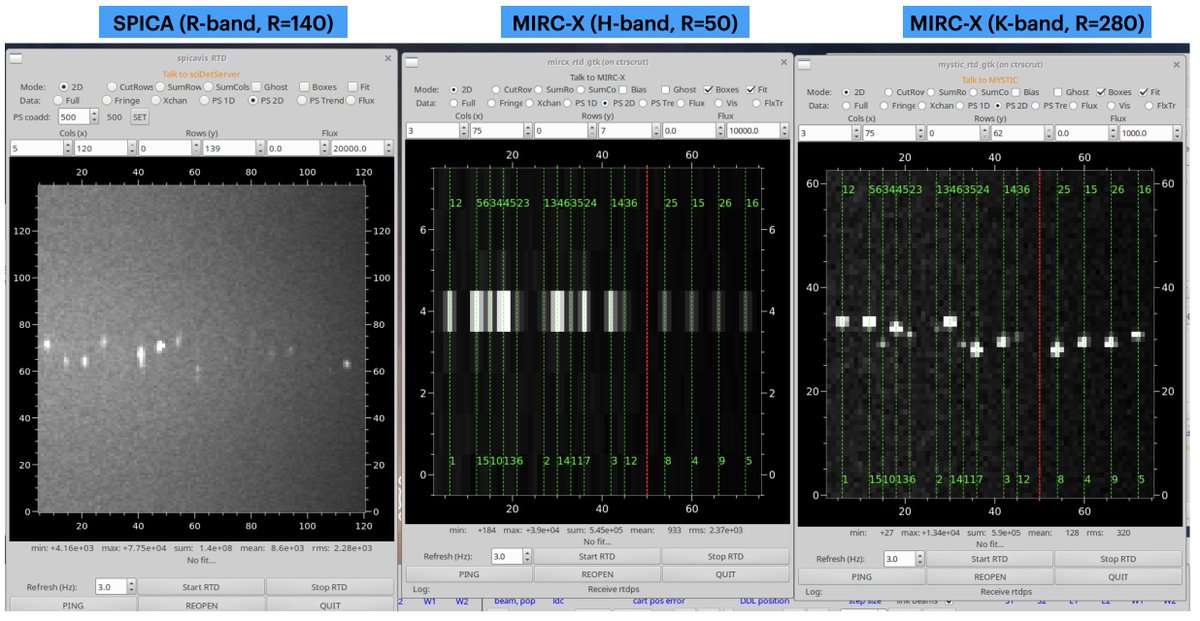
Observing fringes across the optical and near-infrared simultaneously vastly improves interpretation of science observations (as well as uv coverage) allowing more reliable results with less observing time.
The @CHARAArray is looking for planets forming in an unlikely place.. @NarsiAnugu talks about his recent imaging of evolved system AC Her here: https://t.co/xm58Xpo1mB
#olbin#chara
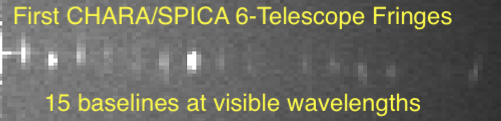
Researchers from @ObsCoteAzur announced first 6-telescope visible light fringes at @chara on 2023Jun17. The SPICA instrument will make images of stellar surfaces with 0.2 milliarcsecond resolution. Congratulations to the team! #olbin#chara#erc#spica
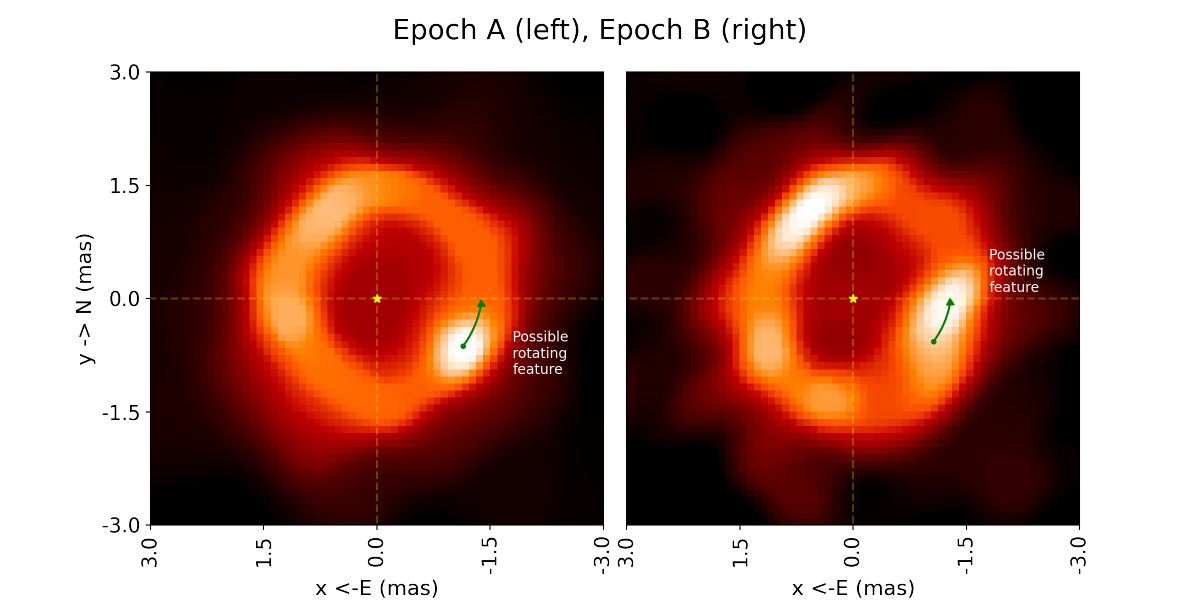
Amazing new images of the inner au of one of the closest Herbig Be stars showing a glowing inner cavity surrounded by a hot dust ring. #chara#mircx#olbin@michiganastro Q&A with lead author Noura Ibrahim (U. Michigan) here: https://t.co/jFwtMe4LpZ
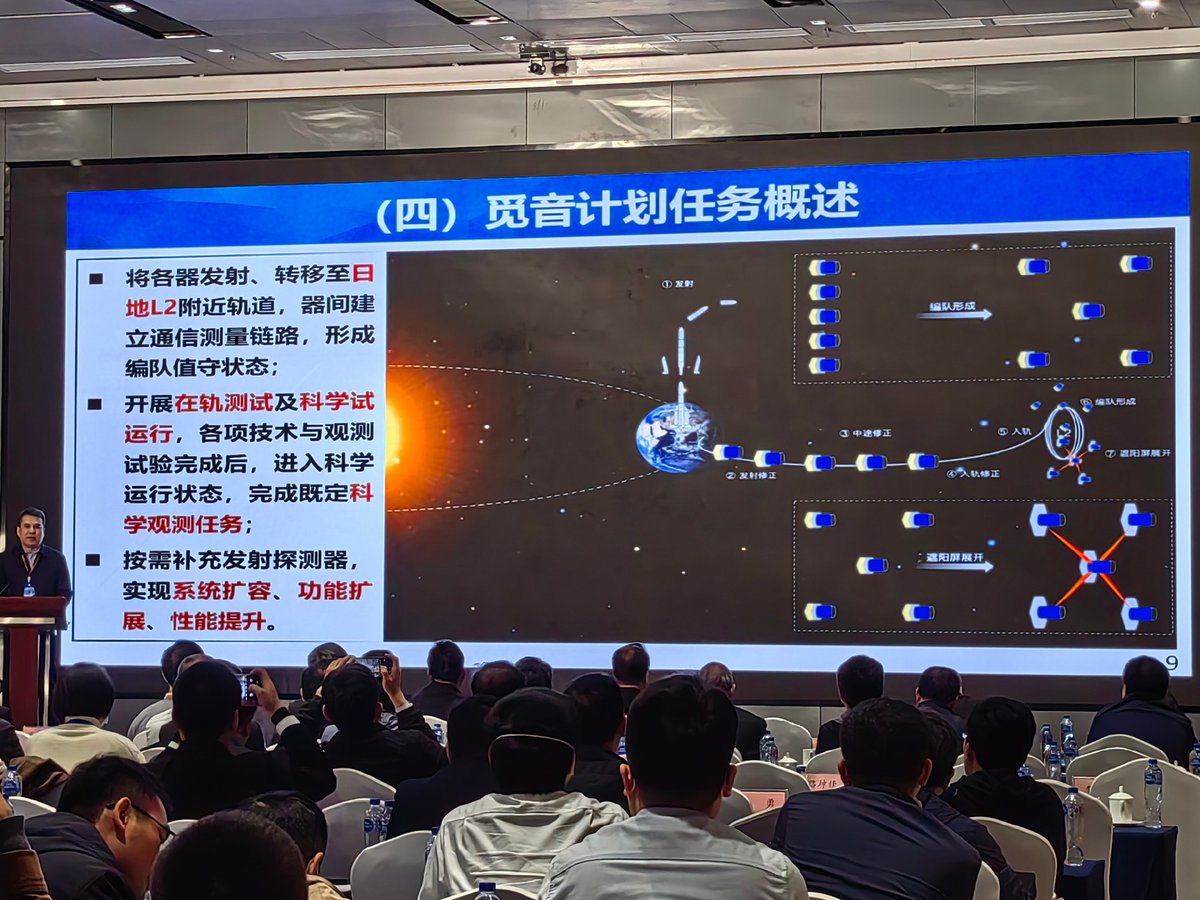
At last. A good insight into China's Miyin exoplanet project. Miyin aims to detect habitable planets around nearby stars using interferometry, using 4 telescopes & a beam combiner at Sun-Earth L2. On-orbit tests in 2024, launch an experimental sat in 2027 year, active ~2030.
There will be a workshop May 22-24 at Ohio State (Columbus, OH) focusing on Stellar Intensity Interferometry, a technique enjoying a resurgence based on new telescope arrays and advances in detection methods. Learn more at https://t.co/VzT2EvV2GV #olbin#quantum
One of the most exciting areas of interferometry is nulling, with vast untapped potential for detecting exoplanets. Here is a chance to join team at Institute of Astronomy of KU Leuven to help build and use Asgard/NOTT at VLTI: https://t.co/MMsYyIM5ll
#olbin#vlti#exoplanets
The Large Binocular Telescope Interferometer (LBTI)is looking for a post-doctoral researcher to join their team, with focus on observing and instrumentation projects. See Job Ad here: https://t.co/19mILcP3X5
#lbti#olbin
A long-awaited updated review in ARAA on "Advances in Optical/Infrared Interferometry" (by Eisenhauer, Monnier, and Pfuhl) is available now on astro-ph: https://t.co/tUaYMbdcg5
Here is an exciting opportunity to help add a long-missing capability to the VLTI!
OLBIN is happy to advertise jobs related to optical interferometry, so please include us @olbin in your postings.
Join us as POSTDOC / OPTICAL ENGINEER in the brand new Exeter Exoplanet Lab. We are building the BIFROST instrument aimed for the VLT Interferometer. Applications open until March 28th (https://t.co/4aGbX6lnc4; P87138) @UoE_Astro@UoE_Physics@ERC_Research
A recent article published in @PASPJournal describes the @NASAWebb NIRISS Aperture Masking Interferometry (AMI) mode and performance derived from commissioning measurements. https://t.co/gbMGieKgaF. -JGM
"The probability of finding [a K=13mag] fringe-tracking star within 30" is almost 100% in the Galactic plane and
remains above 25% for Galactic latitudes of 40°." A summary of the GRAVITY+ Project was published in https://t.co/ZIGMyLIIfC this week. @GravityPlus_VLT
Congratulations to @PierreKervella and colleague Grzegorz Pietrzyński for receiving the Polish-French Science Award! Stellar interferometry helping to build a robust cosmic distance ladder. https://t.co/qTFKprR3Ci
This VLTI-GRAVITY result measuring the spatial distribution of Br-gamma line emission in T Tauri stars really stood out this month. This fundamentally new view of the star-disk connection for young stars will be of wide interest. https://t.co/9muTp1h7Ki
I hear there is a new postdoc position opening in asteroseismology and interferometry, connected to the exciting new SPICA 6-telelescope visible imaging combiner at CHARA. Posting here: https://t.co/57gCPM2tDi
I believe this marks the first extragalactic results for the @CHARAArray . Congratulations and we hope for many more AGN fringes in the future!
https://t.co/u7uZdSppW3