Special thanks to the Start-up Research Grant (SRG) from @ANRFIndia for supporting this work. @shravani_rawool will also be presenting this work at the Vibrio Meeting this year in Berlin.
First time trying @ReviewCommons. Hoping for the best for this manuscript's pilgrimage.
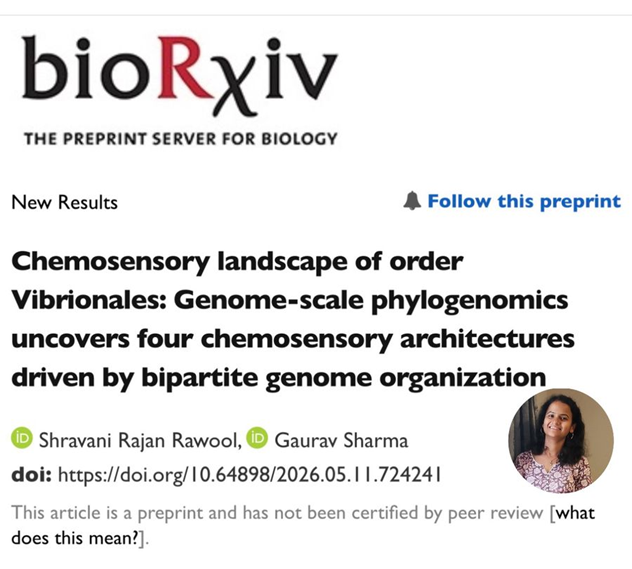
Happy to share Shravani's work on the chemosensory systems across Vibrionales! Preprint: https://t.co/GvmYzBO7QJ
By analyzing ~10K genomes of Vibrio cousins, we identify a novel chemosensory lineage (F8) & reveal how multipartite Vibrio genomes drive sensory & niche adaptation.
Our comment on the urgent need for decentralized scientific databases, particularly in today’s unstable geopolitics, is now online in @NatureGenet. Overdependence on a single authority can jeopardize global scientific access, resilience & continuity.
Link: https://t.co/zIpBy6fTKq
PhD Admissions - July 2026: Our @omics_lab@IITHyderabad will be hiring two PhD students to explore microbial genomics and evolutionary directions.
Last date to apply: 28 April 2026 (5:00 PM)
Apply here: https://t.co/8w5lNNEljL
Lab webpage: https://t.co/RRF2XQEQWd
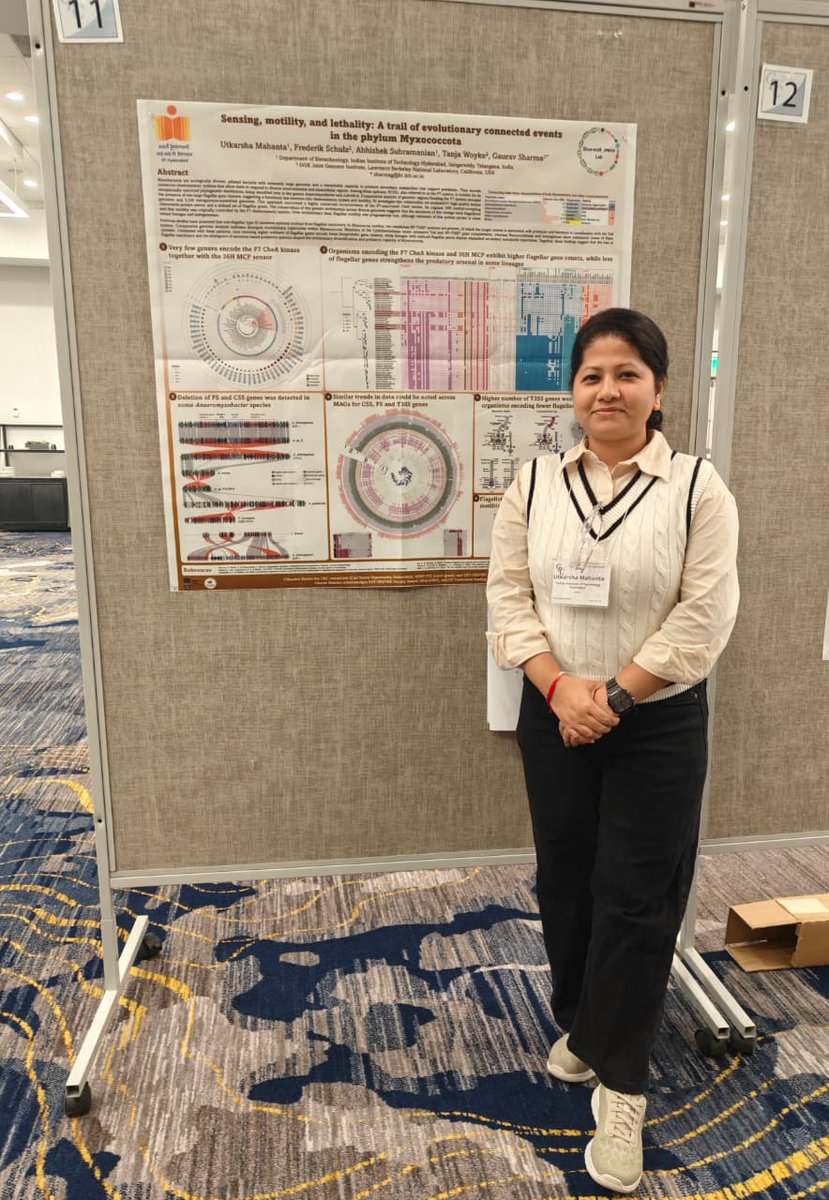
I sincerely thank the Chair @BriegelAriane and Vice Chair @sourjik for selecting me as a Carl Storm Fellow and for organizing such an excellent meeting. I am also grateful to @ANRF_India for the ITS travel grant support that made my participation possible.
I had a wonderful time presenting my poster at the GRC-STIM 2026 meeting in Ventura, CA, USA. Attending the 50th year of the conference felt truly special, especially knowing that my PI, @sharmaG30, had been part of this meeting 10 years ago.
The discussions and interactions throughout the meeting made it a truly enriching and memorable experience. Heartfelt thanks to @sharmaG30 and @omics_lab@BTIITH for their constant support and encouragement.
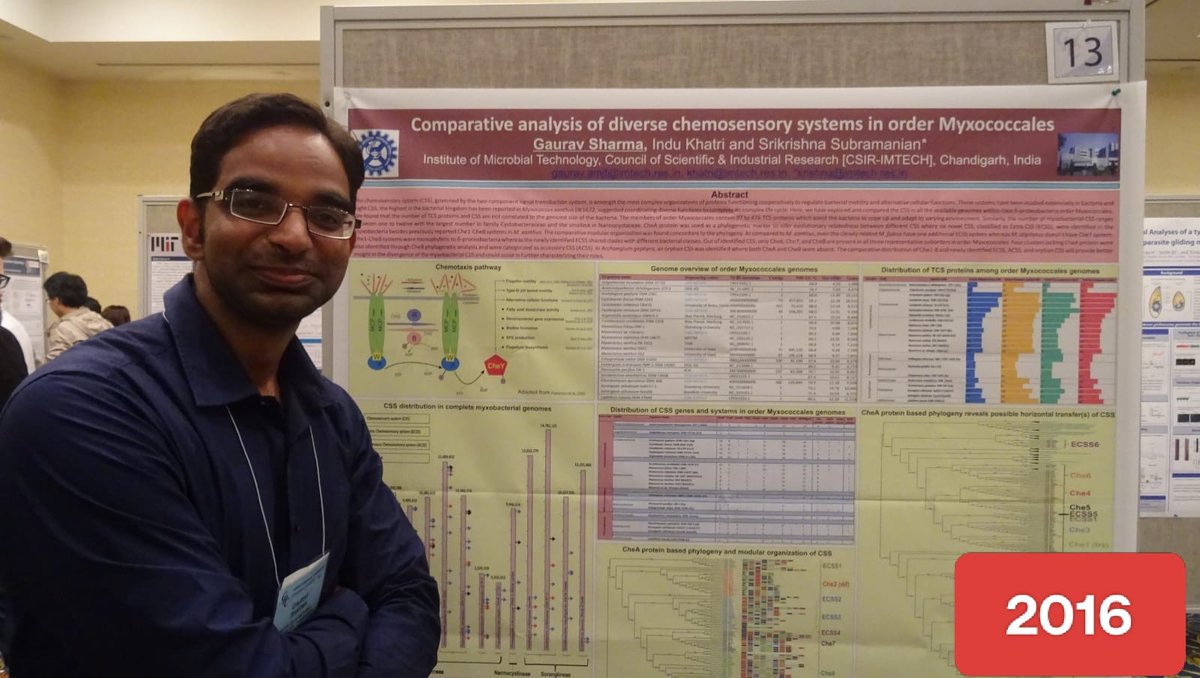
From attending my first international conference - the Gordon Research Conference on Sensory Transduction in Microorganisms (Ventura, California) in 2016 to seeing my first PhD student, @m_utkarsha_ from @omics_lab, present her work in 2026. Truly a full-circle moment in science.
Fantastic week for @omics_lab@IITHyderabad. Five of us (Utkarsha, Niharika, Shravani, Krutideepa & I) presented our work in 3 different conferences across the globe on the same day. It was wonderful connecting with people from different expertises and getting critical feedback.
Wrapping up the incredible 2025 at Hampi with @omics_lab fam!
Grateful for execution of ideas, meaningful academic milestones, and many strong miles. Here’s to learning, building, staying active, and dreaming bigger.
Wishing all a happy, healthy, & ambitious New Year 2026! 🎉🏃♂️
@MParada_Kusz In my opinion, no. Please see this survey:
https://t.co/9dl06ZT4sm
Do we want such collaboration? Almost 70% of researchers based in Europe say that they have been involved in projects in the past three years that listed authors who did not contribute sufficiently to the work
Thanks for commenting positively and negatively on our recent tool, GScholarLens. Let me try to say a few thing:
1. We are not extracting authorship from text mining from full paper text; it is really tough as diverse journals have diverse ways of depiction. Therefore, the first thing to do before running this tool is marking your First/co-first authors with ^ sign, and corresponding/co-corresponding authors with * sign. You can do it only for your GS profile, similar to your CV. Once you have done it, GScholarLens will work efficiently.
2. We all know that h-index and citations are not going away anywhere. Moreover, a lot of people keep boasting about their h-index and citations. Are you not tired of listening to their boasting?
3. Let me be clear that we cannot judge quality from any index. I am with you on this front and we are not claiming anywhere about judging the quality.
4. You must have come across that many authors do a lot of collaborations and less lead projects. The question is should a researcher have a balance between lead and collaborative projects or not? If your answer is yes, this tool is for you. If you answer NO, then it is of no use to you. Overall, GScholarLens aims to show the balance between lead and collaborative publication counts and their gained c1itations.
5. Many of you have asked why First/co-first authors have 10% less weightage than corresponding. Based on multiple evidences, the corresponding author typically contributes more sustained effort across a project—by securing funding, guiding research direction, ensuring integrity, coordinating collaborators, and managing journal communication. They also bear post-publication accountability, including handling queries, corrections, and must be held responsible for retractions. Hence, a slightly higher weightage is justified compared to first or co-first authors, whose contributions are mainly focused on execution and manuscript preparation. This is consistent with ICMJE and CRediT guidelines highlighting the corresponding author’s leadership and responsibility.
My team will do our best to answer your queries.
Link to Nature Feature: https://t.co/V0paUU99KW
Link to Preprint: https://t.co/pfilkkDTYr
Link to Tool: https://t.co/iXcOTJLSLw
@omics_lab@IITHyderabad@IndiaDST@ANRFIndia@Science_Cast@IndiaScienceTV@MicrobiomDigest@IRWatchdog@hapyresearchers@fake_journals@Richvn@NatureInd@AcademicChatter@OpenAcademics
Every research team has that co-author:
💤 No analysis
✍️ No writing
📭 No feedback
…and yet, somehow, the first to list the paper on their CV. 😅
According to @Nature, nearly 70% of researchers have been there.
Thanks to GScholarLENS by @sharmaG30 and his team @omics_lab, we can now actually measure this phenomenon.
The tool introduces the Scholar h-index (Sh-index), which accounts for a researcher’s position in author lists—a small change that makes a big difference.
Maybe it’s time to introduce a new contribution category: “Moral Support and Name Recognition.” 🏆
Because with the Sh-index, just showing up will no longer count as a “substantial contribution.” 😅
Link: https://t.co/ccHU1d5K64
Paper: https://t.co/S1o70KEjeH
Tool: https://t.co/aye29vnTjq
#FairCreditMatters
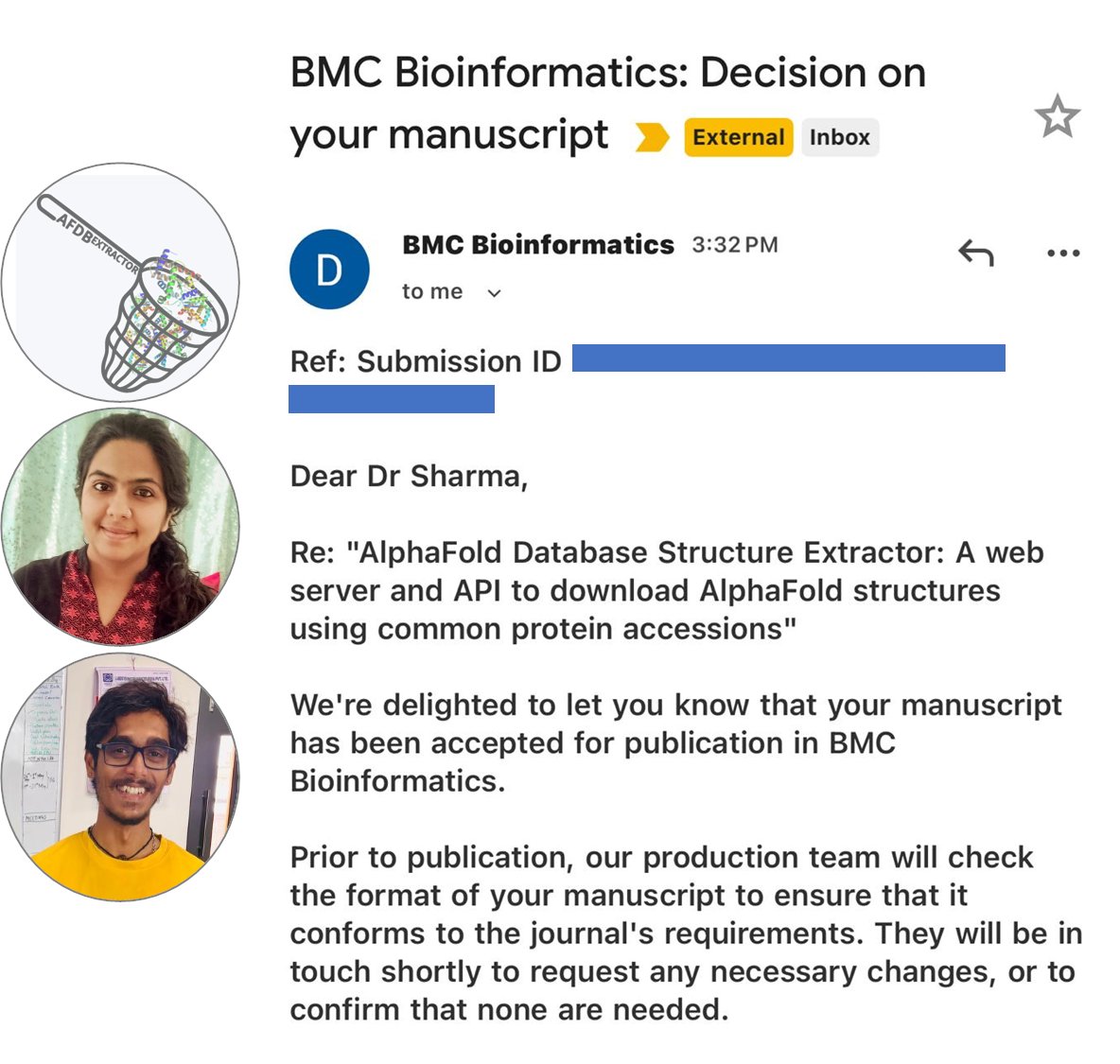
AlphaFoldDB Structure Extractor manuscript is now accepted in BMC Bioinformatics.
Many congratulations to my PhD student (Niharika) for leading this project and JRF (Vishvesh) for his immense help in analysis and deployment.
@omics_lab@IITHyderabad
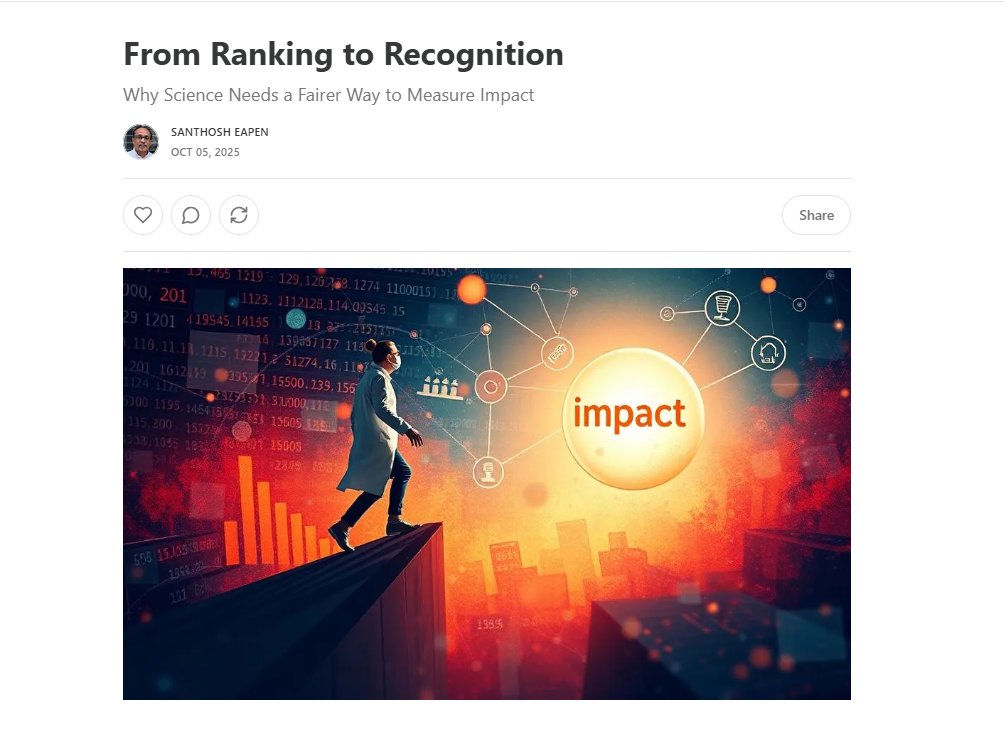
Just read this insightful blog on “From Ranking to Recognition” by Santhosh Eapen @sjeapen.
Link to blog: https://t.co/27eRmwory9
The author has done a great job critiquing and contextualizing GScholarLens (the tool built by my @omics_lab) and another tool named "Funding the Frontiers", highlighting its promise and the challenges it faces in shifting how we value academic work. Worth a read!
In his words: "If we must measure science, let us at least measure what truly matters."
Try GScholarLens: https://t.co/iXcOTJLSLw
#Scholarship #ResearchTools #GScholarLens #authorship #citations #dataAnalytics #PublicationIntegrity #citationIntegrity #ResearchIntegrity
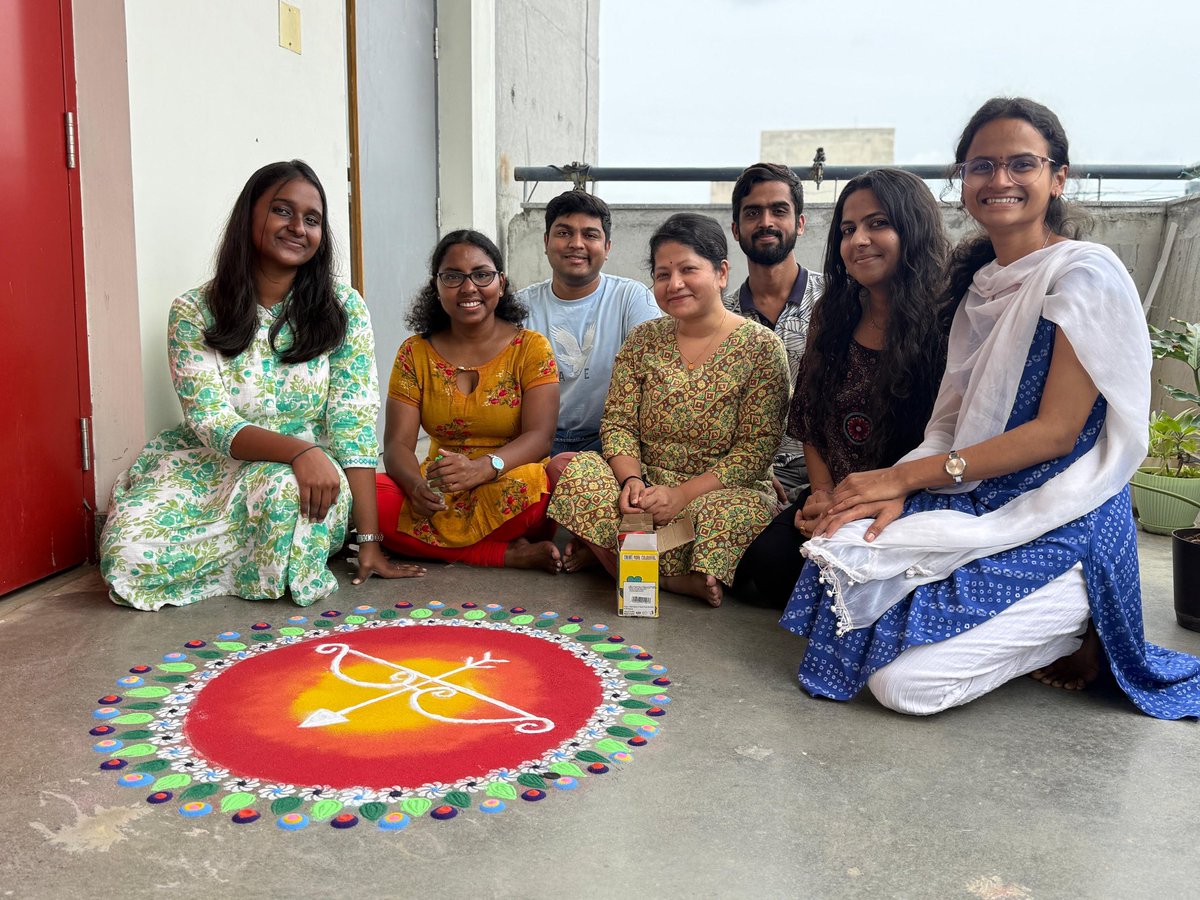
Not just sequencing and analysing genomes, today @omics_lab friends sequenced and analysed some new colors 🌈🧬
Pipeline complete → Festive visualization generated → Happy Dussehra!
Happiness lies in creating something!!
@IITHyderabad