I believe in Nigeria. Looking forward to a corrupt free society where criminal will not be celebrated and justice will always prevail. Its a collective effort!
In Wisconsin, a graduate was forced to stop on stage when his diploma couldn't be found.
That's when the school said a person traveled thousands of miles to deliver it to him.
It was his sister, returning from military service, for over a year. ❤️
List of Major Industrial Companies That Have Collapsed or Become Inactive in Northern Nigeria…
•Nigerian Paper Mill, Jebba
The company collapsed in 2005
•Lafiagi Sugar Company, Kwara
The company collapsed in 2003
•Bacita Sugar Company
The company collapsed in 2002
•Arewa Breweries, Kano
The company collapsed in 2000
•Northern Oil & Allied Products
The company collapsed in 1999
•Kano Mattress Factory
The company collapsed in 2000
•Kano Plastic Company
The company collapsed in 2000
•Nigeria Bottling Company
The company collapsed in 2004
•Goldline Biscuit Factory, Kano
The company collapsed in 2009
•Arewa Metal Containers (AMECO)
The company collapsed in 1998
•Durbar Hotel (Kaduna/Kano)
The company collapsed in 2000
•Kano Tanneries (mills)
The company collapsed in 1990
•Kaduna Fertilizer Company (KFC)
The company collapsed in 2002
•Nigerian Romanian Wood Factory
The company collapsed in 2000
•Nigerian Tanneries Limited
The company collapsed in 2000
Some Other Companies:
1. KADUNA STATE
•Kaduna Textile Limited (KTL) — collapsed in 2002
•Arewa Textiles — collapsed in 1996
•Finetex Nigeria, Kaduna — collapsed in 2003
•Supertex — collapsed in 2000
•Unitex / United Nigerian Textiles — collapsed in 2005
•Nortex Textile — collapsed in 2001
•Nigerian-German Chemicals, Kaduna — collapsed in 2004
•Peugeot Automobile Nigeria (PAN) — collapsed in 2007
•Premier Breweries — collapsed in 2000
2. KANO STATE
•Kano Textile Printing (KTP) — collapsed in 1998
•Bagauda Textile — collapsed in 1995
•Chedi Textile — collapsed in 1997
•Chalawa Textile Mills — collapsed in 1998
•Gaskiya Textile Mills — collapsed in 1999
•Kano Spinning and Weaving — collapsed in 1990
•Daula Textiles — collapsed in 2000
•SuperTextile — collapsed in 2004
•Hajara Textiles — collapsed in 2002
•Nigeria Oil Mills (NOM) — collapsed in 1999
•Bayero Pharmaceutical — collapsed in 2000
•Dala Foods — collapsed in 2008
•Tofa Textile — collapsed in 2001
•Mambayya Textile — collapsed in 1990
•ANCON Textile — collapsed in 2000
3. KATSINA STATE
•Funtua Textiles — collapsed in 2005
•Daura Textiles — collapsed in 2000
•Kankara Kaolin Processing — collapsed in 2000
4. SOKOTO & ZAMFARA STATES
•Gusau Textile — collapsed in 1999
•Zamfara Textiles — collapsed in 2004
•Sokoto Textile — collapsed in 1993
•Sokoto Ceramic Tiles Factory — collapsed in 2005
5. BAUCHI, GOMBE & NORTH EAST
•Bauchi Furniture Company — collapsed in 2000
•Bauchi Meat Factory — collapsed in 2003
•Steyr Nigeria (Bauchi – tractors) — collapsed in 2007
•Gombe Oil Mills — collapsed in 2001
•Ashaka Textile — collapsed in 1990
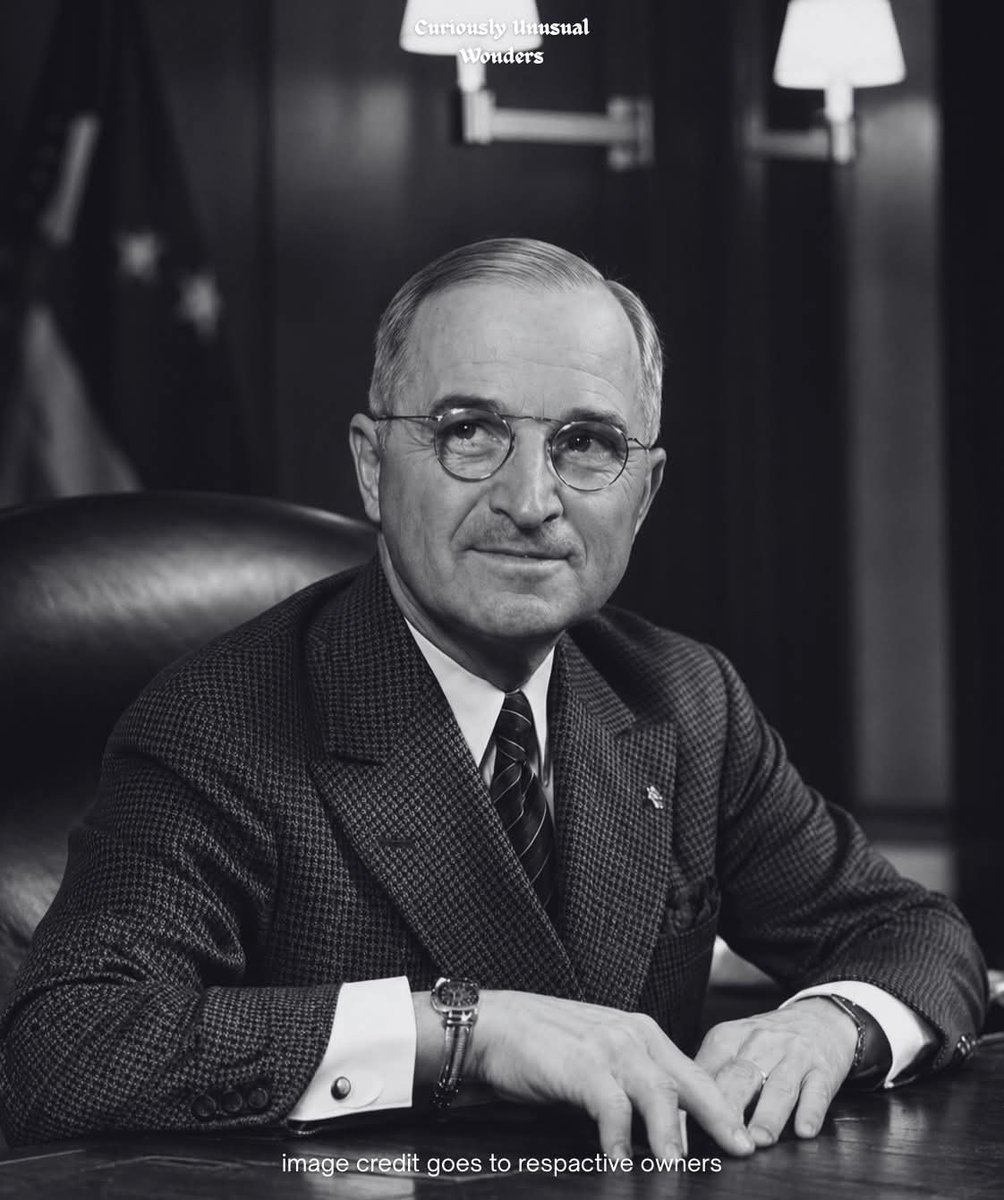
At 7:09 a.m. on April 12, 1945, Harry S. Truman was having breakfast with congressional leaders inside the Speaker’s dining room at the Capitol when a messenger entered quietly and whispered that he needed to come to the White House immediately.
No explanation.
Just urgency.
Truman stood so quickly his chair scraped sharply across the floor.
Minutes later, his car sped through Washington while newspaper headlines about the war filled the streets outside.
Europe was still burning.
American soldiers were still dying across the Pacific.
And Franklin D. Roosevelt had been president for more than twelve years.
Most Americans could barely imagine another man leading the country.
Then Truman entered the White House and saw Eleanor Roosevelt waiting for him.
Her face told him before her words did.
“The president is dead.”
For a moment, Truman simply stared at her.
Then he quietly asked:
“Is there anything I can do for you?”
Eleanor Roosevelt reportedly answered with a sentence history never forgot:
“Is there anything we can do for you? For you are the one in trouble now.”
She was right.
Harry S. Truman had been vice president for only eighty-two days.
Roosevelt had largely excluded him from the deepest wartime decisions.
He knew little about military strategy discussions at the highest level.
He had never been fully briefed on the Manhattan Project.
And suddenly, almost without preparation, a former Missouri farmer and failed haberdashery owner inherited the most dangerous job on Earth in the middle of the largest war in human history.
Witnesses later remembered how stunned he looked that first day.
His shoulders tightened.
His face drained of color.
But there was no time to process fear.
Within hours, generals, cabinet officials, and intelligence officers surrounded him waiting for decisions capable of affecting millions of lives.
Then they told him about the bomb.
Not an ordinary weapon.
Something entirely different.
A device powerful enough to erase an entire city.
In the weeks that followed, Truman sat through relentless briefings about the Pacific war.
American forces had already witnessed catastrophic fighting at Battle of Iwo Jima and Battle of Okinawa.
Thousands of bodies covered beaches.
Japanese kamikaze pilots deliberately crashed aircraft into American ships.
Military planners warned that invading mainland Japan could cost hundreds of thousands of American lives and potentially millions of Japanese casualties.
The projections were horrifying.
But so was the alternative now sitting before him.
In July 1945, while attending the Potsdam Conference alongside Winston Churchill and Joseph Stalin, Truman received coded confirmation that the atomic test in New Mexico had succeeded.
Witnesses said he became unusually quiet afterward.
Because now the weapon was no longer theoretical.
It was real.
Inside Washington, debates intensified rapidly.
Some scientists argued for a demonstration explosion away from civilian populations.
Others believed only overwhelming force would end the war quickly.
Military leaders debated invasion timelines, surrender conditions, and casualty projections.
Every path forward contained unimaginable death.
But the final authority rested with Truman.
On August 6, 1945, the United States dropped an atomic bomb on Atomic bombing of Hiroshima.
Three days later came Atomic bombing of Nagasaki.
Entire sections of both cities vanished beneath heat, fire, radiation, and shockwaves unlike anything humanity had ever witnessed before.
People disappeared instantly.
Children wandered through ruins burned beyond recognition.
Many died immediately.
Many more died slowly afterward from injuries and radiation sickness.
Around the world, reactions collided all at once.
Horror.
Relief.
Celebration.
Fear.
Moral outrage.
And from that moment forward, Harry S. Truman became permanently attached to the decision.
To many Americans, he had ended the war and prevented an invasion that might have killed millions more.
To others, he had introduced humanity to nuclear devastation against civilians.
The argument followed him for the rest of his life.
People close to Truman later noticed how sharply he reacted whenever critics discussed the bomb casually, as if it were only an abstract political debate.
Because he had seen the casualty projections personally.
Read battlefield reports himself.
Spoken directly with commanders preparing for invasion.
But he also understood exactly what the bombs had done.
He carried both realities simultaneously.
Near the end of his life, Truman reflected on the presidency with a phrase that became part of American political history itself:
“The buck stops here.”
People often quote the line as confidence.
As toughness.
But for Truman, it sounded more like burden.
Because after the summer of 1945, the weight of that decision never truly left him.
The war ended.
The world changed.
And one man spent the rest of his life carrying responsibility for a choice no human being before him had ever been forced to make.
Harry S. Truman inherited the presidency in a single morning.
What followed changed human history forever.
Follow for more You should see this
“It’s her first birthday outside the school after many years of teaching, and her pupils didn’t forget her.”♥️✨
-Lady wrote as students joined together to surprise their former teacher, who is now working at Zenith Bank, on her birthday.
A taxi driver in Spain became known for driving patients to the hospital free of charge. One day, while picking up another patient, doctors and nurses surprised him with a standing ovation and a donation in gratitude for his kindness.
This reel absolutely melted my heart. I watched it a couple of times 🫶 After 22 years with a man and building 7 houses together, he dumped her on the streets. She’d already lost her son, yet she still poured out the purest motherly love on Zach, borrowing money to get him shoes. 😭 Watch to the end and see how she was blessed! ❤️🙏
The fruit with the most fat is coconut.
The fruit with the most sugar is dates.
The fruit with the most protein is jackfruit.
The fruit with the most vitamin C is guava.
The fruit with the most vitamin A is mango.
The fruit with the most fiber is raspberries.
The fruit with the most antioxidants is blueberries.
The fruit with the most calcium is figs.
The fruit with the most vitamin K is kiwi.
The fruit with the most water is watermelon.
The fruit with the most potassium is banana.
The fruit with the most natural melatonin is tart cherries.
The fruit with the most vitamin E is mamey sapote.
The fruit with the most iron is mulberries.
The fruit with the most healthy fats is avocado.
The fruit with the most folate is papaya.
The fruit with the most resveratrol is red grapes.
The fruit with the most vitamin B6 is bananas.
The fruit with the most pectin is apples.
The fruit with the most bromelain is pineapple.
The fruit with the most lycopene is pink grapefruit.
The fruit with the most magnesium is tamarind.
The fruit with the most manganese is pineapple.
The fruit with the most lycopene is pink grapefruit.
The fruit with the most lutein and zeaxanthin is honeydew melon.
The fruit with the most sorbitol is prunes.
The fruit with the most niacin (Vitamin B3) is avocado.
The fruit with the most zinc is blackberries.
The fruit with the most quercetin is cranberries.
The fruit with the most riboflavin (Vitamin B2) is passion fruit.
The fruit with the most phosphorus is passion fruit.
The fruit with the most selenium is soursop.
One mistake Africans make when it comes to money is that they do not maintain capital. They earn money and build a house, buy a car, help people in the village, throw parties. They do not keep capital, they do not collaborate with others who have capital. Ownership of capital is how keep wealth over the long run.
If 5 people can jointly field 1bn, they can make more from the 1bn together than if they each had 200m.
Always grow your capital, and collaborate with people who also have capital so you can join deals. And never be greedy - the bigger your capital, the safer your investment target should be.
Work with the same people for long - if you know a retailer who regularly needs 10s of millions for restocking, be their capital provider over years. You too will know the business, and you will have a good sense of how at-risk your capital is. Chasing new ideas is often poor.
Many people have technical knowledge or access, but lack cash to execute - if you see them do it 2-5 times, join them on the 6th time with 10% of their need, then 20%, etc. Try to never cross 30% financing, otherwise you are taking all the risk.
Keep your capital liquid when it is small and lock up in safe, interest producing assets when it is large.
Only ever buy private homes or cars from your interest - your wealth is not your capital, it's your interest.
It is said that the young man in the photo, named Ahmed Abdullah, was a pharmacist working in a pharmacy. Every month, an elderly poor woman would come to him for her medicine. She would then approach him at the cash register... Whenever she saw him, her face would light up with joy. For years, she had been buying this medicine, and this young man would only take 200 Egyptian pounds from her. She would pay and leave.
Then, the young man passed away... The elderly woman returned to the same pharmacy, requested her medicine, and went to the cash register to pay 200 pounds. But he was not there.
Before she could ask about him, the new cashier said: “What is this, madam?”She replied: “This is 200 pounds for the medicine.”He responded: “But this medicine costs 2,000 pounds, madam.”
Surprised, she said: “But for more than three years, I have been getting it for 200 pounds from the young man who was here... Where is he?”
The new cashier replied: “He passed away, madam. May God have mercy on him.” Upon reviewing the records, it was discovered that this young man had been covering 1,800 pounds of the cost every month from his own salary at the pharmacy.
When the pharmacy owner learned of this, he decided to continue selling the medicine to the woman at the same price as an ongoing charity (sadaqah jariyah) for the sake of the young man’s pure soul. The least we can do to honor this exemplary young man is to let his photo travel the world without stopping, so that everyone may pray for mercy upon him. He deserves recognition.
"The mental preparation does not produce pessimism — it liberates optimism. Because the difficulties have already been priced in, he is free to focus entirely on the upside".
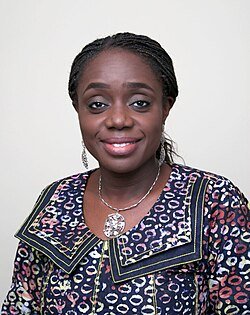
EASY PLACES ARE FULL: What my Lebanese friend taught me about business in Nigeria
By Kemi Adeosun
Before you scroll off in anger: calm down. He is real. He has been in Nigeria longer than some of you reading this have been alive. His children go to school here. His grandchildren may well be buried here. The Lebanese community in Nigerian business is not a rumour, not a colonial hangover awaiting apology, and not going anywhere. They are woven into the fabric of commerce in this country. So pour yourself something cold and read on.
I will not name him — that was the price of the conversation, and I paid it gladly. As part of my work on Nidacity, I put together a board of advisers and concluded it would not be honest or representative without input from the Lebanese business community. So I assured him he would only ever be identified as ‘my Lebanese friend,’ and in exchange he gave me something rare: the kind of unhurried candour that only becomes available when a man is not managing his reputation. I had expected the usual litany: the generators, the customs officials, the phone calls from people whose names you never quite catch. I thought I knew what he was going to say. I was wrong.
Intentionality
His family did not end up in Nigeria by accident or desperation. They chose it. After careful study conducted over generations — cousins sent ahead like scouts, findings reported back, sectors analysed for structural need. The question was never “Is Nigeria easy?”
“We don’t come to easy places. Have you been to Lebanon?” he said. “Easy places are full. We look for places where there is need and where many are too fearful to take on.”
A conscious decision, renewed deliberately, to believe in the upside of a place that some investors treat as a risk footnote. Compare that to the Nigerian entrepreneurs I have encountered who entered sectors because they fell into them — because an official had briefly left a door open. Circumstantial businesses, built not on a view but on an accident. There is nothing wrong with opportunism. But it is not the same as intentionality, and in a market as volatile as Nigeria’s, the difference reveals itself quickly.
Preparation and Optimism — Held Together
I have watched enough foreign investors arrive in Nigeria with optimism, survive the first six months on momentum, and then — somewhere around the fourteenth week a container sat in Apapa, or a promised approval went quiet — curdle into bitterness. Undone not by a single disaster but by the accumulated weight of friction.
My friend’s answer was almost offhand. Before any member of his network opens a business in Nigeria, there is a period of what he called “mental loading” — an acceptance, in advance, of the specific costs Nigeria will impose. The generator will fail. The duty will change. The official will need to be managed. These are not surprises to be absorbed; they are variables to be budgeted.
“When it happens,” he said, “we are not shocked. Shocked people make bad decisions.”
But here is where it gets interesting. You might assume that a community which prepares for friction would develop a siege mentality. The opposite is true. The mental preparation does not produce pessimism — it liberates optimism. Because the difficulties have already been priced in, he is free to focus entirely on the upside.
“The problems here are the opportunities. Every broken thing is a business waiting to be built. We just have to decide we are staying long enough to build it.”
Two hundred million people with needs the formal economy has consistently failed to meet is not a crisis. It is an unserved market. Most people who fail in Nigeria fail not because Nigeria defeated them, but because they were surprised by the Nigeria that actually exists. Pre-acceptance of the cost is what turns friction from a shock into a schedule.
Nigeria Is Not Lebanon
Lebanon’s economy has contracted by more than 38 per cent since 2019. The pound has lost over 98 per cent of its value. Banks are effectively insolvent, having accumulated losses north of $72 billion, with depositors locked out of their own savings for years. The country defaulted on its sovereign debt in 2020 — the first time in its history. The economy that was $54 billion in 2018 was worth around $28 billion in 2024.
I asked him, as carefully as I could: is the loyalty to Nigeria strategic, or is it simply that going home is no longer an option?
“Nigeria is not our consolation prize. Lebanon happened to Lebanon because Lebanon had no size to absorb the shocks. Nigeria can always absorb the shock. That is the asset you people keep undervaluing.”
Lebanon’s commercial model depended on openness — the banking sector, tourism, remittances, regional transit. When those foundations cracked together, there was nothing structural underneath. Nigeria’s famous problems — its infrastructure gaps, its institutional friction — are also, viewed from the right angle, the moat. They keep out the faint-hearted and make the businesses built here difficult to displace. “Lebanon has no moat,” he said. “Anybody can come in and anybody can leave. That is why everybody left.”
The Money Never Goes to the Bank
Then I made the mistake of mentioning banks. His expression shifted in a way that only good manners prevented from becoming a laugh.
His community does not put its money in banks. Not as a cultural quirk but as a lesson paid for by people they knew personally — depositors who worked forty years and could not withdraw their own savings from a machine on the street. So they use banks as transaction rails, nothing more. The actual capital circulates within the network.
“We lend to each other. If my cousin needs capital, I give it to him. If I need to bridge a gap, someone gives it to me. We know each other. We know who is good for it.”
I told him Nigerians would recognise that — ajo, esusu, the thousand small arrangements by which money moves between people who trust each other more than they trust institutions. He shook his head gently. Correctively.
“You call it helping. We don’t see it that way. Helping is emotional. What we do is structural. If I put my money in a bank and the bank fails, I have nothing. If I put my money in my nephew and his business fails, I know where he lives. I know his father. That relationship is the security. The bank was never the security — it was just the place we pretended the security lived.”
The $72 billion locked behind Lebanese bank counters belonged largely to people who trusted the institution over the network. The people who kept their capital in the family, in the cousin’s trading account and the nephew’s warehouse, lost far less. Not because they were lucky. Because they had decided, long before the crisis, that trust was the only bank that does not fail.
This is not a piece about why foreigners understand Nigeria better than Nigerians do. Indeed my work interviewing Nigerian entrepreneurs suggests otherwise. There are Nigerians putting serious capital to work in Nigeria and making money. The Lebanese community did not invent discipline or patience or long-term thinking. What they have done is systematise it — intentionality over accident, preparation over surprise, the network over the institution, and a generational commitment that outlasts any single political weather change.
The good news is that what is transmitted can be learned. It is the decision, made in advance and renewed daily, to stay.
-Adeosun is a former Minister of Finance of the Federal Republic of Nigeria and former Commissioner for Finance of Ogun State. She is the founder of https://t.co/11EREMkIXS.
#KemKem
Anonymous
My upstairs neighbor plays piano. Every night. 9 PM to 10 PM. Classical music. Same routine for eight months.
At first it annoyed me. I work early mornings. Trying to sleep by 10. Walls thin. I could hear every note. Almost complained three times. Almost knocked on his door. Never did. Just got used to it.
Last week the piano stopped. No music. Five days. Nothing. I realized I missed it. Got used to falling asleep to Beethoven or whatever he played. Silence felt wrong...
Sixth day, saw him in the hallway. He looked terrible. I asked if he was okay. He said his mom died. Flew home for the funeral. Just got back yesterday.
"Sorry if the piano bothered you. I won’t play for a while. Don’t really feel like it."
I told him the truth. I’d gotten used to it. Actually missed it. Helped me sleep. He looked surprised.
"Really? I thought you hated it. I always worried I was keeping you up."
"No. It was nice. I’m sorry about your mom."
He nodded. Went into his apartment.
That night, 9 PM, piano again. Different. Slower. Sadder. He played for an hour. I just laid there listening. Knowing he was playing through grief. Only way he knew how to feel something.
When he stopped, I did something I’d never done. Went upstairs. Knocked. He answered. I handed him a note:
"Thank you for playing tonight. Your mom would be proud of the man you are. -Your downstairs neighbor"
Next morning, note under my door.
"Thank you. You’ll never know how much I needed to hear that. Piano was my mom’s. She taught me. Playing makes me feel she’s still here. I’m glad it doesn’t bother you. I’m glad someone’s listening. -David"
Now, when he plays, I don’t think about sleep. I think about David playing his dead mother’s piano. About how close I came to complaining...
Sometimes being a good neighbor isn’t silence. It’s listening. Writing a note that says, "I hear you and it’s okay." That’s what people do. 🤍
"The richest 0.001% don't wear luxury."
Yes they do. You're just too poor to know what these brands are.
Forget Dior. Forget Louis Vuitton.
Old money wears quiet luxury.
Here are six brands that billionaires, world-leaders, and royalty actually wear:
𝟭) 𝗭𝗘𝗚𝗡𝗔
Clients:
• Lewis Hamilton
• Cillian Murphy
• Tom Cruise
Ermenegildo Zegna founded the company in 1910 in Trivero, starting as a wool mill before evolving into the world's largest men's luxury fashion group. Unlike any other house on this list, ZEGNA controls the entire supply chain.
Best known for suiting fabrics so refined that rival luxury houses source from them.
𝟮) 𝗟𝗼𝗿𝗼 𝗣𝗶𝗮𝗻𝗮
Clients:
• Jeff Bezos
• European aristocracy
• Middle Eastern oil heirs
Founded in 1924 by Pietro Loro Piana as a high-quality wool mill in Italy. His grandson, Franco, revolutionised the brand in the 1960s-70s by pioneering rare fibres like baby cashmere and vicuña.
Today, they're best known for sourcing the world's rarest natural fibres and creating ultra-soft cashmere coats starting.
𝟯) 𝗕𝗿𝘂𝗻𝗲𝗹𝗹𝗼 𝗖𝘂𝗰𝗶𝗻𝗲𝗹𝗹𝗶
Clients:
• Daniel Craig
• Prince William
• Silicon Valley billionaires
Brunello Cucinelli borrowed money in 1978 to launch a small cashmere workshop in Umbria. He restored a 14th-century castle as headquarters in 1985 and built a $3 billion empire through artisan ethics and discretion.
The "King of Cashmere" is best known for Zuckerberg's custom grey T-shirts, which cost between $400-600 each.
𝟰) 𝗕𝗿𝗶𝗼𝗻𝗶
Clients:
• Donald Trump
• Barack Obama
• Pierce Brosnan
Established in 1945 in Rome by master tailor Nazareno Fonticoli and entrepreneur Gaetano Savini. The brand gained international fame dressing Hollywood stars and world leaders throughout the 1950s-60s.
𝟱) 𝗞𝗶𝘁𝗼𝗻
Clients:
• Vladimir Putin
• David Beckham
• George Clooney
Ciro Paone, from generations of Neapolitan fabric makers, started a tailored clothing workshop in 1956. He rebranded to Kiton in 1968 and founded a tailoring school to preserve traditional techniques.
Best known for featherlight suits with up to 25,000 stitches per jacket.
𝟲) 𝗖𝗲𝘀𝗮𝗿𝗲 𝗔𝘁𝘁𝗼𝗹𝗶𝗻𝗶
Clients:
• Al Pacino
• Denzel Washington
• Unnamed UHNW individuals
Vincenzo Attolini pioneered the light, unstructured Neapolitan jacket in 1930s Naples, ditching British padding for shirt-like comfort. His son Cesare opened a workshop in 1987 with his own sons to scale production.
Traditional hand techniques create lightweight, unstructured jackets with extended darts and minimal lining.
—
Thanks for reading! Enjoyed this post?
I built an 8-figure music label from scratch and host luxury events.
Follow me @averyx99 for more content like this.
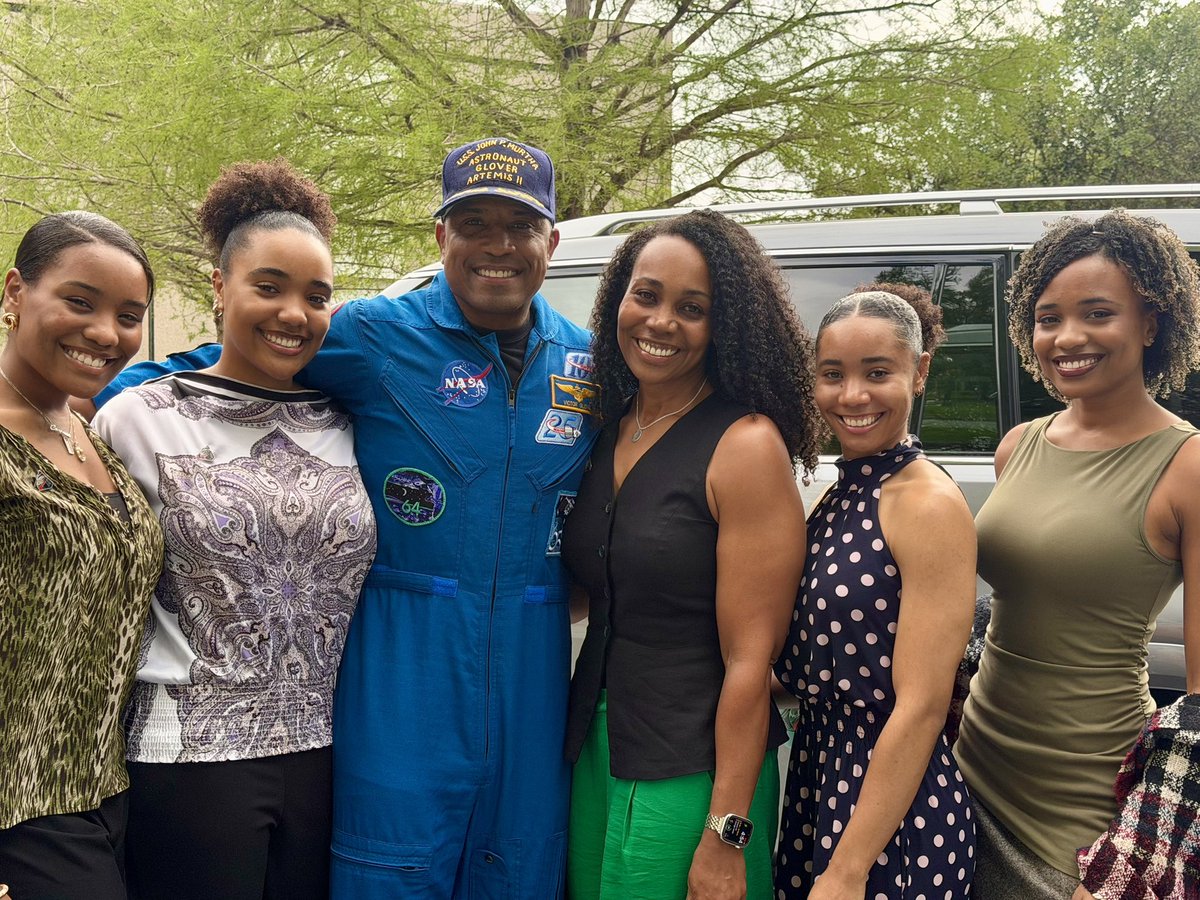
Newly released video from the splashdown of Artemis ll on Friday, April 10, 2026, shows the moment that U.S. Navy Divers cracked the door open and entered the Orion to greet the Astronauts, welcoming them back to Earth after their journey around the Moon.
Home, again! Mission complete. I hope we glorified God, humanity, our families and our terrific teams a @NASA and @csa_asc. Time to share the good news!
The last American slave ship arrived in Mobile, Alabama, in 1860, despite the illegal importation of slaves. On board were approximately 160 West African individuals who had been captured and enslaved. One of the captives, named Cudjo Lewis (Original name- Oluwale Kossola from Yoruba land), was acutely aware of the potential erasure of his birth culture as he toiled in this new land. However, when he eventually gained his freedom, Lewis took action to preserve his heritage.
Using the money he had earned, Cudjo Lewis purchased two acres of land and established a self-sufficient community for the survivors of the last slave ship. This community, known to outsiders as Africatown, aimed to recreate aspects of the West African home from which they had been forcibly removed. Lewis wanted to ensure that extended families could live together, conversations could be held in regional languages, and traditions that might otherwise have been lost in America could be maintained.
Today, Africatown still exists as a community and continues to house the descendants of the individuals who were brought to America on the nation's last slave ship. It stands as a testament to the resilience and determination of those who fought to preserve their heritage and maintain a sense of cultural identity in the face of tremendous adversity.
WHAT DIFFERENT COUNTRIES TEACH YOU ABOUT LIFE:
Japan — Patience and precision are a form of deep respect
Italy — Slowing down is not laziness, it is living
Germany — Systems and discipline create real freedom
Brazil — Joy is not earned, it is chosen every single day
India — Chaos and beauty can exist in the exact same moment
Iceland — Silence is not empty, it is full of answers
Morocco — Hospitality is not a gesture, it is a philosophy
Mexico — Family is not an obligation, it is the whole point
Norway — Simplicity is the most underrated form of wealth
Greece — Food and conversation are never meant to be rushed
New Zealand — Nature is not a backdrop, it is the main event
South Korea — Reinvention at any age is not just possible, it is expected
USA — Ambition is a language everyone around you speaks fluently
Nigeria — Resilience is not a trait, it is a birthright
France — Self respect is non negotiable and style is a state of mind
Argentina — Passion without apology is the only way to truly live
Kenya — Community is not a safety net, it is the foundation
Portugal — Nostalgia is not weakness, it is how you honour what shaped you
China — Patience across generations builds what one lifetime cannot
Australia — Life is too short to take yourself too seriously
Spain — Rest is not a reward, it is a right built into the culture
Thailand — Kindness given freely costs nothing and changes everything
Cuba — Music and survival have always walked hand in hand
Netherlands — Equality is not an ideal, it is a daily practice
Ethiopia — Ancient pride reminds you that greatness did not start with the west
Ghana — Celebration is not reserved for big moments, every day deserves one
Turkey — Every city has layers and so does every person you meet
Colombia — Transformation is possible for a people, a city and a person
Switzerland — Precision and peace can absolutely coexist in the same life
Saudi Arabia — Tradition and ambition are not opposites, they are partners
Philippines — Warmth is a superpower and Filipinos wield it effortlessly
Ukraine — Strength is quiet until the moment it has no choice but to roar
Jamaica — Rhythm, faith and roots will carry you further than pressure ever will
Peru — Ancient wisdom does not expire just because the world moved on
Poland — Dignity in hardship is one of the rarest forms of human strength
“If you look at the people we call leaders—go to the Senate, go to the House of Representatives—why should a senator or a member of the House be a praise singer for anyone? Why are those in government not able to face their boss and say, “Oga, this is the truth”? You have people who are supposed to represent the values of society behaving like illiterates. By the time you become a governor, you should be beyond looking for money. Most of Nigeria’s ruling class lack values—they are too cheap. If we truly want to fix this country, we need a principled ruling class. The ruling class needs to have values—values beyond stomach infrastructure.”
—HRM Sanusi Lamido Sanusi.✅