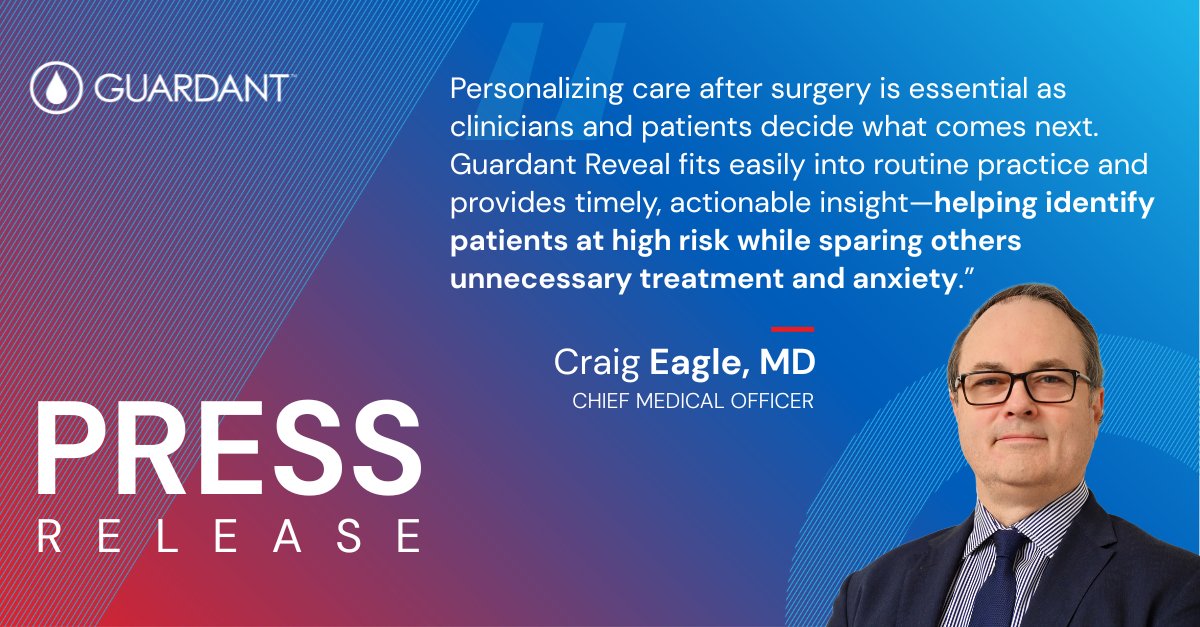
The largest MRD study to date in stage III #ColonCancer is now #Published in @JCO_ASCO. Results from the study show that ctDNA detection with the Guardant Reveal® blood test more precisely predicts recurrence and overall survival than standard staging, helping set a new standard for post-surgical risk assessment.
Thank you to principal investigator @FASinicropeMD, and our collaborators at @MayoClinic & @ALLIANCE_org for their partnership on this important work.
Details: https://t.co/zadb1zSO2y
Minimal Residual Disease Enhances Prognostic Stratification Beyond Pathological Response in Resectable Non-Small Cell Lung Cancer https://t.co/neEjcE9iyM Working together as a team: 3 weeks 3 papers
c-TRAK-TN Tissue-Free ctDNA (RF3-05)
🩸 No tumor tissue? No problem.
c-TRAK-TN: Tissue-free ctDNA (Guardant Reveal) vs ddPCR in early TNBC
Results are striking:
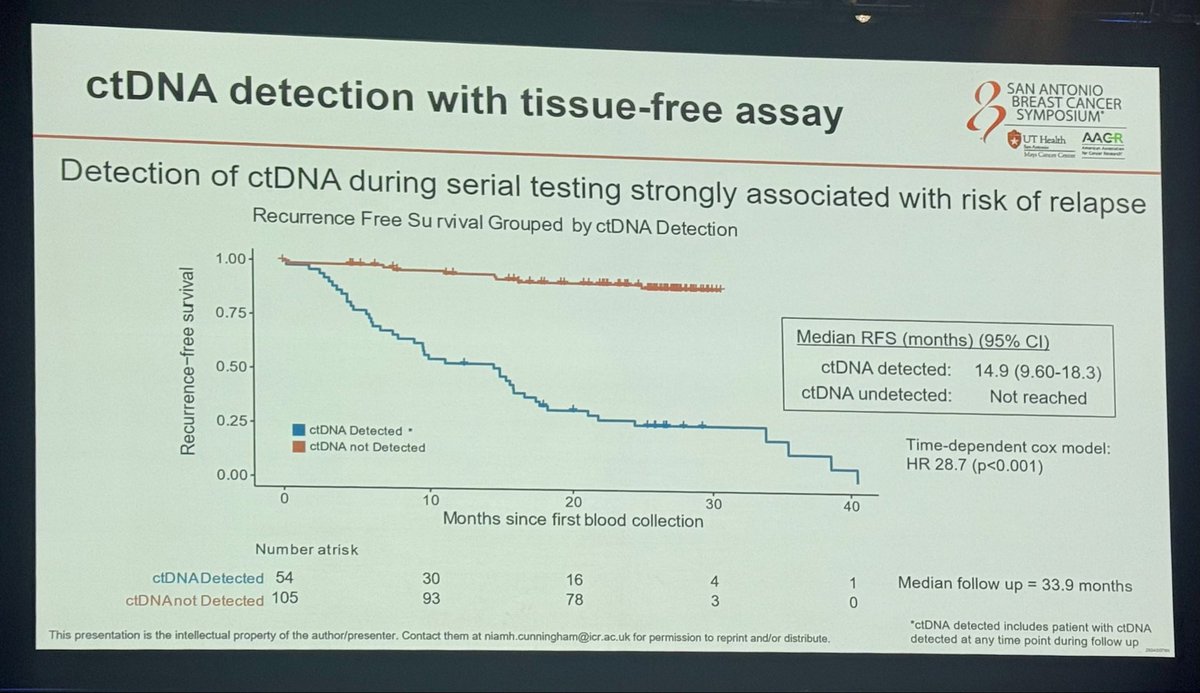
• 89.5% of relapses detected by prior ctDNA ✅
• HR 20.62 for relapse prediction (p<0.0001)
• 94.5% concordance with ddPCR
But tissue-free detected EARLIER:
• 44.8% detected first by tissue-free
• Only 6.9% detected first by ddPCR
• Median lead time: 7.9 vs 5.7 months
Simpler workflow. Earlier detection. Game changer? 🎯
#SABCS25 update on PHERGain data in HER2+ early breast cancer: When tumor DNA in the blood cleared during HER2-targeted therapy, patients were more likely to have no invasive cancer at surgery and had better 3-year outcomes. A blood test that could help tailor treatment 🧬
Role of ctDNA in TX based on results of PHERGAIN study. 37.9% omitted chemo
GuardantReveal assay was used
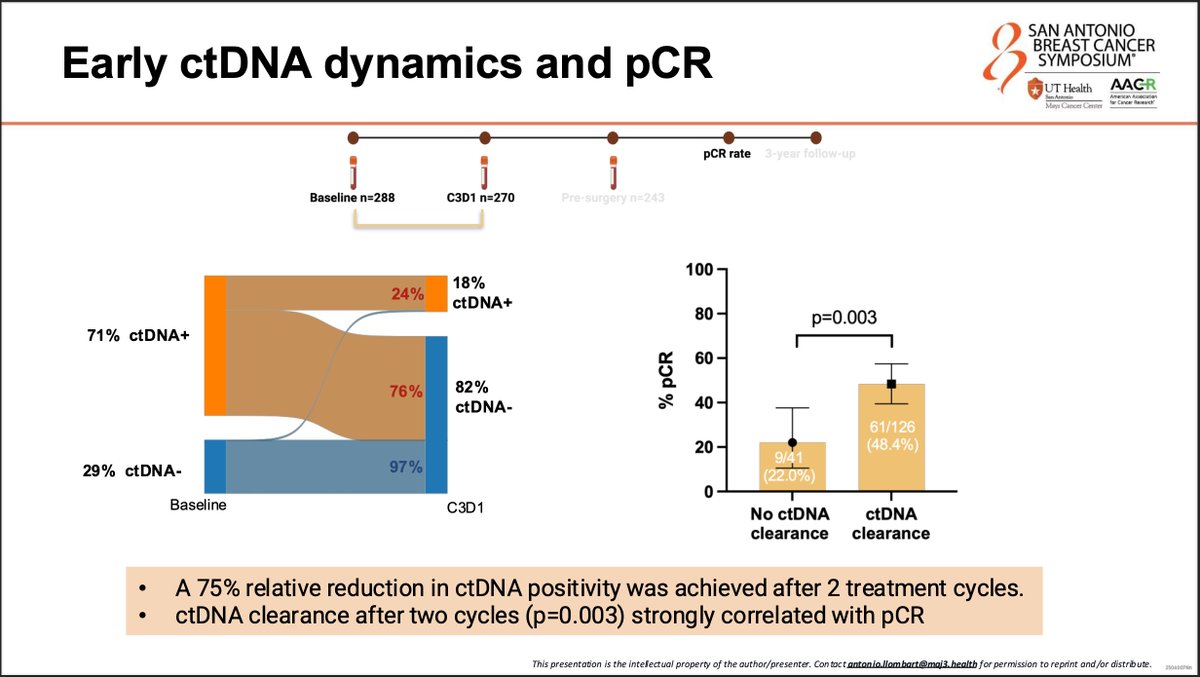
📌early ctDNA clearance was assoc with pCR
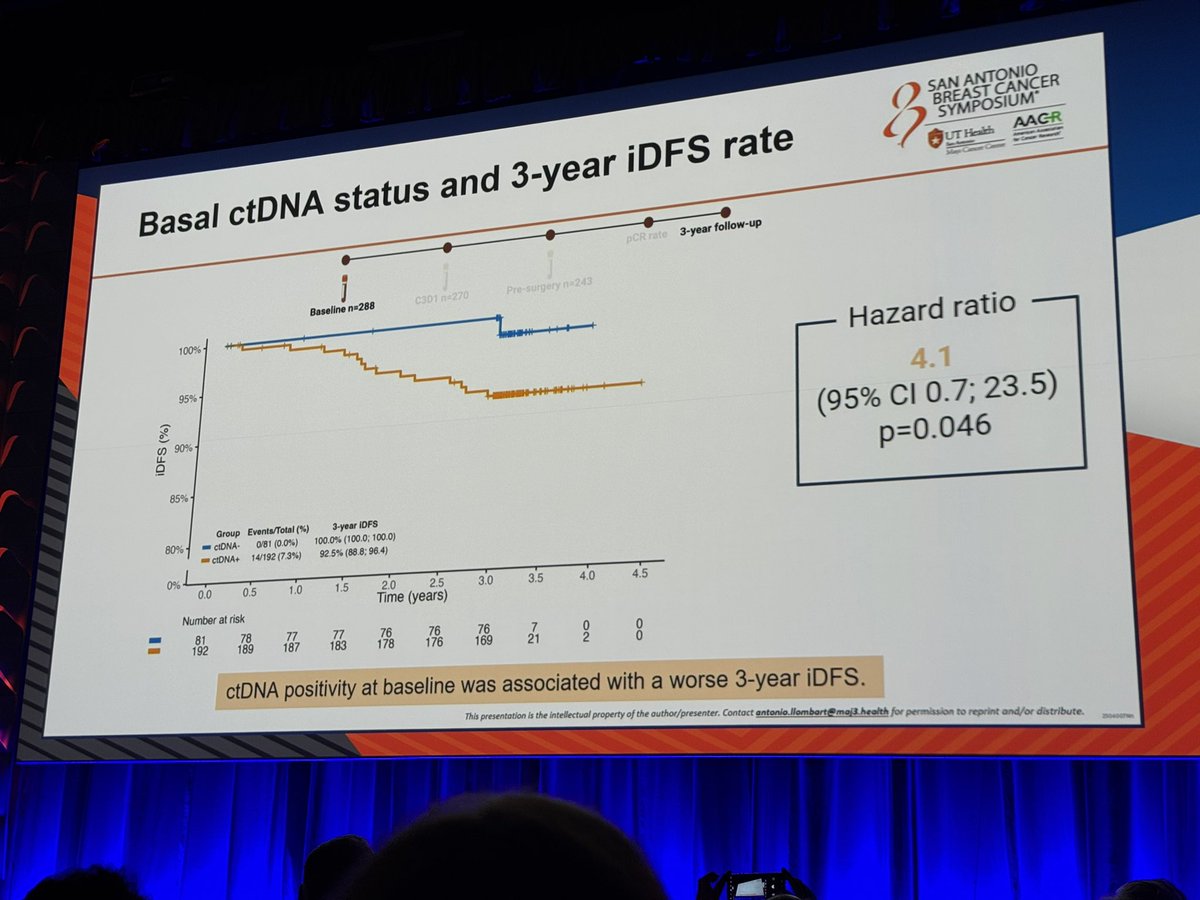
📌baseline ctDNA was assoc w worse 3y-IDFS
📌C3 and presurgery detect ctDNA had worse 3yIDFS
@OncoAlert#sabcs25
#SABC25 A Llombert phergain ctDNA dynamics HER2+ ESBC. 3/4 + at baseline. Poor clearance assoc with worse pCR and IDFS. This is an opportunity to individualize therapy based on a dynamic biomarker. @OncoAlert
Great Presentation at #SABCS25 by Antonio Llombart
"Circulating tumor DNA (ctDNA) in human epidermal growth factor receptor 2-positive (HER2[+]) Early Breast Cancer (EBC): Translational analysis of PHERGain neoadjuvant tailored treatment study"
👏🏻
👇🏻
Interesting sub-analysis from PherGAIN: early clearance of ctDNA at C3D1 predicted higher pCR and better outcomes for HER2+ eBC. Baseline ctDNA status also predictive of outcomes. Not ready for prime time, but extremely promising and warranting of further validation.
GS1-06 – #SABCS25
ctDNA predict pCR and outcomes in HER2+ eBC in PHERGain:
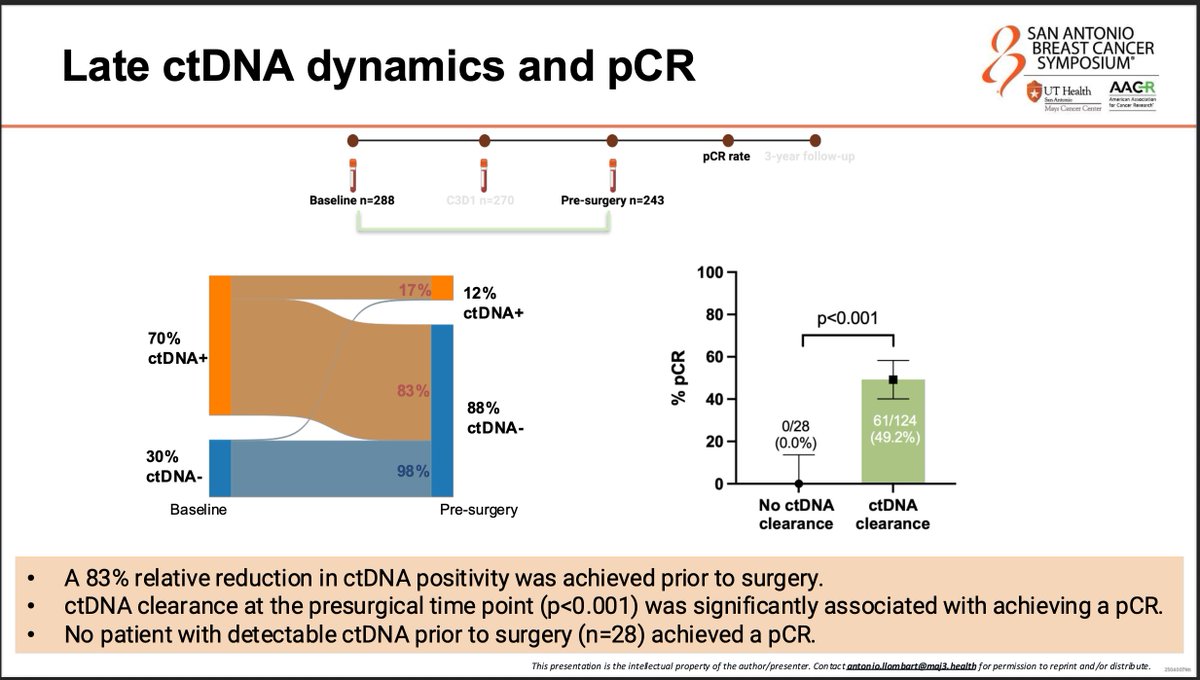
- ctDNA clearance after 2 cycles and pre-surgery strongly correlated w pCR
- Baseline ctDNA+ linked to worse 3y iDFS
➡️No patient with ctDNA+ before surgery achieved pCR !
@OncoAlert@SABCSSanAntonio
🚨 SABCS25 Highlight | PHERGuide (PHERGain translational ctDNA analysis)
A major step forward in reshaping early HER2+ breast cancer management.
Key findings from this ctDNA-guided translational study:
🔬 Baseline insights:
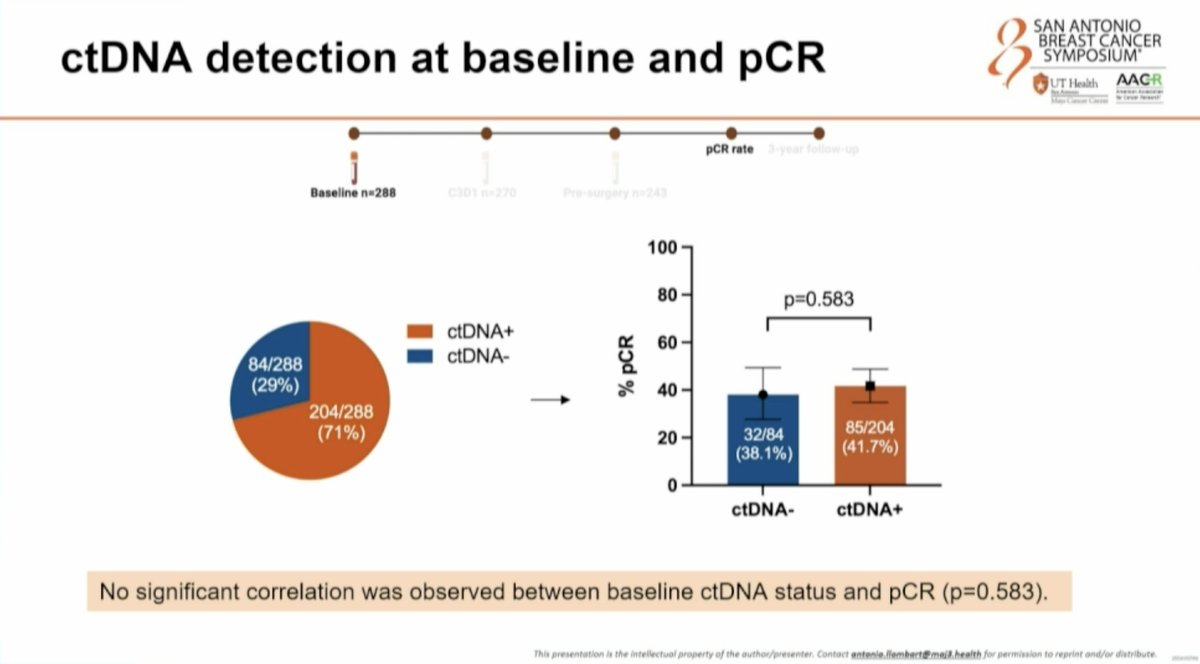
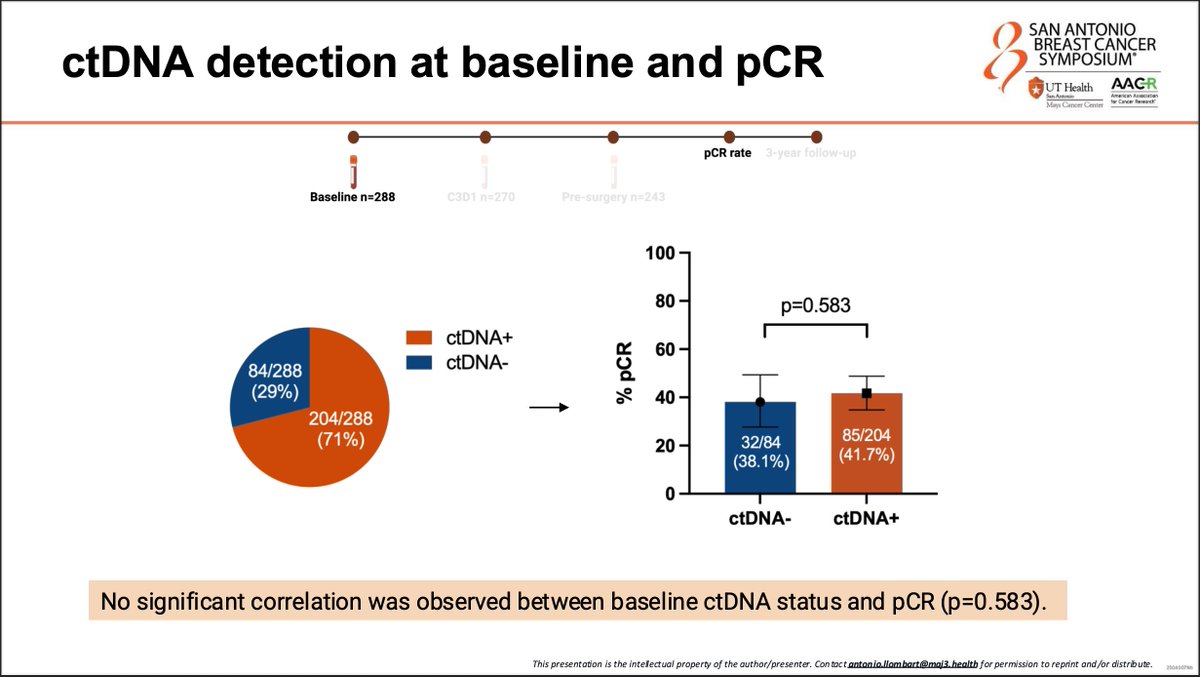
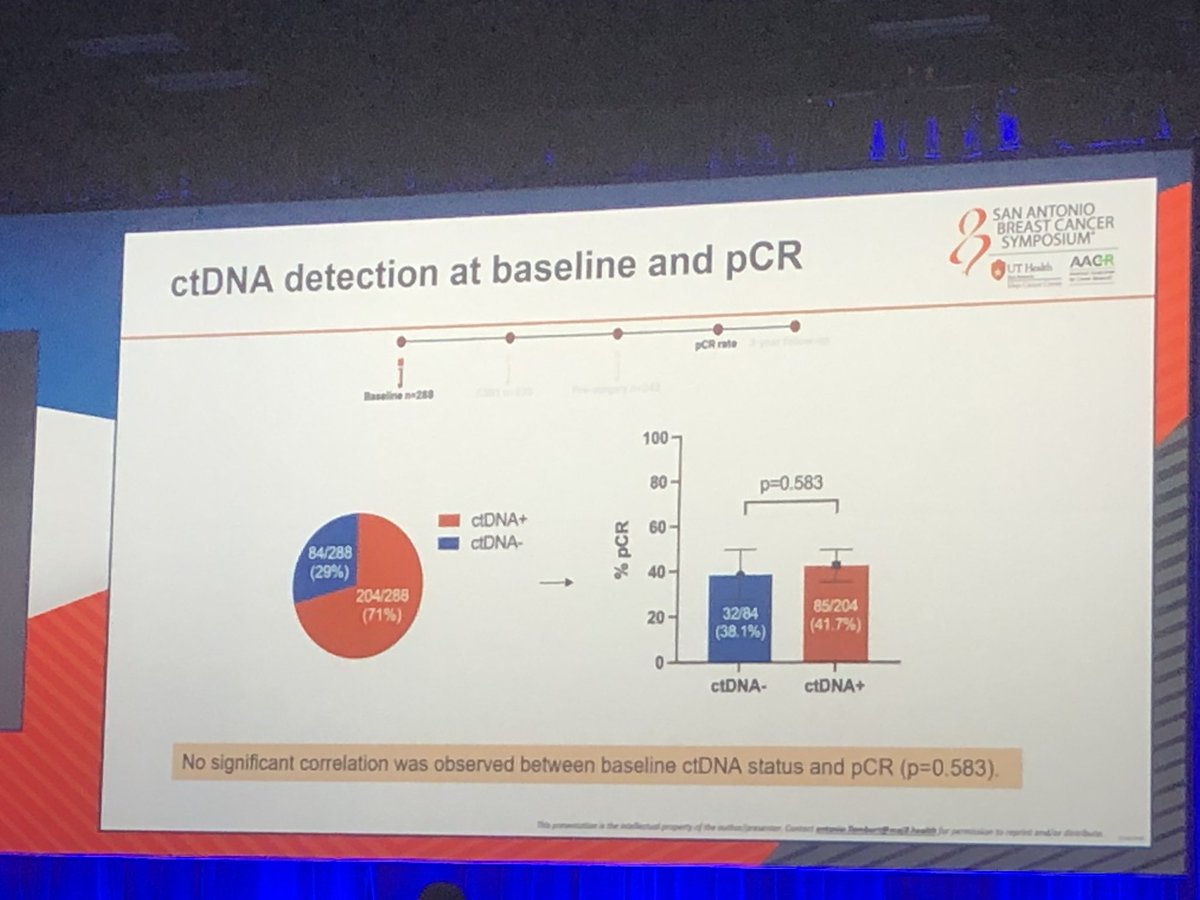
• ctDNA detected in 71% of patients; associated with stage & nodal status.
• Baseline ctDNA did NOT predict pCR — reinforcing that tumor biology is dynamic, not static.
⚡ Early treatment dynamics:
• ctDNA clearance by C3D1 strongly correlated with pCR (p=0.003).
• Early molecular response outperformed baseline biomarkers.
🧬 Pre-surgery signal (most impactful):
• 83% achieved ctDNA clearance pre-surgery.
• 0% of patients with detectable ctDNA at surgery achieved pCR — a powerful negative predictive marker.
• Pre-surgery ctDNA positivity associated with worse 3-year iDFS.
📈 Survival:
• Both baseline ctDNA negativity and ctDNA clearance (early & late) predicted significantly better 3-year iDFS.
🌍 Why this matters now:
This study strengthens a growing paradigm:
ctDNA is emerging as an actionable tool to refine risk stratification, guide treatment escalation/de-escalation, and potentially reshape how we personalize therapy in early HER2+ disease—beyond imaging and pathology.
🔜 Clinical horizon:
• Identify high-risk patients who may benefit from novel escalation (e.g., T-DXd strategies).
• Support de-escalation trials for early molecular responders.
• Integrate methylation-based ctDNA assays into upcoming HER2+ adjuvant/neo-adjuvant designs.
An important translational contribution from PHERGain, pointing to the future of molecularly adaptive treatment in HER2+ eBC.
@OncoAlert@weoncologists@ReduzziCarol




![1969carodriguez's tweet photo. Great Presentation at #SABCS25 by Antonio Llombart
"Circulating tumor DNA (ctDNA) in human epidermal growth factor receptor 2-positive (HER2[+]) Early Breast Cancer (EBC): Translational analysis of PHERGain neoadjuvant tailored treatment study"
👏🏻
👇🏻 https://t.co/qeLAFFAfsQ](https://pbs.twimg.com/media/G70qctnXAAAhHtF.jpg)
![1969carodriguez's tweet photo. Great Presentation at #SABCS25 by Antonio Llombart
"Circulating tumor DNA (ctDNA) in human epidermal growth factor receptor 2-positive (HER2[+]) Early Breast Cancer (EBC): Translational analysis of PHERGain neoadjuvant tailored treatment study"
👏🏻
👇🏻 https://t.co/qeLAFFAfsQ](https://pbs.twimg.com/media/G70qXOlXgAAqq2L.jpg)
![1969carodriguez's tweet photo. Great Presentation at #SABCS25 by Antonio Llombart
"Circulating tumor DNA (ctDNA) in human epidermal growth factor receptor 2-positive (HER2[+]) Early Breast Cancer (EBC): Translational analysis of PHERGain neoadjuvant tailored treatment study"
👏🏻
👇🏻 https://t.co/qeLAFFAfsQ](https://pbs.twimg.com/media/G70qN57WUAAUDeC.jpg)










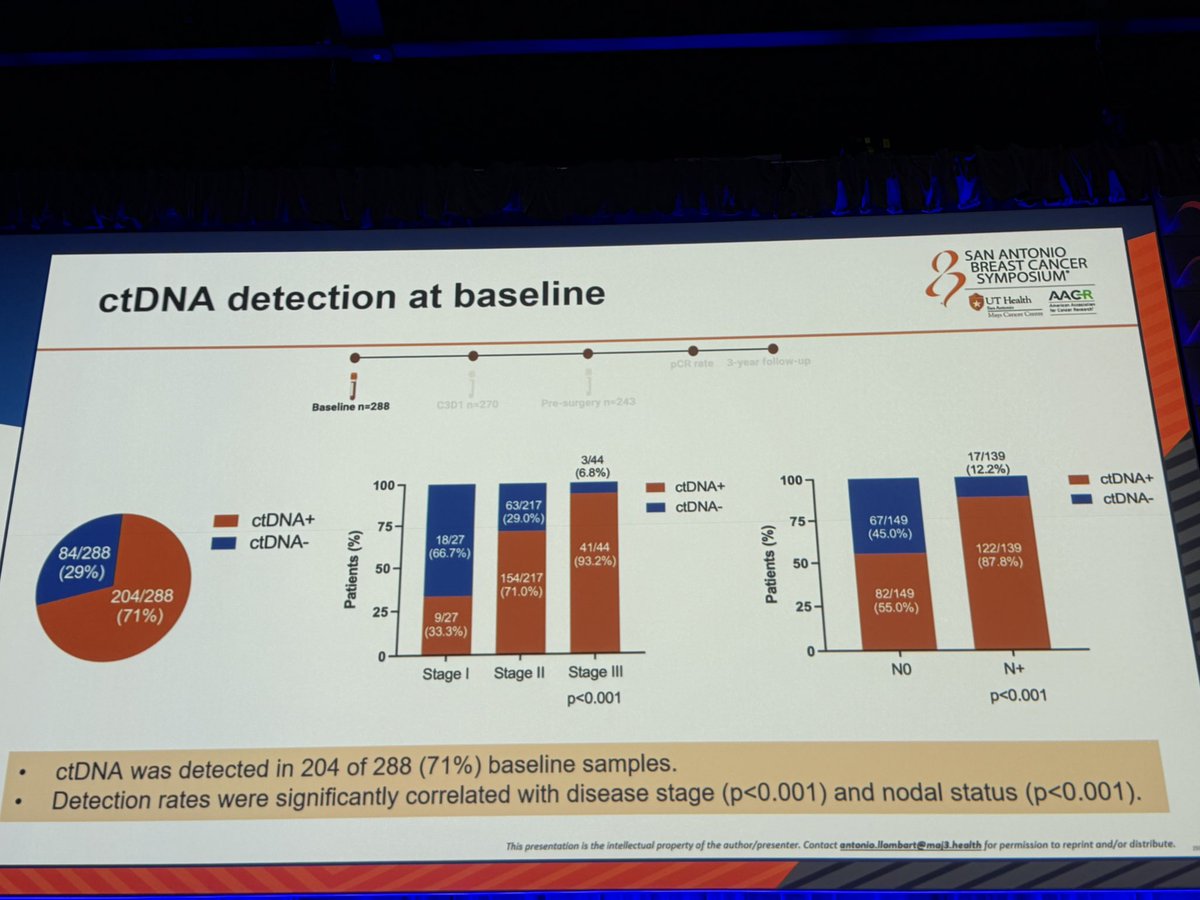
![1969carodriguez's tweet photo. Great Presentation at #SABCS25 by Antonio Llombart
"Circulating tumor DNA (ctDNA) in human epidermal growth factor receptor 2-positive (HER2[+]) Early Breast Cancer (EBC): Translational analysis of PHERGain neoadjuvant tailored treatment study"
👏🏻
👇🏻 https://t.co/qeLAFFAfsQ](https://pbs.twimg.com/media/G70qiQjX0AERW9r.jpg)