⚡️ JCOG1403 in @TheLancetOncol: single intravesical pirarubicin within 24h after nephroureterectomy in UTUC (n=304).
3-year RFS: 60.0% vs 47.0% (HR 0.67; P=0.0066). Manageable safety profile.
A simple, single instillation as a new standard of care in UTUC after nephroureterectomy.
https://t.co/4tJrnTstXi
#BladderCancer
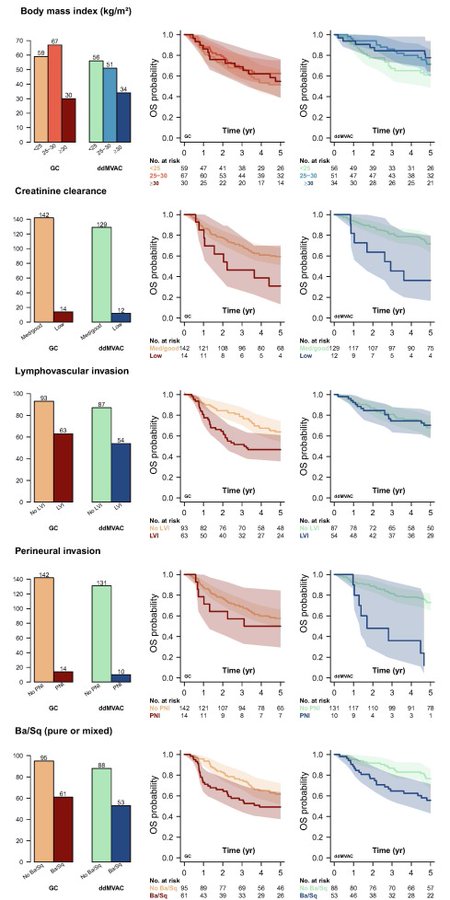
⚡️ VESPER trial: basal molecular subtype is an independent prognostic factor for OS in MIBC treated with neoadjuvant chemotherapy, regardless of the regimen used.
Molecular subtyping beyond clinical staging — increasingly relevant in treatment decision-making.
https://t.co/QNdWhFEXTT
#BladderCancer @EurUrolOncol
⚡️KEYNOTE-B15/EV-304 published in @NEJM: perioperative EV + pembrolizumab vs cisplatin-gemcitabine in cisplatin-eligible MIBC.
Significant improvements in EFS, OS and pCR. The perioperative standard now extends to all MIBC patients candidates for cystectomy.
https://t.co/vLWW1n3pqg
#BladderCancer
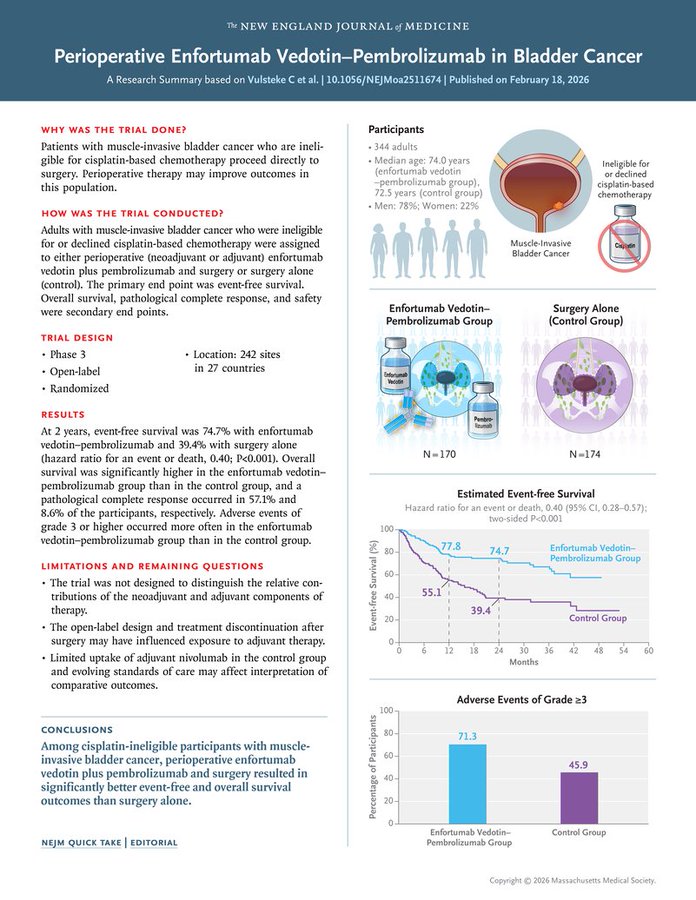
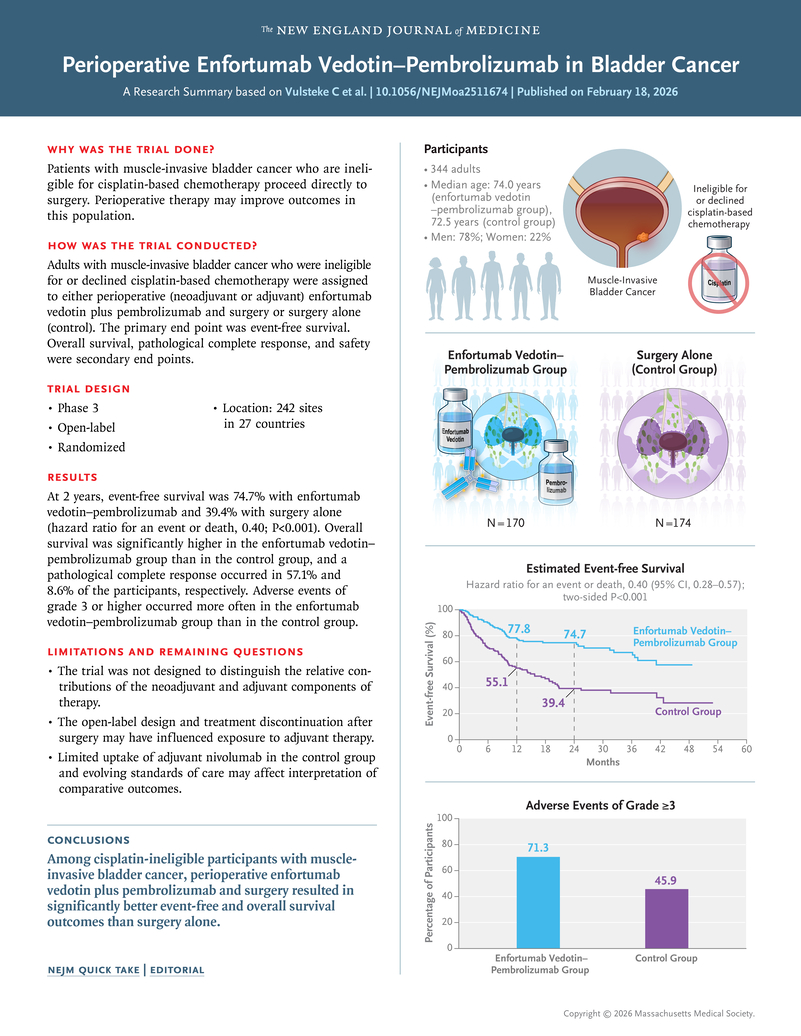
KEYNOTE-905/EV-303 in @NEJM: perioperative enfortumab vedotin + pembrolizumab vs surgery alone in cisplatin-ineligible MIBC (n=344).
pCR: 57.1% vs 8.6%
2-year EFS: 74.7% vs 39.4% (HR 0.40)
2-year OS: 79.7% vs 63.1% (HR 0.50)
The perioperative standard in cisplatin-ineligible MIBC.
https://t.co/3FsYt402uh
#BladderCancer #MIBC #GUOncology
🧬 Your DNA can reveal more than your ancestry—it can reveal your future health risks.
A hereditary gene panel identifies inherited genetic mutations that increase the lifetime risk of cancers and other inherited disorders—often before disease develops.
Early identification means:
✅ Personalized cancer screening
✅ Risk-reducing strategies
✅ Precision treatment options (e.g., PARP inhibitors, immunotherapy)
✅ Family members can also benefit through cascade testing
Remember: A hereditary gene panel does not diagnose cancer—it identifies inherited risk, giving patients and families the opportunity to prevent, detect, and treat disease earlier.
Knowledge today can save lives tomorrow. 🧬🎗️
#HereditaryCancer #Genetics #PrecisionOncology #CancerPrevention #GenomicMedicine #LynchSyndrome #BRCA #MedicalOncology #CancerAwareness #Oncology #NGS #GeneticTesting #PrecisionMedicine #CancerConceptsExplained
🧬 Every cancer cell survives because it finds a way to repair its DNA.
Understanding DNA repair pathways explains why:
✅ BRCA-mutant tumors respond to PARP inhibitors
✅ dMMR/MSI-H cancers benefit from immunotherapy
✅ Platinum chemotherapy works better in HRD tumors
✅ ERCC1 overexpression predicts platinum resistance
✅ DNA-PK is emerging as a radiosensitization target
From BER, HRR, MMR, NER, NHEJ to the Fanconi pathway, these mechanisms form the foundation of modern precision oncology.
Master the biology—and the therapies become much easier to understand.
#Oncology #PrecisionOncology #CancerBiology #DNADamage #DNARepair #PARPInhibitors #BRCA #HRD #MSI #LynchSyndrome #Immunotherapy #PlatinumChemotherapy #MedicalOncology #HemOnc #OncoTwitter #MedEd #FOAMed #DrNB #DMOncology #CancerConceptsExplained
🚨 FDA has expanded perioperative pembrolizumab + enfortumab vedotin to all cystectomy-eligible patients with muscle-invasive bladder cancer, not just those ineligible for cisplatin.
The approval is based on KEYNOTE-B15 / EV-304:
👥 808 patients
✅ Previously untreated MIBC
✅ Eligible for cisplatin
✅ Candidates for radical cystectomy
Randomized to:
🔹 Neoadjuvant pembrolizumab + enfortumab vedotin
➡️ cystectomy
➡️ adjuvant pembrolizumab + enfortumab vedotin
vs
🔹 Neoadjuvant gemcitabine + cisplatin
➡️ cystectomy
Key results:
✅ EFS: NR vs 48.5 months
HR 0.53, p<0.0001
✅ OS: NR vs NR
HR 0.65, p=0.0029
Take-home:
Perioperative EV + pembrolizumab has now beaten cisplatin-based chemotherapy in cisplatin-eligible MIBC.
This is not merely another approval.
It may redefine the perioperative standard for muscle-invasive bladder cancer.
Do you change practice immediately?
@FDAOncology@oncoalert@Merck@AstellasUS
#BladderCancer #MIBC #UrothelialCancer #Oncology
The FDA approval of perioperative EVP in muscle invasive bladder cancer makes platinum eligable somewhat redundant. It creates a paradigm shift in the disease and a is landmark moment . The principle of ‘EVP first, ask questions later’ becomes more relevant. The next questions are i) can we cure most of these patients without surgery and ii) how much systemic therapy is needed? @Annals_Oncology@OncoAlert
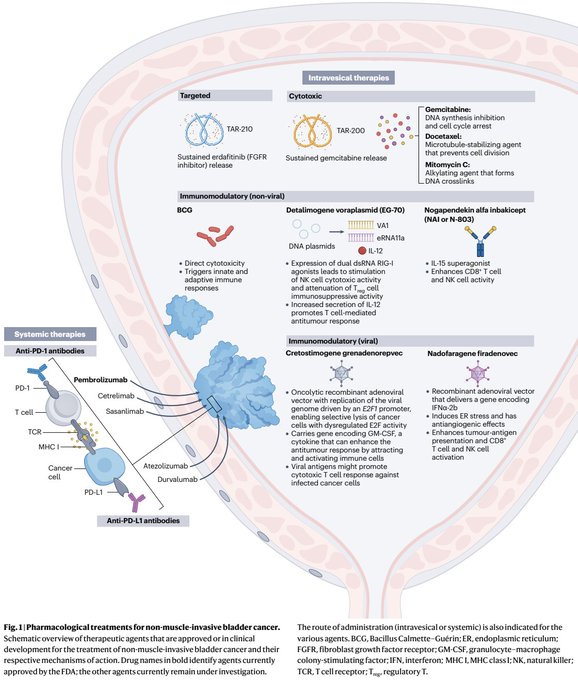
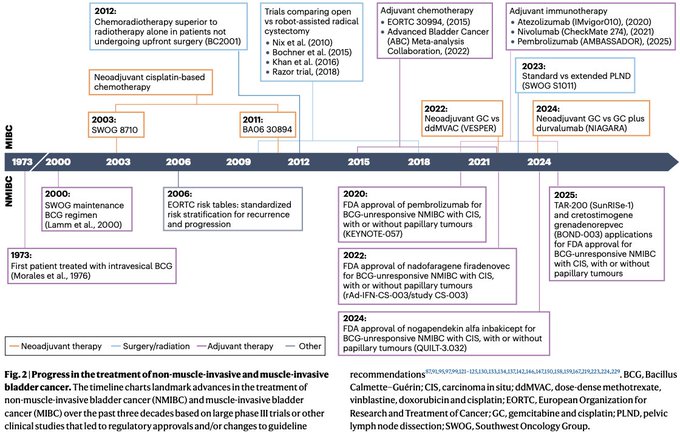
Comprehensive review on the management of localized bladder cancer in @NatRevClinOncol: from BCG-unresponsive NMIBC to perioperative immunotherapy, bladder-preserving strategies, and the emerging role of ctDNA-guided decisions in MIBC.
Personalization is increasing, but careful patient selection remains key.
https://t.co/aoYuWJilTX
#BladderCancer
🔥The final outcomes of SOFT and TEXT are out in @Annals_Oncology
Ovarian function suppression (OFS) + tamoxifen ⬇️ recurrence risk compared to tamoxifen Further reduction in recurrence is seen with exemestane + OFS vs. tamoxifen
https://t.co/cpHhlv21vo
🫁 Another phase III trial is making the case for upfront treatment intensification in EGFR-mutated NSCLC.
AENEAS2 evaluated first-line aumolertinib ± platinum-pemetrexed in advanced EGFR-mutated NSCLC.
Study population:
EGFR Ex19del or L858R mutations
Treatment-naïve advanced NSCLC
ECOG 0-1
Stable brain metastases allowed
🔹 Aumolertinib
vs
🔸 Aumolertinib + platinum-pemetrexed → maintenance aumolertinib + pemetrexed
Results:
⏳ Median PFS
28.9 months vs 18.9 months
📉 53% lower risk of progression or death
HR 0.47 (95% CI 0.37-0.60)
🧠 Benefit seen in patients with brain metastases
🧬 Benefit seen in L858R-mutant disease
The trade-off?
⚠️ Grade 3-4 neutropenia
55% vs 1%
⚠️ Grade 3-4 thrombocytopenia
20% vs 1%
Clinical takeaway:
After FLAURA2, MARIPOSA, and now AENEAS2, the question is no longer whether intensification improves PFS.
The question is which patients should receive it upfront.
📖 Full paper in comment ⬇️
@asco@myesmo@oncoalert
#OncoTwitter #MedTwitter #NSCLC #LungCancer
Excellent slides about definition of endocrine resistance and sequencing of endocrine therapy in 2026. From the talk by @AlexEniu@asco#asco26 🙂👍. Money 💰 Slides .
⚡️ The FDA has approved adjuvant belzutifan + pembrolizumab for clear cell RCC at intermediate-high risk of recurrence after nephrectomy.
LITESPARK-022 data: HR 0.72 (95% CI 0.59–0.87; p=0.0003) in DFS vs pembrolizumab alone. Median DFS not reached in either arm.
A meaningful step forward in a setting where we needed better options.
https://t.co/4uA60Ebwpf
#KidneyCancer
🫁 Beyond oligometastatic disease.
A new JCO review introduces the concept of metastatic trajectories—tracking how individual lesions respond, evolve, and develop resistance over time.
Instead of asking:
“Is this patient oligometastatic?”
We may soon ask:
“Which trajectory is each lesion following?”
This framework could refine:
✅ Patient selection for local therapy
✅ Timing of SBRT/surgery/ablation
✅ Systemic therapy adaptation
✅ Precision oncology trial design
#LungCancer #NSCLC #ThoracicOncology #RadiationOncology #PrecisionMedicine
What great news!!!!! 👏👏👏👏👏👏👏
Perioperative Durvalumab plus EV showed statistically significant and clinically meaningful improvements in event-free survival and overall survival in muscle-invasive bladder cancer in the Phase III VOLGA trial.
@OncoAlert@seom@CANVES_ES@GUOncologyNow@OncBrothers@myESMO
https://t.co/uOS52u6l7V
The evolving landscape of CDK inhibitor use in breast cancer therapy and beyond
https://t.co/jAQnkSQcVO
https://t.co/fTUpDKjAFo
This new Review discusses how combination strategies, novel CDK inhibitors and biomarkers are addressing drug resistance and expanding therapeutic uses
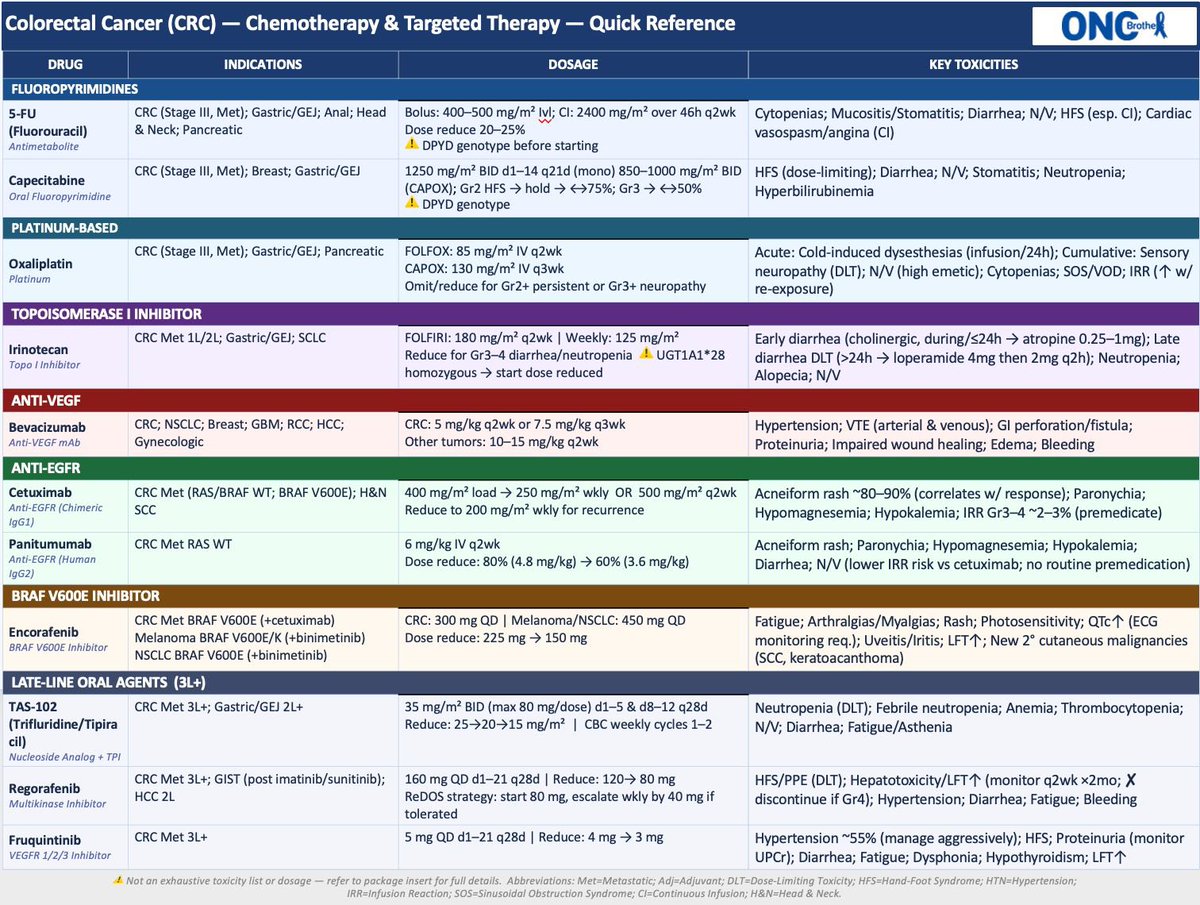
Here is a (long) list of drugs, doses, and common side effects we see/that we discussed during our conversation with @RonaYaege for Colorectal Cancer!
Do you have any clinical pearls that we missed out on?
@OncUpdates@OncoAlert#gism#crcsm