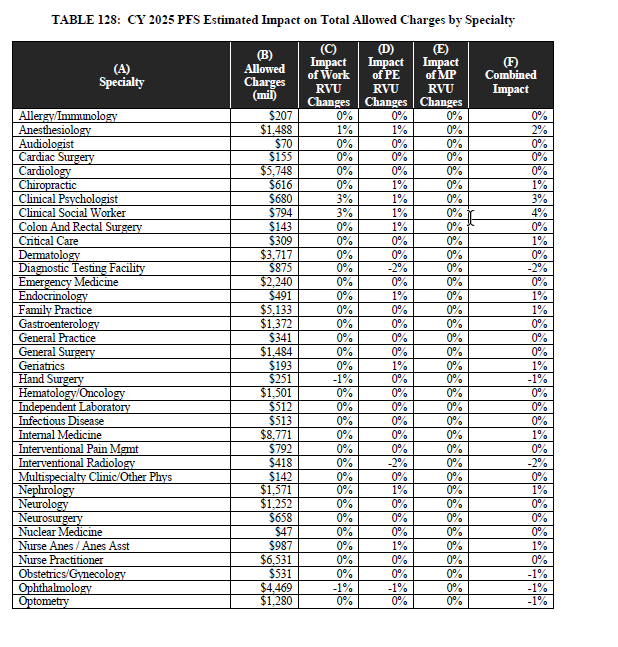
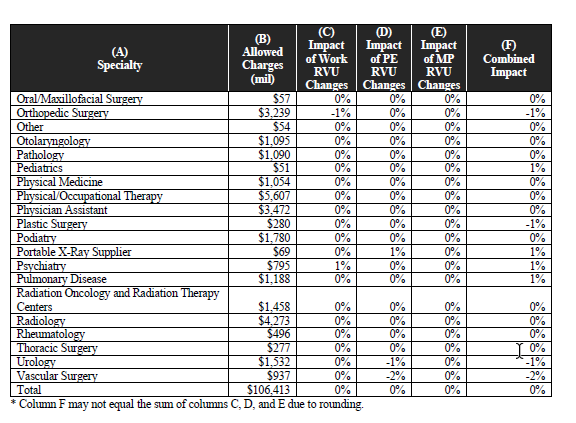
The 2025 Medicare Physician Fee Schedule proposed rule is out & the RVU piece of the fee schedule is not bad. What is not in Table 128 however are the conversion factor cuts and other "Congressional band aids" that expire on 12/31/24--more on those later in the +2200 pages. https://t.co/bqCallj46K
Front page @WSJ investigative report on diagnosis upcoding by health plans & I hope y'all are sitting down b/c @UHC adds add'l diags. more than any other plan, over $1400 per #MedicareAdvantage member. UHC has nurses call Advantage members, offers $50 gift cards if their nurse can spend some time w/ the member & "Voila'" there's a new higher paying diagnosis. Insurers collected $50 billion extra from Medicare by making questionable diagnoses, often without the knowledge of patients or their doctors. https://t.co/qeHq5jGyHX via @WSJ
@VPrasadMDMPH I agree with this and implement whenever possible. However, my wait and see approach is often ‘overruled’ in the ‘shared-decision making’ process.
Hospital prices are completely made up. The implications are huge.
Imagine your local Italian restaurant runs like this:
They contract with local businesses for reasonable prices on pasta, pizza, appetizers, breadsticks, etc. But there's no transparency. As a customer, you have no idea what they charge the local H&R Block for linguine or the Shell station employees for gnocchi in vodka sauce. And that's fine—those are private deals.
Now, you walk in, hungry, and the menu has no prices. You order a big plate of ragu bolognese. When the check comes, it’s $4,500.
Stunned, you ask to see the manager. You say you only have cash, but not that much. The manager replies, "Oh, you didn’t mention cash! We’ll knock it down to $90."
Frustrated that a plate of pasta costs $90, you're still grateful you're not paying $4,500.
But wait, there's more.
The restaurant lets two poor people a month eat for free. With a pasta price of $4,500, they claim $9,000 in charity food each month. Then they allow 10 more patrons with "pasta insurance" for the poor, which reimburses pasta at $5. They write off the remaining $4,495 as "uncompensated food" for each diner.
The restaurant cries poor. They show how bad their finances look with all this charity and uncompensated food.
They negotiate "non-profit" status, saving millions in taxes, robbing the community of that tax revenue. Yet, they still cry poor.
They secure more government subsidies. Food is a human right, after all.
They manipulate public "food insurance" programs to get paid more than local food trucks. They need a "facility fee" since it's "more expensive" to serve food at their restaurant. They justify this with their balance sheet, showing all that charity and uncompensated food.
They get the government to force suppliers into giving them massive discounts. "We serve 12 poor patients a month! Nearly 12% of our clientele!" they cry.
With these benefits, the Italian restaurant buys up other restaurants, growing into a massive conglomerate. They use this market power to increase prices for H&R Block, Shell, and other contracted businesses.
"$500 for pasta?!?" the Shell manager asks.
"Hey, it's still a massive discount off the $4,500 we normally charge!" the restaurant replies.
Making massive margins on pizza, pasta, and entrees, the administration bloats. They hire more people to manage quality metrics, billing codes, and government requirements for the centrally administered "food insurance plan."
Administrator growth outpaces cooks and waitstaff by 30-1.
Looking at the balance sheet, they realize administrators are expensive! The chief parmesan officer makes 7 figures!
So, they cry poor again. They need more reimbursement for their pasta. More regulations to put competitors out of business. Non-compete clauses for cooks and certificates of need for new restaurants. They pass laws forbidding cooks from owning restaurants.
They aggressively go after debt, sending poor patients to collections for unpaid marinara sauce.
Protected from market forces by regulations, they bloat and inefficiency reigns. Yet, they demand more pizza & pasta be served. Cooks and waitstaff are miserable as quality suffers under bureaucracy. They claim "disproportionate share" status for serving 12 poor patients a month while turning away extra poor people at the door.
This isn't hyperbole. These are the tactics hospitals use to inflate care costs. This is why healthcare spending spirals out of control.
We wouldn't tolerate this from our food service establishments. We shouldn't tolerate it from our hospitals, either.
@anish_koka@drdanchoi@JPGK_MD@SpineNeuro@MartyMakary@MedicareMeddler@cscla@EconTalker@mungowitz
Hospital prices are driving inflation.
A new @WSJ article shows how hospital prices are rapidly increasing. This gets passed on to consumers with higher premiums and out of pocket costs. When employers try to make up for the higher costs, they end up raising prices as well.
This is a bad cycle.
Meanwhile, are hospitals becoming more efficient with care delivery?
All the more reason we need a market which rewards efficiency. Transparent pricing and increased competition would do wonders to help curb these costs.
https://t.co/SLwIlQcpcz
@anish_koka@SpineNeuro@MayaBabuMD
@jjfitzgeraldMD@SPuro88 Don’t forget the possibility of getting sued by each client and the random interruptions for “urgent” pages, messages and phone calls.
@jjfitzgeraldMD@SPuro88 Or the fact each patient is like a test, where you have to gather, analyze the data and come up with a plan that takes into account their social,
financial and maybe religious beliefs and could effect the rest of someone’s life all in less than 30 minutes.
Another example of horrible experience in healthcare.
Did lab tests - insurance company said prior auth was necessary. (How are we suppose to know which labs need a PA)
Tried to get P2P scheduled. They gave us 3 (1 hour) time blocks they MAY call.
Thank you to @amy_krambeck , @bsc_urology and all urology faculty and participants for a great 2023 Moses Laser Course. I learned a ton, met some great people, and also had a chance to catch up with an old friend @JaganKansalMD.
@urologybug@so_uro When I learned in residency we had a step wise approach with certain milestones for each step: morcellation, median lobe, lateral lobe, and hardest and most important step of making the turn at the apex to get anterior. Need a dedicated teacher who’s patient