The OM3D Masterclass is Live!
https://t.co/owWDJh2al9
The wait is over! My 3D Modeling and Topology Masterclass is officially here. Learn professional workflows, tackle hands-on exercises, and master clean topology.
💥 Use code LAUNCH2024 for 20% off (valid until year-end).
I use AI to automate tedious tasks and build tools, but never to create the art itself. This is where things are headed, and the industry is already moving this way. My goal is to share that so you can make your own pivots and decisions.
It’s official: 5.9 is happening and it's coming in Preview next week.
It’ll include improved AI workflows, web as a target platform, rendering and animation updates, plus more.
We’re making a few changes in 5.9 branch over on GitHub, and more will come in over the next few days. More details coming soon!
The games we've long wanted, which didn't exist because they'd cost several times more to make than they'd earn back, will soon become possible. As will the games developers wanted to build, but couldn't with the resources available. It'll be a new golden age of gaming.
Get 280 Substrate materials designed for high-fidelity automotive rendering in UE 5.7 for FREE on @fab!
Explore a physically accurate, production-ready material foundation for automotive visualization. Get more info here: https://t.co/bk9xVEyn9Q
At @CES 2026, we showcased our UE5 Next-Gen HMI Experience. Developed in collaboration with @AMD, this project demonstrates a single UE5 instance simultaneously rendering the entire digital cockpit experience—including the instrument cluster, maps, mini map, control panel, and 3D backgrounds—at a seamless 60 fps on high-resolution displays.
It showed what’s possible when a single Unreal Engine instance drives every pixel in a digital cockpit. See the demo in action and catch our full CES recap here: https://t.co/eOgoeqfDY5
After 2 months of recording, I have finally finished my Master Chief Helmet modelling tutorial series! 🥳
I've uploaded 60% of the series to YouTube and in the process of editing and uploading the rest. 😄
I'll provide a link to the tutorial below if you're interested. 👇
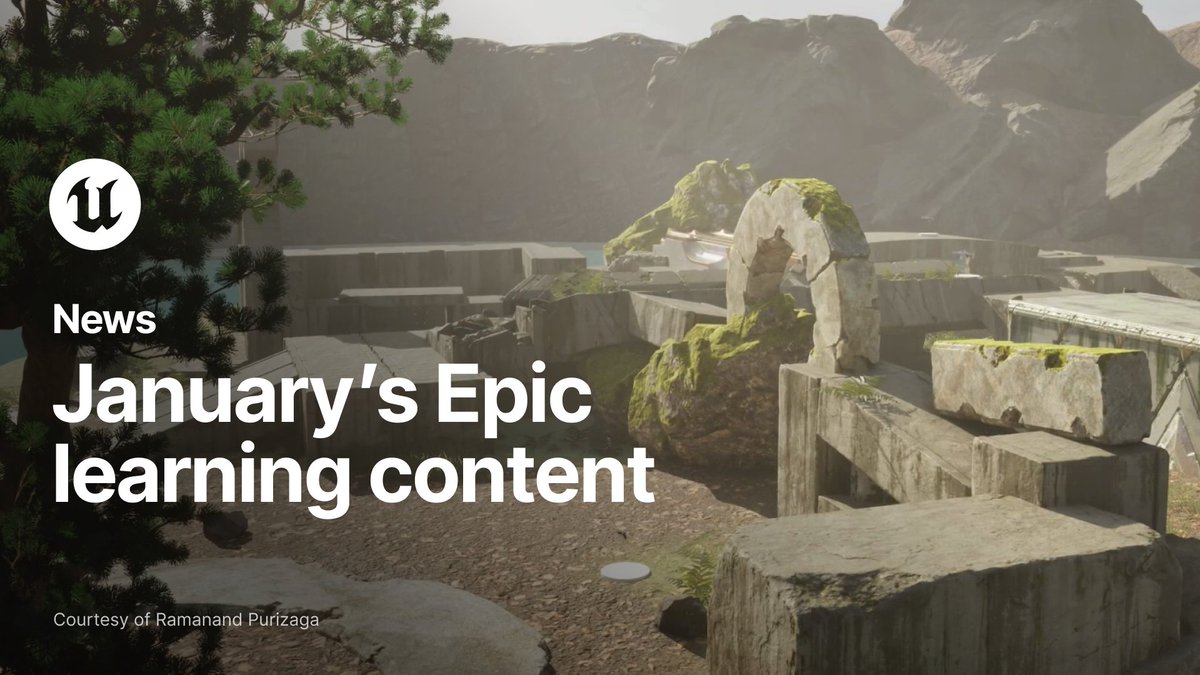
January blues, begone👉Start your 2026 with this bundle of Epic learning content that covers everything from MetaHuman motion capture to learning the ropes of procedural content generation.
Start learning now: https://t.co/pi0ZUnjxtd
One of the easiest things you can do to stand out as a 3D artist is to acquire a vague understanding of real-time rendering.
This especially applies if you are already in a production environment.
Game development is a team sport. Don't pigeonhole yourself as a "artsy artist who makes art and expects others to make it work".
At least try to make your colleagues' life easier.
The best part is that you don't have to become a Tech Artist. It's enough to know what questions to ask a Tech Artist.
— "Should I map this kit onto a single 2K texture or several 512? Here's how it will be used."
— "Hey I'm making this asset that is sensitive to texture compression. DXT doesn't work here, how should I approach it?"
— "I have a task to scatter these props here, should I merge them into a single actor to cut drawcalls or is it better to bake them into a decal?"
— "How many LOD levels can we have for this type of assets?"
Now you are not just a machine that converts concept art into 3D meshes, but a valuable asset. Your lead will trust you and give you more autonomy. Tech Artists will take you seriously. Pipeline Engineers will share their knowledge.
Of course, this is not the only path to success. You can be detached from production and still be a vital team member. You can be a world class sclupltor/hard-surface designer and thrive as a freelancer. You can be a lightning fast modeler/texturer and be a successful outsourcing contractor.
You don't have to be a T-shaped specialist to survive in the industry. I-shaped pros are a vital part of every studio. But being curious and not seeing the game engine as a magic black box will give your career a big boost. Especially if you are just starting out and need to establish your competence.
Start with:
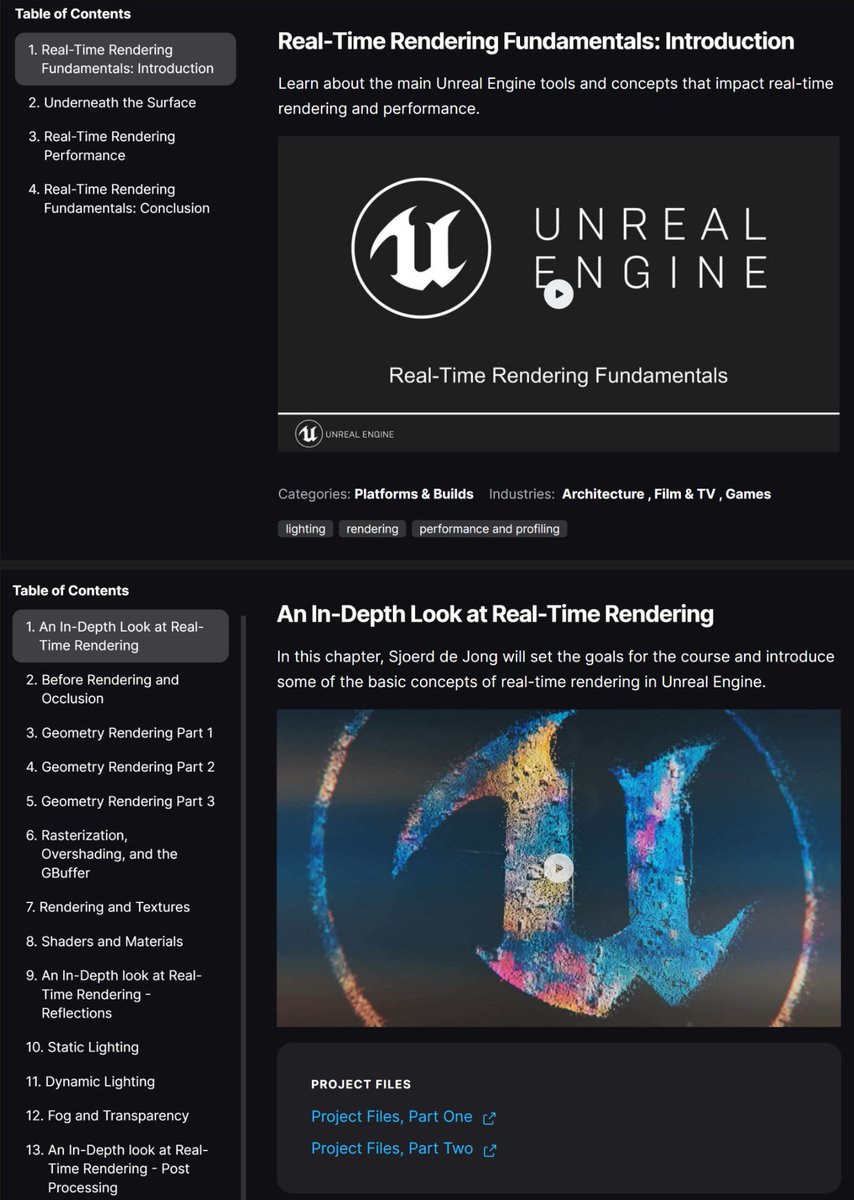
"Real-Time Rendering Fundamentals",
"An In-Depth look at Real-Time Rendering" by Epic Games
and let your curiosity lead you further.
If you are an aspiring 3D environment/prop artist, it's very important that you understand the scarcity of texture memory. Production artists go to great lengths to squeeze the most from the least possible amount of textures.
If you are building a portfolio, include pieces that showcase:
- trim sheets,
- vertex paint masks,
- utilization of multiple UV sets,
- tiling textures and how you hide their repetition.
These works won't get you hundreds of likes, but they'll show that you have the right sensibilities. You don't have to be a tech artist and build an entire pipeline. Just showing that you are aware of those concepts is a strong signal to your future lead.
You do need pretty renders and hero props to get likes, establish your name and attract recruiters.
But don't ignore the biggest pain point of every single graphics-heavy production.
My favorite resources on the topic:
- The Ultimate Trim: Texturing Techniques of Sunset Overdrive — Morten Olsen (Insomniac Games)
Elegant and lightweight pipeline, almost an art form in itself.
- Behind the Art of Battlefield and Battlefront — Joel Zakrisson (DICE)
My personal favorite. Love the double UVs and the detail normals. Revisited this article many times over the years.
- Cyberpunk 2077: A World Full of Substance — Krzysztof Krzyścin (CDPR)
The gargantuan scale of CP2077, vast sightlines, high detail density — CDPR created a miracle.
- Driving Innovation: A New Vehicle Pipeline for 'The Last of Us: Part II' — Matthew Johns (Naughty Dog)
Helps drive home the actual sizes of used textures.
- Building the World of 'The Ascent' — Tor Frick (Neon Giant)
Teaches you what does and doesn't matter in production. Shows you how much data you can squeeze from an asset (color masks, mesh maps).
- Seaside Town UE4 — Vytautas Katarzis
All-time classic. Hyper-optimized doesn't mean ugly.
- Old Freight Car — Aleksandr Silantev
Very thorough breakdown that takes you deep behind the scenes.
- Modular Wood-Shack Kit: Insurgency Sandstorm — Vuk Banovic
Beautiful little example of how far you can take a single texture set.
Best wishes to everyone in Iran. It's one of the most ancient centers of civilization and scholarship, full of generous people living without freedom while filling universities and companies around the world with talent. Iranians deserved better than this past 73 years.
At @CES?
Don’t miss the UE5 next-gen HMI demo, with Unreal Engine driving every pixel of the digital cockpit.
Stop by the @AMD booth (West Hall, Meeting Room 223) and take a seat behind the wheel.
There Is No “Correct” Poly Count
Poly count isn’t a number, it’s a decision.
FPS vs third-person completely changes what “optimized” means.
Context always wins.
Our Unreal Engine Performance Optimization series is complete, with modules on avoiding networking hitches, tickless StateTree changes and more.
Put hitches on ice this holiday season and check out the full learning path today: https://t.co/zEWM1YPTEn
🚀 Starting a new series on how to land a career in 3D art!
These tips have helped many of my students get hired in games, VFX, and animation—and now I’m sharing them with you.
📺 Full video on my YouTube channel
🔗 More at https://t.co/45l18GIaGY
#3dmodeling#3dart#gamedev