If I could just be better, a better… Better daughter, better student, a better doctor, then I could stop bad things from happening.
But when Melendez died, I finally realized that life is not something you’re supposed to control.
It’s something you’re supposed to share.
Key Point 1 from the article Intracerebral Hemorrhage by Drs. Wendy C. Ziai and Vishank A. Shah from the June #CerebrovascularDisease issue, which is available to subscribers at https://t.co/6oN7tpeUIr. #NeuroTwitter#MedEd
When you’re asked to localize the lesion in a patient with aphasia, do you suddenly feel speechless?
At a loss for words to categorize the type of aphasia?
Never fear—here is the decision tree for patients w/aphasia and the associated anatomic correlates
Three main questions:
1. Fluency? Nonfluency indicates damage to the FRONTAL language regions anterior to the fissure of Rolando
2. Comprehension? Impaired comprehension indicates damage to the TEMPOROPARIETAL language regions posterior to the fissure of Rolando
3. Repetition? Impaired repetition indicates damage within the core PERISYLVIAN language zone
The answers will lead you both to the type of aphasia and the location of the lesion.
Keep this figure with you for quick reference—and then when you’re asked about a patient with aphasia, you will have a lot to say!
Important lessons
1- Stroke recrudescence is ALWAYS a diagnosis of exclusion. Patients w prior stroke are at higher risk of recurrence & this should be excluded
2- There is NO recrudescence w/out curdescense. If someone did not have a hx of clinical stroke, it’s NOT recrudescence
When treating patients with CIDP, pain should not be used as an outcome measure. I often encounter patients whose therapy has been escalated due to worsening pain, which never helps. Instead, strength, disability (INCAT), and gait are the most reliable surrogate markers in CIDP.
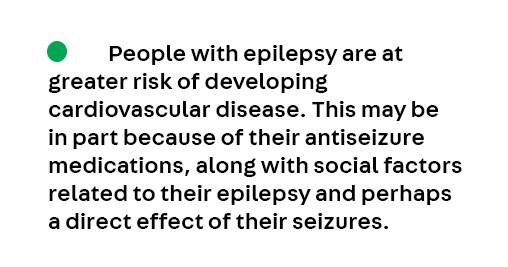
Key Point 2 from the article #Epilepsy Comorbidities Dr. Mark Keezer, from the February Epilepsy issue, which is available to subscribers at https://t.co/APqJVUX8dI
#Neurology#NeuroTwitter#MedEd
Chronic idiopathic axonal polyneuropathy (CIAP) is the most common “etiology” of distal symmetric polyneuropathy after diabetic neuropathy.
https://t.co/tgesCdlHDW
However, CIAP is very unlikely to be the cause if any of the following are present:
1. Foot drop
2. Marked asymmetry
3. Sensory ataxia
4. Weight loss
5. Autonomic dysfunction
6. Rapid progression
7. A family history of neuropathy in first-degree relatives
#NeuropathyBites
The “confused”patient in the ED could be:
- aphasic
- inattentive
- disoriented
- amnestic
- dysarthric
- apraxic
- in pain
- language barrier
With a broad ddx based on the specific symptomatology/exam.
Avoid using the word confusion (and grip strength😋) in the ED/ward