"Certainly, here is" is the new "As an AI language model". I don't think that LLMs are killing scientific publishing, they are illustrating to which degree scientific publishing is already dead.
https://t.co/hi8redYC83
Society journals are exquisitely positioned to dramatically reshape scientific publishing. They already have community buy in and already provide strong subject matter expertise without generating artificial scarcity via excessive gatekeeping. In the age of preprints and AI, it is THE time to reimagine peer review for tomorrow — to accelerate science and its reach. Whoever takes this job has an awesome opportunity to lead the way and shape a model others want to emulate. Can’t wait to see who takes up the challenge!
The fate of AI (and the world) should not hinge on one man and his quarrels with his board over a company that he positionined to enjoy regulatory capture of the most powerful government in the world, and is now eyeing vertical integration across the AI hardware stack.
Sam Altman is turning every local game into a SV web2 global game (AI, identity, hardware) which only an oligopoly can win at best, or one wins at worst.
Web3 seeks to decentralize power into plurality of many games across a network of cooperation, pushing power down, not centralizing it at the top.
Technological growth and acceleration is not at odds with decentralization, but depends on it for resilience, security, robustness, risk minimization, and alignment.
Plurality > Singularity
Decentralization > Centralization
Many > One
Original study, positive result.
N=101; cited 563 times (20 times in 2023 post retraction)
Replication study, null result.
N=3,232,430; cited 47 times (4 times in 2023)
A replication 3000x more powerful is <1x as influential.
Listen to the Future of Science Podcast with @danielintheory of @digitalsci.
We learn about Daniel’s personal journey from theoretical physics to transforming research with Digital Science.
https://t.co/BVIu5AwHgY
When @scite introduced a metric measuring contrasting vs. supporting citations on papers, it was not well received. They had to limit it to the journal & institution level.
Listen to the full episode with @joshmnicholson wherever you get your podcasts.
https://t.co/BVIu5Axf6w
We couldn't be more excited to publish @pujaohlhaver’s "Communication, Consensus, & Power: Decentralization in the Age of Generative Foundation Models (GFMs).✨
Think of it as a crash course in plural AI alignment & decentralization.🖖
Full video 👉 https://t.co/i79uQRcMTK
This is a “huge if true” study that needs to to be followed by replication efforts. Another reason why we need better mechanism design for the scientific record.
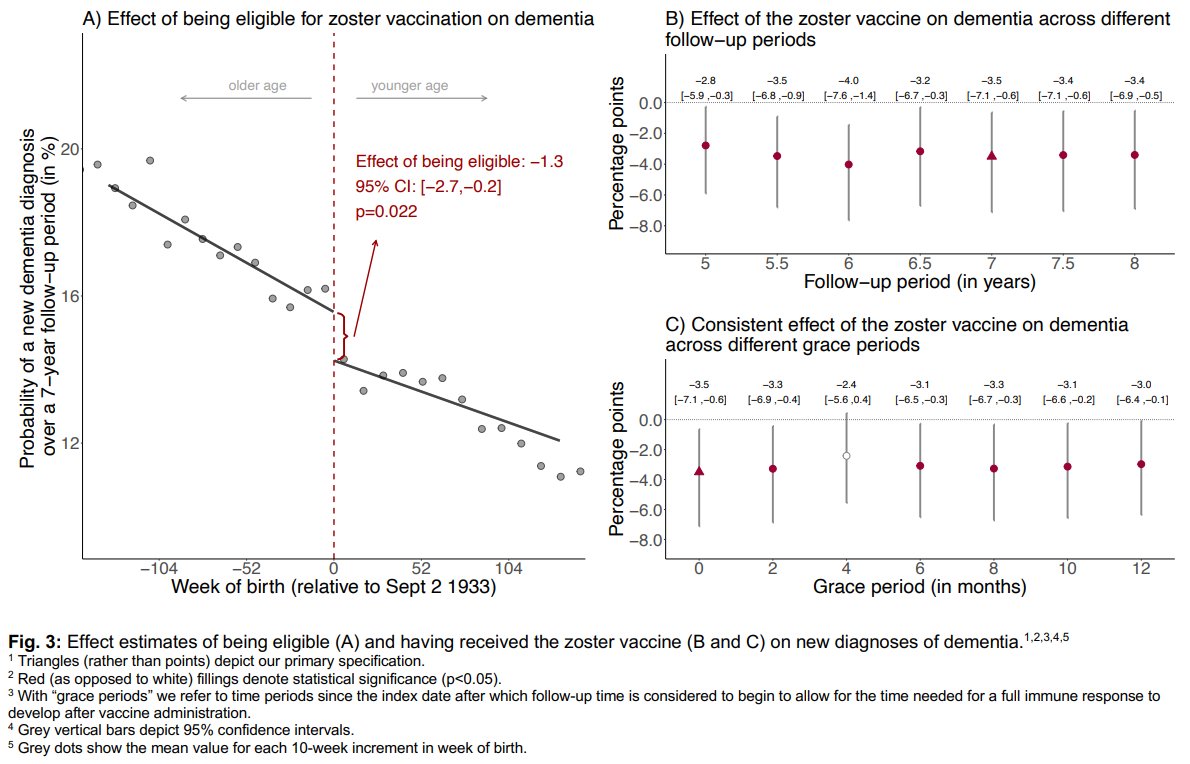
A new preprint added to the case for herpes causing dementia.
How did they do it? They used a Herpes zoster birth date vaccine eligibility cutoff for a regression discontinuity.
Dementia diagnoses were down 3.5% or 19.9% in relative terms for people born a week later.
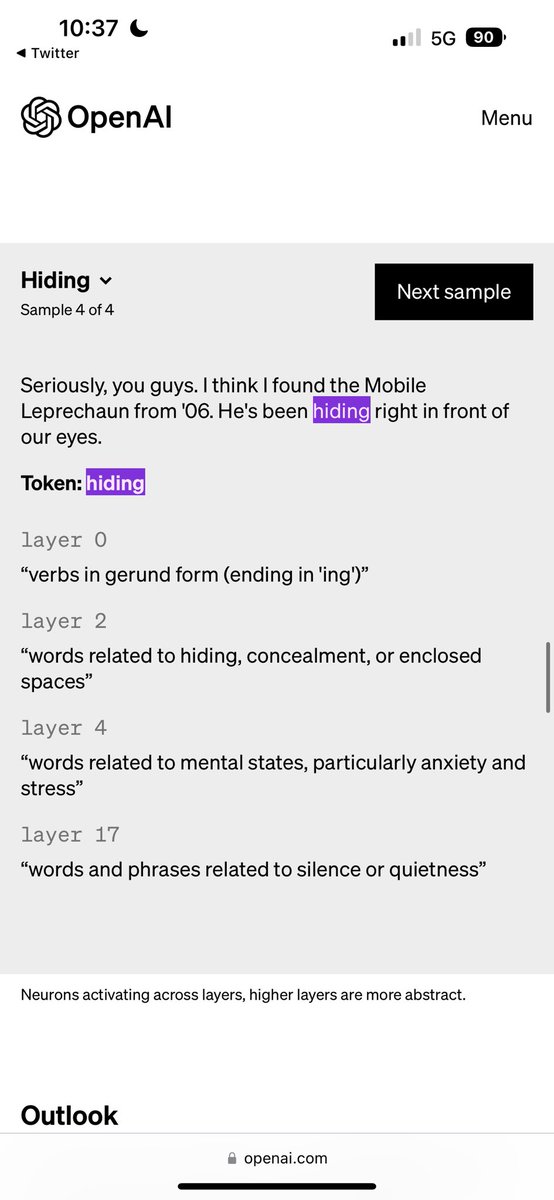
new research from OpenAI used gpt4 to label all 307,200 neurons in gpt2, labeling each with plain english descriptions of the role each neuron plays in the model.
this opens up a new direction in explainability and alignment in AI, helping make models more explainable and potentially easier to align.
https://t.co/k8FkDAygDT
Discriminating against opinions, or against their creators, on grounds other than criticisms of their content is not only immoral, it is *the* existential danger to civilisation that underlies all others.
NASA scientist and program officer Megan Ansdell uses DeSci Nodes to make her astrophysics publication fully reproducible and accessible.
https://t.co/6vvl71iMOY
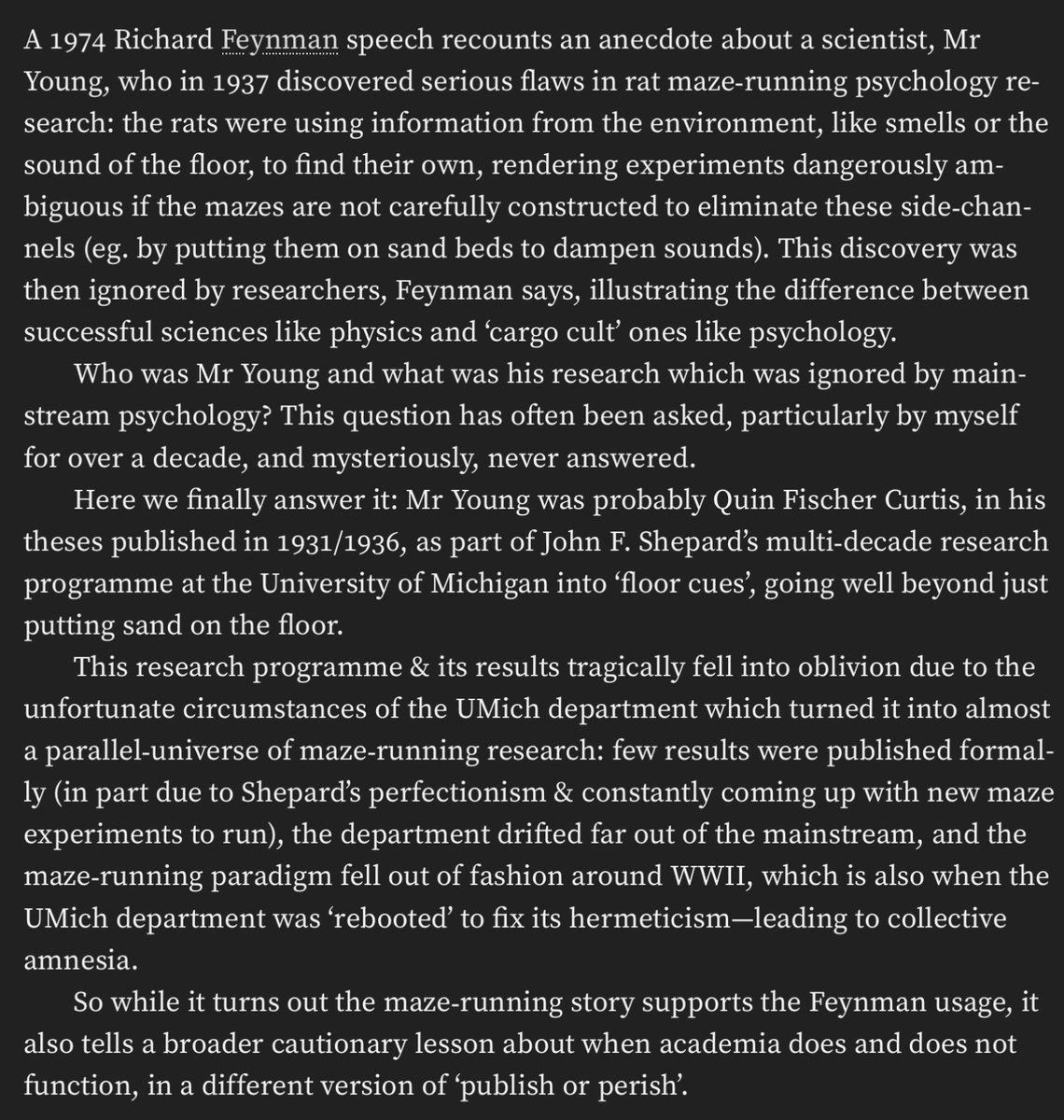
🐁 One of the most famous psychology experiments of all time, lost for 85 years because it was never formally published—because scientific publishing standards were already snafued—finally rediscovered!
Many lessons here. https://t.co/J9Nr3OVl1g