Many are building CAD AI. Nobody can prove their model works.
The reason: no shared benchmarks. Every demo is cherry-picked, every claim is unverifiable, and "look at this cool render"
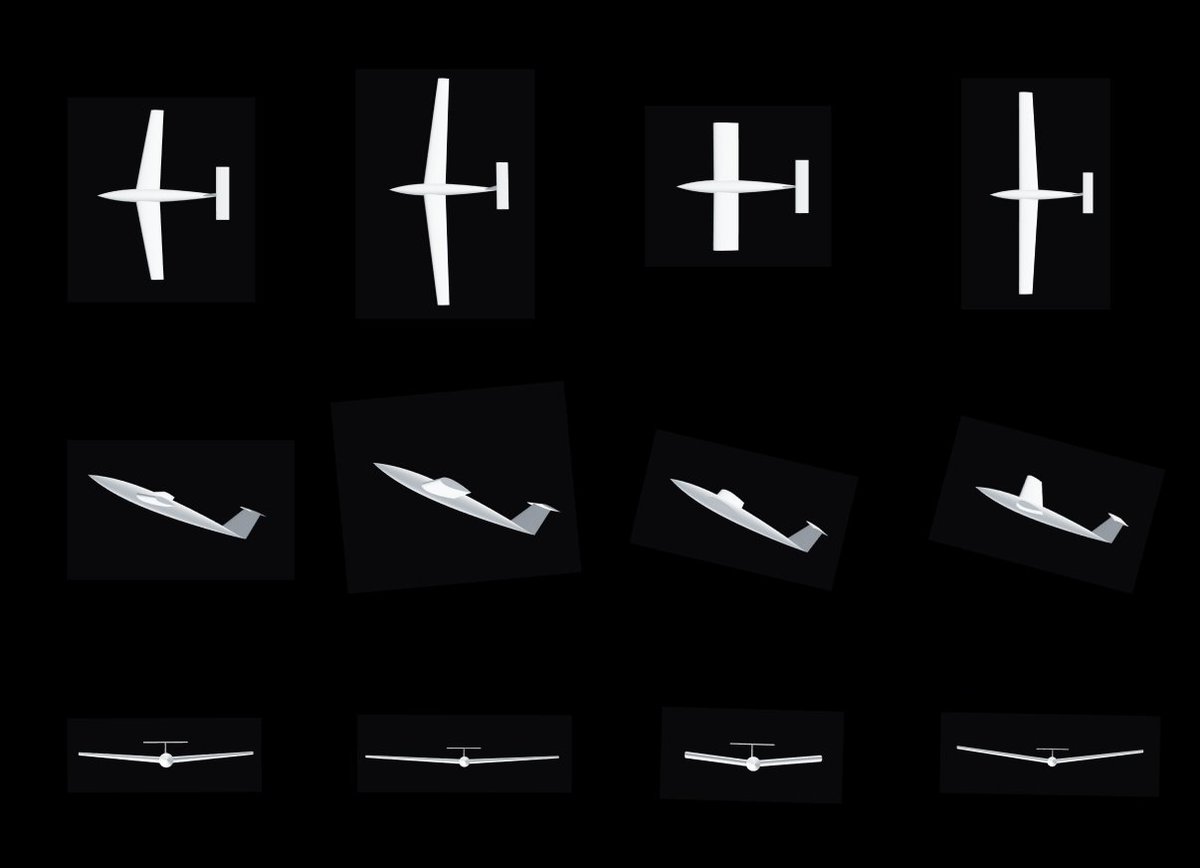
A good approach is using parts increasing in complexity to see where the models succeed and where they fail. Similar to what @emm0sh did with @sendcutsend (but for other reasons)
@OpenAI functional 3D generation feels like a missing eval. Worth considering.
23:10
"The things that most interested me about a decade ago about generative design, was inverting the problem…
So instead of saying let me try to build a bracket, let me build another one, let me test it, instead tell the computer what you want it to do… let it run off and do hundreds of thousands of variations, I think that is a way more interesting way of doing this [CAD design]"
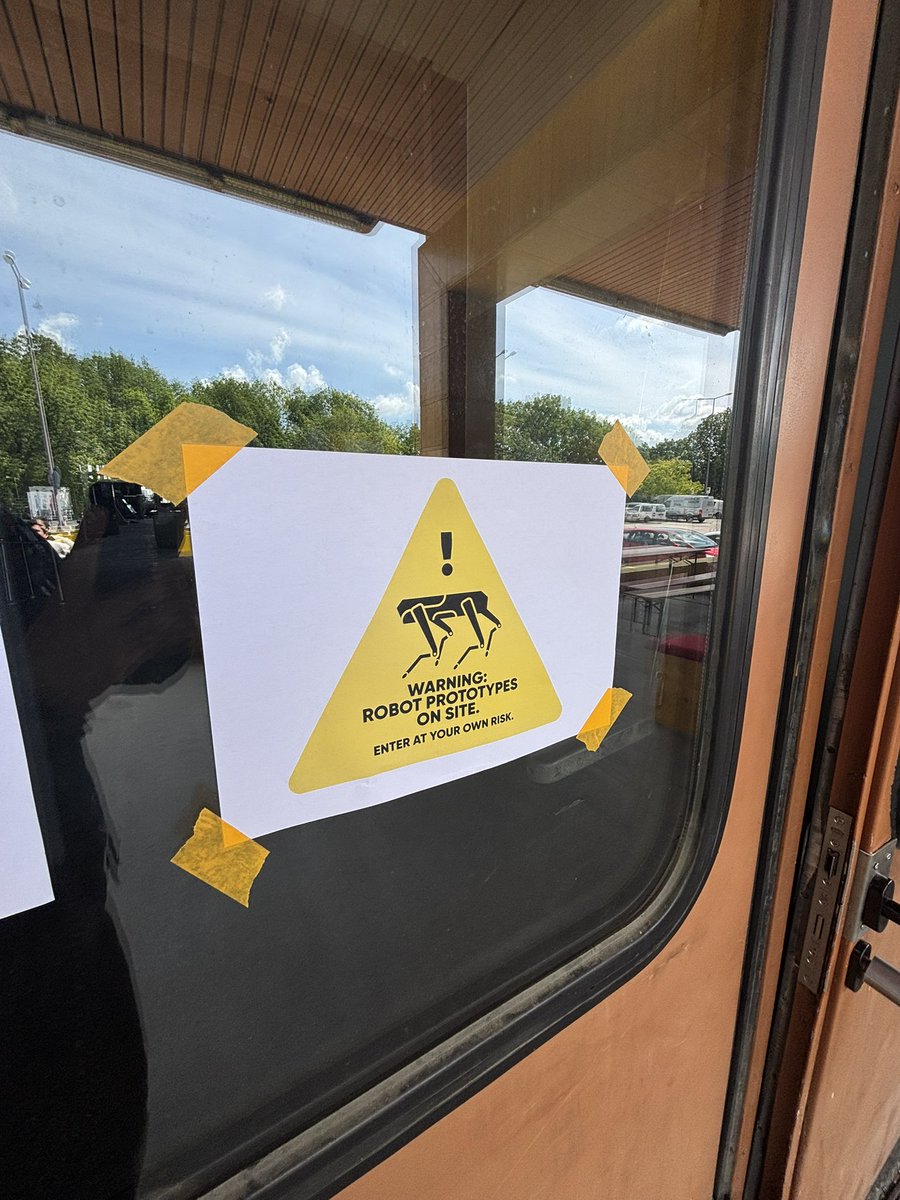
The best robotics meetup in the world.
Tonight in Berlin
CLANKERS
Multiple fully autonomous heavy duty machines. Industrial multi arm robot installations. Drones. Anti drone products. Space lasers. And thats not even all of it.
https://t.co/yEDQD4XAkb
Unrealised pain is the main obstacle to adopting AI in engineering
You talk to people from the industry about their design workflow and they tell you “it is great”, then they proceed to tell you how they spend hours manually reverse engineering a part because they couldn’t find a 3D model of it online. Or how they manually regenerate parts after the simulation is done, because the simulation generated a mesh rather than a parametric part. They think this is ok and normal, they think this is the only way forward.
It is not.
Design automation will feel very natural in a couple of years, but for now, people against it either reject it completely or expect magic from it and are disappointed if AI can not generate a whole jet engine from a simple prompt.
The best way forward is by example: show that design automation works, that complex workflows now can be done in minutes rather than weeks, and that many methods they accepted as standard are nothing but extreme inefficiencies
I never understood where these expectations are coming from. It took years for the car to be able to move faster than 60 km/h. but for some reason, when someone talks about AI in CAD the expectation is "design a whole Jet engine or the AI is a piece of garbage". This doesnt make sense. Were CAD Software capable of doing this when it first became commercial? Was any tool that engineers are using today capable of designing or simulating complex assemblies from day one?
Btw, our tool can already design assemblies! Yes it is still buggy, yes it still makes mistakes, but considering last year we could only design simple boxes, this is a significant improvement and it will keep moving in that direction.
The premise "Either AI has to be able to design the most complex machine ever, or it is useless" is flawed.
The first step is to automate what you mentioned as skill issue and manual clicks.
How many designers spend hours on:
1. Manually desinging parts to be placed in their assembly (Servo motors, warehouse parts, etc.)
2. Migrating CAD models from one version to another by manually generating the parts
3. Developing paramteric models so that they can run sensetivity analysis of a certain part
4. ...
The problem is in seeing such a workflow as "Ok" and accepting the fact that one needs years of experience to know how to click around a CAD interface.
You are absolutely right by saying that as long as we only focus on geometry and not intent that the enterprise workflows will never be automated. However, no one is saying that we should stay stuck with geometry. A lot of work is going into figuring out how to embed intent into the training data and through external modules. It is starting to work, but will take time.
I think taking a strong stand against automation is unjustified. it is similar to what happened when CAD was first introduced commercially, the exact same arguments were made: "CAD is too slow", "it is very buggy", "I need to change my workflow", "I can do it faster by drawing", etc.
Working on it. The goal is to implement design intent in the models, so you don’t design by describing the geometry, rather the function that needs to be fulfilled by the part. This is much harder than one thinks, but it is possible. You can already try our alpha here: https://t.co/oG72FNDBYa
Even if we just automate the monkey work, there is a huge value in that.
You just started working with hardware yesterday, tell me, how much time do you spend clicking around to fix a mesh, generate a standard part manually because you didn’t find the 3D model, and just moving things around in an assembly?
@yacineMTB The first step is automating the monkey work, what comes after is integrating with simulation, DfMA, and other tools to make meaningful models out of 3D slop. It will take time, but it will happen.
1/
Software dev pivoting into hardware or robotics?
Here's what nobody tells you:
Hardware is hard for a reason. This is not only something that is said. Hardware is physical, tangible and uncertain.
At the end of this thread you will want to check https://t.co/paXGsCfYsg but for now continue reading.
You just downloaded your first 3D model from GrabCAD and 3D printed it with your Bambu Lab P1S? Or maybe you just bought the Arduino beginner Kit and made your first LED, resistor, and switch circuit?
good for you, now listen:
AI will change how Engineers perform design discovery.
No need for hours of manual work to setup a parametric design pipeline.
Just inform Kyrall what you need and get what you want in minutes rather than days!
Take a look at https://t.co/Qz7lRsB4vK