day 0
i spent 3 years + $15k cash solo-building a free site that finds remote-first jobs
10k MAU from GEO, bing, duckduckgo... but literally zero from google
from today i publicly challenge myself to escape google filter and document steps here
#buildinpublic
i cannot believe my eyes
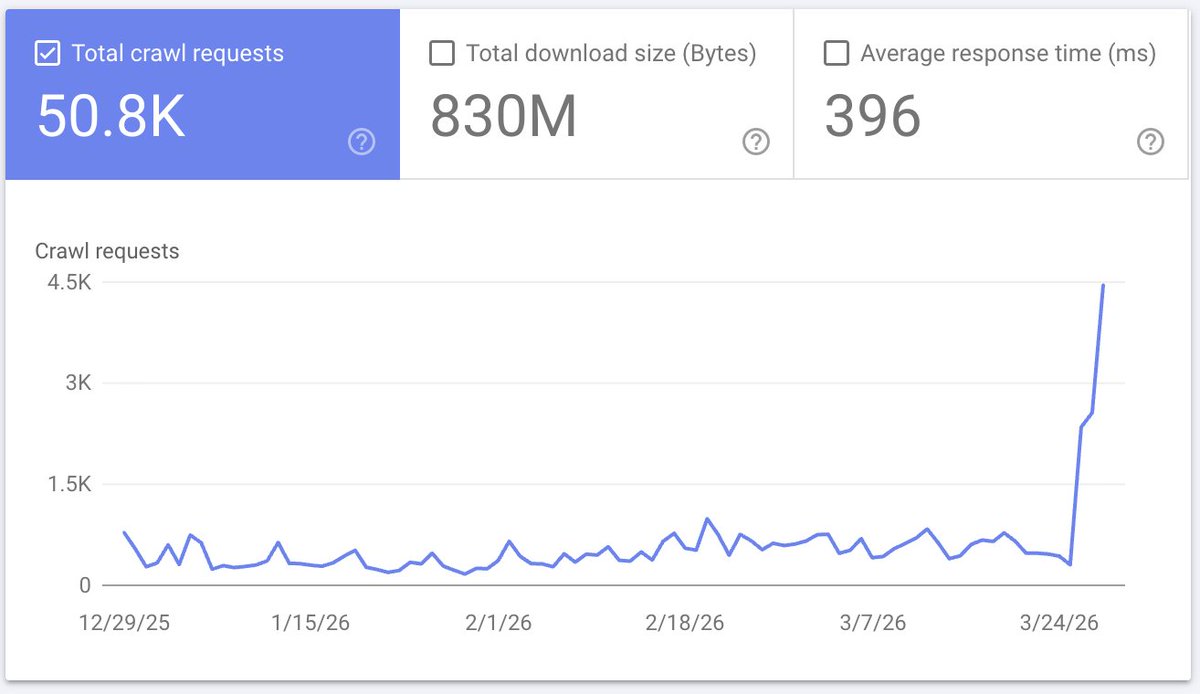
i sold my soul to @illyism and google started crawling and INDEXING my website after almost a year of being shadowed
mb the recent spam update had some influence.. but i think it's illyism's karma that did the trick
https://t.co/g6QVG5mN2c
@illyism I’m ready to sell my soul in exchange for an SEO audit that will find out why Google is literally not indexing my website - https://t.co/p75DH5QjMu
I keep thinking about "signal theory" and how expensive signals are the only signals that matter with AI
Nobel laureate Michael Spence figured out that when buyers can't verify quality directly, the only credible proof is doing something that a faker couldn't afford to do
- cheap signals: just saying "I'm the best at SEO" (anyone can tweet this)
- moderate signals: posting a screenshot of traffic going up (can be faked in 30 seconds)
- expensive signals: publicly offering a free audit, hopping on a live call, waiting 18 days for Google to prove you right, then having the client tweet the results himself
the expensive signal works because:
- you accepted public reputation risk
- the timeline can't be faked
- a third party verified the outcome independently
- the entire paper trail is visible to anyone
here are more expensive signals grouped by what you give up (sorry I'm locked in on this theory now and can't stop seeing everything in life through this lens 😅):
👉 Giving up money:
- Charging $500/mo instead of $69/mo. Your price is a signal to your customer about your own confidence in the product. Cheap pricing signals "toy."
- Performance-based pricing. "Pay me only if your traffic doubles." A faker would go bankrupt.
- Turning down a client publicly because they're not a fit. Walking away from revenue signals you don't need it.
- Open-sourcing your product. You're giving away the thing you built. Only someone confident in their execution speed (not their code secrecy) can afford this.
👉 Giving up time (irreversible):
- Shipping daily for 365 days straight. You can buy followers, you cannot buy a year-long public git commit history.
- Writing a detailed, opinionated blog post every week for 3 years. AI can generate one post. It cannot generate 150 posts with a consistent voice, evolving opinions, and real replies in the comments.
- Staying in one niche for 5+ years. Everyone pivots when it gets hard. The person still doing SEO in 2031 has a signal nobody who jumped to "AI SEO agents" in 2026 can match.
- Being visibly fit. Saying "I'm healthy" is free. A six-pack costs thousands of hours. It's one of the most honest signals humans have because you literally cannot fake it.
- A resume is cheap talk. An open-source contribution history is an expensive signal. One costs mass-sending on LinkedIn, the other costs years of publicly maintained actual work.
👉 Giving up safety / burning bridges:
- Quitting your $300k job to build your startup. You can't fake quitting Google. The bridge is burned.
- Moving countries and posting it on X.
- Publishing your real P&L, including the losses. Anyone can post revenue screenshots. Publishing the months where you lost money, got refunds, or had churn is a signal that you're not performing.
👉 Giving up ego:
- Admitting publicly you were wrong. Corrections are expensive because they cost status. That's why they're so credible.
- Showing your first version vs your current version. The gap between "embarrassingly bad v1" and "polished v50" is proof of work that AI-generated mockups can never replicate.
- Asking for help in public. "I don't know how to do X, who can teach me?" costs social capital. Fakers only project competence.
👉 Giving up optionality:
- Marriage, kids, signing a lease, buying property in one city. Every one of these kills optionality. That's exactly why they signal commitment so strongly.
- The best founders pick specific investors whose names signal credibility to the next round. The investor's reputation is the signal, not the check size. Choosing one means excluding others.
- Exclusive partnerships. Saying "I only work with 5 clients" means you turned down everyone else.
- Tattoos. Literally permanent. The most honest signal of identity because the cost of removal is so high.
👉 Giving up anonymity / privacy:
- Putting your face on your product. If it fails, your reputation fails with it. Anonymous founders have zero skin in the game.
- Saying "40k users" on Twitter is cheap talk. Showing Stripe receipts and public MRR dashboards (@marclou is building TrustMRR for exactly this) is an expensive signal. One is verifiable, the other isn't.
- Live, unedited video. A polished case study can be fabricated. A 45-minute uncut Loom walkthrough of you debugging a client's site in real-time cannot.
- Being surrounded by others. You can't fake social proof easily. If people vouch for you publicly, or you're surrounded by people (of the other gender), they're staking their own reputation and signaling you're a cool person
🚨 every good signal is an expensive signal - because an expensive signal requires you to give up something that a faker would never voluntarily sacrifice
Money, time, ego, optionality, safety, or privacy
If it doesn't cost you anything, it doesn't signal anything
I keep thinking about "signal theory" and how expensive signals are the only signals that matter with AI
Nobel laureate Michael Spence figured out that when buyers can't verify quality directly, the only credible proof is doing something that a faker couldn't afford to do
- cheap signals: just saying "I'm the best at SEO" (anyone can tweet this)
- moderate signals: posting a screenshot of traffic going up (can be faked in 30 seconds)
- expensive signals: publicly offering a free audit, hopping on a live call, waiting 18 days for Google to prove you right, then having the client tweet the results himself
the expensive signal works because:
- you accepted public reputation risk
- the timeline can't be faked
- a third party verified the outcome independently
- the entire paper trail is visible to anyone
here are more expensive signals grouped by what you give up (sorry I'm locked in on this theory now and can't stop seeing everything in life through this lens 😅):
👉 Giving up money:
- Charging $500/mo instead of $69/mo. Your price is a signal to your customer about your own confidence in the product. Cheap pricing signals "toy."
- Performance-based pricing. "Pay me only if your traffic doubles." A faker would go bankrupt.
- Turning down a client publicly because they're not a fit. Walking away from revenue signals you don't need it.
- Open-sourcing your product. You're giving away the thing you built. Only someone confident in their execution speed (not their code secrecy) can afford this.
👉 Giving up time (irreversible):
- Shipping daily for 365 days straight. You can buy followers, you cannot buy a year-long public git commit history.
- Writing a detailed, opinionated blog post every week for 3 years. AI can generate one post. It cannot generate 150 posts with a consistent voice, evolving opinions, and real replies in the comments.
- Staying in one niche for 5+ years. Everyone pivots when it gets hard. The person still doing SEO in 2031 has a signal nobody who jumped to "AI SEO agents" in 2026 can match.
- Being visibly fit. Saying "I'm healthy" is free. A six-pack costs thousands of hours. It's one of the most honest signals humans have because you literally cannot fake it.
- A resume is cheap talk. An open-source contribution history is an expensive signal. One costs mass-sending on LinkedIn, the other costs years of publicly maintained actual work.
👉 Giving up safety / burning bridges:
- Quitting your $300k job to build your startup. You can't fake quitting Google. The bridge is burned.
- Moving countries and posting it on X.
- Publishing your real P&L, including the losses. Anyone can post revenue screenshots. Publishing the months where you lost money, got refunds, or had churn is a signal that you're not performing.
👉 Giving up ego:
- Admitting publicly you were wrong. Corrections are expensive because they cost status. That's why they're so credible.
- Showing your first version vs your current version. The gap between "embarrassingly bad v1" and "polished v50" is proof of work that AI-generated mockups can never replicate.
- Asking for help in public. "I don't know how to do X, who can teach me?" costs social capital. Fakers only project competence.
👉 Giving up optionality:
- Marriage, kids, signing a lease, buying property in one city. Every one of these kills optionality. That's exactly why they signal commitment so strongly.
- The best founders pick specific investors whose names signal credibility to the next round. The investor's reputation is the signal, not the check size. Choosing one means excluding others.
- Exclusive partnerships. Saying "I only work with 5 clients" means you turned down everyone else.
- Tattoos. Literally permanent. The most honest signal of identity because the cost of removal is so high.
👉 Giving up anonymity / privacy:
- Putting your face on your product. If it fails, your reputation fails with it. Anonymous founders have zero skin in the game.
- Saying "40k users" on Twitter is cheap talk. Showing Stripe receipts and public MRR dashboards (@marclou is building TrustMRR for exactly this) is an expensive signal. One is verifiable, the other isn't.
- Live, unedited video. A polished case study can be fabricated. A 45-minute uncut Loom walkthrough of you debugging a client's site in real-time cannot.
- Being surrounded by others. You can't fake social proof easily. If people vouch for you publicly, or you're surrounded by people (of the other gender), they're staking their own reputation and signaling you're a cool person
🚨 every good signal is an expensive signal - because an expensive signal requires you to give up something that a faker would never voluntarily sacrifice
Money, time, ego, optionality, safety, or privacy
If it doesn't cost you anything, it doesn't signal anything
@EntrepGrow@illyism i think i launched RemoteFirstJobs with too many pages (~20k) on a freshly purchased domain with zero backlinks and no authority
google gave me some initial traffic and indexed pages but then dropped to literally 1 indexed page
@illyism I’m ready to sell my soul in exchange for an SEO audit that will find out why Google is literally not indexing my website - https://t.co/p75DH5QjMu
hey @ProductHunt
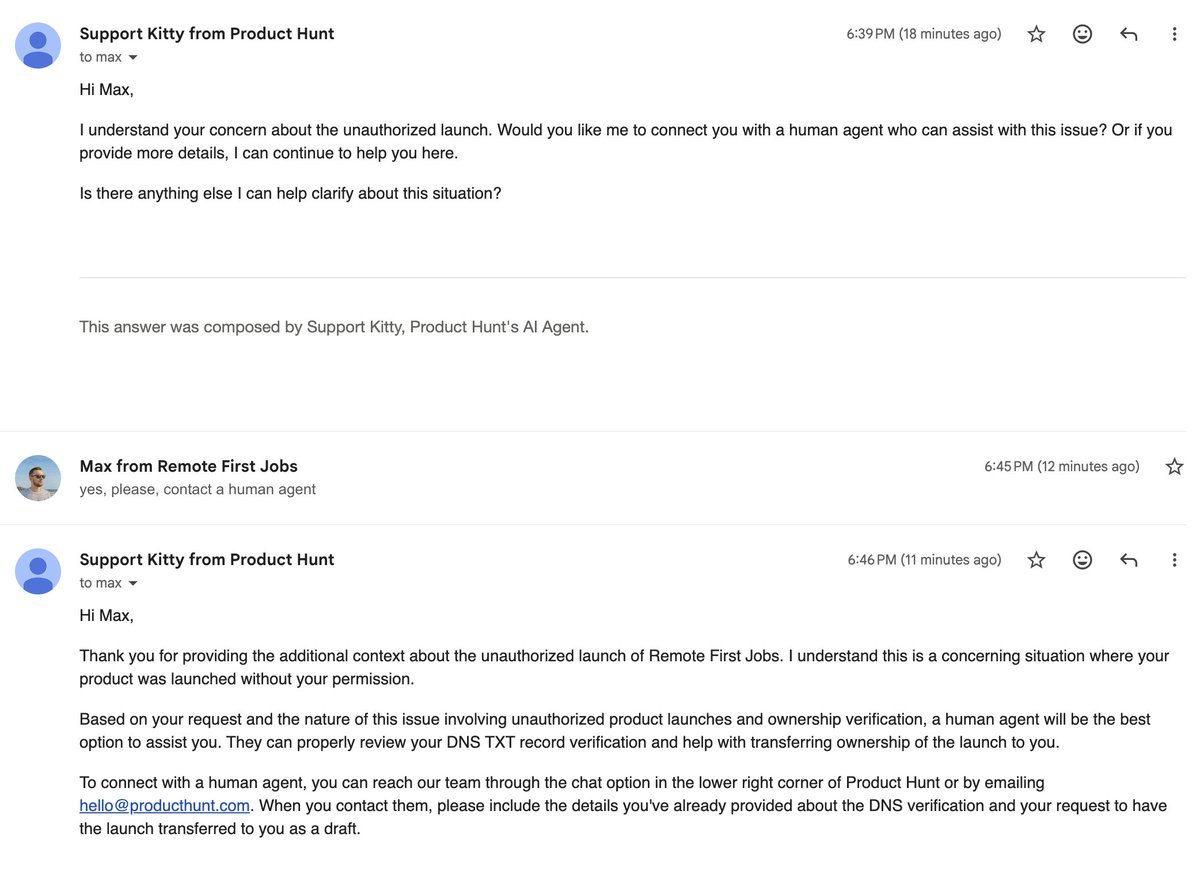
i emailed [email protected] and was asked to reach out again via the same email or chat option, but I can't find the chat option in the lower right corner 🥲
hi #BuildInPublic community, I ask you for help
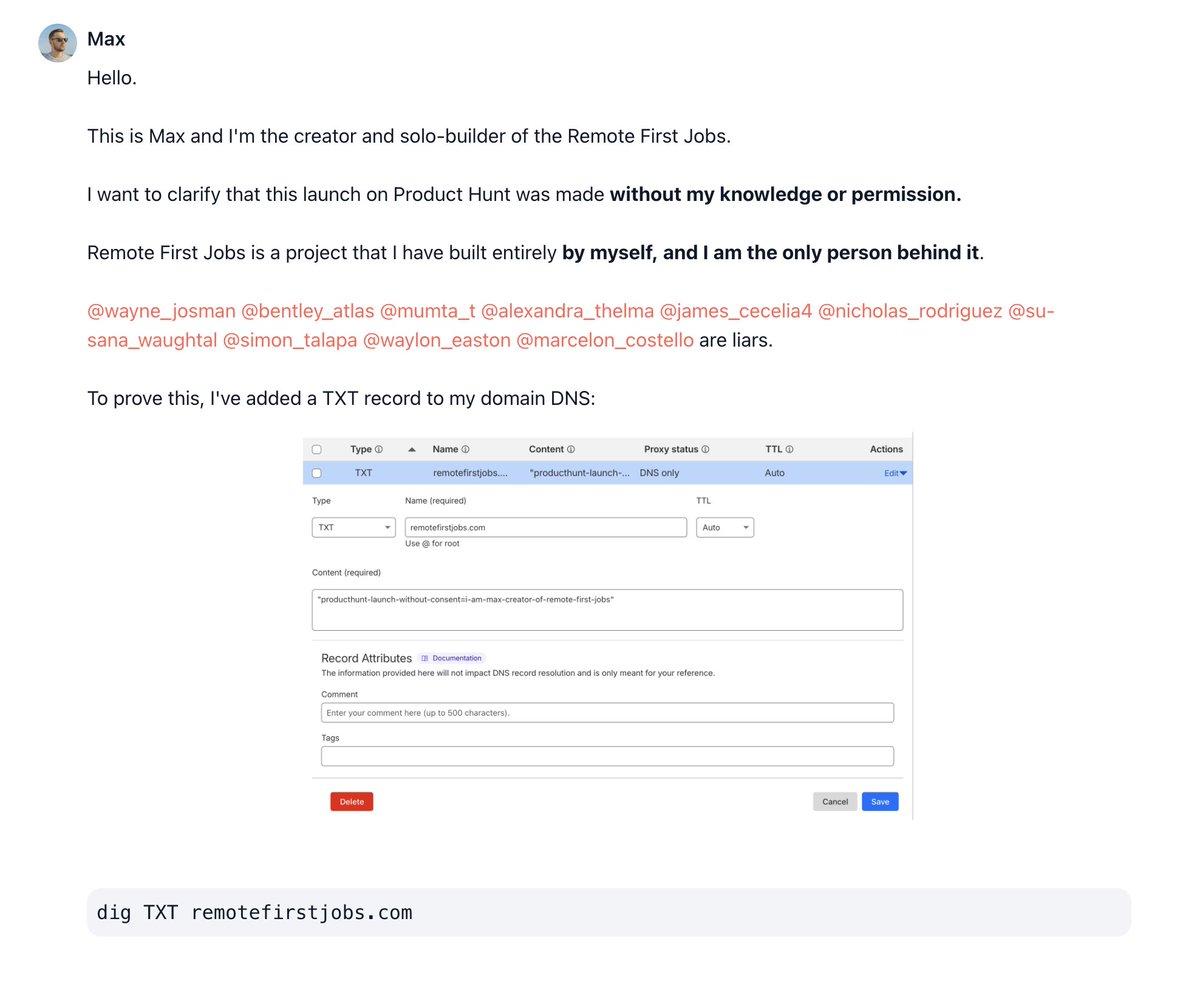
some guys decided to launch my website https://t.co/p75DH5QjMu on @ProductHunt without my consent and permission!