@FedExHelpEU please contact me: Paid £21 and invoiced, then you demanded £21+£15 through debt collector, paid again, then you refunded £21. I would like my £15 fee back too.
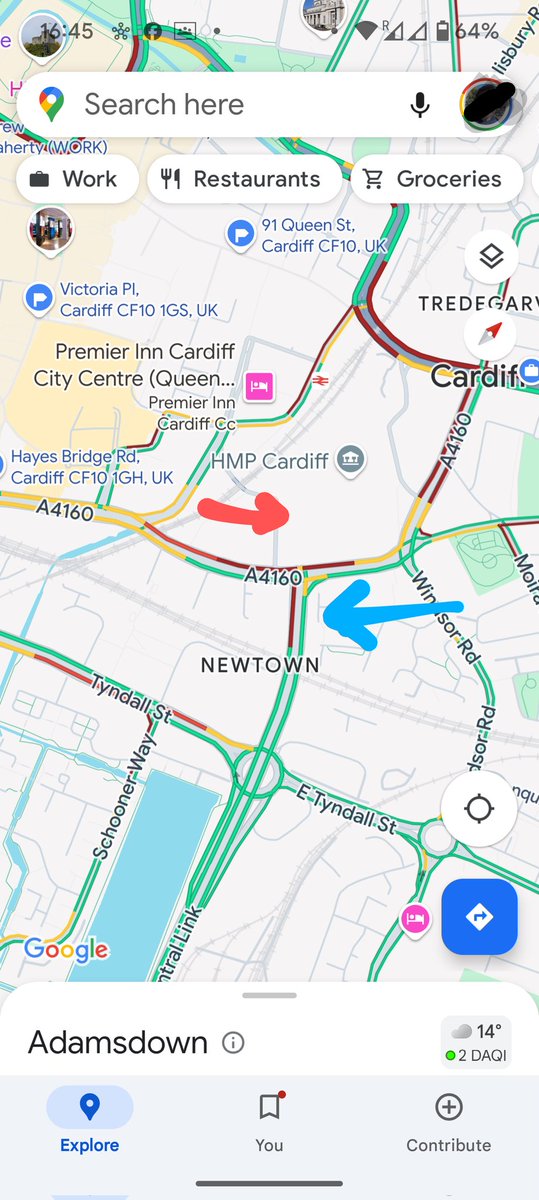
@cardiffcouncil cars in the dir of the red arrow see a "tunnel closed" sign, but cars in the dir of blue arrow see "tunnel open". No wonder it's chaos in the red dir. The tunnel is open of course. Do you create traffic on purpose? @WalesOnline@BBCWales#Cardiff
@tfwrail service Penarth to Queen Street. Stops at Central, muffled tannoy, signs still show Queen Street next stop, but train reverses back to Penarth and conductor tells 20 people to pay return ticket even if the service was cancelled while on board. £7.40 and still in Penarth.
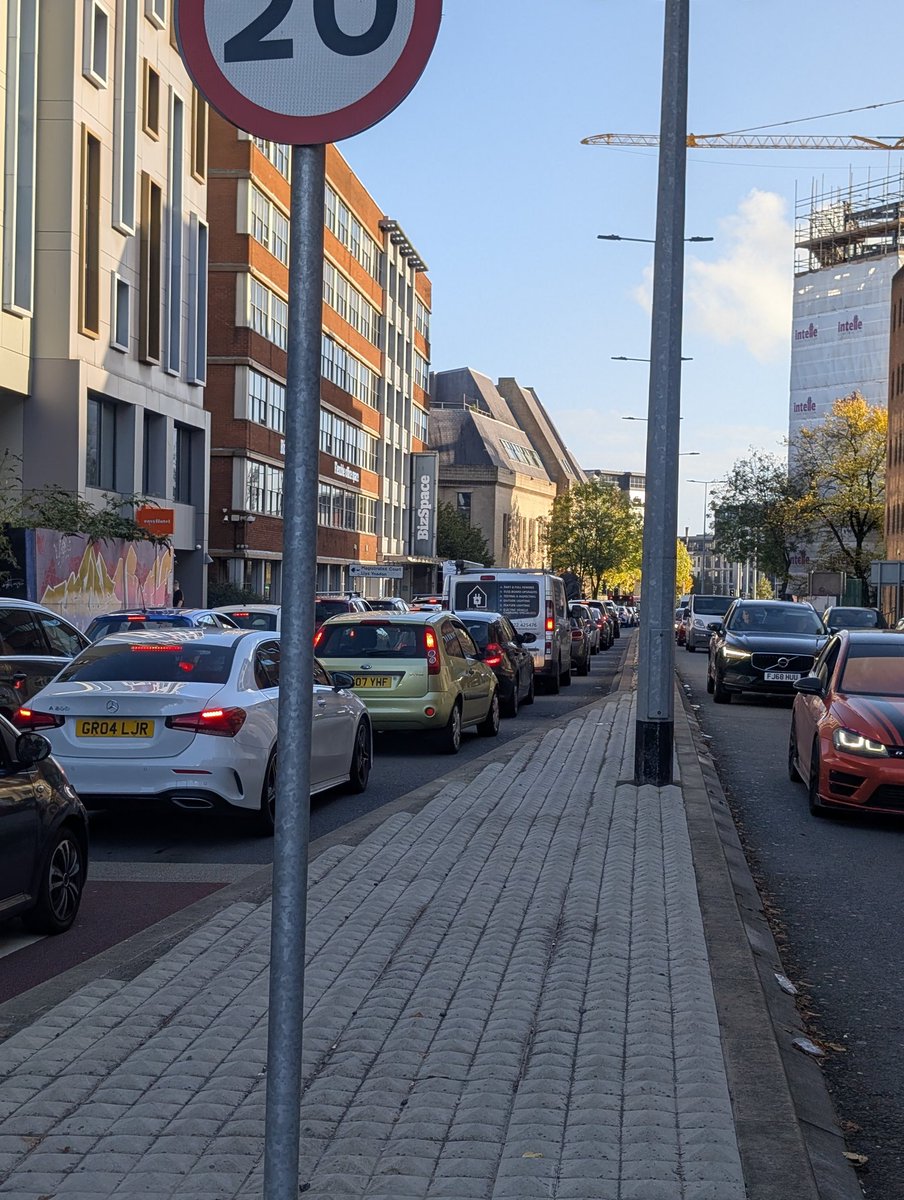
The only city in the world where the cars leaving the centre are stuck in the traffic from the cars arriving in the centre. Fitzalan Place. Great planning @cardiffcouncil. That's what you get when there is only one entrance to all main parking lots in #Cardiff.
@TfL what happens if you forget to pay for ULEZ in the 3 days after you enter London? I've emailed you twice trying to pay on the 4th day, but I had no response #London
@transport_wales cancelling trains means people can't rely on your service. Another day, another train cancelled, another day late for work. We don't deserve this when we pay with our taxes. Shameful, and yet again no one is accountable for this. Terrible.
🌌 Around the world, professional and amateur astronomers are closely watching T Coronae Borealis – a binary system ~3,000 light-years from Earth – waiting for an impending nova event so bright it will be visible on Earth with the naked eye.
MORE HERE >> https://t.co/HgONmjpy9B
@SkaitvGR το πρόγραμμα που «παιζει» στο σάιτ ως live TV έχει μείνει σε αυτό που θα παίζατε χωρίς εκλογές λέει TV-Only και «παίζει» Βουτσά. Δε βλέπουμε τίποτα.
In this essay, academic, author, and broadcaster @jimalkhalili breaks down why many explanations that scientists call “simple”—such as the idea that the Earth revolves around the sun—really aren’t simple at all. https://t.co/KXJN4nEm0s #science
@wjec_cbac Too bad you release them too soon, taking away the valuable tool that a mock examination based on last year's paper, a complete, real paper, can be.
Sorry but I have to share a bit more of this morning’s Downeast Maine meteorology magic, with 15F overnight chill clashing with far warmer sea temperatures, creating an astonishing frost crystal cloak on marsh grasses and drifting sea mist.
@CostaCoffee in Cardiff thinks that after putting all tables back inside, this mess is for the council to clean up, and for us to suffer until the council does so. Never mind the wind scattering this all over the place for a filthy Saturday night sponsored by @CostaCoffee .
In the heart of World War II, as the Nazis took control of Copenhagen, a peculiar situation took place at the Institute of Theoretical Physics, led by physicist Niels Bohr. Two Nobel laureates Max von Laue and James Franck, fearing the confiscation of their gold Nobel Prize medals by the Nazis, had sent their medals to Bohr for safekeeping.
On the day the Nazis arrived in Copenhagen, Hungarian chemist Georgy de Hevesy, who was working in Bohr's lab, devised a plan to prevent the discovery of the medals. Initially considering burying the medals, they quickly dismissed the idea, fearing the thorough searches the Nazis would conduct. Instead, de Hevesy proposed a chemical solution — literally. Utilizing a mixture known as "aqua regia" (a blend of hydrochloric and nitric acids), he set about dissolving the gold medals. This concoction is one of the few substances capable of dissolving gold, a notably unreactive element. As the Nazis marched outside, de Hevesy dissolved the precious medals, reducing them to a colorless solution that eventually turned bright orange. The liquid containing the dissolved gold was then placed on a high shelf in the laboratory, where it remained unnoticed throughout the Nazi occupation.
Post World War II, upon returning to the laboratory after V-E Day, de Hevesy found the beaker undisturbed on the shelf. The gold was recovered from the solution and returned to the Nobel Prize committee, who then reminted the medals and presented them back to Laue and Franck in a ceremony in 1952.