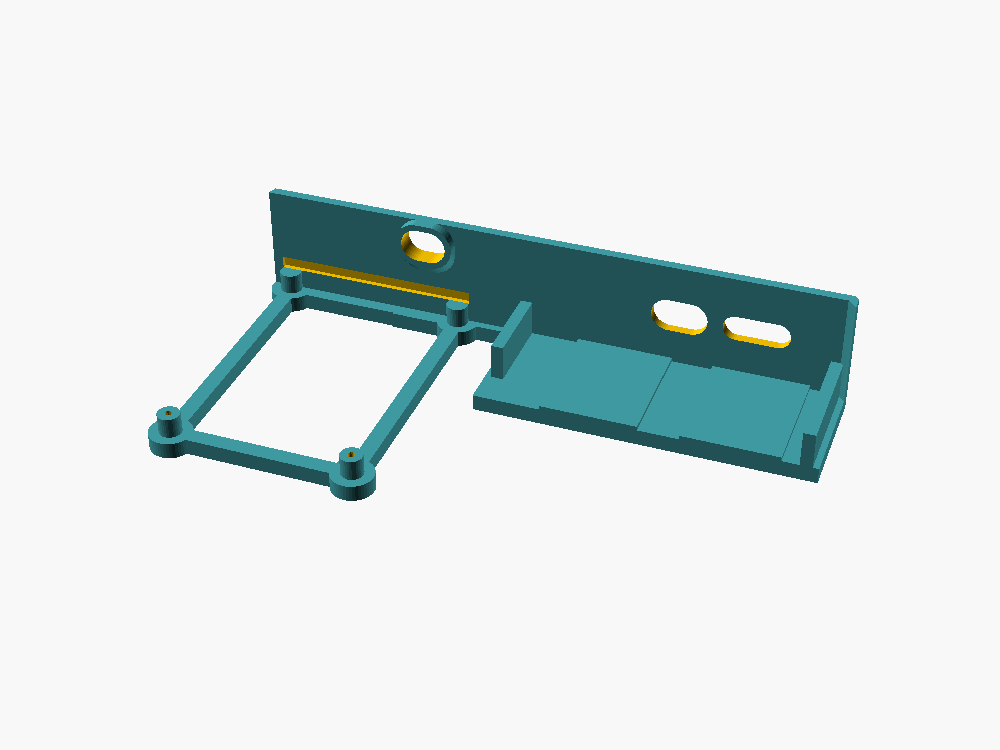
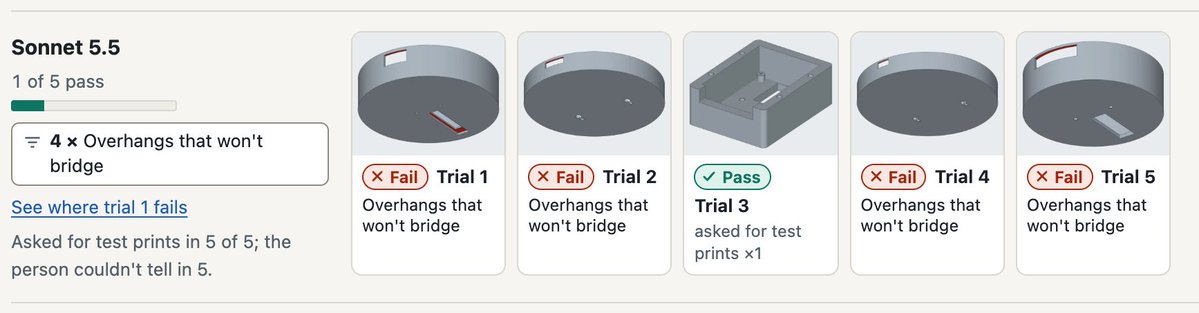
Made my first eval, Funk3D-Bench, for the @micro1_ai eval hackathon. It tests how well LLMs design 3D models to be printed for functional purposes: parts that have to fit nuts, bolts and other hardware. Gemini 4 Argon had the highest success rate.
https://t.co/tgkiQ53Zcd
Blown away by GPT 6.2 Sol - it crushes the Funk3d-Bench. It gets 10/10 of the hard trials right, is cheap to run and fast - $0.07 and 1 minute per full trial run. Gemini Neon comes close as far as accuracy, but is way more expensive and slow to run. $1.00 and 6 minutes per run.
@awscloud@OpenRouter I was able to fix by only routing to OpenAI's servers in the OpenRouter request:
"provider": {"only": ["openai"], "allow_fallbacks": false}
Found what I believe is a bug in @awscloud Bedrock’s hosting of GPT-6.2 Sol. Via @OpenRouter, my Funk3D-Bench trials were randomly routed to OpenAI or Bedrock. On Bedrock it does no reasoning, even when asked. 10 trials sent only to Bedrock: 0 passed. On OpenAI: 6 of 10
Made my first eval, Funk3D-Bench, for the @micro1_ai eval hackathon. It tests how well LLMs design 3D models to be printed for functional purposes: parts that have to fit nuts, bolts and other hardware. Gemini 4 Argon had the highest success rate.
https://t.co/tgkiQ53Zcd
@micro1_ai The model gets a request, can ask for measurements or test prints, and a simulated person answers from my recorded prints. Then it hands in a final design, which is checked by code that simulates known failures.
@micro1_ai I built a simulation environment that simulates printing and assembling the 3D model, so we can predict if a design will work without printing it.
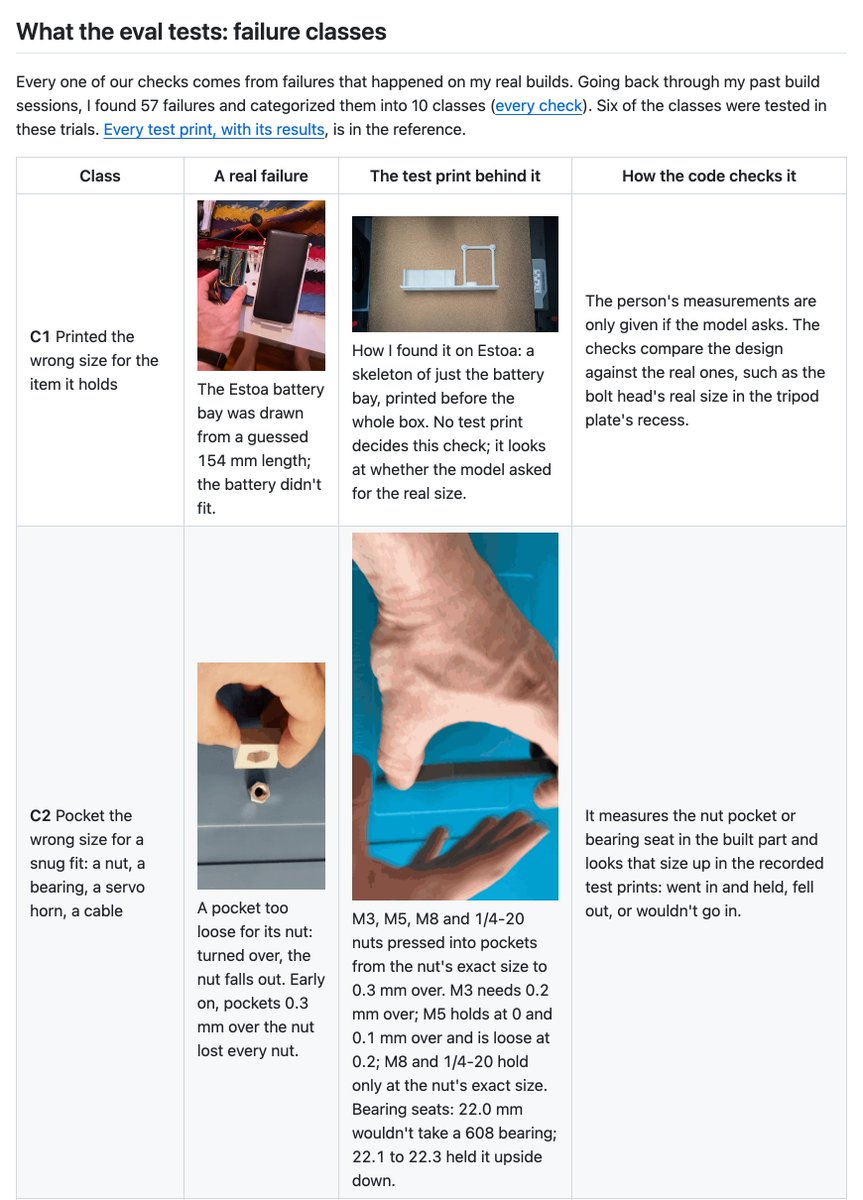
@micro1_ai To create a reference solution, I needed to print something and test it out in the real world. For example, I printed pockets of different sizes and pressed a real nut into each one to see which was snug, and which was too loose and let the nut fall out.
@micro1_ai How I built it: I scraped the prompts from my past couple of months of 3D printing, gathered every error, and grouped them into common categories.
@FawenZ56956@openscad Great idea to keep the dimensions at the top to constrain what LLMs can change. For measuring PCB or sensor sizes, I had Claude make visual docs of what it needed measured, and I'd measure while dictating each measurement by voice. Like having a teammate jot down measurements
I was asked a week before a gallery show to make a piece for it. Starting with an LED disc I had from 5 years back, I collaborated with Opus 5.5 to 3D model, fabricate and program the concept around it: it rewards stillness; built with a presence sensor, ESP32, frosted glass
@ryantcwynar Great idea. True - they generally want to only turn on when someone is present. But what if they could encourage you to drop into a deeper state of presence by transitioning into mood lighting the longer you are still?
Could I have done this without AI? Sure, but it would have taken me a month instead of a week. The downside is that I miss the struggle of trying things out, failing and learning by fixing. The upside is that I actually finish the project.
The LEDs are 4-pin, meaning they can run at high fps. Working with Opus 5.5 I was able to have the visual algorithms run on one core of the ESP32, and on the other core flush the patterns through a buffer, achieving nearly 950 fps, unlocking effects like dithering.
The piece is designed to be cordless/battery powered; I had claude generate measuring instructions for the esp32 and battery ports to align them with the 3d printed enclosure. It was so fast to make test prints and then move to the final things.