Check out my latest article: I Hate to Be the One to Have Told Ya’ So: The Centralized AI Path Was Always Going to Fail https://t.co/7ZQyZaBcUa via @LinkedIn
Φ-Plasma-Core is the first working prototype of a new kind of neural network one where each layer is a step of physical Hamiltonian flow instead of a matrix multiplication and at its very first run it already preserves long-context information 2.31× better than the transformer it might one day replace. $ROKO #DEEPTECH
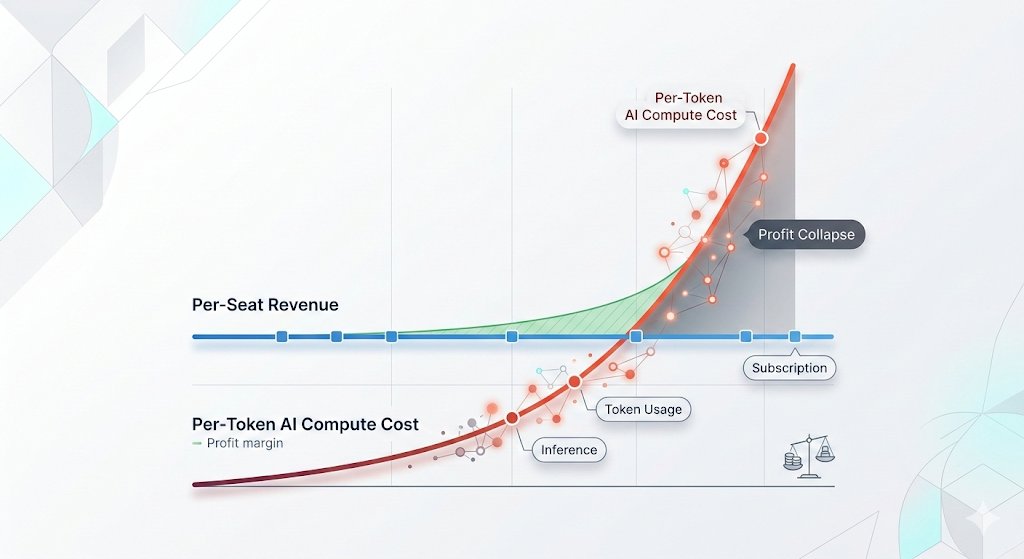
🦔Microsoft canceled its internal Claude Code licenses this week after token-based billing made the cost untenable, even for a company with effectively infinite cloud resources. Uber's CTO sent an internal memo warning the company burned through its entire 2026 AI budget in just four months. American AI software prices have jumped 20% to 37%, and GitHub (owned by Microsoft) is dropping flat-rate plans for usage-based billing across its products.
My Take
The AI subsidy era is ending in real time. The same company that put $13 billion into OpenAI and built the Azure infrastructure powering most of Anthropic's compute just looked at the bill from a competitor's coding tool and decided it was not worth paying. That is not a productivity failure on Anthropic's end. Token-based pricing is forcing every enterprise customer to confront the actual cost of running these models at scale, and the number turns out to be far higher than the flat-rate experiments suggested.
This ties directly to my Gemini Flash post yesterday. Anthropic, OpenAI, and Google all raised effective prices in the last six months. Enterprises that built workflows assuming AI costs would keep falling are now watching annual budgets evaporate in months. Two outcomes look likely from here. Either enterprises scale back AI usage to fit budgets, which slows the revenue ramp the labs need to justify their valuations ahead of IPOs, or the labs cut prices and absorb the losses, which makes the unit economics worse at exactly the wrong moment. Both paths land in the same place, the numbers stop working, and somebody has to take the writedown.
Hedgie🤗
GastroSight - agentic OS for the food industry - is moving agents to SERV across inventory, controlling, and operations.
90% in savings. Failure rate: 10% -> 0%.
The math is impossible to ignore.
Once builders see SERV in production, they move over.
https://t.co/xByTe16rRA
@TheChiefNerd@linq_ai It's 1000x more than we're using. There are 10s of billions of personal devices out there, perfectly capable of filling that gap. https://t.co/JjMbQaGYXX is about to access them with decentralized computation.
@Kylechasse Centralized AI infrastructure is hitting the wall: power, components, permits, and community opposition.
OpenServ helps by reducing the compute burden.
https://t.co/JjMbQaGYXX helps by moving AI compute beyond centralized server farms.
That’s not a theory anymore.
@Kylechasse This is why https://t.co/JjMbQaGYXX plus OpenServ is such an interesting pairing.
OpenServ attacks the compute demand side.
GNUS attacks the centralized infrastructure side.
Greg Ivanov joins SERV as key advisor.
ex-Head of Partnerships at Google, GP at 227 - early backers of Pendle, Bittensor, RNDR.
He grew Google Play into one of the largest developer ecosystems on the planet - now working with us to scale SERV Reasoning across large enterprises.
@pmddomingos Not exactly true. Advancing tech will reduce the amount of compute needed to do the same work as well as distribute that work amongst eighteen billion personal devices like cellphones.