ஒருத்தன் எவ்வளவு கெட்டவன் கேவலமானவன் என்பதைத் தெரிந்துகொள்ள அவனிடம் அதிகாரத்தைக் கொடுத்துப் பார் என்பார்கள். பாஜகவை எல்லாம் தூக்கிச்சாப்பிடும் அதிகார வெறி கொண்டவர்கள் நாங்கள் என நிரூபித்துள்ளது தவெகவின் புரோக்கர் கட்சியான விசிக.
இந்தப் பையன் பேசும்போதே ஜெய்பீம் என ஆரம்பிக்கிறான். திமுக தொடங்கிவைத்த அவன் படிப்பை அழித்ததுதான் விசிக வன்னியரசின் சாதனை, விசிக அதிகாரப்பகிர்வு லட்சணத்தின் சாதனை.
🧬 What if mitochondrial ATP does more than power T cells—what if it directly helps determine their identity by controlling chromatin accessibility?
A fascinating new Cell study provides a mechanistic bridge between immunometabolism and epigenetics, showing that mitochondrial ATP production can support the chromatin remodeling required for CD8⁺ T-cell effector differentiation.
The key molecule is D-α-hydroxybutyrate (DAHB).
Rather than functioning primarily as a fuel, DAHB acts as a metabolic signal that reprograms activated CD8⁺ T cells:
DAHB → OXPHOS ↑ → fatty-acid oxidation ↑ → phosphocreatine ↑ → local ATP buffering → BAF-dependent chromatin remodeling → effector genes ↑ → stronger antitumor immunity.
That is a remarkable metabolism-to-chromatin circuit.
🔥 DAHB pushes CD8⁺ T cells toward a cytotoxic phenotype
DAHB strongly increased:
Perforin
IFN-γ
TNF-family members
GZMB
CCL3/CCL4
and DAHB-pretreated OT-I cells showed approximately 3-fold greater tumor-cell cytotoxicity.
But the metabolic mechanism was unexpected.
DAHB increased ATP-coupled mitochondrial respiration while suppressing glycolysis. Estimated ATP production shifted substantially:
OXPHOS-derived ATP ↑ ~82%
glycolytic ATP ↓ ~23%.
Stable-isotope tracing showed that DAHB itself was not meaningfully oxidized through the TCA cycle.
Instead, it doubled fatty-acid oxidation and redirected glucose away from lactate production toward biosynthetic pathways, including the pentose-phosphate and serine/glycine pathways.
So:
DAHB is not primarily the fuel.
It changes which fuels the T cell uses.
⚡ Then comes the central discovery: phosphocreatine
Untargeted metabolomics identified phosphocreatine (PCr) as the most strongly induced metabolite after DAHB treatment.
This is intriguing because the creatine–phosphocreatine system is usually associated with tissues such as skeletal muscle, heart and brain, where it rapidly transports and buffers high-energy phosphate.
Here, activated T cells appear to exploit the same system.
DAHB increased:
OXPHOS → mitochondrial ATP → PCr ↑ → CKB ↑
and blocking phosphocreatine production with cyclocreatine or creatine-kinase inhibition:
⬇️ perforin
⬇️ IFN-γ
⬇️ tumor killing.
Even more interestingly, CKB accumulated near the nuclear envelope, with DAHB producing >6-fold enrichment of CKB–Lamin B1 proximity signals.
This suggests that PCr may function as an intracellular energy shuttle:
mitochondria → PCr → nucleus → ATP
delivering energetic capacity precisely where ATP-consuming nuclear processes occur.
🧬 And one of those processes is chromatin remodeling
ATAC-seq showed that DAHB increased chromatin accessibility at key effector loci:
Prf1
Ifng
Tnf
while inhibition of PCr synthesis largely reversed these changes.
The investigators then targeted the ATP-dependent BAF/mSWI-SNF chromatin remodeling complex.
Both BAF degradation and inhibition of its BRG1/BRM ATPase activity reduced DAHB-induced perforin and IFN-γ and eliminated the increased accessibility of effector loci.
This creates an elegant mechanistic sequence:
FAO
↓
mitochondrial OXPHOS
↓
ATP
↓
phosphocreatine
↓
nuclear ATP buffering
↓
BAF chromatin-remodeling activity
↓
open Prf1 / Ifng / Tnf loci
↓
CYTOTOXIC T-CELL DIFFERENTIATION
The graphical abstract on page 1 captures this beautifully: mitochondrial ATP is converted into a PCr-based energetic shuttle that connects mitochondrial metabolism to nuclear BAF activity and ultimately cytotoxicity.
🎯 The antitumor consequences were substantial
Ex vivo DAHB conditioning of antigen-specific OT-I cells improved control of EL4-OVA tumors after adoptive transfer.
DAHB also enhanced anti-CTLA-4 therapy in immunocompetent MC38 colorectal cancer and B16 melanoma models, whereas this benefit disappeared in lymphocyte-deficient RAG2-KO mice—supporting an adaptive immune mechanism.
Figure 6 on page 11 is especially compelling: DAHB improves tumor control across adoptive-transfer and checkpoint-blockade experiments.
And the TIL phenotype is interesting.
DAHB-treated tumors contained CD8⁺ T cells with:
⬆️ CD44
⬆️ TCF1
⬆️ antigen-specific gp100⁺ cells
⬇️ PD-1⁺CD39⁺ cells
⬆️ polyfunctional IFN-γ⁺TNF-α⁺ responses
⬆️ T-bet.
Importantly, residual PD-1⁺CD39⁺ cells expressed more TCF1, suggesting enrichment toward a precursor-exhausted rather than terminally exhausted state.
👨⚕️ And the biology translated to human T cells
Under chronic stimulation, DAHB-treated human CD8⁺ T cells maintained:
IFN-γ ↑
TNF-α ↑
PCr ↑
ATP/ADP better preserved
and cyclocreatine partially reversed these effects.
Human CD8⁺ T cells engineered with the NY-ESO-1-specific 1G4 TCR also showed greater cytokine production and stronger killing of A375 melanoma cells after DAHB treatment.
Most importantly, in an A375 xenograft model:
DAHB alone → little effect on tumor growth
but
1G4 T-cell ACT + DAHB → significantly improved tumor control.
That distinction argues that DAHB is functioning primarily as a metabolic adjuvant for T cells, rather than simply acting directly on cancer cells.
💡 The conceptual implication is broader than DAHB
We often describe mitochondrial metabolism as providing enough ATP for cells to “function.”
This study suggests something more specific:
Energy availability can regulate cell fate because chromatin remodeling itself has an energetic cost.
ATP is therefore not merely downstream fuel for an already differentiated effector T cell.
Mitochondrial energy production may participate directly in establishing the epigenetic accessibility required to become and remain an effector cell.
That has potentially important implications for:
CAR-T manufacturing
TCR-engineered T cells
tumor-infiltrating lymphocytes
checkpoint blockade
metabolic preconditioning of adoptive cell therapies.
Instead of engineering only receptors and signaling domains, perhaps we should also engineer the bioenergetic infrastructure that maintains their chromatin state.
There are important caveats.
The molecular sensor through which DAHB activates mitochondrial ETC activity remains unknown. The concentrations used experimentally were high, whether microbiota-derived DAHB ever reaches comparable concentrations in vivo is unclear, and the safety/tolerability of therapeutic systemic DAHB in humans remains untested.
Still, the mechanistic concept is striking:
MITOCHONDRIA → ATP → PHOSPHOCREATINE → BAF → CHROMATIN ACCESSIBILITY → T-CELL FATE → ANTITUMOR IMMUNITY
Metabolism and epigenetics are not separate layers of T-cell biology.
They may be connected by something as fundamental as where ATP is produced—and where that energy is delivered.
📄 Ng C, Fung TS, Li D, et al.
Mitochondrial ATP promotes T cell differentiation through chromatin accessibility.
Cell. 2026;189.
DOI: 10.1016/j.cell.2026.08.023
#CancerImmunology #Immunometabolism #TCells #Mitochondria #OXPHOS #Phosphocreatine #Chromatin #Epigenetics #BAF #TCellExhaustion #Immunotherapy #CART #CellTherapy #CancerMetabolism
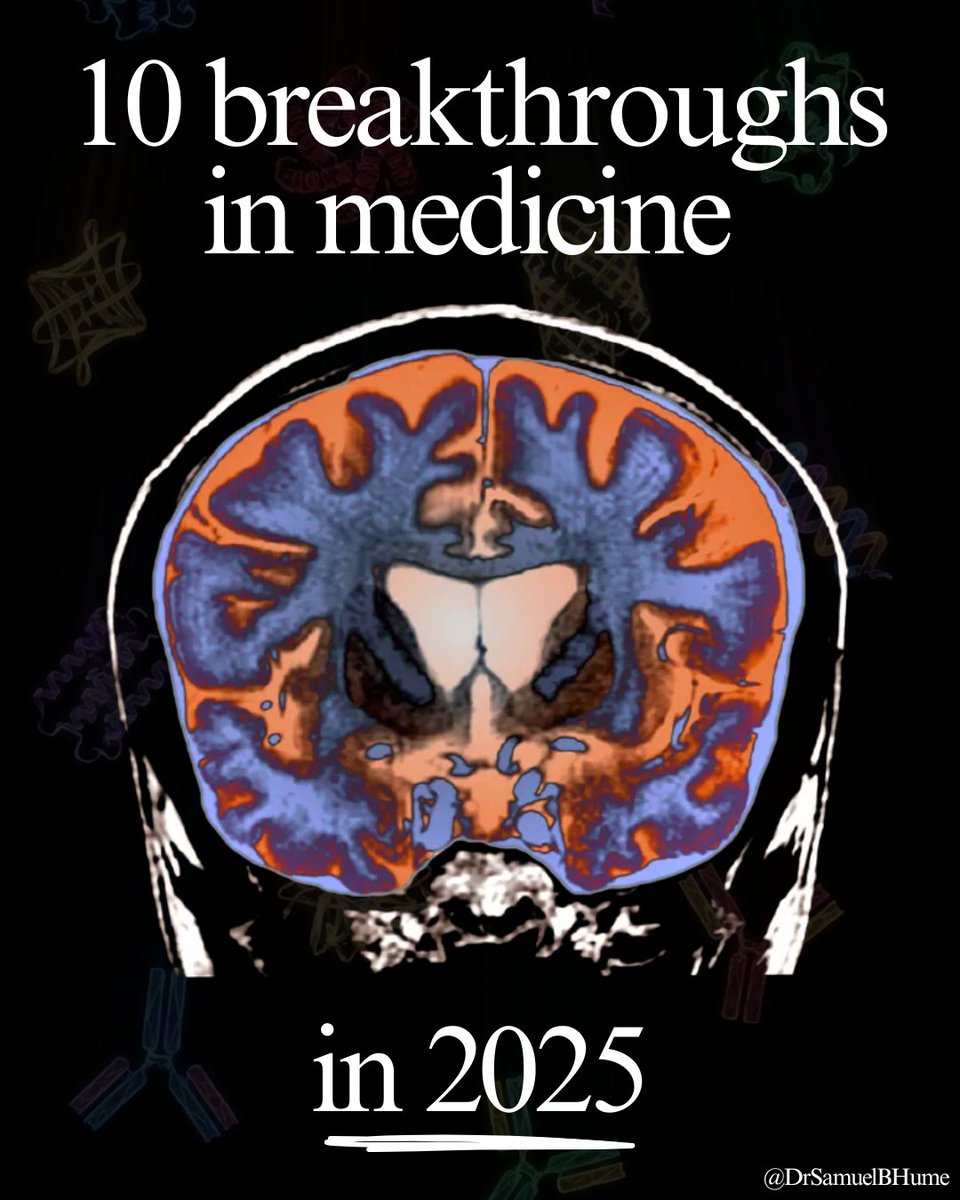
This week in medicine
1. Scholar Rock’s myostatin inhibitor, apitegromab, gets FDA-approved for spinal muscular atrophy!
2. MediLink/Roche’s new B7-H3 antibody-drug conjugate, tambotatug pelitecan, beats topotecan in relapsed small-cell lung cancer - in a phase 3 trial in China.
3. Baylor College of Medicine researchers report complete regression of a rare pediatric cancer, metastatic hepatoblastoma, after treatment with CAR-T therapy engineered to coexpress IL-15 and IL-21 (in a single patient case).
4. Amgen/AstraZeneca’s DLL3×CD3 bispecific, tarlatamab - plus durvalumab - improves overall survival in small-cell lung cancer, in a phase 3 trial.
5. AstraZeneca’s anti-IL-33 antibody, tozorakimab, succeeds in two phase 3 COPD trials - including in patients with low eosinophil counts.
6. Columbia University researchers show efficient PCSK9 base editing in human embryos - extremely early, but might pave the way towards eventual clinical use.
7. Uni Oxford researchers figure out why smoking is associated with a lower risk of Parkinson’s disease: carbon monoxide. Hillhurst Bio are already testing this therapeutically, in a phase 2a trial.
8. Beijing Tiantan Hospital researchers show that a neuroprotective small molecule, loberamisal, can reduce residual disability in a phase 3 trial for acute ischemic stroke.
9. Novartis’ antibody–oligonucleotide conjugate, del-desiran, sadly fails its phase 3 trial in myotonic dystrophy type 1.
10. Insilico Medicine’s TNIK inhibitor, rentosertib, becomes the first generative AI-discovered drug to reach a phase 3 trial (for idiopathic pulmonary fibrosis).
Both my books — How China Escaped the Poverty Trap (2016) & China’s Gilded Age (2020) — are now open access
A big thank you to every reader
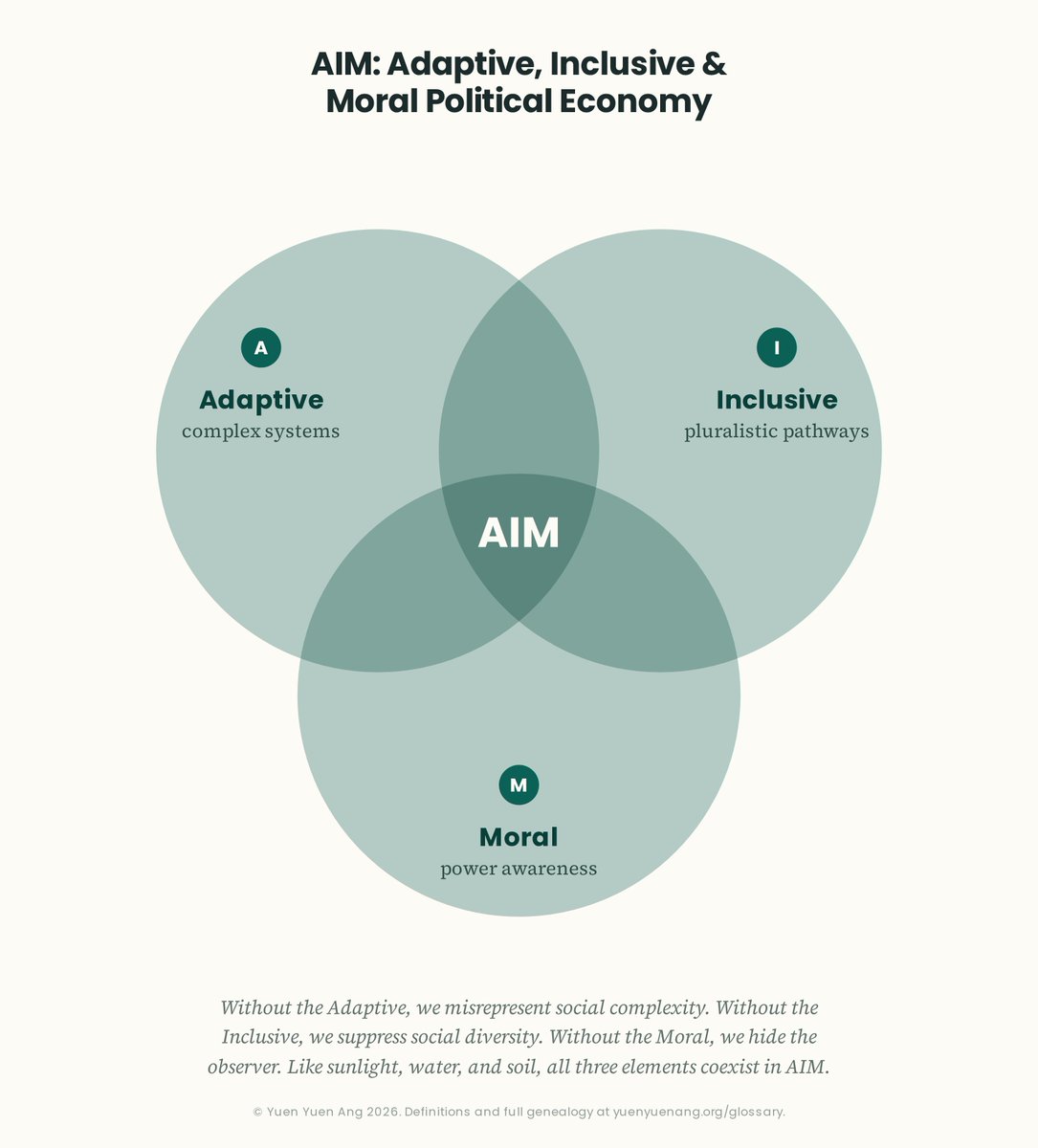
Both books applied AIM - Adaptive, Inclusive & Moral Political Economy - before AIM was named
https://t.co/o6i5XCYMO2
best longevity stack:
- less food
- more life outdoors
- coffee
- creatine
- vibrant social life
- walk after every meal
- real sleep, not tracked sleep
- strong grip strength
- sunlight before screens
- water
- reta if you're fancy like the bros
- zero interest in your own decline
125 life expectancy incoming
A peptide that binds its target is not yet a drug.
It must also survive long enough, remain soluble, cross the right membrane, avoid haemolysis and nonspecific interactions, and retain activity after chemical modification.
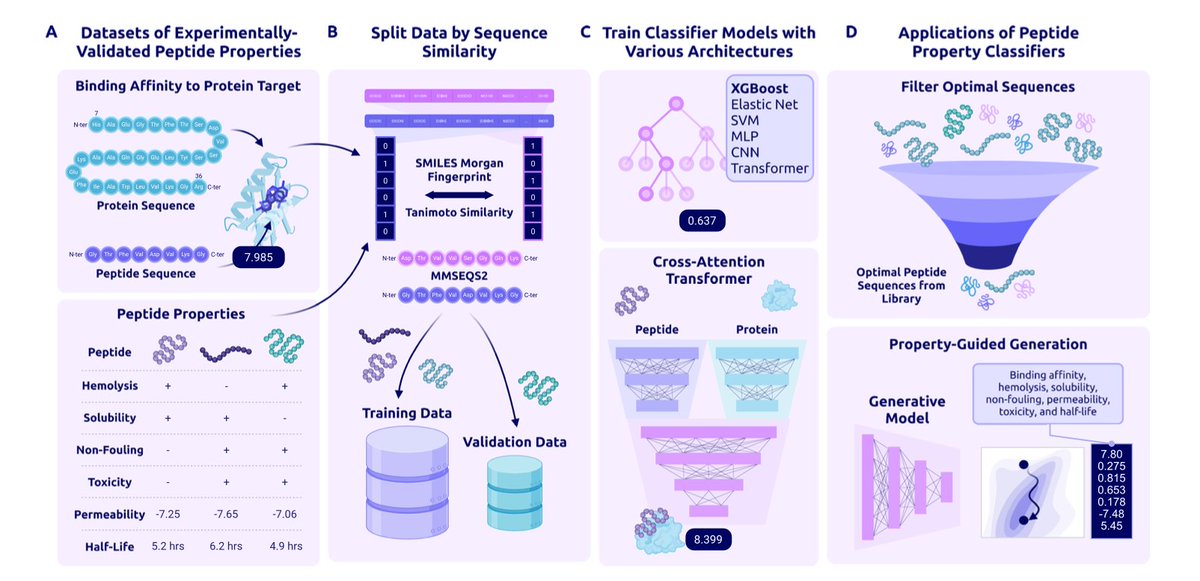
A new Nature Communications study introduces PeptiVerse, a unified platform that predicts these developability properties from either amino-acid sequences or chemical SMILES, allowing canonical and modified peptides to be evaluated in the same workflow.
What I find most instructive is not simply the number of predictions, but what the benchmarks reveal about Bio × AI: once the biological representation is strong, simpler models can perform as well as more complex neural architectures, while data coverage often becomes the real bottleneck.
The study also shows that structural confidence is not binding affinity, ipTM was almost unrelated to experimental peptide–protein affinity. This is an important distinction in an increasingly structure-driven field.
PeptiVerse should not be viewed as a machine that decides which peptide becomes a medicine; its role is to eliminate weak candidates earlier and make experimental search more rational.
To me, this is where computational biology creates real value: not replacing medicinal chemistry or pharmacology, but helping them spend experiments on better hypotheses.
Structural confidence tells us whether a complex looks plausible to a model, not whether the molecule will survive as a drug.
Read : https://t.co/FEhcGCePkI
This vial contains a new drug called PAC-832, which I recently invented to treat Alzheimer’s disease. It is the world’s first selective GalR1 antagonist.
I designed and synthesized PAC-832 in a chemistry lab I built in my garage. (1/16)
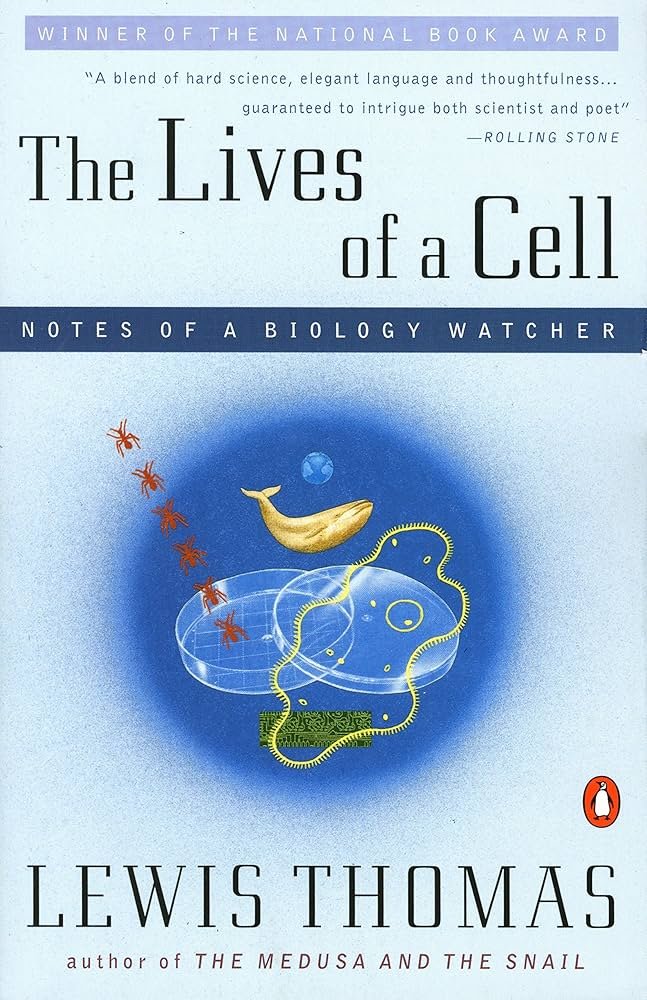
You must read. Read nonfiction. Read fiction. Read history. Read philosophy. Read psychology. Read banned literature. Read poetry. Read about new technology. Read biography. Read memoir. Read on economics. Read on finance. Reread what you have already read. Read. Reflect. Repeat.
RJD has refused to accept Bihar election result. All the MLA of RJD are going to resign together. And RJD has decided to go on the roads against #ECI. Mujhe Lagta Hai, Gyanesh Kumar Fas Chuka Hai.
An AI tool screened 2.5 million images to find two motile sperm that manual searches missed, in a man with azoospermia
The sperm were injected into eggs, and this led to a pregnancy in a couple who'd been infertile for 19 years!
The 1st pregnancy via A.I. detected sperm (by finding 5 motile sperm in 2.5 million images) from a 39-year-old man with infertility. @TheLancet
https://t.co/mn3N3TydRY
@varshaparmar06 China leads in
renewable energy surpassing America and the majority of the world.
India continues to
pour money into this useless kumbh and return nothing.
Instead Govt must start some PSU and give jobs to many people
My prior post below re China x US biotech has caught the attention of a few of you
Why am I well positioned to comment on the situation?
A short backstory:
In 2021 I co-founded precision oncology biotech, @melioratx, based in Boston and SF. We work on covalent allosteric small molecule drugs for breast cancer and other solid tumors
Over the last 12-18 months, we started noticing that there seemed to be a Chinese competitor asset for every target we were exploring. M&A in the industry began slowing noticeably as Pharma buyers opted to license drug assets from China en masse. Slowly at first, but then very quickly, the market was changing underneath us
To learn more about what was actually happening, this past December I spent time on the ground in China in Shanghai and Suzhou, meeting many of the leaders in local biotech ecosystem across small mlc, ADCs, and more. I toured their facilities and had the chance to see their capabilities up close
What I saw would cause any biotech leader to sit up and take notice. Science parks that were many multiples larger than Kendall Square or South SF, filled with life science startups. Integrated biology / chemistry / biochem / vivarium labs that were processing 10s of thousands of in vivo mouse experiments monthly. Numerous programs which went from standing start to registering for human clinical trials within 18 months (!)
IMHO direct competition on the basis of R&D execution alone is no longer an option. It’s a no contest.
Make no mistake, my lens for observing these developments are definitively American. I grew up in the heartland of America. My youth consists of 10 years in Louisville Kentucky and 8 more in Chicago (reasons why am I a huge Kentucky Wildcats and Chicago Bulls fan). I received a world class education at Penn’s Life Science and Management program, founded by long time Merck CEO Roy Vagelos. I started my career in biotech investment banking in Goldman’s New York office, and have now spent a decade in the US life sciences industry, culminating with co-founding Meliora. Through lots of hard work and (more than) a few lucky breaks, our small but impactful team at Meliora has been able to gain funding, generate compelling data for our lead molecule, and attract stellar luminaries in the industry to our cause (ex CEOs of Bayer and Biomarin are on the Board).
I am living out my American Dream, with emphasis on *American* - as it’s no exaggeration to say that America, a country that has provided so many opportunities for which I owe an eternal debt of gratitude, is truly the only country where my story could have happened.
My family and I hail from a tiny Tier 3 city in Hunan province in China, one of the country’s poorest (I had never even seen a flush toilet until I landed in California 30+ years ago). Being from Hunan, my parents, despite their best efforts to study whenever the electricity was still on, were only able to attend a small local college and did not attend a top college in China like Peking University or Tsinghua. In China meant they would have been stuck in whatever small town they were born in, with a real cap on opportunity — no matter how much grit, or talent, or drive they (or later their children - me) had
The only reason I am able to be a biotech founder and pursue my dream of creating drugs for patients is because my parents immigrated to the US; I don’t speak lightly when I say it is our duty to protect and grow the American Dream.
That is also exactly why we must confront the truth of the current moment. Drastic change has come to the drug discovery industry. America has led, and can continue to lead, the biopharma market - but in order to do so, it must evolve to meet the changing global reality —>
Based on what I have seen first hand (and the data results over the last 1-2 years), Chinese biotechs will not be beat in a game of execution. They will “out engineer” any solvable pharmacology problem you place before them [similar story to Chinese firms leading the way in electric cars, home devices, robotics]
However - all is not lost for the US biotech industry, far from it. Fortunately for the US, biology is messier and harder than straight industrial or electrical engineering. That means that true innovative, novel biology is (and likely will be, for a long, long time) at a premium in our industry - and that is where the US market shines
Exploring novel modalities of therapeutics to expand our drug toolkit, elucidating new underlying biological mechanisms to open up new therapeutic lines of attack against disease, and setting the global standard for converting translational / clinical trial insights into world class clinical patient care - these are the strengths US biotech must double down on
In a world where R&D execution becomes ever more commoditized, novel scientific innovation is where the vast majority of the value creation in the therapeutics universe will accrue, and where American innovation should not, and cannot, cede its pole position
*A new path forward*
So where to from here?
With all the talk about the rise of China biotech, the core truth does not change - making medicines still revolves around the same fundamental equation: [quality / novelty of the biological hypothesis] x [quantity / speed of R&D execution experiments]. Whomever is best at achieving this equation repeatedly will inevitably create the most clinically impactful medicines over time.
We are in early stages, however it is becoming clear that those who can figure out how to capitalize on the US’ strengths in novel biology while leveraging Chinese R&D execution capabilities will be highly formidable. This new model may in fact enable US biopharma to even surpass previous heights in developing new medicines.
Perhaps most importantly, there is a path forward where American biotechs continue to be the intellectual powerhouse of the industry, capturing the IP generated by leveraging the best R&D execution abilities globally, while also still breaking ground scientifically and clinically.
We owe it to American innovation to figure out what is that path. Patients, here - and across the world, are waiting.
Investors, scientists, entrepreneurs, and policy makers interested in taking action on the significant opportunities ahead, feel free to DM. I will also be at JPM conference in a couple weeks. Catch you on the other side.
Total female population of Delhi= 80Lakh
Freebie promised= 2100 INR/month per female
2100 * 12= 25,200 per year, per female
80L * 25,200= 20,000Cr
Total state budget Delhi = 72,000Cr
% spent on 1 freebie scheme= 27.7%
The rate at which we are destroying our nation is unreal.
I'm in Kyiv to interview President Zelenskyy, trying to do my small part in pushing for peace.
This photo is of me visiting Babi Yar yesterday, a place where many in my family were slaughtered by Nazi forces in 1941. They were ordered to gather with valuables with the promise they'd be "resettled", and then forced to lay down in this ravine on top of other people's bodies and were shot. Over 30,000 people were slaughtered in this way in just 2 days.
Let me add another note, because sadly I'm attacked a lot online by all sides but in this case Ukrainian people. I'm told by many Ukrainian friends (living in Ukraine) that the attacks are voices propped up by Ukrainian bot farms. I disagree, and I think it's not a good way to operate intellectually, thinking that anyone attacking me is a bot, and anyone supporting me is a smart thoughtful human being 🤣 Maybe it's true sometimes, but it's better to assume it's not. I prefer to assume it's just a lot of passionate people who care about Ukraine and yes sometimes get caught up in the witch-burning hysteria of the crowd. The far left and far right in United States did this a lot over the past few years.
Anyway, in the previous post, I already correcting a bunch of lies spread about me online about my my background. I explained my family roots in Ukraine, and now let me add some more context to the pile about my previous visit to Ukraine during the war.
I visited Ukraine in summer of 2022, traveling to Bucha, Borodyanka, Kyiv, Kryvyi Rih, and several places on the front in Kherson Oblast.
This trip was personal. Most of it was not recorded, and was not meant to be recorded. I had two goals for the trip:
1. To interview President Zelenskyy
2. For me to personally understand and feel the reality of this war.
For the first part, President Zelenskyy eventually agreed, and that's why I'm back in Kyiv.
For the second part, I spoke with hundreds of people off-mic (not recorded, just human to human), including soldiers, civilians, politicians, artists, religious leaders, journalists, economists, historians, and technologists. I recorded only a tiny number of these, with no intent to publish them as standalone episodes, but instead to maybe consider including them in a documentary-style video as part of a Zelensky interview (if it happens during the 2022 visit), kind of like David Letterman did. But the project quickly fell apart and started to not make sense, not in the way I was approaching it. As I was speaking with people (off-mic), the conversations I enjoyed having most and that I felt would powerfully show the beauty and pain of Ukrainian people in this war would be with hundreds of soldiers and civilians. The interviews I DID record were simply just not good conversations, and it's my fault, and I take full responsibility for that. They were short (by my standard: ~1 hour) where I asked disparate generic questions, which resulted in shallow generic conversation. I quickly realized that I would need to change my approach. I would need to either make a documentary by recording hundreds of conversations with soldiers & civilians or do full normal deep-dive 3-5+ hour podcasts with individual people. I agreed to do the latter with a few folks I met, including President Zelenskyy. I did an episode with Ukrainian historian Serhii Plokhy in this style.
Almost all the people I spoke with on and off-mic have reached out with support and total understanding. Many have become good friends. Still, I'm deeply sorry for the many ways I've failed in this effort, but I promise I'm working really hard to get better.
I really do try with all my heart to speak to people from all sides with empathy, depth, and compassion.
I'm sure the attacks will continue, but at least now you have some more context.
Sorry for the long post, and any mistakes (I didn't proofread). I'm writing it looking over Kyiv as the sun rises.
Happy Holidays. I love you all ❤️
2024's top 10 advances in biology (🧵)
1. Progress in longevity
Blocking the pro-inflammatory cytokine, IL11, extended healthspan and lifespan (in mice!)
Old mice without IL11 look healthier, they're stronger, and they live longer
https://t.co/Y0Raog12xk