Protecting forests at scale requires significant long-term funding. Governments, NGOs, Indigenous communities, and private investors all have a role to play.
@Oxygen_Token opens conservation to global investors, helping channel additional capital into forest protection in a world where economic incentives often favor deforestation over conservation.
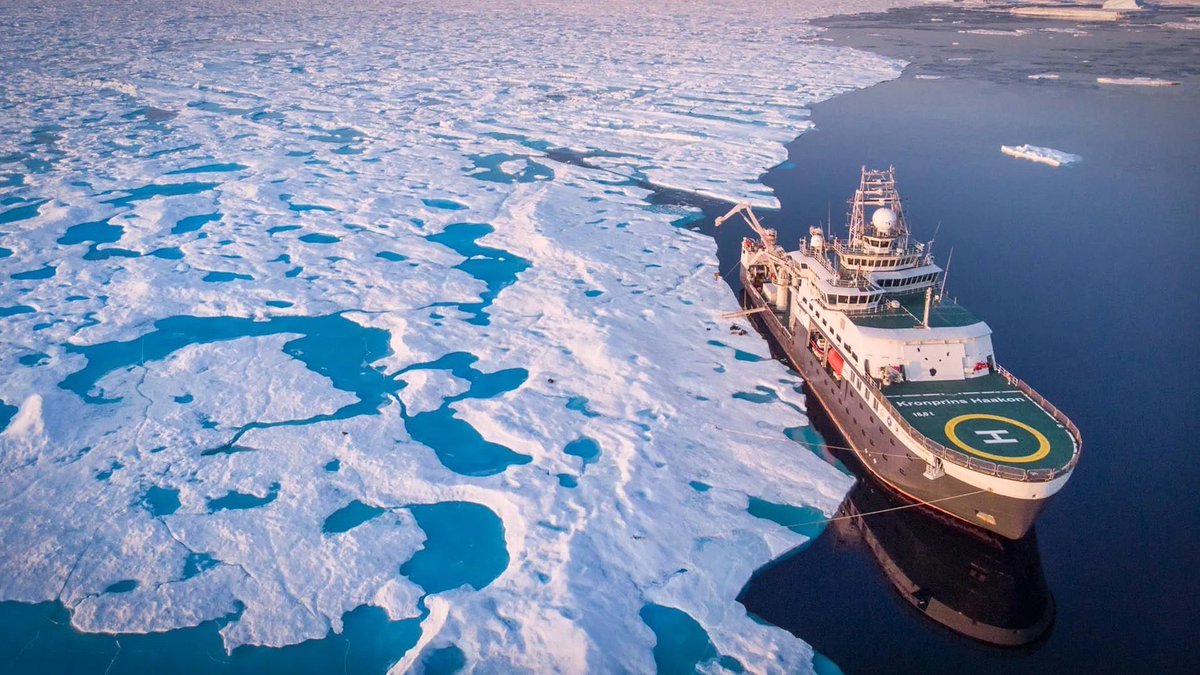
The Arctic Ocean has passed a tipping point and may never recover.
Scientists once thought melting sea ice would boost marine life by letting more sunlight into the ocean, but a 20-year study suggests the opposite may be happening.
As the ice disappears, sunlight triggers chemical reactions that remove nitrate, a key nutrient at the base of the Arctic food web.
Less nitrate means less plankton, less food for fish, seabirds, and whales, and reduced carbon absorption from the atmosphere.
Researchers say this shift began around 2009 and is unlikely to reverse.
This is not a future warning; it may have started more than 15 years ago.
@TerryDaynard Fair point. Should have been more precise. The broader point is that pollinator dependence varies enormously across crops, and many foods valued for nutrition and dietary diversity rely far more heavily on pollinators than staple grains do.
Biodiversity loss is the silent multiplier of every other crisis we face.
Every species we wipe out is another thread pulled from the web that keeps us alive.
Bees pollinate much of the food we eat. Coral reefs protect coastlines from storms and support the livelihoods of hundreds of millions of people.
Most species are valuable because they perform jobs we rarely realize need doing until they stop.
Protecting biodiversity is not charity. It is self-preservation.
What’s one species or ecosystem you now realize we can’t afford to lose?
By 2030, the world’s data centers could consume 9.3 trillion liters of water every year.
That’s roughly equivalent to the annual water needs of 1.3 billion people.
The AI boom is a major driver. As artificial intelligence expands, so does the physical infrastructure behind it: servers, cooling systems, and data centers operating around the clock.
In 2025 alone, data centers consumed 448 terawatt-hours of electricity. If they were a country, they would rank as the world’s 11th-largest power consumer. By 2030, they could rank sixth.
We call it “the cloud,” but the cloud runs on electricity, water, and real-world resources.
Every convenience has a cost. This one is just easier to hide.
@babadookspinoza@DavidUllrich202 Some of the biggest climate risks aren’t the changes we can see today, but the systems we’ve always assumed would remain stable. The AMOC is one of them.
@TerryDaynard That’s fair. Pollinators may contribute a smaller share of our calories than many people assume, but they support a disproportionately large share of the fruits, nuts, vegetables, and crops that make our diets diverse and nutritious.
@rawfactshq@earthcurated Well said. The atoms are common. The biological machinery that turns sunlight, water, and atmospheric carbon into wood is what makes it extraordinary.
Every piece of wood is the product of a biological process we still can’t replicate at scale.
Trees build complex, self-repairing structures from sunlight, water, and carbon dioxide.
That’s a remarkable technology for a species we often take for granted.
The greatest threat to our planet is the belief that humans are a plague that must be restrained rather than the only species with the ingenuity to solve its biggest challenges.
Humans have caused many environmental challenges, but we’re also the only species capable of understanding them, valuing nature, and solving them at scale.
Consider the evidence:
• Global deaths from weather-related disasters have fallen by more than 90% since the 1920s thanks to better infrastructure, forecasting, wealth, and technology.
• Many developed nations have seen significant reforestation and forest regrowth while increasing food production.
• Crop yields have risen dramatically through innovation, including better seeds and precision agriculture, feeding billions while using land more efficiently.
• Air and water quality in much of the West improved markedly as societies grew richer and invested in cleaner technologies.
The pattern is clear: prosperity and human creativity drive conservation, not degrowth or treating people as the problem. When energy is abundant and affordable, forests are spared for fuel. When farmers are more productive, they need less land. When we innovate, we reduce impact per person.
Real environmental progress comes from aligning incentives, property rights, markets, technology, and measuring outcomes, not from rejecting technologies like nuclear energy or GMOs that, when deployed responsibly, can reduce environmental impacts while improving human well-being.
We face genuine challenges: biodiversity loss in some regions, ocean health, and long-term climate risks. But the solution isn’t fewer humans or less ambition.
It’s more ingenuity, better stewardship, and betting on people as problem-solvers. Abundance is the ultimate environmentalist.
@janazsoul Precision agriculture can certainly help improve resilience and efficiency. But if extreme weather keeps intensifying, adaptation and mitigation will need to go hand in hand.
The world is remarkably good at noticing food shortages once they happen, but much less effective at paying attention to the conditions that create them.
Food security is one of the most overlooked climate risks.
Extreme heat during key growing seasons doesn’t just affect farmers. It affects harvests, food prices, supply chains, and ultimately the cost of living for billions of people.
The consequences will be felt far beyond the fields.
El Nino update. Godzilla is coming.
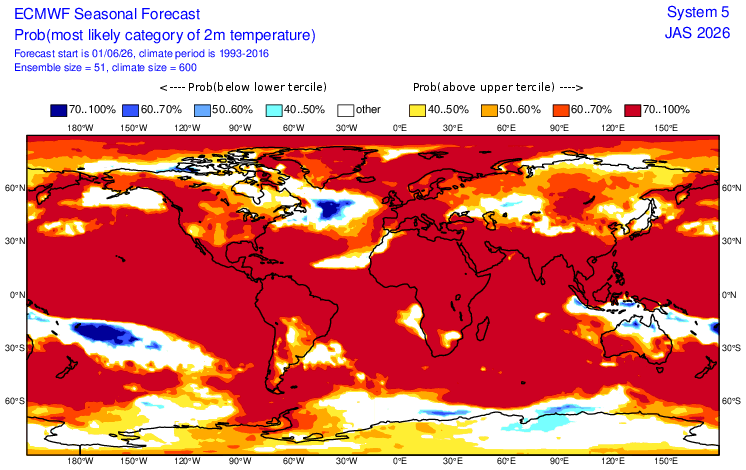
Most of the world will see top quartile temperatures over Jul/Aug/Sep, which is peak vegetative growth season globally for grains, half the world oilseeds and also for sugar and rice in Asia. That means more evapotranspiration and stress on crops.
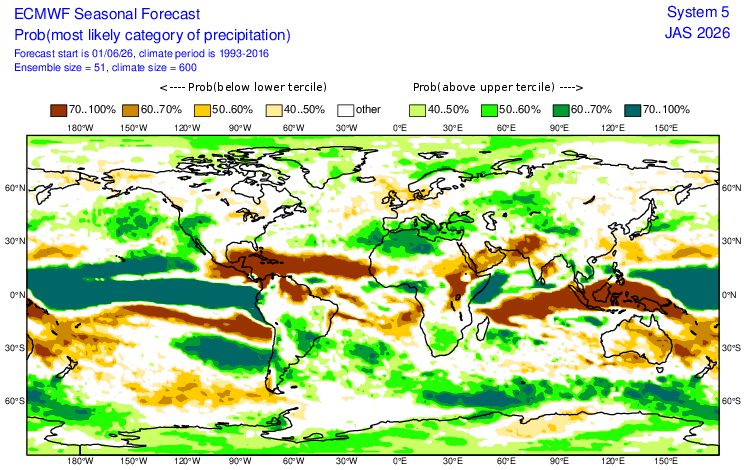
India and South-East Asia will also likely see their weakeast monsoon rains in decades.
This is happening while there's a shortage of fertilizers.
The world is remarkably good at noticing food shortages once they happen, but much less effective at paying attention to the conditions that create them.
Food security is one of the most overlooked climate risks.
Extreme heat during key growing seasons doesn’t just affect farmers. It affects harvests, food prices, supply chains, and ultimately the cost of living for billions of people.
The consequences will be felt far beyond the fields.
The last wild horse species on Earth has returned to Kazakhstan after disappearing from the region for nearly 200 years.
Przewalski's horses were driven to extinction in the wild and survived only because a small number were bred in zoos.
Every living Przewalski's horse today descends from just 12 animals. They are now being returned to the vast grasslands where they once roamed.
The goal is not nostalgia.
Without large grazing animals, the steppe loses nutrient cycling, fire regulation, and habitats many other species depend on.
Sometimes conservation is not just saving a species, but putting an ecosystem back together.
The greatest threat to our planet is the belief that humans are a plague that must be restrained rather than the only species with the ingenuity to solve its biggest challenges.
Humans have caused many environmental challenges, but we’re also the only species capable of understanding them, valuing nature, and solving them at scale.
Consider the evidence:
• Global deaths from weather-related disasters have fallen by more than 90% since the 1920s thanks to better infrastructure, forecasting, wealth, and technology.
• Many developed nations have seen significant reforestation and forest regrowth while increasing food production.
• Crop yields have risen dramatically through innovation, including better seeds and precision agriculture, feeding billions while using land more efficiently.
• Air and water quality in much of the West improved markedly as societies grew richer and invested in cleaner technologies.
The pattern is clear: prosperity and human creativity drive conservation, not degrowth or treating people as the problem. When energy is abundant and affordable, forests are spared for fuel. When farmers are more productive, they need less land. When we innovate, we reduce impact per person.
Real environmental progress comes from aligning incentives, property rights, markets, technology, and measuring outcomes, not from rejecting technologies like nuclear energy or GMOs that, when deployed responsibly, can reduce environmental impacts while improving human well-being.
We face genuine challenges: biodiversity loss in some regions, ocean health, and long-term climate risks. But the solution isn’t fewer humans or less ambition.
It’s more ingenuity, better stewardship, and betting on people as problem-solvers. Abundance is the ultimate environmentalist.
Conservation has traditionally depended on donations and philanthropy.
By tokenizing forests and certifying carbon credits, we’re creating a model where environmental protection can generate returns for investors while creating long-term incentives to keep forests standing.
Saving forests should not be a financial sacrifice.
@MoyesB0y The seeds aren’t supposed to stay where the box is. Air currents can carry them far beyond the release point, which is the whole idea behind aerial seeding.