How could increasing tobacco taxes help prevent non-communicable diseases (NCDs) and strengthen health financing in Kenya?
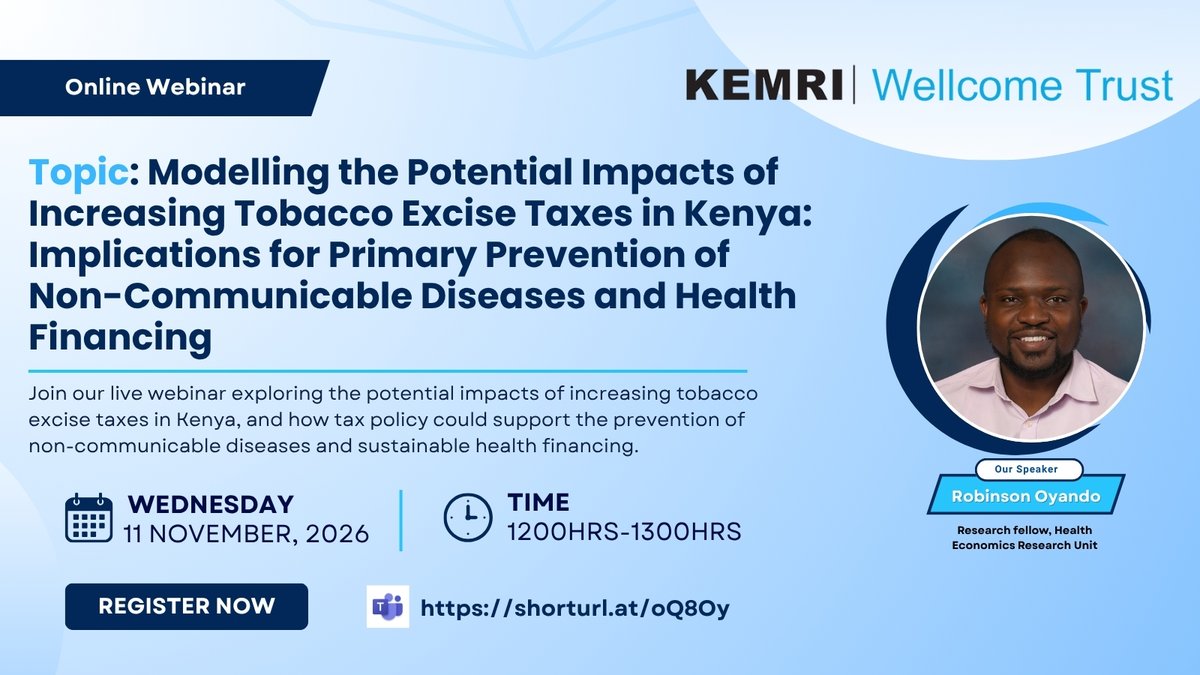
🚨 Join us for a live webinar exploring the potential impacts of increasing tobacco excise taxes in Kenya, including opportunities to reduce tobacco use, prevent NCDs, and generate additional resources for health financing by @oyando_robin
👥 Who should attend? Researchers | Policymakers | Healthcare professionals | Public health practitioners | Students
🗓 Date: 11/11/2026
🕛 Time: 12:00-13:00 hrs
🔗 Register here: https://t.co/l4TuyaJ1kZ
🚬 What are the health and economic costs of tobacco use in Kenya, and how could taxation help address them?
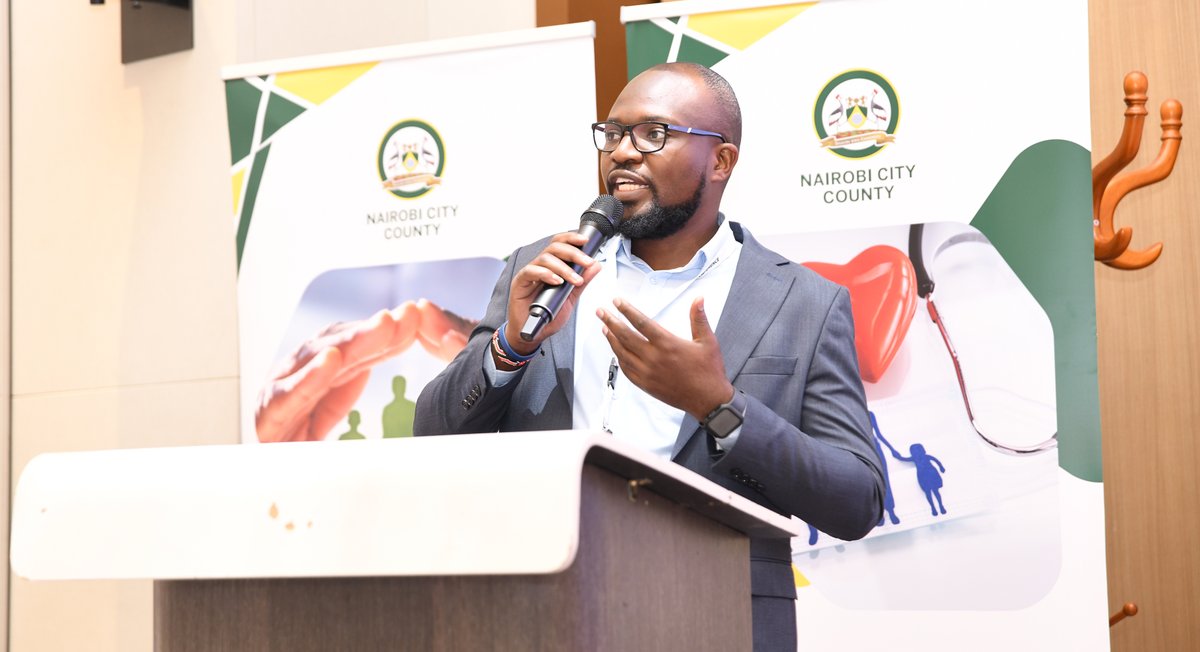
Robinson Oyando, Health Economist at @KEMRI_Wellcome presented research on the potential impacts of increasing tobacco excise taxes, examining the implications for NCD prevention, health financing and equity across socioeconomic groups. The modelling explores how different tax increase scenarios could influence tobacco consumption, prevent premature deaths, generate additional government revenue and reduce tobacco-related healthcare costs. The discussion highlights the importance of evidence-informed, equity-sensitive approaches to tobacco taxation in Kenya.
Can better-designed taxes on alcohol and tobacco contribute to a healthier Kenya?
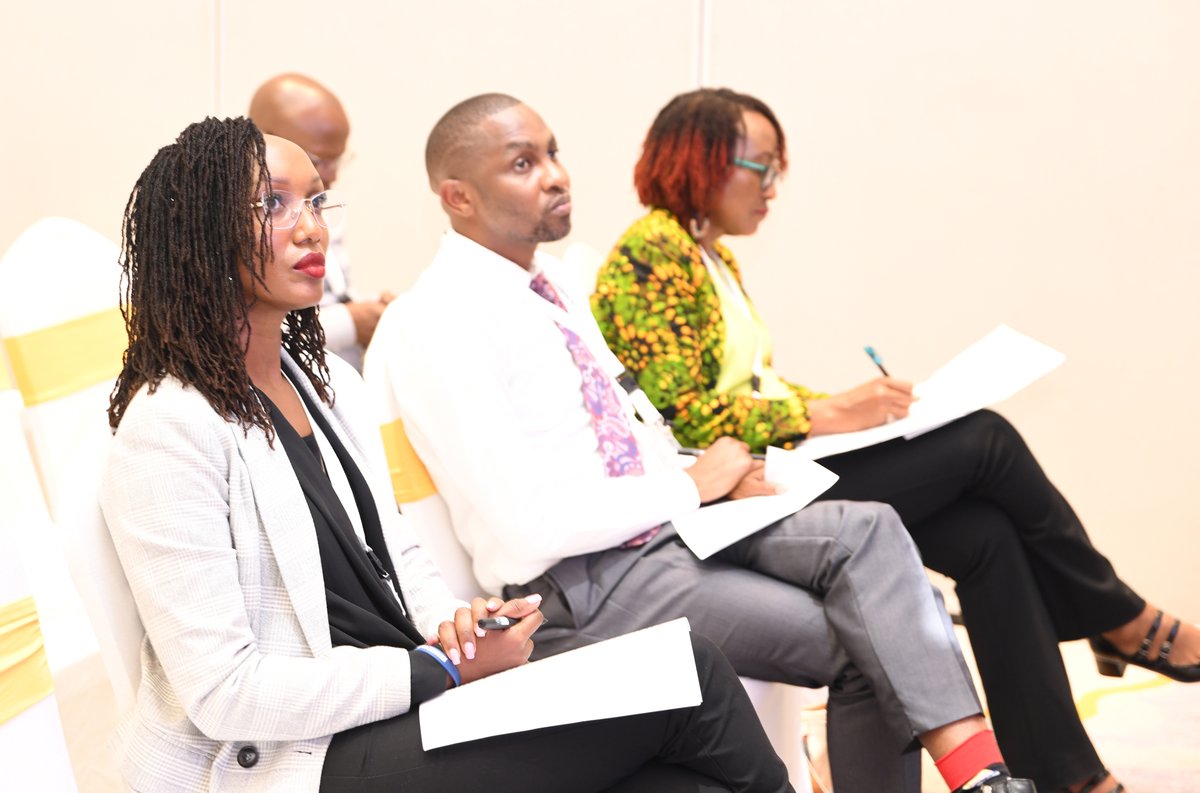
The stakeholder engagement meeting on Optimizing Health taxes discussing Alcohol and Tobacco Taxes brought together key actors to examine evidence on the country's current tobacco and alcohol taxation landscape, agree on a shared vision and identify practical policy actions. Convened by @KEMRI_Wellcome, @MOH_Kenya, @KeTreasury, Parliamentary Budget Office, @WillowHealthKe with support from the @AllianceHPSR, the meeting aims to chart a prioritised pathway towards more effective health taxation.
@MartenRobert@anitamusiega@oyando_robin
🫀 New research led by @oyando_robin at @KEMRI_Wellcome highlights how relationships, communication, and everyday experiences of care are just as important as funding and infrastructure.
Read 👉https://t.co/BclJzME72Y
🫀How do health systems deliver better hypertension care in rural settings?
📚Our latest research shows that strengthening hypertension care requires coordinated investment in both hardware (funding, medicines, staff, and infrastructure) and software (relationships, communication, norms, and power dynamics), raising health funds and thinking complexity to improve care.
🔗Read more here👉 : https://t.co/rgwtrqkBhj
Health insurance isn’t just coverage; it’s cost protection.
Data shared by Robinson Oyando, PhD Fellow, @KEMRI_Wellcome, and @IDeAL_KEMRI_WT at the #NairobiHealthScientificConference show that insured Kenyan households spend KES 6,680 less out of pocket than uninsured households
Congratulations Prof. @EdwineBarasa, very well deserved!
From an intern to leading @HERU_KEMRI_WT and Nairobi Director of @KEMRI_Wellcome and now the Executive Director!! What an inspiration
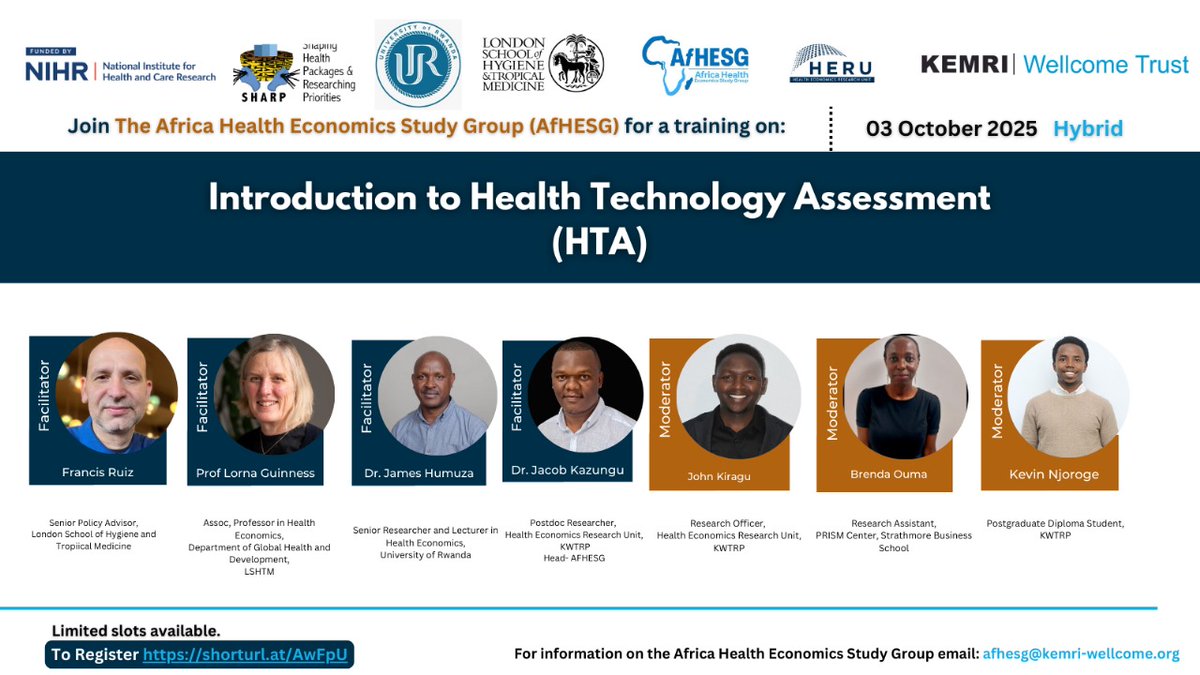
@HERU_KEMRI_WT is committed to strengthening health economics capacity in Africa through monthly capacity building sessions (AfHESG). We empower academics, policymakers & practitioners with skills that shape policy. Join us today as we introduce Health Technology Assessment!
HOT OFF THE PRESS! Assessing catastrophic health expenditures using median out-of-pocket costs for inpatient and outpatient care in Kenya's journey to universal health coverage @oyando_robin
https://t.co/PyvoUZ5Oiv
@KQSupport The KQ staff at Kigali airport told me he cancelled the tickets for all the 10 stranded passangers and that would reduce the cost of rebooking
@KQSupport No show was removed and the flight cancelled because I was here 50 minutes before departure time but I was not allowed into the boarding gates. So the USD 363 is on the high